

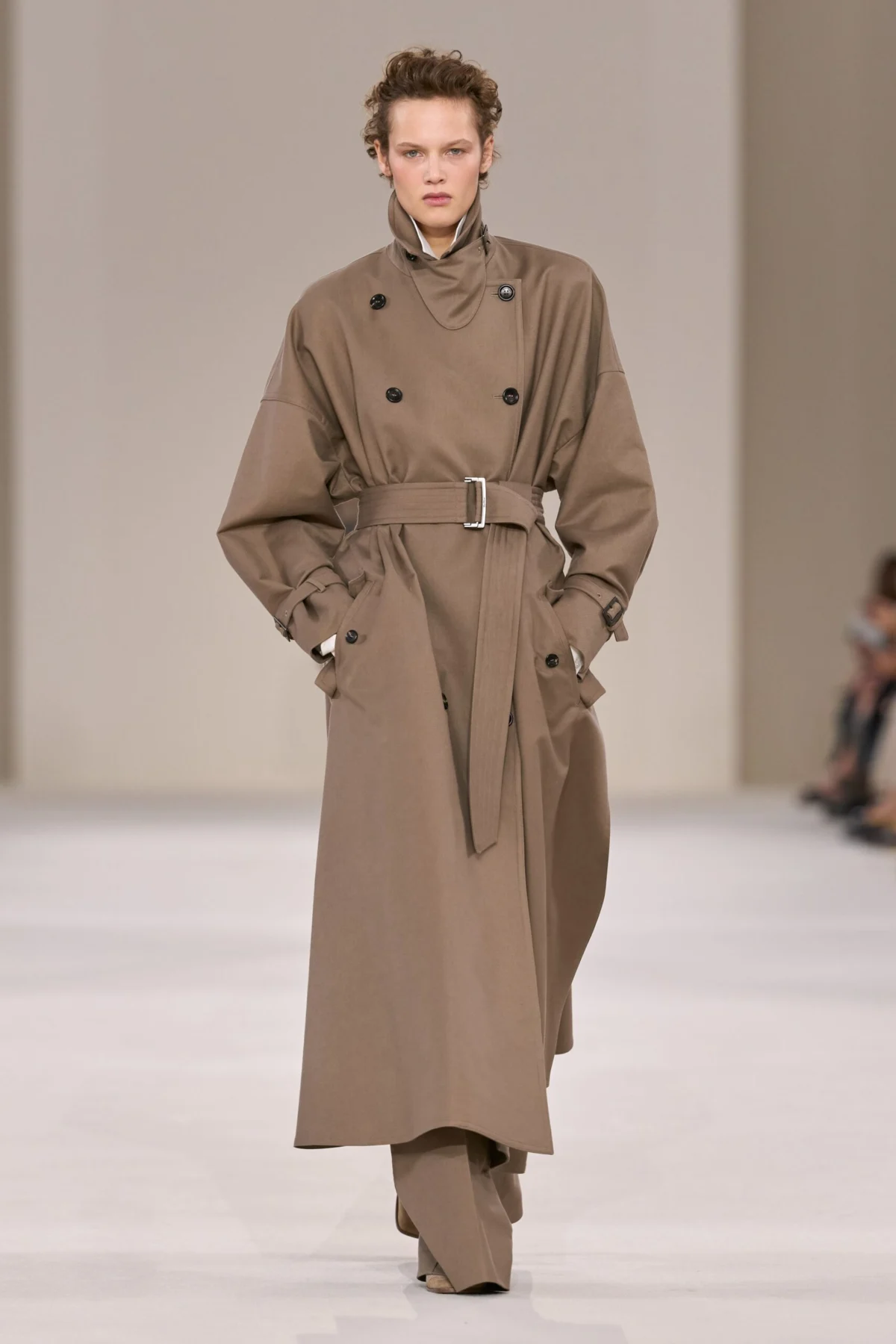
The recent Max Mara Fall/Winter collection, unveiled amidst the bustling fashion calendar, has ignited a fervent discussion around the evolving definition of luxury. Creative Director Ian Griffiths presented a vision that consciously eschews ephemeral trends in favor of enduring style, meticulously crafting a narrative of "utility luxe" that draws from the brand’s foundational principles. This collection, far from being merely a sartorial statement, serves as a powerful testament to the enduring appeal of garments designed for both life and aspiration, blending robust functionality with an undeniable air of refined cosmopolitanism.
The Genesis of Utility Luxe: A Brand Heritage Reimagined
Griffiths’ vision for the season hinges on a deliberate reinterpretation of iconic utility wear. "We’re developing this concept of utility luxe, which is a narrative that has existed within Max Mara since it was founded," Griffiths stated backstage following the show. He identified key archetypes – the utility vest, the cargo vest, the trench coat, and the safari jacket – not as mere clothing items, but as "tokens of that" enduring brand ethos. This deliberate focus on heritage pieces, reimagined through the lens of contemporary design, underscores a strategic move by Max Mara to reinforce its brand identity in an increasingly saturated market.
The collection’s genesis can be traced back to the brand’s inception in 1951 by Achille Maramotti. Maramotti’s pioneering spirit was characterized by an unwavering commitment to high-quality craftsmanship and an understanding of the modern woman’s need for versatile, elegant attire. He sought to democratize fashion, making luxurious, well-made clothing accessible to a broader audience. Griffiths’ current direction can be seen as a direct homage to this founding philosophy, demonstrating how the core tenets of practicality and enduring style, once revolutionary, remain profoundly relevant today.
A Symphony of Practicality and Panache
The collection’s opening ensembles immediately established its thematic core. A cigar-brown wrap skirt, secured with substantial leather straps at the thigh, evoked a sense of rugged resilience, suggesting a wearer ready for any element, even on the "deck of a wave-struck schooner." This imagery, while evocative, was deliberately not literal. As Griffiths clarified, these utilitarian gestures were not designed for specific outdoor pursuits but rather to "telegraph readiness and leisure within what was more broadly a highly cosmopolitan wardrobe."
This duality was further exemplified by a rose-toned silk-linen tailored jacket paired with matching shorts. Layered beneath an open-backed hunter’s gilet, complete with bellows pockets capacious enough to "stash a brace of grouse," the ensemble projected an image of effortless country-to-city transition. The floor-length, storm-flapped trench coat in a crisply finished nut brown, described as "big enough to bivouac in," similarly married robust practicality with an undeniable elegance, hinting at the wearer’s preparedness for both the unexpected and the everyday.
The deliberate inclusion of robust hardware – substantial leather straps, functional bellows pockets – served as visual cues to the collection’s utilitarian underpinnings. These elements, however, were elevated through the use of luxurious fabrics and sophisticated tailoring, creating a compelling juxtaposition. The intention was not to create garments for extreme conditions, but to imbue everyday wear with a sense of preparedness and inherent strength, a quality highly valued in today’s fast-paced world.
Beyond the Obvious: Sheer Delicacy and Sensual Undertones
While the collection championed practicality, it did so without sacrificing sensuality or a forward-thinking aesthetic. Griffiths masterfully played with the perceived rigidity of utility silhouettes, introducing elements of unexpected lightness and allure. Jumpsuits and flight jackets, typically associated with a more utilitarian, even masculine, sensibility, were rendered in sheer organza. This innovative material choice served a dual purpose: to signal "adventurousness" while simultaneously embracing "sensuality." The resulting effect was a compelling blend that evoked the iconic allure of Hollywood legends such as Audrey Hepburn and Lauren Bacall, actresses who embodied both strength and undeniable feminine grace.
This deliberate exploration of contrasting textures and transparencies allowed the collection to transcend its utilitarian origins, offering a nuanced interpretation of modern femininity. The sheer fabrics added an ethereal quality, a whisper of vulnerability that balanced the inherent robustness of the utility-inspired designs. This approach speaks to a broader trend in fashion, where the lines between traditionally masculine and feminine attire are increasingly blurred, leading to more complex and empowering sartorial expressions.
The Art of Practical Adornment and Eveningwear Innovation
The collection’s emphasis on practical yet striking design extended to its lower halves. Skirts and pants were consistently high-waisted, cinched by wide, functional belts that added structure and definition. These garments then cascaded to the floor with an assertive fullness, creating a silhouette that was both commanding and elegant. The bellows pockets, a recurring motif across blazers, gilets, and safari jackets, further reinforced the narrative of a sophisticated countrywoman transitioning seamlessly into an urban environment. This imagery suggests a woman who is grounded and connected to her roots, yet fully embraces the dynamism of city life.
Griffiths’ exploration of utility then took a surprising turn, moving from overt functional elements to a more subtle, sensation-driven approach in the final section of the show. Here, bias-cut eveningwear in fine-gauge knit fabrics took center stage. These ensembles, while undeniably luxurious, offered a practical advantage. The designer explained, "Some of these fine-gauge full-looks combined the impact of a dress with the practicality of separates." This innovative approach allowed for ease of movement and a subtle layering effect, offering the visual drama of a complete outfit with the comfort and adaptability of individual pieces. This demonstrated a sophisticated understanding of how luxury can manifest not just in appearance, but in the tactile experience and wearability of a garment.
Redefining Luxury: Beyond the Unnecessary
Ian Griffiths’ outspoken commentary on the very definition of luxury provided a crucial philosophical anchor for the collection. He stated, "I think the word luxury is used very lazily, and it confuses fashion completely. And if you said that the definition of luxury is something that you don’t really need which costs a lot of money, then Max Mara wouldn’t be luxury by that definition: Max Mara is what you want in your daily life." This powerful assertion directly challenges conventional notions of luxury as being solely about exclusivity and unattainable opulence.
Instead, Griffiths posits that true luxury lies in desirability, in garments that enhance and enrich daily life. Max Mara, by this definition, offers a luxury that is deeply ingrained in practicality and wearability. It is the kind of clothing that one desires not for its ostentatious display, but for its ability to serve, to comfort, and to empower the wearer. The collection’s emphasis on quality materials, impeccable tailoring, and versatile designs directly supports this philosophy. The "highly satisfying to use" aspect of these garments, as Griffiths subtly implied, is the ultimate measure of their luxurious quality.
Broader Implications: The Future of Enduring Style
The Max Mara Fall/Winter collection’s emphasis on "utility luxe" arrives at a pivotal moment in the fashion industry. As consumers increasingly prioritize sustainability, longevity, and mindful consumption, brands that can offer timeless, well-made pieces are poised for significant growth. The collection’s success in reinterpreting utilitarian archetypes into sophisticated, cosmopolitan attire suggests a promising direction for the future of fashion.
The data on consumer behavior in the luxury market supports this trend. A 2023 report by Bain & Company indicated a growing demand for "investment pieces" and a decline in the appetite for fleeting, trend-driven items. Consumers are seeking quality over quantity, and brands that can deliver both aesthetic appeal and enduring functionality will resonate most strongly. Max Mara’s strategic focus on its heritage of practicality, infused with contemporary design sensibilities, positions it exceptionally well to capture this evolving market segment.
Furthermore, Griffiths’ articulation of luxury as something desirable for daily life, rather than merely a symbol of excess, offers a refreshing perspective. This approach not only appeals to a more conscious consumer but also fosters a deeper connection between the wearer and their clothing. The collection’s success in blending aspirational aesthetics with tangible practicality underscores the enduring power of well-designed garments that are not only seen but also felt and experienced. The "utility luxe" narrative presented by Max Mara is more than a seasonal theme; it is a profound statement about the enduring values of quality, craftsmanship, and the true essence of what makes clothing luxurious.
