

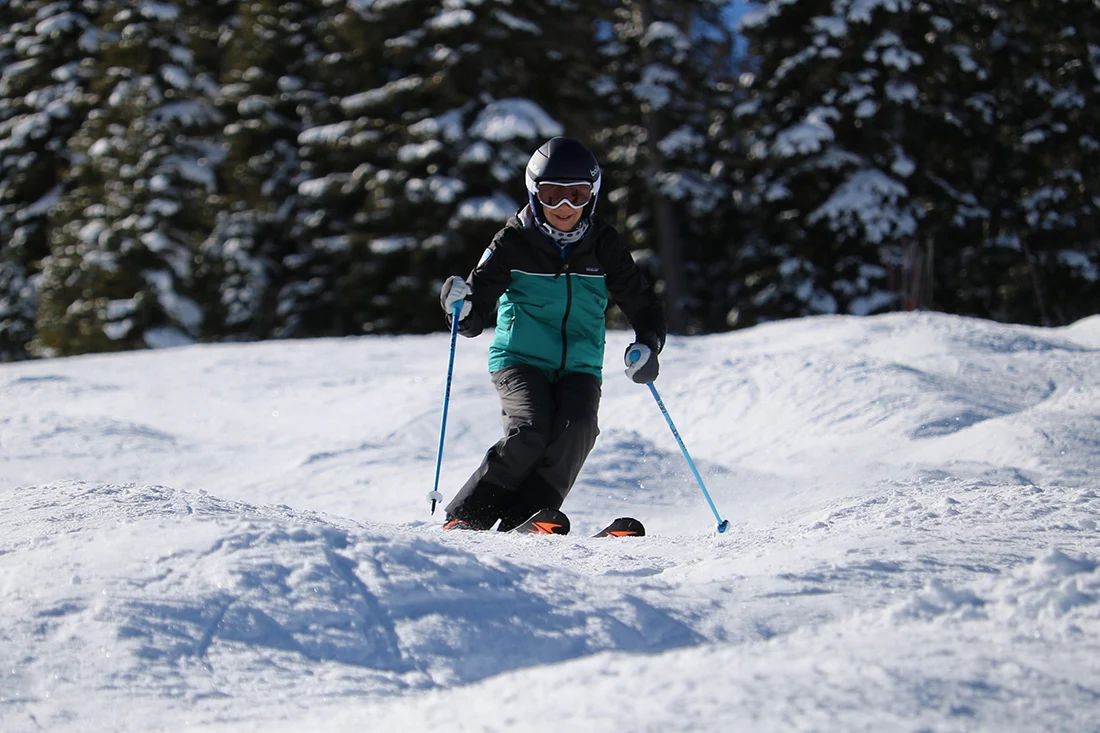
A powerful instructional strategy, mirroring, described as copying someone with the intention of understanding them, has long been recognized as a best practice in teaching and learning, recently highlighted and extensively explored at global snowsports forums. This technique, deeply rooted in human evolution and supported by modern neuroscience, offers profound insights into student comprehension and performance, fostering empathy, trust, and accelerated skill development across all levels of snowsports. Its practical application, demonstrated from international summits like Interski 2023 to local instructor training programs, underscores its efficacy in enhancing the learning environment and refining teaching methodologies.
The Fundamental Capacity for Learning by Observation and Imitation
The human capacity to learn through copying others is not merely a pedagogical tool but an ancient evolutionary survival strategy. This foundational capability, termed motor resonance, which is the inherent ability to match what is observed, emerged over 100 million years ago, predating many complex cognitive functions. Evidence of motor resonance is widespread across the animal kingdom. For instance, dogs exhibit synchronized behaviors, adjusting their speed, turning, stopping, and pace when moving in a pack, demonstrating an innate capacity for coordinated action based on observation. Similarly, young songbirds meticulously learn their intricate melodies by listening to and imitating their parents, a process crucial for species-specific communication and survival.
Among primates, this observational learning gained remarkable sophistication tens of millions of years ago. Chimpanzees, for example, demonstrate complex behaviors like termite fishing, a skill passed down through generations by observing and replicating the techniques of others. Bonobos engage in chasing games and elaborate social greetings, behaviors learned and refined through observation and imitation within their social structures. The advent of intentional teaching, however, is believed to have evolved more recently, likely within our own genus, Homo. The production of sophisticated stone tools, which were too intricate to be accurately copied through mere observation, suggests that purposeful demonstration and guided practice—true teaching—were essential for transmitting these advanced skills. This evolutionary trajectory underscores that learning through imitation and direct instruction is not a modern invention but a fundamental aspect of human development, deeply ingrained in our biological and social fabric.
Modern learning theories, such as Albert Bandura’s seminal Social Learning Theory, are entirely compatible with these evolutionary insights. Bandura’s theory posits that individuals learn from one another through observation, imitation, and modeling. These psychological capacities are now understood to be firmly grounded in ancient evolutionary mechanisms, suggesting a continuous thread from our earliest ancestors to contemporary human learning. The intricate dance of observation and replication, therefore, is a testament to millions of years of evolutionary refinement, making mirroring a powerful and inherently effective instructional approach.
The Neuroscientific Basis: Mirror Neurons and Brain-Based Learning
The scientific underpinning of mirroring gained significant traction with the discovery of mirror neurons in the 1990s. Located in the premotor cortex, supplementary motor area, primary somatosensory cortex, and inferior parietal cortex of the brain, these specialized neurons fire not only when an individual performs an action but also when they observe the same action being performed by another. This "mirroring" activity provides a neurological bridge between observation and execution, enabling an observer to internally simulate and understand the observed action as if they were performing it themselves.
The activation of mirror neurons is believed to be critical for empathy, language acquisition, and social learning. When an instructor mirrors a student’s movements, or vice versa, these neural circuits are engaged, facilitating a deeper, non-verbal understanding. This process allows instructors to gain immediate, kinesthetic insight into the student’s technique, identifying subtle nuances or challenges that might be missed through verbal instruction alone. Conversely, when students mirror an instructor, their brains are actively simulating the desired movement, enhancing motor learning and skill acquisition beyond purely cognitive understanding.
This understanding forms the core of brain-based learning, an educational approach that explicitly aligns instructional methodologies with neuroscientific evidence on how the brain receives, processes, and retains information. Brain-based learning principles emphasize active engagement, real-world relevance, emotional connection, and opportunities for reflection—all elements that mirroring naturally incorporates. By leveraging the brain’s innate capacity for imitation and social learning, instructors can create more impactful and efficient learning environments, moving beyond traditional didactic methods to engage students on a deeper, more intuitive level.
A Global Showcase: Mirroring at Interski 2023 in Levi, Finland
Interski 2023, held in Levi, Finland, served as a premier international platform for showcasing and discussing advanced snowsports instructional techniques. As a biennial event, Interski brings together national snowsports instructor teams from around the world to share innovations, compare methodologies, and foster global collaboration in ski and snowboard education. It is a critical forum for the evolution of teaching practices, promoting excellence and consistency across diverse cultures and snow environments. The Czech Republic National Team, recognized for its progressive approach, presented two highly influential sessions on brain-based learning, demonstrating how neuroscientific principles could be directly applied to enhance snowsports instruction.
The on-snow session, attended by approximately 40 participants from various national teams, provided a compelling, experiential introduction to mirroring. The initial exercise was designed to build immediate rapport and trust: participants were instructed to form a circle and identify a partner solely through eye contact, without verbal communication. This seemingly simple task, initially met with awkward silence and darting eyes, quickly yielded results. Within a minute, each participant had established eye contact, signaled acknowledgment through subtle non-verbal cues, and moved to form a partnership. This rapid, non-verbal connection underscored the human brain’s remarkable efficiency in social bonding.
The author, Angelo Ross, partnered with Angela Cesnik from the Australian National Team (APSI). After a brief, almost identically named introduction, they were instructed to stand face-to-face, about two feet apart, and again, without speaking, decide who would lead an unknown upcoming activity. Through an unspoken agreement, Angela assumed the lead. The leaders were then instructed to spend 60 seconds miming their morning bathroom routine, while followers were tasked with reproducing these movements exactly, acting as a perfect reflection. This meant coordinating opposite limbs and directions: if Angela "brushed her teeth" with her right hand, Ross used his left; if she turned left, he turned right. The exercise was both comical and profoundly insightful, as 40 strangers silently mimicked personal routines, from dental hygiene to applying deodorant. This shared, slightly vulnerable experience rapidly fostered connection and broke down barriers, demonstrating the power of reflective mirroring in building immediate trust and empathy. After one round, partners switched roles.
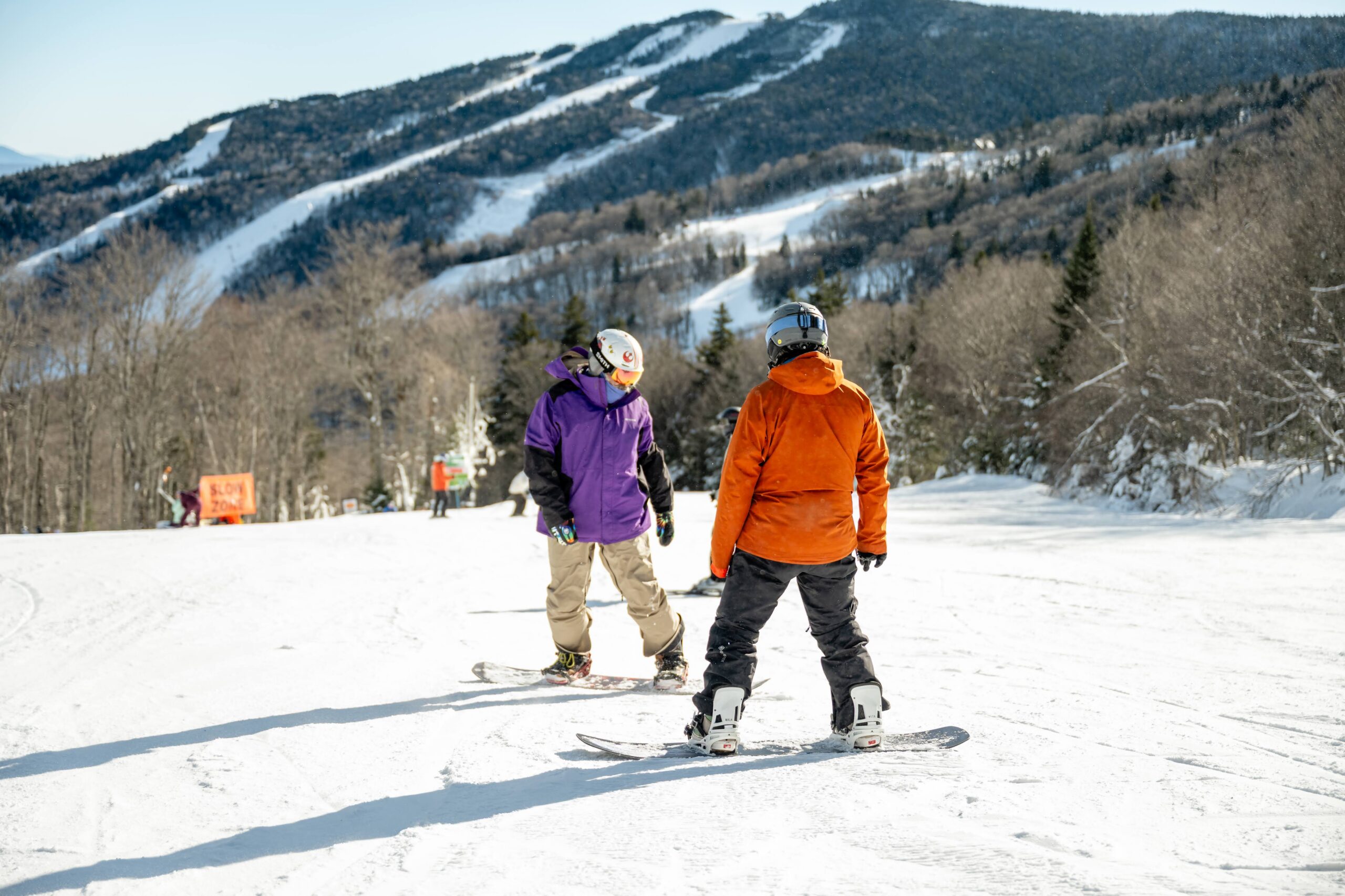
The next phase moved onto the snow, introducing tandem mirroring. Facing the same direction, the original leader made predictable medium-radius turns, with the follower positioned closely behind, aiming to replicate every movement—limbs, poles, helmet, skis—precisely. At a predetermined stopping point, the follower described how mirroring the leader altered their technical performance. The roles then reversed for the remainder of the run. During the subsequent lift ride, Ross and Cesnik engaged in a detailed discussion, comparing similarities and differences in their techniques, analyzing the impact on performance, and exchanging insights on APSI and PSIA-AASI values, even touching upon global politics. This single, short experience proved to be remarkably high-impact, facilitating deep learning and cross-cultural understanding.
The corresponding afternoon indoor session provided the scientific context. Czech researchers elucidated the brain-based science behind the on-snow activities, explaining how mirroring directly facilitates trust, empathy, and understanding at a neurological level. They highlighted research demonstrating how synchronized movements can increase prosocial behavior and feelings of connection, reinforcing the observed outcomes of the morning’s practical exercises. This integrated approach, combining experiential learning with scientific explanation, solidified the profound impact of mirroring as a pedagogical strategy.
Expert Endorsement and Domestic Application: Ellen Post Foster’s Legacy
The value of mirroring is not a novel concept within leading snowsports organizations; it is a time-tested technique championed by legendary figures. Ellen Post Foster, a U.S. Ski & Snowboard Hall of Famer (Class of 2016) and 2021 Colorado Snowsports Museum Hall of Famer, exemplifies the profound impact of this instructional approach. Her illustrious career includes being the 1973 Junior National Champion of Exhibition Skiing, excelling in aerials, ballet, moguls, and combined freestyle in 1975, and serving on the 1980 and 1984 PSIA National Demonstration Teams. As a prolific snowsports author and co-author of the current Teaching Snowsports Manual, Foster’s insights have shaped generations of instructors.
Skiing with Foster offers a masterclass in observation and empathetic instruction. Known for her exceedingly nimble touch and silent, graceful movements, she often "disappears" on the slopes. As Ross recounts, during one of their first ski outings, he momentarily lost sight of her, only for her to reappear at the lift, informing him she had been following him specifically to understand his skiing. This deliberate act of mirroring allowed her to gain a comprehensive, kinesthetic understanding of his technique, enabling her to provide precise, actionable feedback for improvement—feedback Ross continues to integrate. This anecdote perfectly illustrates the core principle of mirroring: understanding precedes effective instruction. Foster’s consistent practice of observing and emulating students’ movements is explicitly mentioned multiple times in the Teaching Snowsports Manual as a crucial teaching skill, underscoring its institutional endorsement within PSIA-AASI.
Building on the powerful demonstrations at Interski Levi and the enduring wisdom of figures like Ellen Post Foster, Ross has successfully integrated mirroring into his own instructional strategies. In November, at the Rocky Mountain Telemark Education Staff Training, he adapted the Czech team’s format, beginning with an indoor session to foster connection between partners, leading to an outdoor session focused on careful observation and constructive feedback. Similarly, in December, he utilized a modified on-snow version with a group of National Ski Patrol leaders at the Outdoor Emergency Transportation Conference in Killington, Vermont. This application facilitated partner observation and subsequent discussions on the applicability of various movement patterns in different emergency scenarios. Feedback from both sessions was overwhelmingly positive, consistently highlighting "connecting quickly," "developing trust," and "deep learning" as immediate benefits. These real-world applications demonstrate the versatility and effectiveness of mirroring across diverse snowsports disciplines and instructional contexts.
Practical Implementation and Broader Implications for Snowsports Education
Mirroring is a versatile and highly effective strategy that can be seamlessly incorporated into various aspects of snowsports instruction, yielding multiple benefits for both instructors and students. Its implementation goes beyond simple imitation, fostering a dynamic and empathetic learning environment.
For Instructors:
Mirroring students provides invaluable insights into their understanding and performance of the sport. By physically replicating a student’s movements, an instructor can kinesthetically experience the student’s balance points, timing, pressure application, and overall feel of the ski or snowboard. This deep, embodied understanding allows instructors to identify root causes of technical challenges, communicate more effectively, and tailor feedback with greater precision. It moves beyond superficial observation to a deeper, empathetic comprehension of the student’s experience.
For Students:
When students mirror their instructor, it encourages active engagement and communication. The act of imitation forces them to pay closer attention to detail, refining their observational skills. This direct, physical replication facilitates trust, as students perceive their instructor as a guide who not only demonstrates but also intimately understands the desired movement. This process accelerates skill development by bypassing purely verbal explanations and engaging the motor learning systems directly, leading to more intuitive and lasting changes in technique.
For Peer Learning and Group Dynamics:
Mirroring peers in synchronized skiing and riding activities offers a unique set of advantages. It transforms a typical "follow me" drill into a more analytical and engaging exercise. Participants gain insights into the value of varied movement patterns, challenging the "one-right-way" mentality that can sometimes permeate snowsports instruction. By closely observing and replicating a peer’s style, individuals sharpen their eye for subtle technical differences and gain a broader understanding of effective movement solutions. This collaborative mirroring fosters group camaraderie, builds confidence, and encourages constructive peer feedback, creating a supportive learning community.
Enhancing Traditional Drills:
Adding the nuance of intentional mirroring to common "Follow Me" activities significantly increases student interest and engagement. Instead of merely following, students are tasked with precise replication, which demands heightened focus and active participation. This subtle shift enhances learning, transforms routine drills into dynamic explorations of movement patterns, and provides tangible evidence against rigid technical dogmas. Such activities can easily evolve into structured games and experiments, aligning perfectly with PSIA-AASI fundamentals that advocate for playful, explorative, and evidence-based teaching practices.
The implications of widely adopting mirroring as a core instructional strategy are substantial. It promises improved student outcomes through more effective skill acquisition, deeper understanding, and enhanced motivation. For instructors, it offers a powerful tool for empathetic connection, diagnostic precision, and pedagogical innovation. Furthermore, by fostering global exchanges like those at Interski, mirroring promotes a unified yet adaptable approach to snowsports education, ensuring that teaching methodologies remain at the forefront of neurological and pedagogical understanding. Time-tested, research-backed, and deeply embedded in the fabric of our species, mirroring empowers both instructors and students to evolve their understanding, performance, and teaching of snowsports, continually pushing the boundaries of what is possible on the slopes.
