

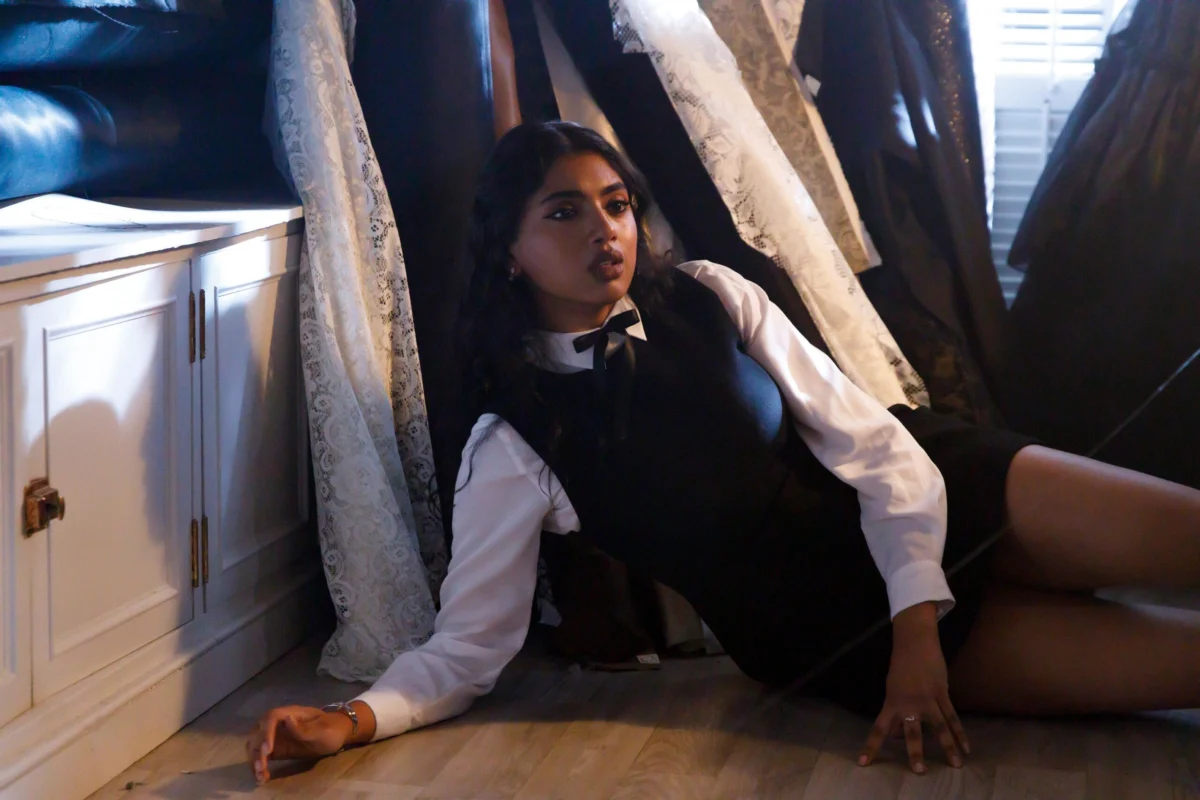
The latest installment of FX’s anthology series, American Horror Story, titled "The Baddest Witch of Them All," plunges viewers back into the macabre tapestry of Season 13, further exploring the thematic convergence of history’s most infamous serial killers and their ultimate fates. This episode, the seventh in the current season, continues the narrative arc established in the preceding weeks, weaving a compelling, albeit disturbing, exploration of evil, punishment, and the enduring legacy of those who have committed heinous acts. The title itself, "The Baddest Witch of Them All," suggests a focus on a particular figure or a culmination of female villainy within the show’s expansive universe, drawing parallels to classic folklore and the archetypal representation of female power, often depicted as both alluring and terrifying.
Contextualizing the Narrative: A Season of Grim Reckonings
Season 13 of American Horror Story, subtitled Delicate, has already established a tone of heightened suspense and psychological horror, diverging from some of the more overtly supernatural themes of previous seasons to explore more grounded, albeit still terrifying, elements of human depravity. The narrative has been building towards a crescendo, with the introduction of various characters and plotlines designed to unsettle and provoke. The decision to intertwine the fates of historical serial killers with the ongoing narrative of Delicate marks a significant creative choice for the series, aiming to leverage the notoriety and inherent terror associated with these figures to amplify the show’s overall impact.
The concept of "history’s most prolific serial killers meet their end" is not entirely new to the horror genre, but American Horror Story‘s approach often involves a unique blend of historical accuracy, speculative fiction, and the show’s signature stylistic flair. Previous seasons have delved into various historical periods and infamous figures, from the dark underbelly of Hollywood to the unsettling history of asylums. This season, however, appears to be focusing on a more direct confrontation with the legacies of these individuals, potentially exploring themes of redemption, damnation, or even a twisted form of cosmic justice.
Episode 7: Unpacking "The Baddest Witch of Them All"
While specific plot details of "The Baddest Witch of Them All" are not provided in the initial content, the title strongly implies a significant focus on a female antagonist, or a group of them, who embody ultimate wickedness. In the context of American Horror Story, "witch" can be interpreted in multiple ways: literally, as a practitioner of magic; metaphorically, as a powerful and dangerous woman; or even as a symbol of societal fear and condemnation directed towards women who defy traditional norms. The phrase "Baddest Witch of Them All" evokes a sense of supreme evil, a matriarchal figure of darkness who perhaps orchestrates or embodies the ultimate downfall of the serial killers being referenced.

The episode’s placement as the seventh in the season suggests it is a pivotal point in the narrative. By this stage, the audience is typically invested in the characters and the unfolding mysteries. The writers likely use this episode to reveal key plot twists, escalate the stakes, and set the stage for the season’s climax. The back-to-back airing of episodes, as mentioned in the original content, is a common strategy employed by networks to maintain viewer engagement and create a sense of urgency, especially during critical junctures of a season. This pacing can also allow for a deeper immersion into the narrative, with plot threads from one episode directly carrying over into the next, amplifying the suspense.
Thematic Resonance: Evil, Legacy, and Retribution
The overarching theme of serial killers facing their end provides a fertile ground for exploring complex ideas. The show might be examining:
- The Nature of Evil: Is evil inherent, learned, or a consequence of circumstance? By juxtaposing different forms of extreme violence, the episode could offer a nuanced perspective on what drives individuals to commit such acts.
- The Weight of Legacy: How do the actions of these killers continue to impact the world long after their physical demise? The episode might explore the psychological and societal scars left by their crimes.
- Justice and Retribution: Is there a form of justice that transcends the legal system? The narrative could delve into supernatural or karmic retribution, suggesting that even the most monstrous individuals cannot escape consequences.
- The Feminine in Horror: The title’s emphasis on a "witch" suggests a potential exploration of female power and its dark manifestations. Historically, witches have been figures of both fear and fascination, often representing forbidden knowledge, rebellion against patriarchal structures, and untamed power. American Horror Story has a history of reclaiming and reinterpreting such archetypes, often presenting complex female characters who defy easy categorization.
Potential Narrative Threads and Character Arcs
Without access to the full episode script, one can speculate on the potential directions the narrative might take:
- A Gathering of Villains: The episode could feature a convergence of various serial killers from different eras or fictional universes, brought together by a supernatural force or a shared destiny. This would allow for direct comparisons and contrasts between their methods and motivations.
- The Rise of a New Evil: The "Baddest Witch" could be a new character introduced in this season, or an existing character revealed to be far more sinister than initially perceived. This character might be the architect of the killers’ downfall, or perhaps a being that feeds on their malevolent energy.
- A Symbolic Reckoning: The "end" of these killers might not be a literal death but a symbolic one – their reputation tarnished, their legacy dismantled, or their souls facing an eternal punishment. This could be explored through supernatural means, psychological torment, or a devastating revelation.
- Connection to the "Delicate" Narrative: The episode’s events would undoubtedly tie back into the central plot of Delicate. The fates of the serial killers might have direct implications for the protagonists, either by providing them with answers, creating new threats, or influencing their choices. For instance, the "witch" figure could be a personification of the anxieties and dangers faced by the main characters, or a supernatural entity that manipulates events to serve its own inscrutable purposes.
Supporting Data and Historical Context
The effectiveness of American Horror Story‘s thematic explorations often hinges on its ability to draw from real-world history and cultural touchstones. While the show is fictional, its use of historical figures and events lends a chilling verisimilitude. The series has previously touched upon:

- The Golden Age of Serial Killers: The late 20th century saw an unprecedented number of high-profile serial killers capture public attention, such as Ted Bundy, John Wayne Gacy, and Jeffrey Dahmer. Their notoriety stemmed from the sheer brutality of their crimes, their ability to evade capture for extended periods, and the psychological profiles that fascinated and horrified the public.
- The Evolution of True Crime: The genre has exploded in popularity, with documentaries, podcasts, and books dissecting the lives and crimes of notorious individuals. American Horror Story taps into this cultural fascination, offering its own stylized interpretation of these dark narratives.
- Archetypes of Female Villains: Throughout history and literature, female figures have been depicted as powerful and dangerous, from mythological figures like Medea and Circe to historical figures and fictional characters like the Salem witches, Lady Macbeth, and more contemporary villains. The "witch" archetype, in particular, often embodies a primal fear of female power that is both alluring and destructive.
The episode’s title, "The Baddest Witch of Them All," could be a direct nod to this rich history of female villainy, reinterpreting or recontextualizing these archetypes within the American Horror Story universe. It is possible the episode will draw inspiration from figures like Elizabeth Báthory, often accused of bathing in the blood of virgins to retain her youth, or from the broader mythology surrounding witchcraft and its association with malevolence.
Analysis of Implications and Broader Impact
The continued exploration of serial killers and dark figures within American Horror Story reflects a broader cultural interest in the psychology of evil and the enduring impact of extreme violence. By presenting these narratives, the show can:
- Prompt Discussion: The series often sparks conversations about morality, the nature of good and evil, and the societal factors that contribute to violence.
- Challenge Perceptions: American Horror Story is known for its ability to subvert expectations and present familiar tropes in new and unsettling ways. The portrayal of female villains, in particular, can challenge traditional gender roles and offer a more complex understanding of female agency, even when that agency is directed towards malevolent ends.
- Explore Societal Fears: The show often taps into contemporary anxieties, whether they be related to technology, politics, or social issues. The inclusion of serial killers and potentially supernatural elements can serve as a metaphor for deeper societal fears and vulnerabilities.
The success of such an episode would rely on its ability to balance historical context with creative storytelling, providing viewers with a thought-provoking and terrifying experience. The engagement of a writer like Emma Specter, whose background includes covering culture, film, TV, and politics, suggests a potential for nuanced thematic exploration beyond mere shock value. Her previous work, which has touched upon diverse subjects from queer culture to broader societal issues, indicates an approach that could lend depth and intellectual rigor to the show’s often sensational material.
The inclusion of a writer with such a broad cultural purview suggests that "The Baddest Witch of Them All" might not just be a superficial exploration of horror tropes but an attempt to weave in commentary on societal dynamics, power structures, and the enduring fascination with the darker aspects of human nature. The episode’s potential to dissect the legacies of infamous figures through the lens of a powerful female antagonist offers a unique opportunity to explore themes of control, punishment, and the cyclical nature of violence, all within the distinct and often provocative framework of American Horror Story. The narrative’s trajectory, particularly in its latter half, will be crucial in determining how effectively it synthesizes these elements into a cohesive and impactful viewing experience.
