

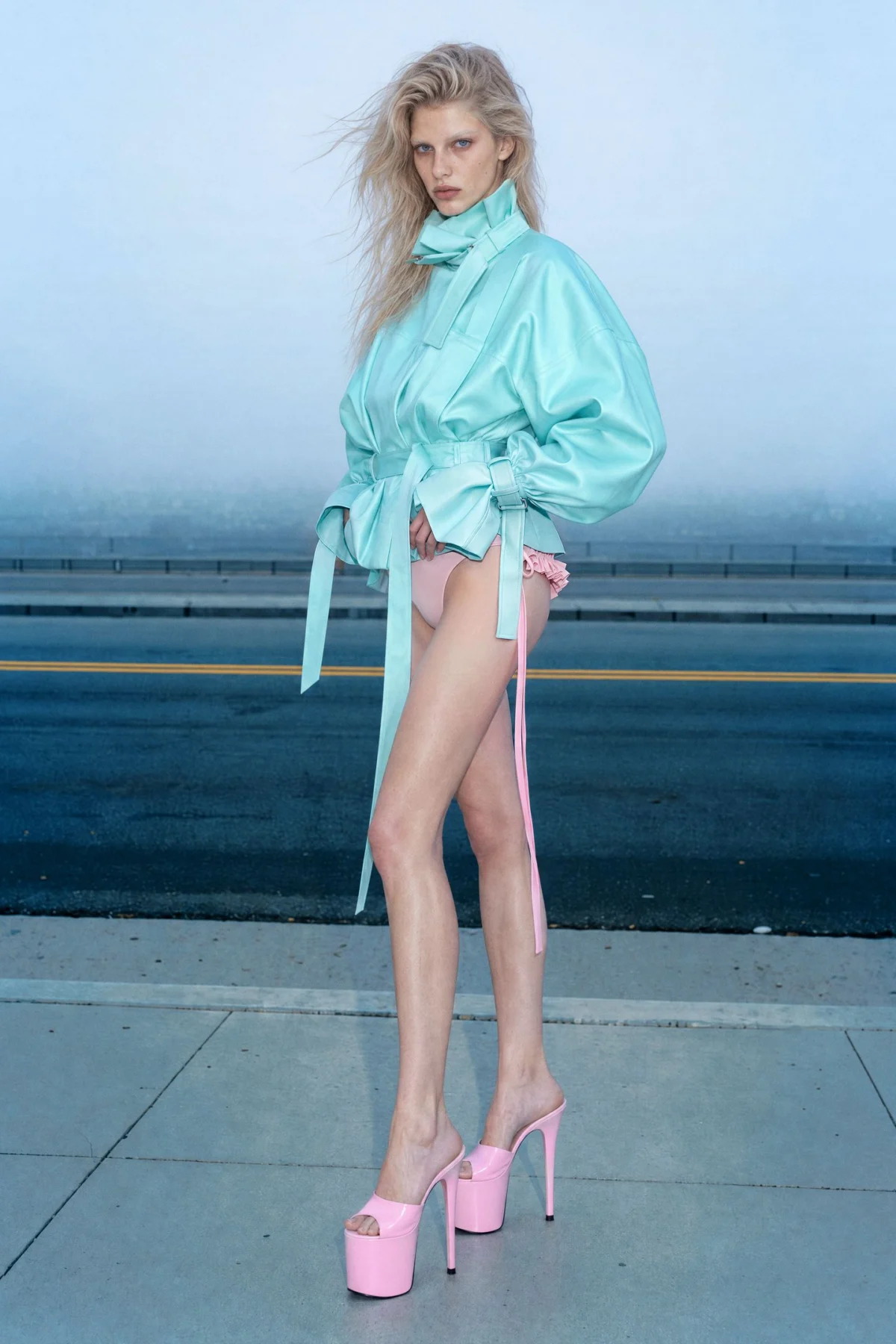
The Spring 2027 collection from David Koma unfurled with a concept rooted in the paradox of "cool summers," a thematic exploration that swiftly navigated towards the stark, glittering world of 1990s competitive figure skating. This unexpected pivot, as detailed by the designer himself, was not merely about the visual spectacle of rhinestones and theatrical femininity that often cloaks the discipline, but rather a deeper dive into the ethos of athletes like Tonya Harding. Koma cited Harding not for the dramatic narratives surrounding her career, but for her "determination and rawness," qualities that he sought to imbue into his latest designs. The collection, therefore, moved with the fluid grace of a skater, transitioning through the various stages of a competitor’s journey, from the utilitarian warmth of practice gear to the show-stopping reveal on the ice, all while retaining Koma’s signature sharp tailoring and feather embellishments.
Thematic Genesis and Palette
The genesis of the collection, as explained by Koma, began with a contemplation of "cool summers." This initial, seemingly contradictory idea led him to the intensely competitive arena of 1990s figure skating. The designer was particularly drawn to the juxtaposition of extreme athleticism and overt femininity, where an abundance of rhinestones and dramatic flair are employed to create an illusion of effortless execution. The inspiration drawn from figures like Tonya Harding was specific: Koma admired her "determination and rawness," not the sensational aspects of her personal story. This provided a powerful character reference that underpinned the collection’s exploration of strength and vulnerability.
The color palette of the Spring 2027 collection was instrumental in conveying this narrative. It featured a sophisticated interplay of inky blacks and milky ivories, punctuated by satiny, almost sugary shades. These colors were strategically deployed to prevent the collection from becoming overly sweet, creating a visual tension that mirrored the sport’s blend of grace and grit. Standout pieces included a minty blue bomber jacket with a technical neckline, paired with skirts that mimicked the gathered texture of scrunchies, either fringed or pleated. The collection also showcased candyfloss pink knickers, metallic column gowns that offered a sleek, modern take on athletic wear, and sculpted, boned bodysuits designed to abstract and redefine the silhouettes inherent to the sport.
Echoes of Compulsory Figures and Dynamic Construction
A significant influence on Koma’s design process was the concept of compulsory figures – the meticulously traced circles and figure-eights that skaters perform and are judged upon. These precise, almost mathematical forms found expression in a striking black minidress, where concentric shapes were rendered in hand-beaded crystals, each featuring a mother-of-pearl center, akin to intricate jewelry embedded directly into the garment. This motif of geometric precision extended throughout the collection. Hipbone cutouts bloomed with cascading fringe, while internal metal constructions were employed to manipulate and gather fabric around the body, imbuing garments with a sense of dynamism and theatrical flair, reminiscent of the showmanship required in competitive skating.
The collection’s construction was engineered to create a feeling of movement, even when the garments were at rest. A series of gowns and skirts featured internal boning systems that extended outwards from the body, supporting shimmering layers of silk fringe and feather plumes. This innovative approach allowed the fabric to “vibrate,” as Koma described, creating an organic, animated quality. “I like to animate the body and create this organic movement,” Koma stated, articulating his successful translation of the centrifugal forces experienced by skaters into wearable art. This technique not only added visual interest but also emphasized the collection’s core theme of controlled, powerful motion.
Expanding the Koma Woman’s Wardrobe
Beyond the runway spectacle, a key strategic shift observed in the Spring 2027 collection was Koma’s deliberate effort to imbue his signature glamour into more accessible, ready-to-wear pieces. The intention was to offer the "David Koma woman" a wardrobe that extended beyond the confines of the red carpet, allowing her to integrate his distinctive aesthetic into her everyday life across various categories and occasions. While the high-glamour hallmarks remained, they were now seamlessly integrated into separates, knitwear, and layering pieces, broadening the applicability of his designs.
Koma articulated this evolution by emphasizing his desire for the wearer to experience his creative vision across different contexts. The fundamental proposition of glamour as a form of strength persisted, but its expression was diversified. “It’s becoming harder to define the David Koma woman, and I think that’s important, to see how characters across the world translate my vision,” the designer commented. This statement suggests a growing confidence in the adaptability of his aesthetic and an embrace of a more multifaceted identity for his brand, one that resonates with a wider array of women and lifestyles.
Industry Context and the Fashion Calendar
The unveiling of David Koma’s Spring 2027 collection took place during the highly anticipated Spring 2027 Ready-to-Wear fashion week. This season, typically held in September of the preceding year, is a crucial period for designers to showcase their upcoming collections to buyers, press, and influencers, shaping global fashion trends for the subsequent year. The event, often hosted in major fashion capitals like Paris, Milan, New York, and London, serves as a barometer for the industry’s direction. David Koma, a London-based designer known for his distinctive blend of sharp tailoring and feminine sensuality, presented his collection within this competitive landscape, where innovation and commercial viability are key determinants of success.
This season’s focus on athletic inspiration is not an isolated trend but part of a broader, ongoing dialogue within the fashion industry. Athleisure has evolved from a fleeting trend to a fundamental component of modern wardrobes, with designers continuously reinterpreting athletic silhouettes and functionalities. Koma’s approach, however, elevates sportswear elements through his signature luxurious materials, intricate detailing, and avant-garde construction, distinguishing his offerings from more mainstream athletic wear. The inclusion of references to 1990s figure skating specifically taps into a vein of nostalgia while simultaneously offering a fresh perspective on the sport’s visual language.
Supporting Data and Market Implications
The global sportswear market, which directly influences the commercial viability of collections like Koma’s, has experienced significant growth. According to Statista, the global sportswear market is projected to reach $324.70 billion in 2024. This sustained demand indicates a strong consumer appetite for clothing that blends style with comfort and performance. Koma’s strategy to integrate high-glamour elements into ready-to-wear separates and layering pieces directly addresses this market trend, aiming to capture a broader segment of this lucrative industry.
The emphasis on "glamour as a form of strength" also aligns with evolving consumer values. Modern consumers, particularly younger demographics, increasingly seek brands that empower them and reflect their personal values. Koma’s articulation of his brand as a means for women to express their strength and individuality, irrespective of their chosen lifestyle, resonates with this demand for authentic and empowering fashion. The success of his collection will likely be measured not only by critical reception but also by its commercial performance across different product categories, from statement gowns to more accessible knitwear and outerwear.
Reactions and Industry Analysis
While specific direct quotes from other parties involved in the fashion week were not immediately available in the provided text, industry observers and fashion critics often provide contextual analysis. Typically, after a designer’s show, reviews are published by major fashion publications, offering insights into the collection’s strengths, weaknesses, and its potential impact. These reviews often consider how well the collection aligns with current trends, its originality, and its commercial appeal.
From an analytical standpoint, Koma’s Spring 2027 collection appears to be a strategic evolution of his brand. By drawing inspiration from a niche yet visually rich subculture like 1990s figure skating, he has managed to create a collection that is both thematically cohesive and visually distinctive. The integration of athletic elements into high fashion, while a recurring theme, is executed here with Koma’s signature precision and a thoughtful exploration of movement and form. The move towards more wearable pieces suggests a keen understanding of the current market demands and a desire to expand his brand’s reach beyond luxury couture.
The collection’s success in translating the "centrifugal force" of skating into wearable garments is a testament to Koma’s innovative design approach. The use of internal structures and dynamic fabric treatments to create a sense of animated movement is a sophisticated technique that elevates the collection beyond mere thematic representation. Furthermore, the broadening of his design philosophy to encompass a more diverse range of occasions and product categories signals a mature brand strategy, aiming for sustained relevance and commercial growth in a competitive global market. The "David Koma woman" is presented as a dynamic, multifaceted individual, empowered by fashion that reflects her strength and individuality, a narrative that is increasingly resonating with contemporary consumers. The collection’s ability to bridge the gap between aspirational runway pieces and commercially viable ready-to-wear will be a key indicator of its long-term impact.
