

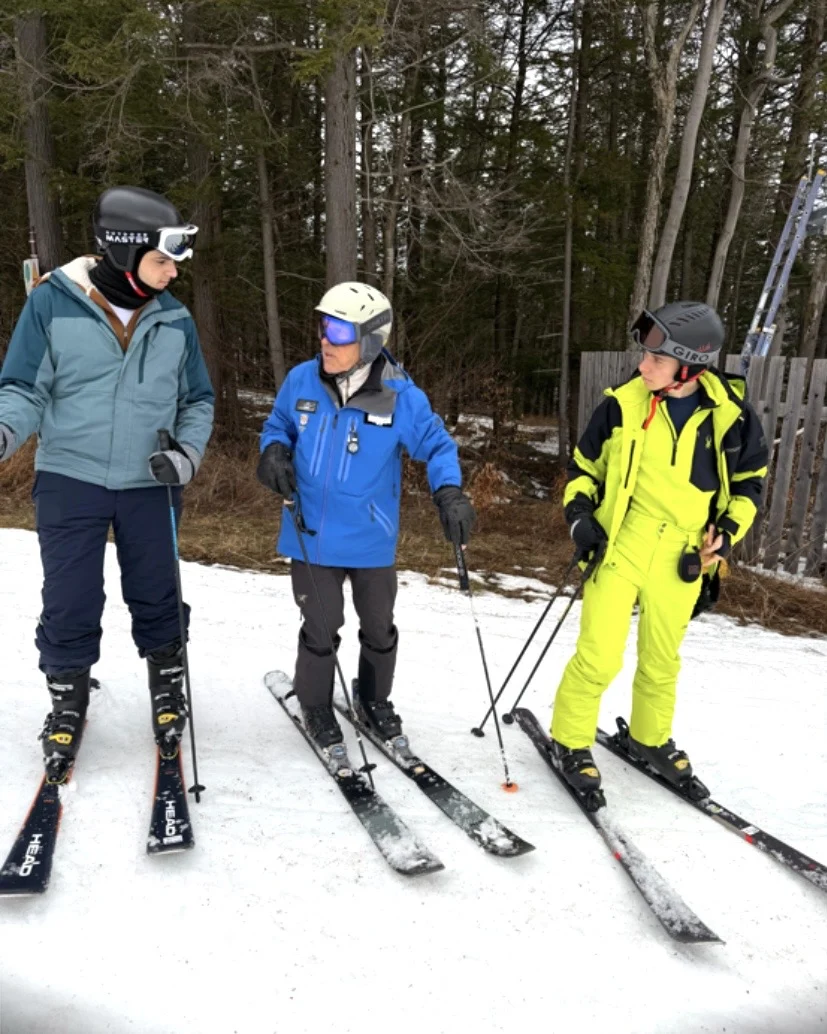
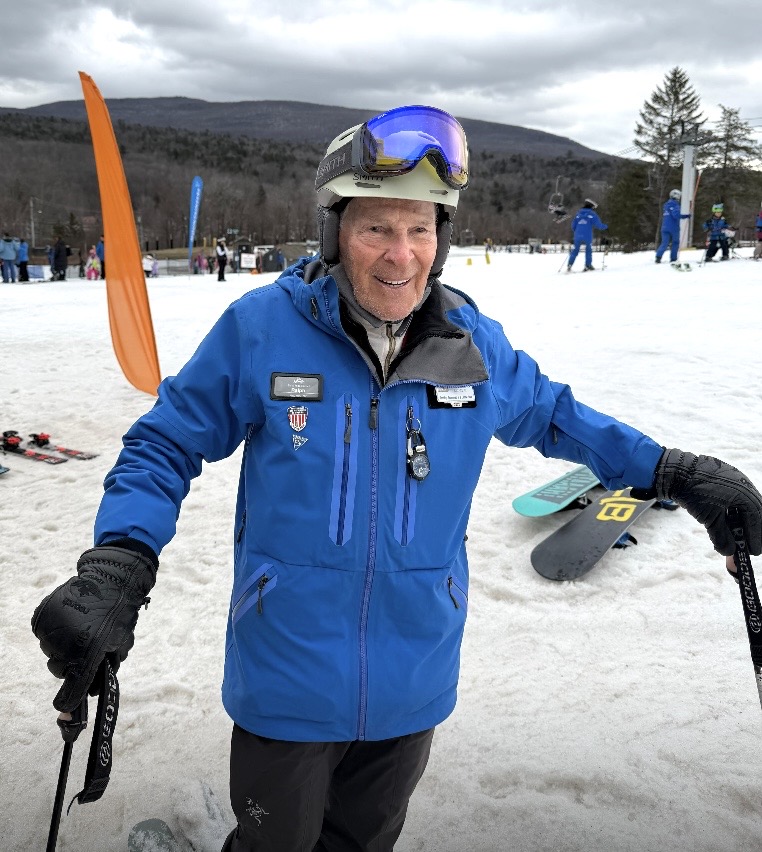
A biting wind, a relentless force that seemed to strip warmth from the very air, swirled snow across the summit of Hunter Mountain in New York’s Catskills as the Otis Quad chairlift crested its unloading ramp. The thermometer on Leslie Surprenant’s jacket, an Alpine Level II and Children’s Specialist 1 instructor at Hunter, registered a frigid -5°F, a temperature made exponentially harsher by a wind chill that plummeted the felt temperature to an excruciating -30°F. Most patrons of the popular ski resort sought refuge in the warmth of the lodge, vying for coveted spots near the roaring fireplace. Yet, amidst these challenging conditions, a remarkable figure stood ready to embark on another run, his skis squeaking on the cold, dry snow: Ralph Perlberger, celebrating his 95th birthday on the slopes. This extraordinary day, captured in the Spring 2026 issue of the SnowPro, the official publication of the Professional Ski Instructors of America Eastern/Education Foundation, underscored a life defined by resilience, passion, and an unwavering commitment to the joy of skiing.
Surrounded by his wife, Carol, and two fellow ski instructor friends, David Raindorf and Steve Cohen, Ralph Perlberger embodied his personal philosophy of embracing every snow condition and weather challenge. Surprenant, coaching a weekly women’s clinic, proudly introduced Ralph to her group, recognizing the profound inspiration he represented. "When I grow up, I want to be Ralph," David Raindorf had once quipped, a sentiment echoed by Steve Cohen, who declared, "Ralph is my idol." Their admiration, shared by countless others, was palpable as the group, faces muffled by frozen masks, sang "Happy Birthday." Ralph, a PSIA Level II alpine instructor who has dedicated 24 seasons to teaching at Hunter Mountain, grinned in response, then led the way down West Side Glide, an intermediate trail winding gracefully through a thicket of pines and hemlocks. Victoria Mercado, the Senior Manager of Hunter Mountain’s Ski and Ride School, articulated the collective awe: "Ralph is an inspiration. He’s not only skiing, but teaching! Skiing and riding keep you young. When I watch Ralph ski, I can’t believe he’s 95. His energy, skill, and passion on the mountain defy his age. It’s an absolute pleasure to work alongside him."
A Life Forged in Adversity: From Amsterdam to Liberation
Ralph Perlberger’s remarkable present-day vitality stands in stark contrast to the unimaginable hardships of his early life, a testament to the enduring power of hope and the human spirit. Born in Amsterdam, Netherlands, his childhood was irrevocably altered by the outbreak of World War II. In 1940, as Nazi Germany invaded the Netherlands on May 10, Ralph’s father had already departed for New York City, meticulously arranging for his family’s immigration to the United States. This fateful timing saved his father, but left Ralph, then just nine years old, his mother, and two older brothers trapped in occupied Europe.
The family’s ordeal began in 1941 when they were forcibly removed from their home in Amsterdam. They were subsequently imprisoned in Westerbork transit camp in the Netherlands. Westerbork, established by the Dutch government as a refugee camp in 1939, was repurposed by the Nazis in 1942 as a transit camp for Jews being deported to extermination camps in Eastern Europe. Conditions were harsh, but it served primarily as a staging ground. In February 1944, Ralph and his family were subjected to the terrifying journey by railroad cattle car to Bergen-Belsen concentration camp in Germany. Bergen-Belsen, initially a prisoner-of-war camp, evolved into a concentration camp where tens of thousands perished from starvation, disease, and overwork, particularly during the final chaotic months of the war. Despite suffering from debilitating typhus and typhoid fever, Ralph maintained an extraordinary conviction that he and his family would survive. He attributes this steadfast confidence, security, and hope to his parents, recalling an early, almost naive belief that he would simply have "quite a story" to share with friends once the war concluded.
Meanwhile, Ralph’s father in New York City lived in agonizing uncertainty, unaware of his family’s fate. Miraculously, at the war’s end, he learned they had survived and were located in the Russian-occupied village of Tröbitz, Germany. Their arrival there was the culmination of a harrowing journey known as the "Lost Transport." This was one of three trains on which the Nazis, in a desperate and cynical maneuver, sent approximately 7,500 Jewish prisoners, primarily from Bergen-Belsen, with the purported intent of exchanging them for German prisoners. The "Lost Transport" train embarked on a two-week odyssey, constantly stopping and rerouting due to widespread destruction of railway tracks across war-torn Germany. It never reached its intended destination, finally coming to a halt on a destroyed bridge over the Elster River, just outside Tröbitz. On April 23, 1945, Soviet troops liberated the train’s emaciated and critically ill prisoners. Hundreds had already succumbed to typhus and starvation en route.
In the five months that followed, while the family’s visa applications were processed, Ralph’s father sent life-sustaining Red Cross packages filled with food and hygiene products, a tangible link to a world beyond their recent torment. Finally, in February 1946, Ralph, his two brothers, and his mother immigrated to the United States, making their new home in New York City. Ralph quickly adapted, learning English and excelling in school, while his father diligently worked to re-establish connections and rebuild a family fractured by war and separation. This period of his life laid the foundation for a profound appreciation of freedom, opportunity, and the simple joy of living.
Finding Solace and Purpose on the Slopes
Ralph Perlberger’s enduring love affair with skiing began much later, during his academic pursuits. While studying economics at Stanford University, his father, keen to provide experiences his children had missed during the war, sent Ralph and his two older brothers to Sun Valley, Idaho, for a winter break. It was there, amidst the pristine slopes and crisp mountain air, that Ralph was "hooked." This nascent passion for skiing continued even as he pursued and earned his law degree at Harvard, a testament to his ability to balance rigorous intellectual endeavors with invigorating outdoor pursuits.
For decades, skiing remained a cherished pastime, taking him to renowned resorts in Taos, throughout Europe, and, eventually, to Hunter Mountain. However, it wasn’t until 2002, at the age of 75, that Ralph considered transforming his passion into a profession. An advertisement caught his eye: for $85, he could participate in a weekend of instructor training and candidate selection at Hunter. If selected as a candidate, a second weekend of training and final selection would be free. Ralph, then a seasoned recreational skier but new to the nuances of instruction, was among those chosen. This experience, he realized, highlighted that while he knew how to ski, he had much to learn about teaching others effectively.
His dedication to mastering the craft led him to become a PSIA (Professional Ski Instructors of America) Level II alpine instructor. This certification is a significant achievement, signifying a high level of skiing proficiency, refined teaching methodology, and a deep understanding of snowsports fundamentals. Level II instructors are qualified to teach a wide range of skiers, from advanced beginners through intermediate levels, and are recognized for their ability to analyze movement, communicate effectively, and foster a positive learning environment. Ralph credits much of his development to the advice he received from fellow ski instructor and PSIA alpine examiner Charlie Knopp, whose simple yet profound instruction – "Lift your inside hip!" – became a cornerstone of his own technique and teaching philosophy.
The Art of Instruction: Ralph’s Enduring Legacy
Within Hunter Mountain’s vibrant ski and ride school community, Ralph Perlberger is not merely an instructor; he is a cherished institution. His colleagues express profound awe and appreciation for his presence and the wisdom he imparts. Luca Arrigoni, a member of the PSIA Eastern Alpine Development Team, shared a personal anecdote that encapsulates Ralph’s impact: "Ralph has a special place in my heart. I shadowed him as a new instructor and was inspired by his patient, gentle, and knowledgeable way with beginners. He still proudly wears the Hunter uniform, which shows his love for, and dedication to, the sport and teaching." This dedication is evident in his consistent presence on the mountain, defying age and adverse conditions.
Ralph particularly enjoys the challenge of helping adult intermediate skiers progress. He often begins by asking students how they make their skis turn. The typical response – "I don’t know; I just turn" – reveals a common issue. Ralph observes that many intermediate skiers rely heavily on leg rotation on flat skis, lacking the fundamental understanding of maintaining their center of mass (CM) over their base of support (stance), directing pressure effectively to their outside skis, and controlling edge angles. His coaching focuses on developing these foundational skills. He guides skiers to feel the crucial contact of their shins against the tongue of their boots throughout all phases of a turn, a sensation indicative of proper fore-aft balance and engagement.
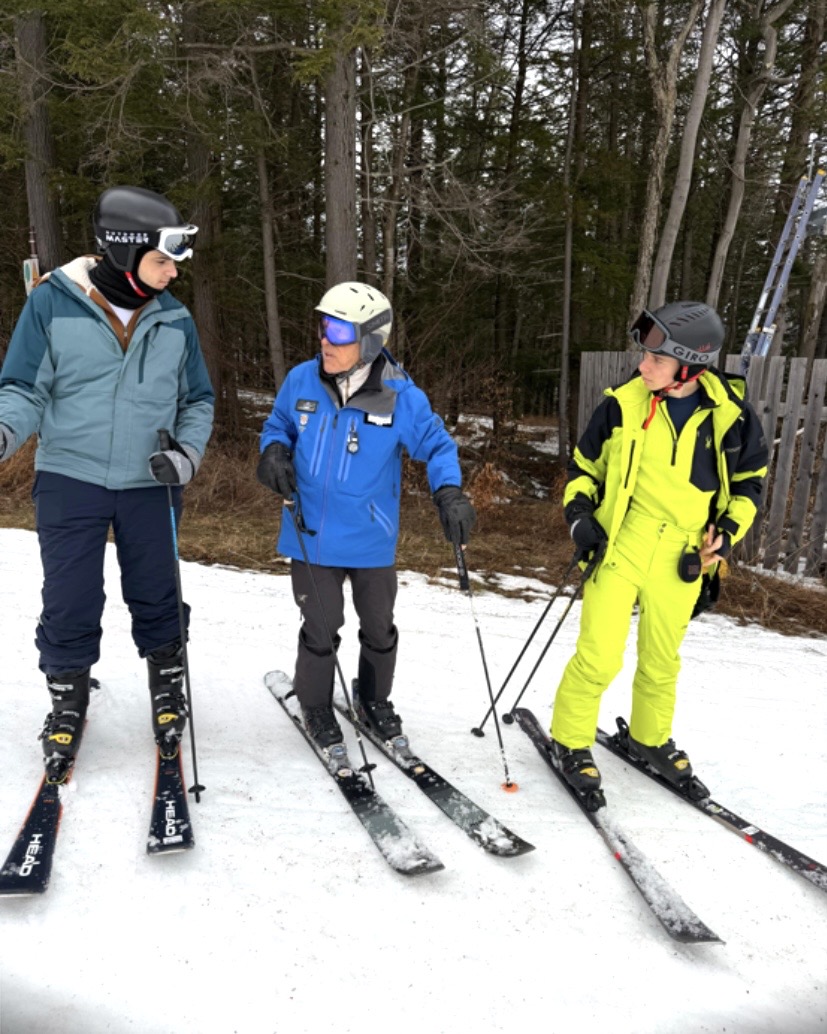
When he notices students leaning back, a common cause of fatigue and loss of control, Ralph has a simple yet effective technique. He asks them to stop and describe how their quadriceps feel. Most report "tired" or "burning" sensations. He then directs their attention to their body’s position relative to their feet, gently reminding them to maintain that essential shin contact with the front of their boots. Through these patient, practical, and empathetic methods, Ralph ensures that every student not only improves their technique but also has fun and leaves the lesson with a renewed sense of accomplishment and gratitude.
Broader Implications: Active Aging, Resilience, and the Spirit of Snowsports
Ralph Perlberger’s story resonates far beyond the slopes of Hunter Mountain, offering profound implications for active aging, the ski industry, and the enduring power of human resilience. In an era where populations are aging globally, Ralph stands as a powerful exemplar of what is possible. Data from various health and fitness organizations consistently highlight the numerous benefits of physical activity for seniors, including improved cardiovascular health, enhanced balance and coordination, increased muscle strength, and cognitive engagement. Skiing, with its complex motor skills, dynamic environment, and social interaction, offers a holistic workout that actively combats the physical and mental decline often associated with advanced age. Ralph’s continued instruction at 95 years old challenges societal perceptions of aging, demonstrating that vitality and purpose can persist well into nonagenarian years. His longevity on the slopes provides a tangible model for others seeking to maintain active, fulfilling lives.
For the ski industry, Ralph represents the invaluable asset of experienced instructors. While younger instructors bring fresh perspectives and energy, veterans like Ralph offer a depth of knowledge, patience, and an understanding of diverse learning styles that only decades of experience can provide. His ability to connect with adult intermediates, a significant demographic for ski resorts, underscores the importance of retaining and celebrating these seasoned professionals. His story also serves as a powerful marketing tool, showcasing skiing as a lifelong sport accessible and enjoyable across generations.
Moreover, Ralph’s background as a Holocaust survivor adds a profound layer of historical significance to his present-day achievements. His survival and subsequent thriving life stand as a testament to human resilience in the face of unspeakable atrocities. His willingness to share his story, albeit implicitly through his actions, serves as a living connection to a pivotal moment in history, contributing to Holocaust remembrance and education. It underscores the importance of hope, perseverance, and the pursuit of joy even after enduring unimaginable suffering. His life embodies the victory of hope over despair, a message that transcends the ski slopes and resonates universally.
Looking Forward: "Don’t Look Back"
Hunter Mountain’s ski instructors span an impressive eight decades in age, a testament to the diverse and inclusive community fostered there. To the youngest instructors just beginning their careers, Ralph Perlberger offers sage advice: "Keep at it and don’t give up! Don’t let anything stop you. Ski in all conditions and all weather." This philosophy, born from a lifetime of overcoming challenges, is central to his enduring success and happiness.
Having recently completed his 24th season of instructing, Ralph Perlberger has no intention of stopping. His passion for teaching and skiing remains undiminished. "Maybe someone above is watching over me," he mused, reflecting on his remarkable journey. He draws inspiration from unexpected sources, including Baseball Hall of Famer Satchel Paige, who famously advised, "Don’t look back; something might be gaining on you." For the countless skiers who frequent Hunter Mountain, that "something" might just be the indomitable spirit and inspiring presence of Ralph Perlberger, skiing effortlessly down the mountain, a beacon of resilience, joy, and the boundless possibilities of a life well-lived. His legacy is not just in the turns he teaches, but in the enduring spirit he shares, proving that age is merely a number when passion guides the way.
