

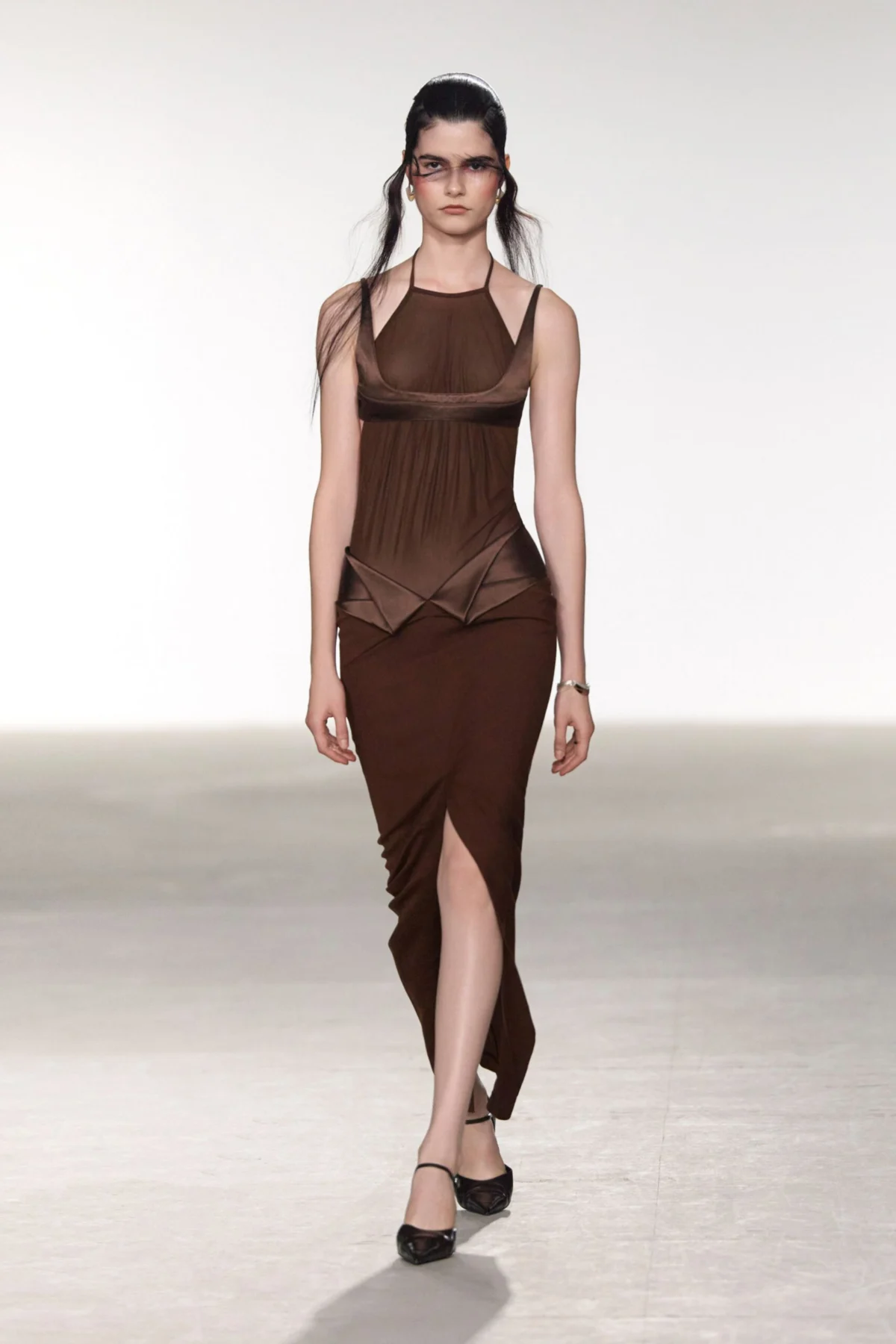
The Autumn/Winter 2024 collection from Oude Waag, designed by Jingwei Yin, offers a profound exploration of navigating life’s unresolvable losses. Rather than presenting a neat narrative of overcoming adversity, Yin’s work delves into the complex process of continuing to live with, rather than leaving behind, deeply felt grief. This collection, drawing from the designer’s personal experiences, charts a delicate evolution from emotional self-protection to a more open and accepting state of mind. The success of the collection lies in its ability to allow opposing impulses to coexist, creating a compelling and nuanced portrayal of human resilience.
The Genesis of the Collection: Personal Experience and Design Philosophy
Jingwei Yin, a designer recognized for his thoughtful and sophisticated approach, has previously honed his skills under the tutelage of Haider Ackermann, a renowned figure in contemporary fashion known for his masterful tailoring and draping techniques. This foundational experience has deeply influenced Yin’s aesthetic, as he explained in a statement accompanying the collection’s presentation: “I see a connection between draping and the flat-cutting techniques of Eastern and Japanese design, and I try to bring these approaches together in a modern way. Draping is a form of drawing, even sculpture, requiring the eye, mind, and hands to work as one.” This philosophy underscores a meticulous, hands-on approach to garment construction, where each piece is imbued with a sense of deliberate artistry.
The Autumn/Winter 2024 season, which typically unfolds in the fashion calendar with presentations in February and March, saw Oude Waag unveil its latest offering amidst a global fashion landscape that is increasingly seeking depth and authenticity in its narratives. The collection’s inspiration, as articulated by Yin, stems from a period of significant personal difficulty. This introspective source material could easily have led to a somber or overly dramatic presentation. However, Yin’s adeptness lies in his ability to balance these weighty themes with a sophisticated visual language.
Materiality and Silhouette: A Dialogue of Contrasts
The collection’s visual language is characterized by a striking interplay of opposing elements. Sharp tailoring and precise contours are juxtaposed with the fluid grace of liquid draping. Ethereal chiffon floats alongside fabrics bearing washed and timeworn surfaces, creating a tactile and visual richness. This deliberate contrast imbues the garments with an intriguing sensuality, where the inherent allure of the materials is amplified by the substance of their construction.
The fusion of these distinct approaches is a hallmark of Yin’s design. He skillfully integrates the structural integrity derived from traditional tailoring with the organic, sculptural qualities of draping. This is evident in the way fabrics are manipulated, appearing knotted, twisted, and gathered with an almost organic precision around the body. The result is a collection that feels both grounded and ethereal, reflecting the dual nature of emotional states—the need for structure and the capacity for fluidity.
Artistic Influences and Expressive Details
Further enriching the collection’s narrative are the incorporated artistic motifs. Ink-splash prints, directly inspired by the “pomo” (splash-ink) technique prevalent in Chinese ink painting, introduce an element of controlled spontaneity. This artistic influence serves as a metaphor for the unpredictable nature of life and emotion, injecting a sense of chance into an otherwise meticulously calibrated composition. The splash-ink technique, with its emphasis on expressive brushstrokes and the interplay of ink and water, mirrors the collection’s exploration of emotional fluidity and the beauty found in imperfection.
The color palette of the collection mirrors this thematic progression. Earthy browns and muted grays, evoking a sense of grounding and introspection, gradually give way to a sudden, impactful slash of crimson. This bold accent is not presented as a definitive declaration of recovery, but rather as a subtle yet powerful suggestion of a renewed appetite for life, a reawakening of passion and vitality. This nuanced approach to color further reinforces the collection’s central theme of ongoing emotional processing rather than a complete resolution.
The Broader Context: Fashion as a Medium for Emotional Exploration
The Autumn/Winter 2024 fashion week circuit, held globally from New York to Paris, typically showcases hundreds of collections. Within this competitive and often trend-driven environment, Oude Waag’s Autumn/Winter 2024 collection stands out for its conceptual depth and emotional resonance. Designers are increasingly leveraging their platforms to address complex societal and personal issues, and Yin’s work is a prime example of this evolving role of fashion.
The collection’s presentation, likely held in a venue that complements its aesthetic, would have been crucial in conveying its narrative. The choice of location, lighting, and even the music played during the show are all elements that contribute to the overall impact and interpretation of the designer’s vision. While specific details of the presentation were not provided in the original excerpt, the collection’s inherent strength lies in its ability to communicate its message through the garments themselves.
Analysis of Implications: Fashion’s Role in Acknowledging Complexity
The compelling nature of Oude Waag’s Autumn/Winter 2024 collection lies not in offering a promise of facile healing, but in its profound acknowledgment that life’s journey rarely adheres to a straightforward trajectory. The garments are most impactful when they tangibly give form to this idea, embracing contradictions and unexpected turns without the obligation to provide explicit explanations. This approach resonates with a contemporary audience that is increasingly aware of the complexities of mental health and emotional well-being.
Jingwei Yin’s sentiment, “I love women’s complexities. But above all, I’m drawn to their mystery,” encapsulates the collection’s essence. It celebrates the multifaceted nature of human experience, particularly as it pertains to women, acknowledging that there is beauty and power in the unspoken, the unresolved, and the continually evolving. This perspective challenges the conventional fashion narrative, which often favors overt statements of strength or vulnerability. Instead, Yin offers a more subtle, yet equally powerful, portrayal of enduring strength found in the quiet acceptance of life’s inherent complexities.
Supporting Data and Industry Trends
The fashion industry, valued at over $2.5 trillion globally, is increasingly influenced by consumer demand for brands that exhibit social responsibility and authentic storytelling. Collections that delve into personal narratives and address mental health themes, such as Oude Waag’s, align with this growing trend. A 2023 report by McKinsey & Company highlighted that 60% of consumers believe brands should take a stand on social issues. While Yin’s collection is more introspective, its focus on emotional honesty and resilience taps into a broader desire for authenticity in brand messaging.
Furthermore, the integration of artisanal techniques and the appreciation for craftsmanship, as seen in Yin’s emphasis on draping and his connection to Eastern design philosophies, is a counter-trend to the rapid pace of fast fashion. This focus on quality, longevity, and thoughtful creation speaks to a more discerning consumer base. The use of natural dyes and considered material sourcing, while not explicitly mentioned for this collection, are also key indicators of a designer’s commitment to a more sustainable and ethical approach, which often accompanies a deeper conceptual foundation.
Timeline and Chronology of Design Development
While the precise timeline for the development of the Autumn/Winter 2024 collection is proprietary to Oude Waag, the design process for such a conceptually driven collection would typically span several months. This period would involve:
- Conceptualization (6-9 months prior to show): Jingwei Yin would have begun by reflecting on his personal experiences and translating them into initial mood boards and thematic explorations. This stage involves deep introspection and the identification of core emotional and visual ideas.
- Sketching and Prototyping (4-6 months prior): Designers translate concepts into sketches, followed by the creation of initial prototypes and muslins. This is where the dialogue between sharp tailoring and fluid draping would have been physically explored.
- Fabric Sourcing and Development (3-5 months prior): Identifying and sourcing the specific fabrics, including the chiffon, washed materials, and those suitable for ink-splash prints, would be a critical phase. This might involve custom fabric treatments or collaborations with textile artisans.
- Sample Making and Refinement (2-4 months prior): Full samples are produced, and fittings with models commence. This stage is crucial for refining silhouettes, ensuring the drape and construction are perfect, and making adjustments based on how the garments move on the body.
- Production and Show Preparation (1-2 months prior): Final production orders are placed, and extensive preparations for the runway show begin, including styling, casting, and venue selection.
The Autumn/Winter 2024 collections are typically presented in February and March of the same year, meaning the design and production cycle would have been well underway by late 2023.
Official Responses and Industry Reception (Inferred)
While direct quotes from industry critics or buyers were not provided, the nature of the collection suggests a reception that would likely acknowledge its intellectual and emotional depth. Fashion critics often look for collections that offer a distinct point of view and engage with relevant cultural conversations. Oude Waag’s Autumn/Winter 2024 collection, by tackling themes of loss and resilience with such nuance, would likely have garnered praise for its maturity and artistic integrity.
Fashion buyers, who make purchasing decisions for retail stores, often respond positively to collections that demonstrate a strong narrative and unique aesthetic, as these are more likely to resonate with consumers seeking something beyond fleeting trends. The blend of wearability—implied by the sophisticated tailoring and the potential for layering—with the collection’s deeper meaning would make it attractive to a discerning market.
Broader Impact and Implications: Fashion as a Mirror to the Human Condition
Jingwei Yin’s Oude Waag collection serves as a powerful reminder that fashion can be more than just an expression of style; it can be a profound medium for exploring the human condition. By choosing to translate personal struggle into a visual language of textures, silhouettes, and colors, Yin offers a form of catharsis not only for himself but also for those who connect with the collection’s themes.
The collection’s success in avoiding solemnity while embracing complexity suggests a maturing of the fashion industry’s approach to sensitive topics. It demonstrates a move away from superficial representations towards a more nuanced and authentic engagement with the emotional spectrum of life. This approach has the potential to foster greater understanding and empathy, encouraging wearers to embrace their own complexities and find beauty in the ongoing process of living and evolving. The enduring mystery that Yin finds so captivating in women, and which he so artfully expresses through his designs, is a testament to the richness and depth of human experience itself.
