

The instructional strategy known as mirroring, defined as copying another individual with the deliberate intent of understanding their actions and motivations, is gaining significant traction in professional snowsports education. This methodology, deeply rooted in evolutionary biology and now supported by contemporary neuroscience, offers profound benefits in fostering trust, empathy, and accelerated skill acquisition between instructors and students. Recent demonstrations at international forums like Interski 2023 in Levi, Finland, and its consistent application by esteemed figures such as U.S. Ski & Snowboard Hall of Famer Ellen Post Foster, underscore its proven efficacy and its increasing integration into best practices for teaching and learning across the snowsports spectrum.
The Foundational Science: Evolutionary Roots of Learning by Observation
The human capacity to learn through imitation is not merely a pedagogical technique but a fundamental evolutionary survival strategy, tracing back hundreds of millions of years. This intrinsic ability is underpinned by several interconnected biological mechanisms.
At its most basic level is motor resonance, a primal capacity observed in many vertebrates. This allows an organism to neurologically "match" or simulate what it observes, forming a direct link between perception and action. Emerging over 100 million years ago, motor resonance is evident in phenomena like dogs synchronizing their movements—speed, turning, stopping—when moving in a pack, or young songbirds acquiring their species-specific melodies by mimicking parental calls. This foundational ability enables basic coordination and the transfer of simple motor patterns.
As life forms evolved, particularly among primates, observational learning became significantly more sophisticated, developing tens of millions of years ago. This advanced form of learning involves not just simple imitation but the acquisition of complex behaviors through watching and interpreting the actions of others. Examples include chimpanzees learning intricate "termite fishing" techniques by observing older, more experienced individuals, or bonobos developing social greetings and chasing games within their communities. This stage signifies a leap from mere motor matching to understanding sequences of actions and their social or functional context.
The pinnacle of this evolutionary journey, intentional teaching, is largely believed to have emerged within our own genus, Homo. The production of early stone tools, which required a level of cognitive complexity and precision too great to be replicated solely through observation, suggests that purposeful demonstration, guided practice, and direct instruction were essential for the transmission of these critical survival skills. This era marks the formalization of teaching as a deliberate act, where knowledge and skills are actively imparted from one individual to another.
Modern psychological theories, such as Albert Bandura’s seminal Social Learning Theory, are entirely compatible with these evolutionary frameworks. Bandura’s work, which emphasizes learning through observation, imitation, and modeling, can be viewed as a contemporary articulation of psychological capacities grounded in these ancient evolutionary mechanisms. The concept of "mirror neurons," discovered in the 1990s, further elucidates the neurological basis of mirroring. These specialized neurons fire both when an individual performs an action and when they observe someone else performing the same action, creating a neural bridge that facilitates empathy, understanding, and direct imitation. This neurobiological evidence provides a robust scientific foundation for the effectiveness of mirroring as an instructional tool.
Interski 2023: A Global Showcase for Brain-Based Learning in Levi, Finland
Interski, the quadrennial international congress for snowsports instructors, serves as a vital platform for sharing innovative teaching methodologies and advancing the global standard of snowsports education. The 2023 event, hosted in Levi, Finland, brought together national demonstration teams and educators from around the world to present and discuss cutting-edge approaches. Among the most impactful presentations was a series of sessions on brain-based learning conducted by the Czech Republic National Team. Brain-based learning, an educational philosophy that aligns instructional techniques with current neuroscientific understanding of how the brain processes, stores, and retrieves information, perfectly encapsulates the scientific underpinnings of mirroring.
Angelo Ross, representing the Eastern Alpine and Children’s Examiner, attended these pivotal sessions. The Czech team’s on-snow demonstration provided a compelling, hands-on experience of mirroring. Approximately 40 participants, a diverse group of instructors from various nations, were initially tasked with forming partnerships through eye contact alone, without verbal communication. This seemingly simple exercise immediately highlighted the power of non-verbal cues in establishing connection and trust. The initial awkwardness quickly gave way to silent acknowledgment, as partners were selected and introduced themselves.
Ross partnered with Angela Cesnik from the Australian National Team (APSI). Their first challenge involved "reflective mirroring": standing face-to-face, about two feet apart, and again, without speaking, determining who would lead an unknown activity. Angela instinctively took the lead. The leaders were then instructed to perform a 60-second pantomime of their morning bathroom routine, while followers were to meticulously reproduce these movements as if viewing their own reflection. This required coordinating opposite limbs and directions—a leader’s right-hand motion demanding a follower’s left-hand response, and a turn to the left mirroring a turn to the right. The exercise, though comical, was deeply insightful. It immediately broke down social barriers, fostered an unexpected level of intimacy, and created a shared, memorable experience that built rapport and connection among strangers. The collective giggling and shared vulnerability served to accelerate group cohesion and trust, illustrating the profound social dimensions of mirroring.
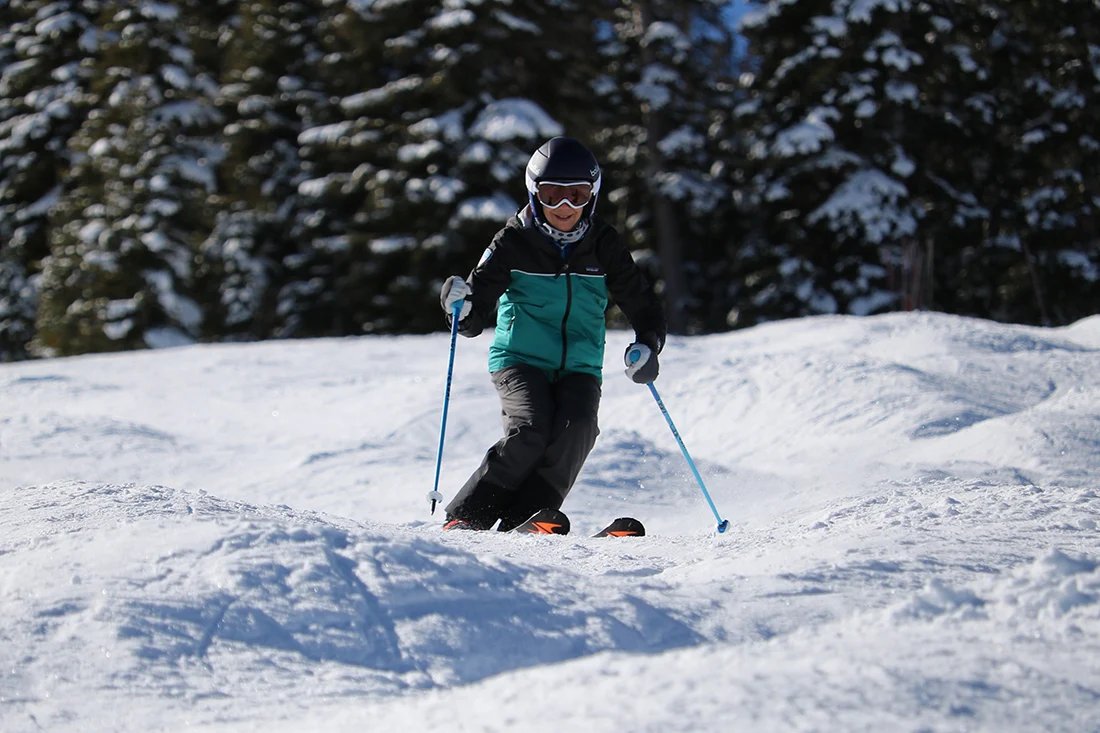
The session then progressed to "tandem mirroring" on the slopes. Participants skied in the same direction, with the original leader making predictable medium-radius turns, and the follower meticulously replicating every aspect of their movement—limb positioning, pole plant, helmet angle, ski pressure—as precisely as possible. At predetermined stopping points, followers articulated how the act of mirroring influenced their technical performance and understanding. This segment provided immediate, actionable feedback and allowed for a direct comparison of movement patterns. During subsequent lift rides, partners engaged in rich discussions, comparing techniques, sharing insights into their respective national snowsports values (APSI vs. PSIA-AASI), and even touching upon broader global perspectives. The Czech researchers later explained in an indoor session that mirroring is scientifically proven to facilitate trust, empathy, and understanding, precisely the outcomes observed during the practical exercises. The rapid connection and deep learning experienced by participants underscored the effectiveness of this brain-based approach.
Expert Endorsement: Ellen Post Foster and the PSIA-AASI Manual
The principles of mirroring are not new to the highest echelons of snowsports instruction, having been championed by revered figures like Ellen Post Foster. A luminary in American skiing, Foster’s influence is undeniable. Her illustrious career includes being the 1973 Junior National Champion of Exhibition Skiing, a multiple champion in international freestyle competitions in 1975, and a distinguished alumna of the 1980 and 1984 PSIA National Demonstration Teams. Her induction into the U.S. Ski & Snowboard Hall of Fame (Class of 2016) and the Colorado Snowsports Museum Hall of Fame (2021) solidifies her status as an icon. Beyond her competitive prowess, Foster is also a prolific snowsports author and a co-author of the current Teaching Snowsports Manual for the Professional Ski Instructors of America and American Association of Snowboard Instructors (PSIA-AASI).
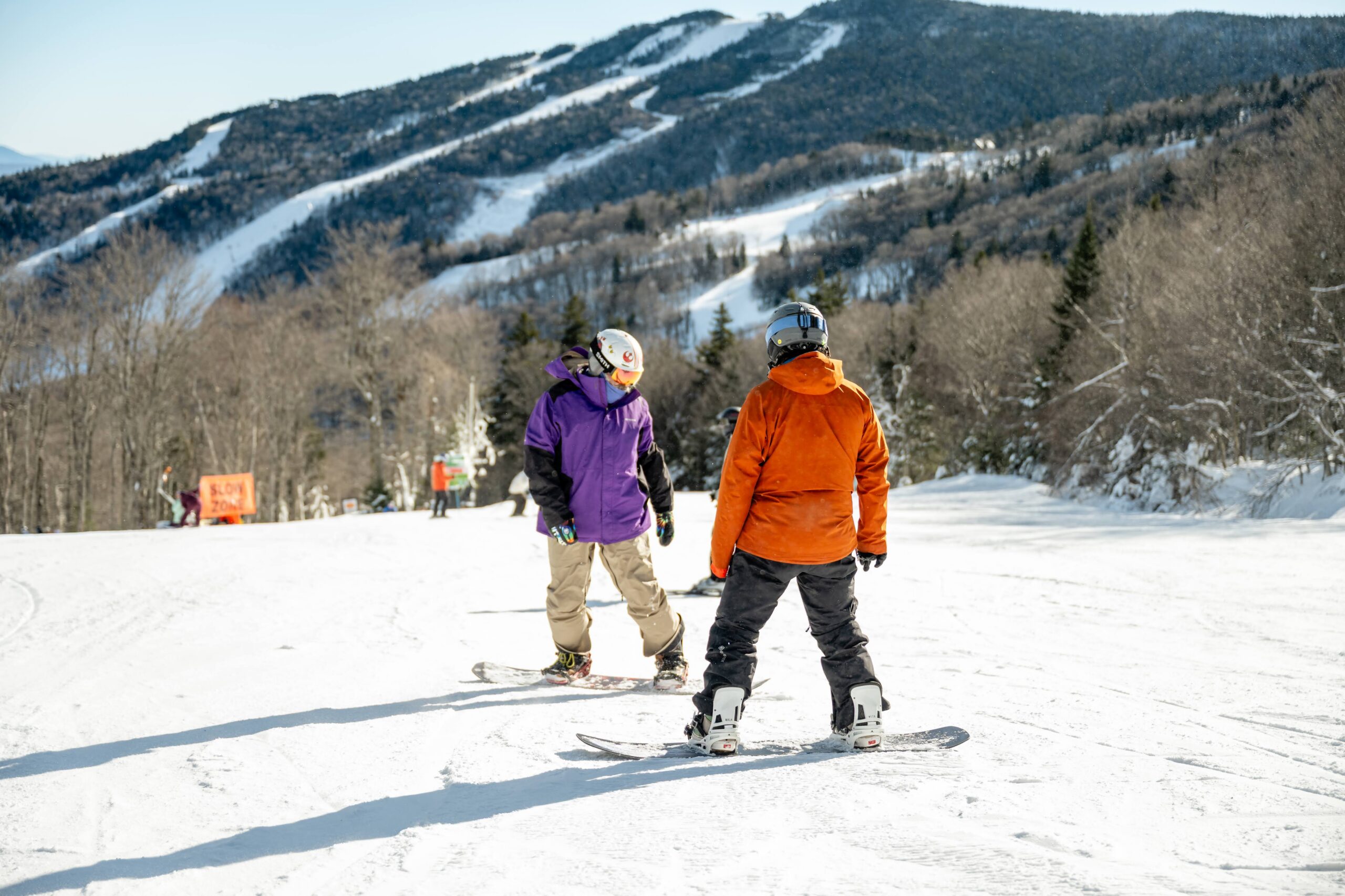
Foster’s understanding of mirroring stems from decades of practical experience. Angelo Ross recounts an instance of skiing with Foster where she subtly disappeared from his periphery, only to reappear at the lift. She explained that she had been following directly behind him, mirroring his movements "to understand [his] skiing." She then sought his permission to offer observations and feedback, a gesture that exemplifies the respectful and insightful nature of this teaching strategy. This anecdote highlights how mirroring allows instructors to gain an unparalleled, kinesthetic understanding of a student’s movements, challenges, and perspectives from their own vantage point. The Teaching Snowsports Manual itself explicitly references the value of following students as a key instructional skill, further cementing mirroring as a recognized best practice within PSIA-AASI. This integration into official guidelines underscores the method’s long-term validation and its importance for developing effective instructors.
Implementing Mirroring: Real-World Applications and Positive Outcomes
Inspired by the profound impact of the Interski sessions, Angelo Ross has actively integrated mirroring into his own instructional programs, yielding consistently positive results. In November, during the Rocky Mountain Telemark Education Staff Training, Ross adapted the Czech Republic’s format. He orchestrated an indoor session designed to build rapid rapport and trust between paired partners, which then transitioned into an outdoor session emphasizing careful observation and constructive feedback through mirroring. The structure proved highly effective in fostering deep engagement and mutual understanding among participants.
A month later, at the Outdoor Emergency Transportation Conference in Killington, Vermont, Ross deployed a modified on-snow version of mirroring with a group of National Ski Patrol leaders. This iteration focused on facilitating partner observation and subsequent discussion about how varied movement patterns could be applied in different emergency scenarios. The feedback from both training sessions was overwhelmingly positive, with participants specifically commending the technique for "connecting quickly," "developing trust," and facilitating "deep learning." These testimonials corroborate the scientific evidence regarding mirroring’s ability to enhance social bonds and accelerate cognitive and motor skill acquisition.
Broader Implications for Snowsports Education: Challenging Conventional Wisdom
The widespread adoption and refinement of mirroring as a teaching and learning strategy holds significant implications for the future of snowsports instruction.
Firstly, enhanced instructor-student connection and trust are direct outcomes. When instructors mirror students, it communicates genuine interest and empathy, creating a safer, more open learning environment. When students mirror instructors, it fosters focused attention and direct engagement, leading to more effective communication and rapid skill transfer. This mutual mirroring builds camaraderie and breaks down hierarchical barriers often present in traditional teaching models.
Secondly, mirroring actively challenges the "one-right-way" mentality that can sometimes permeate snowsports instruction. By having students mirror peers or different instructors, they are exposed to a diversity of movement patterns and styles. This experience sharpens their observational skills and provides tangible evidence that effective skiing or riding can manifest in various forms, depending on individual body mechanics, terrain, and snow conditions. This encourages adaptability and critical thinking, moving away from rigid adherence to a single "perfect" technique.
Thirdly, integrating mirroring into existing "Follow Me" activities can significantly increase student interest and engagement. By adding the nuanced intention of understanding or exact replication, these common drills transform into dynamic games, movement explorations, and practical experiments. This makes learning more enjoyable, memorable, and ultimately more effective, aligning perfectly with modern pedagogical best practices and the PSIA-AASI fundamentals which advocate for playful, exploratory, and student-centered learning environments.
Finally, the application of mirroring extends beyond individual skill development to broader industry impact. By making learning more engaging and effective, mirroring can contribute to higher student retention rates, attract new participants to snowsports, and elevate the overall quality of instruction. As snowsports evolves, instructors who are adept at utilizing such scientifically-backed, human-centered approaches will be invaluable in shaping a generation of more skilled, confident, and enthusiastic skiers and riders.
Mirroring, a capacity ingrained in the very fabric of our species’ evolution, is proving to be a powerful, time-tested, and research-backed strategy. By thoughtfully incorporating it into teaching methodologies, snowsports professionals can empower both themselves and their students to continually evolve their understanding, refine their performance, and enrich the art and science of snowsports instruction.
