

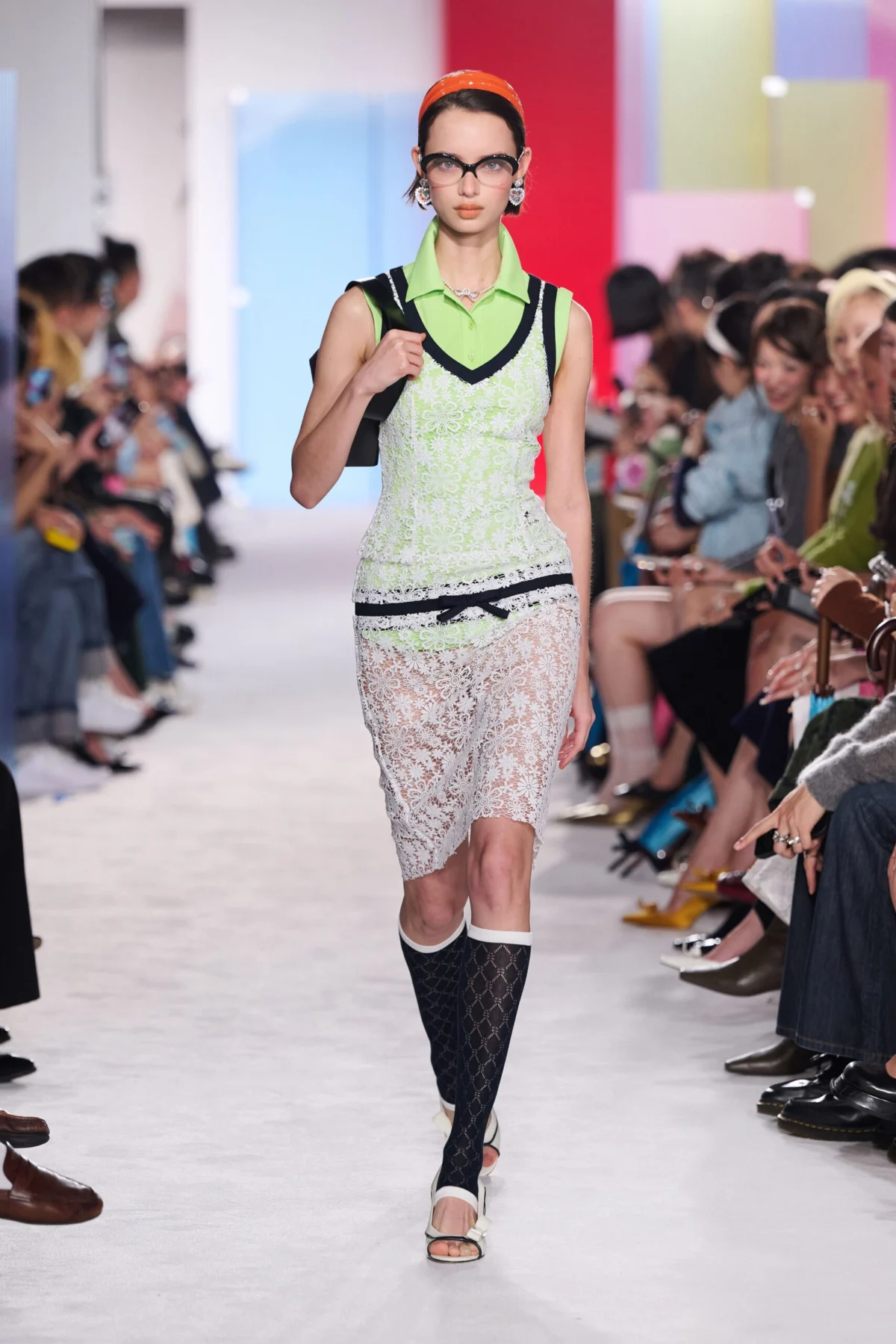
Shanghai, China – The spring collection from Chinese fashion label Shushu/Tong, titled "Darling Melancholy," offered a vibrant and playful interpretation of 1960s aesthetics, drawing inspiration from classic French cinema and Japanese animation. Unveiled during Shanghai Fashion Week, the collection presented a cascade of candy-colored ensembles featuring short, girlish silhouettes, petal-edged detailing, voluminous balloon skirts, and delicate macramé lace. The show’s atmosphere was immediately set by a whimsical touch: a colorful umbrella placed on every seat, a direct nod to Jacques Demy’s iconic 1964 film, The Umbrellas of Cherbourg. This thematic choice infused the runway with a distinct French New Wave sensibility, blended with influences from pioneering designers like Mary Quant and André Courrèges, and a contemporary whisper of Miu Miu’s playful charm.
The collection’s narrative, as articulated by designers Liushu Lei and Yutong Jiang, delved into their shared childhood fascination with Japanese anime. This influence has consistently permeated Shushu/Tong’s brand identity, often manifesting in refined schoolgirl uniform codes and an ethereal, almost unreal prettiness. For the spring season, they described their creative process as filtering the vibrant spirit of the 1960s through an "Asian lens," resulting in garments that eschewed any hint of bittersweet longing, despite the collection’s evocative title. The "melancholy" seemed to exist solely in name, as the visual presentation exuded an undeniable effervescence.
A Deep Dive into the Collection’s Aesthetic and Influences
Shushu/Tong’s "Darling Melancholy" collection was a masterclass in youthful exuberance and nostalgic charm. The designers’ deliberate invocation of The Umbrellas of Cherbourg was more than a stylistic flourish; it represented a conceptual anchor. Demy’s film, celebrated for its bold use of color and its exploration of love and loss, provided a rich tapestry of visual and emotional references. While the film itself grapples with poignant themes, Shushu/Tong reinterpreted this narrative through a lens of unadulterated optimism. The "heartbreak" mentioned in relation to the film was, in the context of the collection, seemingly softened and transformed into something saccharine and cheerful, perhaps symbolized by the ubiquitous pink umbrellas.
The silhouettes were undeniably feminine and youthful. Short hemlines, often flaring into playful balloon shapes, dominated the runway, evoking a sense of carefree movement. This was complemented by the delicate touch of petal-edged details, adding a soft, organic feel to the garments. Macramé lace, rendered in a spectrum of vibrant candy colors – from bubblegum pink and mint green to lemon yellow and sky blue – lent a handcrafted, artisanal quality to many pieces. This deliberate use of color and texture created a visually arresting display, appealing to a sense of playful sophistication.
Further enhancing the collection’s upbeat mood were subtle yet impactful embellishments. Beaded daisies, a recurring motif, were strategically placed, adding a touch of whimsical detail and reinforcing the collection’s connection to nature and innocence. These elements, combined with the overall pretty and neatly proportioned designs, contributed to an impression of disarming wearability. The garments appeared not only aesthetically pleasing but also practical and approachable for the modern wearer.
Context of Shanghai Fashion Week and Designer Background
Shanghai Fashion Week has emerged as a significant global platform for fashion, showcasing a dynamic blend of established international brands and burgeoning local talent. The event, typically held twice a year, attracts a diverse audience of industry professionals, buyers, media, and fashion enthusiasts, fostering a vibrant ecosystem for creativity and commerce. The Spring 2027 season, where Shushu/Tong presented its collection, underscored the city’s growing influence in the global fashion landscape, particularly in championing emerging Asian designers.
Liushu Lei and Yutong Jiang, the creative forces behind Shushu/Tong, have steadily built a reputation for their distinctive design philosophy. Founded in 2017, the brand quickly garnered attention for its ability to blend Eastern and Western sartorial influences with a unique, almost dreamlike aesthetic. Their signature has often been characterized by a sophisticated interpretation of youthful attire, drawing inspiration from elements of subculture, vintage fashion, and contemporary art. The designers’ stated childhood obsession with Japanese anime is a key tenet of their creative output, explaining the recurring themes of fantasy, idealized femininity, and a certain unreal prettiness that defines their work. This background provides crucial context for understanding the "Darling Melancholy" collection, positioning it as a natural evolution of their established brand identity.
The "Asian Lens" and a Reimagining of 1960s Style
The designers’ explanation of viewing the 1960s "through an Asian lens" offers a fascinating insight into their creative methodology. This perspective suggests a conscious effort to deconstruct and reassemble Western fashion historical references through the prism of their own cultural experiences and aesthetic sensibilities. The 1960s, a decade of significant social and cultural upheaval and innovation in fashion, is often associated with specific Western trends like the mod movement, the space age, and the rise of youth culture. By applying an "Asian lens," Lei and Jiang likely introduced nuances in color palettes, fabric choices, detailing, or even underlying sartorial codes that differ from traditional Western interpretations of the era.
This approach also explains the collection’s divergence from any potential "bittersweet longing" that might be associated with the 1960s or the film The Umbrellas of Cherbourg. Instead, their interpretation leans towards a more direct and unadulterated expression of joy and youthful energy. The collection’s emphasis on "clothes with no interest in bittersweet longing" signifies a deliberate choice to focus on the more optimistic and celebratory aspects of fashion, particularly as they relate to young womanhood. This is a powerful statement in itself, as it challenges conventional notions of fashion narratives and their inherent emotional undertones.
Accessories: The Pop Art Finale
The collection’s conclusion was marked by a memorable accessory statement: ladylike, boxy bags clutched in the crook of each model’s arm. These bags, described as resembling "Pop Art toys," served as a final flourish, injecting a dose of contemporary edge and artistic sensibility into the otherwise sweet and retro ensembles. This detail underscored the designers’ ability to seamlessly integrate diverse influences, from classic cinema and anime to avant-garde art movements, into a cohesive and impactful collection. The choice of accessories, often the unsung heroes of a runway presentation, played a crucial role in solidifying the collection’s overall message of playful sophistication and artistic expression.
Market Reception and Industry Implications
The immediate reaction from the front row, populated by what the article refers to as "well-groomed" attendees, suggests a keen commercial interest in the collection. The description of VICs (Very Important Customers) mentally adding skirts to their carts highlights the brand’s strong appeal to its target demographic. Shushu/Tong has cultivated a loyal following by consistently delivering on its promise of distinctive, fashion-forward, yet wearable pieces that resonate with contemporary youth culture.
The success of "Darling Melancholy" at Shanghai Fashion Week further solidifies Shushu/Tong’s position as a significant player in the global fashion arena. Their ability to draw on diverse cultural inspirations, reinterpret historical fashion movements with a unique perspective, and maintain a consistent brand identity speaks to their creative maturity and market understanding. For the broader fashion industry, Shushu/Tong’s approach serves as a compelling example of how designers can leverage cultural heritage and personal narratives to create collections that are both commercially viable and artistically resonant. Their success also contributes to the growing recognition of Chinese fashion on the international stage, demonstrating a capacity for innovation and a distinct creative voice that is increasingly being sought after by consumers worldwide.
The collection’s emphasis on playful femininity, vibrant color palettes, and accessible silhouettes aligns with broader market trends that favor optimistic and joyful fashion. As the industry continues to navigate post-pandemic recovery and evolving consumer desires, collections that offer escapism and a sense of lightheartedness are likely to find favor. Shushu/Tong’s "Darling Melancholy" collection, with its cheerful disposition and stylish execution, appears well-positioned to capture this sentiment, offering a refreshing and delightful vision for the spring season. The brand’s continued exploration of themes like childhood nostalgia and artistic influences, filtered through their unique "Asian lens," promises further exciting developments in their future collections.
