

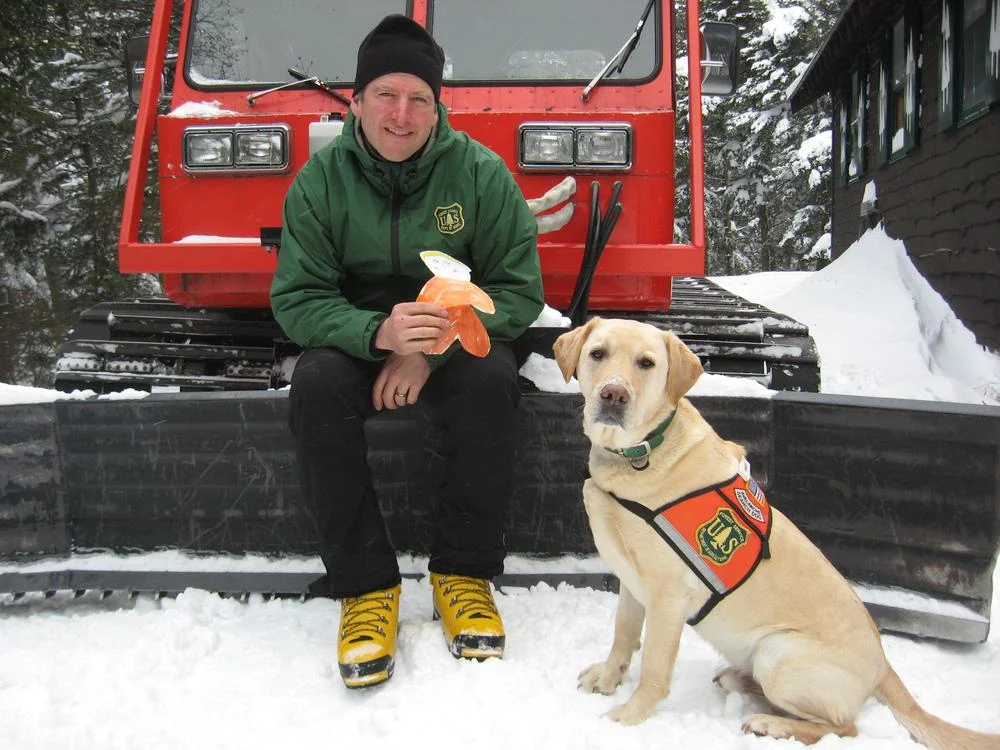
The Mount Washington Avalanche Center (MWAC) and the broader mountaineering community of the Northeast are mourning the loss of a foundational figure in their safety operations: Cutler, a dedicated avalanche search and rescue dog who served the White Mountain National Forest for over a decade. Cutler, who passed away at the age of 14, spent 11 years as an active-duty member of the Mount Washington Snow Rangers, a tenure that accounted for nearly 80% of his life. Working alongside his handler, Mount Washington Avalanche Center Director Chris Joosen, Cutler became a symbol of safety, resilience, and public engagement on the highest peak in the Northeastern United States. His passing marks the end of an era for a program that relies on the unique capabilities of canines to protect thousands of winter recreationists who flock to the Presidential Range each year.
The Role of the Avalanche Dog in High-Risk Environments
To understand the magnitude of Cutler’s contribution, one must first understand the specific demands placed on search and rescue assets in the White Mountains. Mount Washington is frequently cited as having some of the "world’s worst weather," with wind speeds exceeding hurricane force on more than 100 days per year and temperatures that can plummet well below zero. In this volatile environment, the risk of avalanches is a constant threat to backcountry skiers, ice climbers, and hikers, particularly in high-use areas like Tuckerman Ravine and Huntington Ravine.
Avalanche dogs like Cutler are not merely mascots; they are sophisticated biological sensors capable of performing tasks that remain beyond the reach of modern technology. When a victim is buried under several feet of dense, packed snow, time is the most critical factor in survival. Statistics from the American Avalanche Association indicate that a victim’s chances of survival drop precipitously after 15 to 30 minutes of burial due to asphyxiation or trauma. While human rescuers use transceivers, probes, and shovels, a trained avalanche dog can search an area roughly the size of a football field in approximately 20 to 30 minutes—a task that would take a team of 20 human rescuers several hours to complete using traditional probe lines.
Cutler’s training allowed him to detect the "scent cone" of a human buried under the snowpack. By identifying the specific odors that rise through the porous layers of snow, he could pinpoint a victim’s location with remarkable accuracy, allowing Snow Rangers to focus their digging efforts and maximize the chances of a live recovery.
A Timeline of Service: From Training to Retirement
Cutler’s journey began nearly 14 years ago, entering a world of rigorous training designed to prepare him for the harsh realities of the White Mountain National Forest. Training an avalanche dog is a multi-year commitment that involves both the canine and the handler. For Chris Joosen and Cutler, this meant hundreds of hours of drills in sub-arctic conditions.
- Foundational Training (Years 1-2): Cutler began with basic obedience and socialization, quickly transitioning to "hide-and-seek" games that utilized his natural prey drive and olfactory abilities. In these early stages, he learned to associate the scent of a human buried in a snow pit with a reward, such as a favorite toy or high-value treat.
- Certification and Active Duty (Years 3-11): Once Cutler demonstrated the ability to find multiple "victims" in complex debris piles, he was certified for active duty. Throughout his 11 years of service, he was a constant presence at the Hermit Lake Shelters and the floor of Tuckerman Ravine. His career spanned a decade of significant growth in backcountry skiing, a period during which the number of visitors to Mount Washington’s eastern slopes increased dramatically.
- Public Education and PR: Beyond his tactical skills, Cutler served as the "face" of the Mount Washington Avalanche Center. His presence made the often-intimidating Snow Rangers more approachable to the public. This accessibility allowed the MWAC staff to deliver crucial safety messages regarding snow stability, gear requirements, and weather forecasts to a wider audience.
- Retirement and Passing: Following a storied career, Cutler transitioned into a well-earned retirement. His passing at 14 is considered a long life for a working dog of his breed and size, a testament to the care he received from Joosen and the MWAC team.
The Impact of Public Relations on Mountain Safety
While Cutler’s primary directive was search and rescue, his secondary role in public relations proved equally vital for the U.S. Forest Service. Mount Washington attracts a diverse demographic of visitors, ranging from elite mountaineers to casual tourists who may be underprepared for the alpine environment.
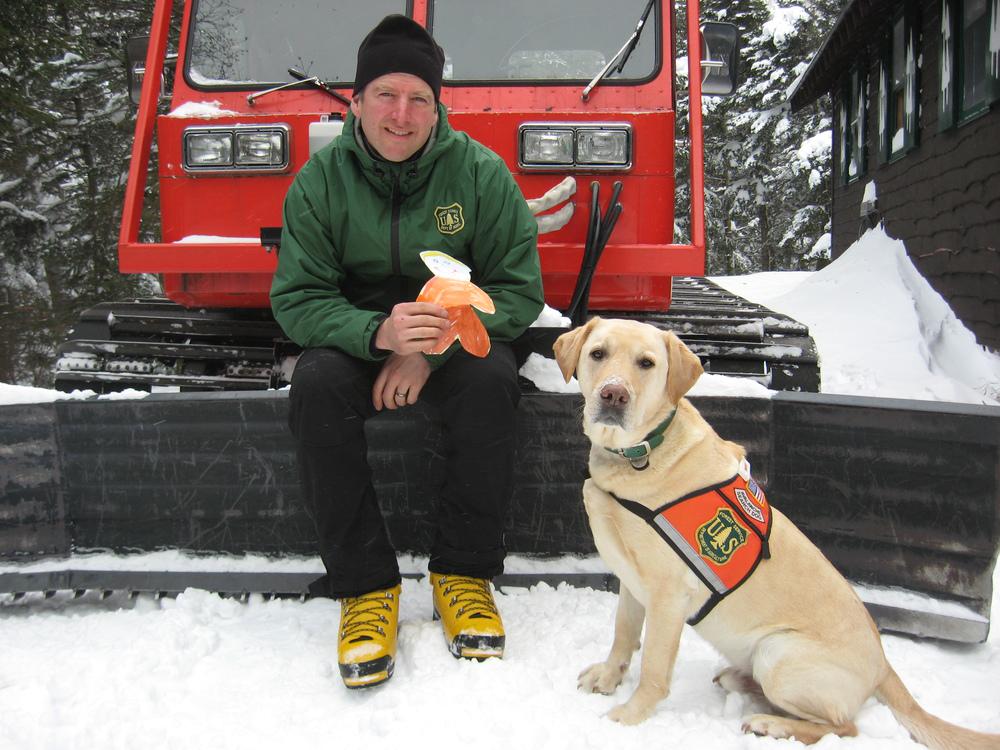
Chris Joosen often noted that Cutler acted as a bridge between the technical world of avalanche forecasting and the general public. When visitors saw Cutler in the ravine, they were more likely to stop and engage with the Snow Rangers. These interactions provided the rangers with "teachable moments" to explain the day’s avalanche advisory or to check if a group was carrying essential safety equipment like beacons, probes, and shovels. By humanizing the safety mission, Cutler helped foster a culture of preparedness that likely prevented numerous accidents before they could occur. This preventative aspect of his work is difficult to quantify in data but is widely recognized by safety professionals as a cornerstone of modern mountain management.
Technical Data: The Hazards of Mount Washington
The environment Cutler patrolled is one of the most hazardous in North America. To provide context to his service, one must look at the environmental data associated with the Mount Washington Avalanche Center’s jurisdiction:
- Wind Extremes: The summit of Mount Washington held the world record for the highest wind speed ever recorded by a human (231 mph) for decades. These winds are responsible for "leeward loading," where snow is stripped from the western slopes and deposited into the eastern ravines, creating unstable "wind slabs" that are the primary cause of avalanches in the region.
- Avalanche Frequency: The MWAC issues daily advisories from December through May. On high-risk days, the ravines can see dozens of natural or human-triggered slides. The steepness of Tuckerman Ravine, which features slopes ranging from 40 to 55 degrees, is the ideal angle for avalanche release.
- Visitor Volume: On a busy spring weekend, upwards of 2,000 to 3,000 people may visit Tuckerman Ravine. The concentration of people in a high-consequence slide zone makes the presence of a rapid-response asset like an avalanche dog a necessity rather than a luxury.
Official Responses and the Legacy of the Canine Program
Following the announcement of Cutler’s passing, tributes have poured in from the outdoor community. Chris Joosen, in a blog post and photo album dedicated to his partner, reflected on the 14 years they shared. He described Cutler not just as a tool for the Forest Service, but as a "buddy" who was integral to the daily life of the Snow Rangers. The bond between a handler and an avalanche dog is unique; they live together, train together, and rely on each other’s instincts in life-or-death situations.
The legacy of Cutler continues through the ongoing canine program at Mount Washington. His success paved the way for future dogs to be integrated into the Forest Service’s regional safety strategy. The MWAC has demonstrated that a well-trained dog is an essential component of a modern avalanche center, providing both the technical capability to save lives and the social capital to educate the public.
Implications for Future Search and Rescue Operations
Cutler’s long career highlights the sustainability and effectiveness of canine programs in the National Forest System. As backcountry use continues to rise across the United States, the model established by Joosen and Cutler serves as a blueprint for other high-use alpine areas.
The analysis of Cutler’s impact suggests three primary implications for the future:
- The Human-Canine Bond as a Safety Tool: The psychological comfort provided by a dog during a rescue operation cannot be overstated. For victims and their families, the presence of a dog can provide a sense of hope and calm in a traumatic situation.
- Efficiency in Resource Allocation: By utilizing a dog to clear a slide path quickly, search and rescue teams can more effectively allocate human resources to other tasks, such as medical stabilization or technical rope evacuations.
- The Power of Soft Enforcement: Cutler proved that safety compliance is often better achieved through positive engagement (education and outreach) than through strict enforcement of regulations.
Conclusion
Cutler’s 11 years of service to the Mount Washington Avalanche Center represent a monumental contribution to the safety of the White Mountain National Forest. He was a guardian of the ravines, a tireless worker in the face of brutal weather, and a friend to the thousands of hikers and skiers who crossed his path. While technology in the field of avalanche rescue continues to evolve—with the advent of better RECCO reflectors and more sensitive digital transceivers—the nose of a dog like Cutler remains an irreplaceable asset. As the snow continues to fall on the Presidential Range and a new generation of Snow Rangers takes to the slopes, the standard set by Cutler will remain the benchmark for dedication and service in the alpine wilds of New Hampshire. His memory will endure in the stories of the rangers he worked with and the many lives he touched during his fourteen years.
