

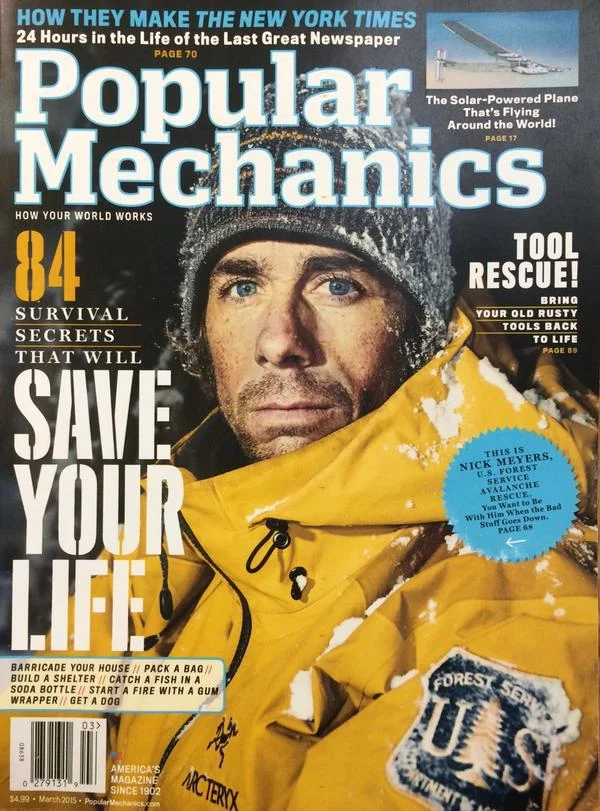
Nick Meyers, a prominent figure in the field of alpine safety and mountain rescue, has received national recognition for his expertise in avalanche mitigation and high-altitude survival. As the Director of the Mount Shasta Avalanche Center (MSAC) and the Lead Climbing Ranger for the Shasta-Trinity National Forest, Meyers was recently featured on the cover of Popular Mechanics, a leading publication focused on science, technology, and outdoor innovation. The feature highlights Meyers’ extensive experience in one of the most challenging alpine environments in the United States, positioning him as a primary authority on the gear and psychological preparedness required for backcountry survival.
The inclusion of Meyers in a national mainstream publication underscores the growing public interest in backcountry safety as winter sports and high-altitude climbing continue to rise in popularity. The article, titled "10 Survival Essentials an Avalanche Rescue Expert Always Carries," delves into the specific toolkit Meyers utilizes to navigate the volatile conditions of Mount Shasta, a 14,179-foot stratovolcano known for its extreme weather and complex snowpack.
Professional Profile: The Dual Role of Nick Meyers
Nick Meyers occupies a unique niche within the United States Forest Service (USFS). His dual role as both a Lead Climbing Ranger and the Director of the Mount Shasta Avalanche Center requires a balance of law enforcement, emergency medical response, and scientific observation. Meyers has spent over a decade patrolling the slopes of Mount Shasta, a peak that attracts thousands of climbers and skiers annually.
As the Lead Climbing Ranger, Meyers oversees a team responsible for maintaining trails, educating the public on Leave No Trace principles, and conducting technical search and rescue (SAR) operations. Mount Shasta is a "maritime" mountain, meaning it receives heavy, wet snow and is subject to high winds, creating a high-risk environment for avalanches and mountaineering accidents.
In his capacity as the Director of the Mount Shasta Avalanche Center, Meyers is responsible for the daily issuance of avalanche forecasts during the winter and spring months. This involves field observations, snow pit analysis, and the synthesis of meteorological data to provide the public with accurate risk assessments. His leadership has been instrumental in modernizing the center’s outreach, utilizing digital platforms and community workshops to increase safety awareness among the growing demographic of backcountry enthusiasts.
The Popular Mechanics Feature: Technology and Survival
The Popular Mechanics cover story focuses on the intersection of technology and human endurance. The "10 Survival Essentials" listed by Meyers are not merely tools but critical components of a systemic approach to mountain safety. The items discussed include modern digital avalanche transceivers, high-tensile strength probes, and lightweight shovels—the "holy trinity" of avalanche rescue gear.
However, Meyers also emphasizes the importance of communication and navigation technology. In the feature, he discusses the necessity of satellite messaging devices, which have revolutionized SAR operations by allowing stranded individuals to provide exact coordinates to rescue teams. This technological shift has significantly reduced "find time," which is the most critical factor in surviving an avalanche burial or a medical emergency in the backcountry.
Beyond the hardware, Meyers provides insight into the "human factor"—the psychological element of decision-making in high-stress environments. He notes that the best gear is ineffective if the user lacks the training to operate it under pressure or the judgment to avoid dangerous terrain in the first place. This holistic view of survival is a hallmark of Meyers’ educational philosophy.
Chronology of Mount Shasta Safety Leadership
The recognition of Nick Meyers by a national publication is the culmination of years of institutional growth within the Mount Shasta safety infrastructure.
- Early 2000s: Meyers joins the Shasta-Trinity National Forest as a seasonal climbing ranger, beginning his long-term study of the mountain’s unique weather patterns and snow stability.
- 2006-2010: The Mount Shasta Avalanche Center expands its forecasting capabilities, moving from sporadic updates to regular, data-driven reports. Meyers becomes a central figure in this transition.
- 2015: Meyers is appointed Director of the MSAC. Under his leadership, the center strengthens its partnership with the "Friends of the Mount Shasta Avalanche Center," a non-profit organization that provides financial support for equipment and educational programs.
- 2015 (May): Popular Mechanics features Meyers on its cover, bringing national attention to the specific challenges of the Cascade Range and the expertise of the US Forest Service rangers.
This timeline illustrates a steady professional trajectory from field operative to a nationally recognized expert, reflecting the increasing professionalization of the avalanche forecasting industry.
Supporting Data: The Rising Risks in the Backcountry
The demand for the expertise provided by individuals like Nick Meyers is supported by data from the Colorado Avalanche Information Center (CAIC) and the American Avalanche Association (A3). Over the last two decades, participation in backcountry skiing and snowboarding has seen an exponential increase. This surge has led to a higher frequency of human-triggered avalanches.
Statistically, the United States averages approximately 27 avalanche fatalities per year. While gear technology has improved, the number of incidents remains steady, largely due to the increased number of people entering "unmanaged" terrain—areas outside of ski resort boundaries where no active control work is performed.
On Mount Shasta specifically, the Forest Service manages upwards of 15,000 climber days per year. The mountain’s most popular route, Avalanche Gulch, is a massive volcanic cirque that acts as a natural funnel for both falling rock and sliding snow. Data from the MSAC indicates that during peak season, the combination of high climber density and rapid temperature fluctuations creates a high-probability environment for accidents. Meyers’ work in forecasting and education is the primary defense against these statistics.
Institutional Response and Community Impact
The Shasta-Trinity National Forest and the broader US Forest Service have responded positively to the national spotlight on Meyers. In a blog post published by the USDA, officials praised Meyers for his dedication and his ability to translate complex scientific data into actionable advice for the general public.
"Nick’s feature in Popular Mechanics is a testament to the high caliber of professionals we have working in our national forests," a representative from the Forest Service stated. "His ability to communicate the importance of safety and preparedness helps us fulfill our mission of providing a safe and enjoyable experience for all visitors."
Locally, the Mount Shasta community has seen a direct benefit from Meyers’ leadership. The MSAC’s educational seminars, often led by Meyers, have become a staple for local outdoor shops and guide services. By fostering a culture of safety, Meyers has helped reduce the strain on local volunteer SAR teams and county resources.
Analysis of Implications for Alpine Safety
The decision by Popular Mechanics to feature a Forest Service ranger on its cover signals a shift in how the public perceives outdoor "experts." It highlights a move away from the "daredevil" archetype toward a more calculated, professional approach to mountain sports.
This visibility has several implications:
- Standardization of Gear: By highlighting the "10 Essentials," Meyers helps establish a baseline for what is considered acceptable equipment in the backcountry. This can influence consumer behavior and lead to better-prepared recreationists.
- Funding and Support: National recognition can lead to increased support for avalanche centers, many of which rely on a combination of federal funding and private donations. Highlighting the critical nature of the work helps justify these expenditures.
- Technological Integration: The focus on "mechanics" and technology in the article emphasizes that survival in the 21st century is increasingly dependent on the successful integration of human skill and advanced electronic tools.
The Broader Context of Mount Shasta
Mount Shasta is not just a recreational site; it is a critical watershed and a site of immense ecological and cultural importance. The management of its slopes requires an understanding of geology, hydrology, and meteorology. As an active stratovolcano, the mountain is constantly changing.
Meyers’ work as a Lead Ranger involves monitoring these changes. From the retreating glaciers on the north side to the debris flows that can occur during heavy rain-on-snow events, his role is multifaceted. The Popular Mechanics feature, while focused on survival gear, serves as an entry point for the public to understand the complexity of managing such a massive and volatile natural feature.
The "10 Survival Essentials" mentioned—ranging from the shovel to the satellite messenger—represent the frontline of defense against a mountain that can turn lethal in a matter of minutes. Through his leadership at the Mount Shasta Avalanche Center and his presence in national media, Nick Meyers continues to play a vital role in ensuring that those who seek the challenge of the summit do so with the best possible chance of a safe return.
Conclusion
The feature of Nick Meyers in Popular Mechanics is more than a personal accolade; it is a recognition of the essential service provided by avalanche forecasters and climbing rangers across the United States. As the Director of the Mount Shasta Avalanche Center, Meyers has demonstrated that expertise in the mountains is a combination of years of field experience, a deep respect for natural forces, and a commitment to utilizing the best available technology. His work remains a cornerstone of the safety infrastructure in the Pacific Northwest, providing the data and education necessary to navigate the beautiful but dangerous terrain of Mount Shasta.
