

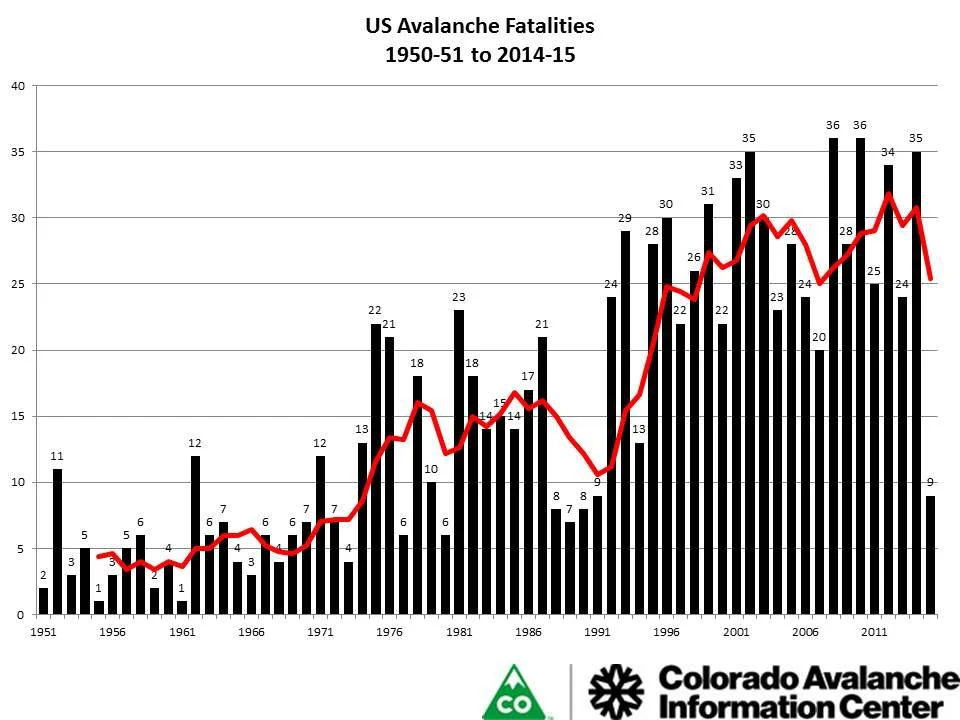
As the 2014–2015 winter season officially concludes on April 30, data compiled by national safety organizations reveals a significant and historic decline in avalanche-related deaths across the United States. With only nine recorded fatalities, this season marks the lowest death toll attributed to avalanches since 1991. This statistical anomaly arrives at a time when backcountry recreation is seeing unprecedented growth, suggesting that a combination of unusual meteorological patterns and intensified public safety campaigns has mitigated the inherent risks of high-altitude winter sports.
While safety officials maintain that any loss of life is a tragedy, the single-digit fatality count is being viewed as a major milestone in the history of domestic mountain safety. For comparison, the five-year moving average for avalanche deaths in the United States has remained relatively stable, fluctuating between 25 and 30 fatalities annually. The 2014–2015 figures represent a reduction of more than 60% from that average, prompting experts to analyze the specific variables that contributed to such a safe season.
Meteorological Factors and Snowpack Stability
The primary driver behind the record-low fatality rate is widely attributed to the specific weather patterns observed across the American West throughout the winter of 2014 and the spring of 2015. Professional forecasters point to two distinct weather phenomena: an exceptionally poor snow year along the West Coast and uncharacteristically warm temperatures further inland.
In the Sierra Nevada and the Cascade Range, the winter was defined by a severe lack of precipitation. In many regions, the snowpack was at or near historic lows, which naturally reduced the frequency of large-scale slides. Without the accumulation of significant "slabs"—the heavy layers of snow that typically sit atop weaker, crystalline layers—the physical mechanism for most fatal avalanches was largely absent. In many high-traffic backcountry areas in California, Oregon, and Washington, the "avalanche season" barely materialized, as rocky terrain remained exposed or covered only by a thin, non-threatening layer of snow.
Further inland, in the Rocky Mountains and the Intermountain West, the snowpack was more substantial but was influenced by a consistent trend of warm temperatures. Traditionally, avalanche danger is highest when cold, dry conditions create "persistent weak layers" (PWL) in the snowpack. These layers, often composed of faceted crystals or depth hoar, act as a failure point when new, heavy snow falls on top of them. However, the 2014–2015 season saw frequent warming cycles. These cycles promoted "rounding," a process where snow crystals bond together more effectively, creating a stronger and more cohesive snowpack. While warm weather can cause "wet slides," these are often more predictable and slower-moving than the catastrophic "dry slab" avalanches that occur mid-winter.
The Role of Educational Outreach and Information Centers
While the weather played a foundational role in the season’s safety record, officials also credit the robust efforts of the U.S. Forest Service (USFS) avalanche centers and the Colorado Avalanche Information Center (CAIC). Over the last decade, these organizations have transitioned from being purely technical forecasting bodies to becoming leaders in public education and digital communication.
The CAIC, which maintains the primary database for U.S. avalanche accidents, has expanded its reach through mobile applications, social media, and localized "Know Before You Go" campaigns. By providing real-time data and high-resolution maps, these centers allow backcountry users to make informed decisions before they ever leave their homes. Spencer Logan, a prominent researcher with the CAIC, has been instrumental in maintaining the national accident database, which serves as the bedrock for modern safety protocols.
Education initiatives have focused on three core pillars:
- Recognition of Terrain: Teaching skiers and snowmobilers to identify slopes steeper than 30 degrees, where most slides occur.
- Snowpack Awareness: Encouraging users to read daily bulletins and understand the specific "avalanche problems" (such as wind slab or persistent slab) identified for that day.
- Rescue Preparedness: Increasing the prevalence of essential gear, including transceivers, probes, shovels, and more recently, avalanche airbags.
The 2014–2015 season suggests that these messages are reaching the intended audience. Despite a perceived "low-risk" year due to weather, the engagement with forecasting websites remained high, indicating a cultural shift toward safety-conscious recreation.
Chronology of the 2014-2015 Season
The season began with typical early-winter concerns as October and November saw sporadic snowfall in the Rockies. However, as the calendar turned to 2015, the "Ridiculously Resilient Ridge"—a high-pressure system over the Pacific—prevented major storms from reaching the West Coast.
- December 2014: Early season fatalities occurred in the Intermountain West, following typical patterns of skiers venturing onto shallow, unstable early-season snowpacks.
- January – February 2015: This period, usually the deadliest time of year, saw a remarkable lack of activity. While the interior states like Colorado and Utah experienced some storms, the lack of a "deep slab" problem kept the death toll at historic lows.
- March 2015: Spring conditions arrived early. Rapid warming caused some concern for wet avalanches, but the public generally responded by avoiding steep terrain during the heat of the day.
- April 2015: As the month closes, the total count remains at nine. This is the first time in 24 years that the number has not reached double digits by the end of the traditional season.
Analyzing the Paradox: Higher Use, Lower Fatalities
One of the most striking aspects of the 2014–2015 data is the context of backcountry participation. Estimates from industry groups like the Snowsports Industries America (SIA) suggest that backcountry skiing, splitboarding, and snowmobiling have seen a meteoric rise in popularity over the last 15 years. Retail sales of "touring" equipment have outpaced traditional alpine gear in several recent quarters.
In a vacuum, an increase in the number of people in avalanche terrain should lead to a linear increase in accidents. However, the five-year moving average has remained remarkably stable at 25 to 30 deaths. The fact that fatalities are not rising in tandem with participation is what experts call a "relative decrease" in risk.
This stability is attributed to several factors:
- Technological Advancement: The widespread adoption of avalanche airbags has significantly increased the chances of survival for those caught in a slide.
- Professionalization of Instruction: More recreationists are enrolling in standardized American Institute for Avalanche Research and Education (AIARE) courses.
- Peer Influence: A growing "safety culture" within the backcountry community has made it socially acceptable—and even expected—to turn back from a dangerous objective.
Regional Variations and Data Integrity
The data for the 2014–2015 season was meticulously tracked by the CAIC in collaboration with various regional centers. While Colorado often leads the nation in avalanche fatalities due to its "continental" snowpack (which is inherently more unstable), even this region saw a marked decrease.
The Pacific Northwest and California, which often contribute several fatalities per year, were nearly absent from the accident reports this season. This regional "blackout" of accidents is a direct reflection of the snow drought. However, safety officials warn against complacency. They note that the low numbers of 2014–2015 are an outlier and that a return to "normal" winter conditions in future years will likely see a return to higher fatality counts if the public does not maintain its vigilance.
Implications for Future Safety Policy
The results of this season provide a unique case study for avalanche researchers. It highlights the "human factor" in mountain safety. When the danger is perceived to be low (due to low snow), and the education is high, the results are life-saving.
For the U.S. Forest Service and other federal agencies, these numbers may influence future funding and resource allocation. The success of the educational programs provides a strong argument for continued investment in public forecasting. As the 2015–2016 season approaches, the focus will likely shift toward maintaining this momentum, even when the weather patterns inevitably become more volatile.
The 2014–2015 season will be remembered in the record books as a year of reprieve. While the low snow was a disappointment for many winter sports enthusiasts, the resulting safety record is a welcome outcome for the families of backcountry users and the professional rescuers who work to keep the mountains safe. The challenge moving forward will be to determine how much of this success was a gift of the weather and how much was the result of a better-informed public. Regardless of the split, the nine lives lost serve as a reminder that the mountains remain a place of inherent risk, requiring respect, knowledge, and constant preparation.
