

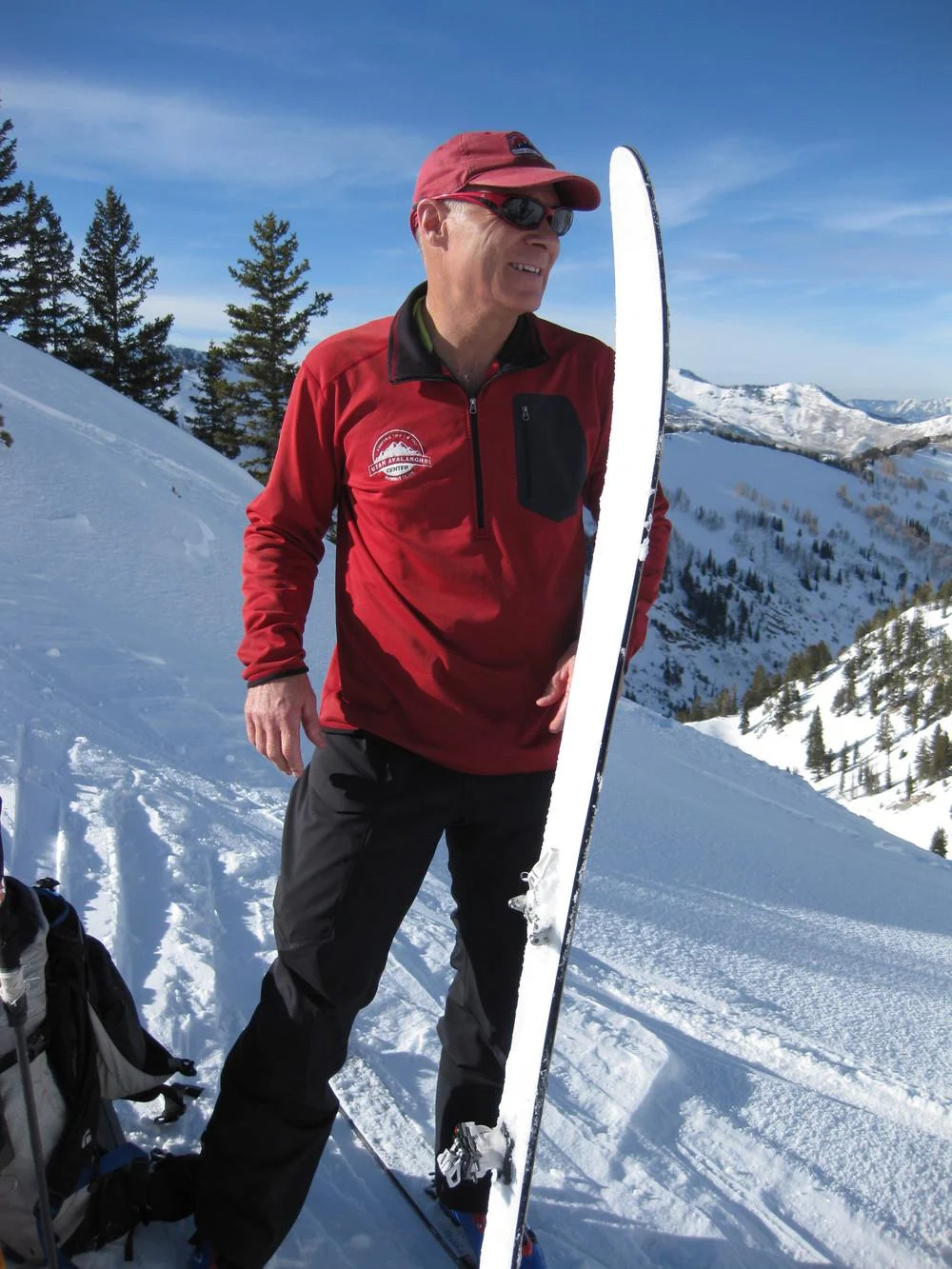
After a career spanning nearly three decades at the forefront of snow science and public safety, Bruce Tremper has announced his retirement from the United States Forest Service, effective at the end of August. Tremper, who has served as the Director of the Utah Avalanche Center (UAC) for 29 years, leaves behind a legacy that has fundamentally transformed how avalanche information is communicated to the public, not only in the Wasatch Range but across the globe. His departure marks the end of an era for the Utah backcountry community, where he has been a steady voice of authority during some of the region’s most volatile winters. To ensure a seamless transition for the agency, the Forest Service has appointed Mark Staples, a veteran forecaster from the Gallatin National Forest Avalanche Center, as the new Director.
Bruce Tremper’s tenure is characterized by a relentless pursuit of clarity in avalanche forecasting. When he first took the helm of the UAC in 1986, the primary method for disseminating snow stability information was via recorded telephone messages. Under his leadership, the center evolved into a digital powerhouse, pioneering the use of graphical advisories, social media outreach, and standardized icons that have since been adopted by forecasting centers worldwide. His retirement comes at a time when backcountry recreation is seeing record-breaking participation numbers, making the foundational systems he built more critical than ever before.
A Career Rooted in Science and Practical Application
Tremper’s journey into the world of snow and ice began in the rugged mountains of Montana. He pursued his Master of Science degree at Montana State University in Bozeman, an institution renowned for its contributions to snow science. Studying under the tutelage of Dr. John Montagne, a pioneer in the field, Tremper developed a deep understanding of the mechanical properties of snow and the meteorological factors that lead to slope failure.
However, Tremper was never content with purely academic pursuits. He sought to bridge the gap between complex geophysics and practical mountain safety. His early professional years were spent in the "trenches" of avalanche mitigation, performing control work at Bridger Bowl and Big Sky Resort in Montana. These roles required high-stakes decision-making and the use of explosives to trigger slides before they could threaten public ski runs.
Following his time in Montana, Tremper moved north to Alaska, joining the Alaska Avalanche Center. Working alongside legendary figures such as Doug Fesler and Jill Fredston, he refined his skills in one of the most extreme maritime snowpacks on earth. This diverse experience—ranging from the continental snowpack of Montana to the maritime conditions of Alaska—prepared him for the unique challenges of the Wasatch Range in Utah, where he was appointed Director in 1986.
Innovations in Public Safety and Communication
When Tremper arrived at the Utah Avalanche Center, the science of forecasting was often cloaked in technical jargon that was difficult for the average skier or snowmobiler to digest. Recognizing that a forecast is only effective if it is understood, Tremper spearheaded a movement toward "avalanche problems." Instead of simply providing a danger rating, he introduced a system that identified the specific nature of the threat—whether it was wind-drifted snow, persistent weak layers, or wet loose slides.
This shift was formalized in 2010 when Tremper served as a key member of the working group that developed the Conceptual Model of Avalanche Danger. This model, and the associated North American Avalanche Danger Scale, provided a unified framework for forecasters across the continent. It replaced vague terminology with a tiered system (Low, Moderate, Considerable, High, Extreme) backed by specific definitions regarding the likelihood and size of potential avalanches.
Perhaps his most visible contribution to the public is the use of icons in daily advisories. By utilizing visual symbols to represent aspects (the direction a slope faces) and elevations where danger was most acute, Tremper made it possible for recreationists to assess risk at a glance. This "info-graphic" approach to mountain safety has become the gold standard for avalanche centers in Europe, Canada, and New Zealand.
The 2002 Winter Olympics and National Influence
The peak of Tremper’s logistical career came in 2002 when Salt Lake City hosted the Winter Olympic Games. As the lead for backcountry avalanche safety, Tremper was tasked with ensuring that the influx of international visitors and media did not result in tragedy in the uncontrolled terrain surrounding the Olympic venues. The success of the Games, which saw no major avalanche incidents despite heavy snowfall, was a testament to the rigorous monitoring and public education campaigns managed by the UAC under his direction.
Beyond his regional duties, Tremper has been a prolific educator and author. His book, Staying Alive in Avalanche Terrain, is widely considered the definitive text for backcountry travelers. It stripped away the mystery of snow science and replaced it with a practical, human-centered approach to risk management. He followed this with Avalanche Essentials, a more concise guide aimed at beginners. His ability to translate life-saving information into engaging prose helped democratize mountain safety, moving it from the realm of experts into the hands of the general public.

Transition of Leadership: Mark Staples Takes the Helm
As Tremper prepares to step down, the Forest Service has conducted an extensive search to find a successor capable of maintaining the UAC’s high standards. Mark Staples, who will assume the role of Director in September, brings a wealth of experience that mirrors Tremper’s own background.
Staples also holds a Master of Science in Engineering from Montana State University, where his research focused on the mechanical properties of snow. His professional resume includes years of service as a ski patroller and snow safety officer at Big Sky Resort, as well as eight seasons as a backcountry forecaster for the Gallatin National Forest Avalanche Center.
Staples is no stranger to the National Avalanche Center (NAC), having led several special projects aimed at improving forecasting technology. His appointment has been met with widespread approval within the industry. Colleagues describe Staples as a meticulous scientist with a deep passion for the mountains—a combination necessary for leading an organization that serves one of the most heavily used backcountry areas in the United States.
The Evolution of the Utah Avalanche Center
The transition in leadership comes at a pivotal moment for the UAC. The Wasatch Range is currently experiencing an unprecedented boom in winter recreation. The rise of "uphill" skiing at resorts, combined with advancements in lightweight alpine-touring equipment, has pushed thousands of inexperienced users into complex terrain.
Data from the Forest Service indicates that the number of backcountry users in Utah has nearly tripled over the last decade. This surge in participation has put a premium on the UAC’s educational programs. Under Tremper, the UAC expanded its "Know Before You Go" program, a free avalanche awareness talk that has been presented to hundreds of thousands of middle school and high school students.
The economic implications of the UAC’s work are also significant. Utah’s "Greatest Snow on Earth" is a primary driver of the state’s multi-billion-dollar tourism industry. Ensuring that the backcountry remains a safe and viable option for residents and tourists alike is a matter of both public health and economic stability.
A Legacy of Continued Service
While Bruce Tremper is retiring from his administrative role with the Forest Service, he does not intend to leave the field of avalanche safety entirely. In his announcement, he indicated plans to continue teaching at the National Avalanche School and contributing to various research projects. He also intends to remain an active voice in the literary community, updating his texts to reflect new findings in the psychology of decision-making—an area of study known as "human factors" that he believes is the next frontier in reducing avalanche fatalities.
In the Wasatch, Tremper is frequently seen skinning up the peaks he has spent decades monitoring. His colleagues noted that while he may be relinquishing his title, his presence will remain a fixture in the local mountains. His wife, Susi, an accomplished backcountry skier in her own right, will likely join him as they trade the pressures of daily forecasting for the freedom of personal exploration.
Looking Ahead: The Future of Avalanche Forecasting
As Mark Staples prepares to lead the UAC into its next chapter, the challenges are clear. The climate is changing, leading to more erratic weather patterns and "atmospheric river" events that can create complex, multi-layered snowpacks. Furthermore, the digital landscape continues to shift, requiring the UAC to find new ways to reach younger demographics through mobile platforms and real-time data sharing.
However, the foundation laid by Bruce Tremper provides a robust platform for these future innovations. By prioritizing clear communication, scientific rigor, and public engagement, Tremper transformed the Utah Avalanche Center from a local service into a global model of excellence. As he departs the Forest Service at the end of August, the avalanche community honors a man whose work has undoubtedly saved countless lives and empowered a generation of mountain travelers to pursue their passions safely.
The official handover marks a significant moment in the history of American snow science. While the face of the Utah Avalanche Center may be changing, the mission remains the same: to provide the public with the information they need to "stay alive in avalanche terrain." With Mark Staples at the helm, the agency is well-positioned to continue its legacy of service to the winter sports community.
