

The ski industry’s relentless pursuit of extremity in backcountry boot design, focusing heavily on ultra-lightweight or robust crossover models, has left a crucial segment of the market underserved: the midweight touring boot. This versatile category, historically characterized by three buckles and a weight range of 1,300 to 1,500 grams, is essential for the vast majority of backcountry skiers, yet it has seen minimal innovation, creating a "missing middle" akin to the housing crisis in ski towns. This oversight, driven by a focus on niche markets and resort-hybrid demand, has led to a stagnation of R&D in a category that, proponents argue, offers the most practical and adaptable solution for a broad spectrum of backcountry enthusiasts.
The All-Rounder’s Dilemma: A Divergent Market
For the dedicated backcountry skier, the morning ritual often involves a critical decision: which boot to choose for the day’s adventure. This choice, however, has become increasingly fraught as the market polarizes. While backcountry skis have evolved into a well-defined bell curve of dimensions and weights, catering to a wide range of conditions and skier abilities, the boot market has bifurcated. On one end, ultra-lightweight boots, often weighing under 1,200 grams and featuring two buckles, are designed for efficiency and long-distance touring. On the other end, crossover boots, typically with four buckles and weighing around 1,500 grams, aim to bridge the gap between resort skiing and backcountry touring, offering enhanced downhill performance and compatibility with alpine bindings.
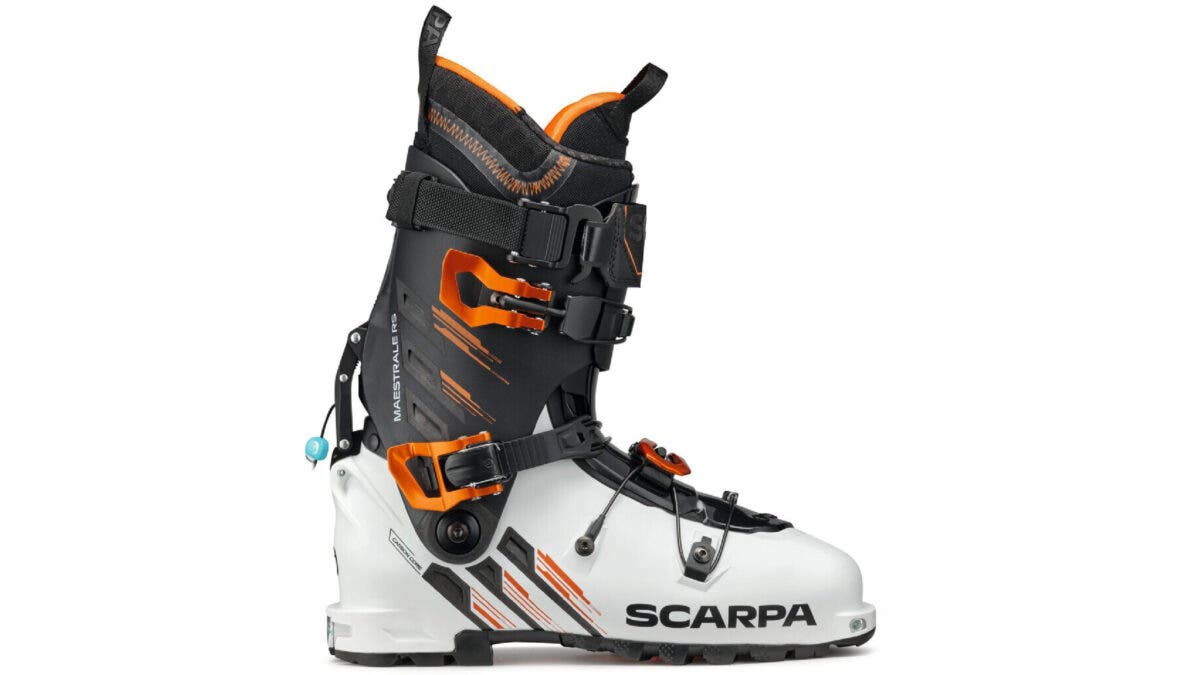
This polarization leaves the midweight boot, a historically reliable workhorse, in a precarious position. These boots, exemplified by models like the Scarpa Maestrale RS, offer a balance of uphill mobility and downhill capability that serves a broad user base. However, the industry’s investment has largely shifted to the extremes. This has resulted in a situation where the boots best suited to the most common backcountry ski setups are not receiving the innovation they deserve, leading to a plateau in their development.
Defining the Midweight Category: A Historical Perspective
While no official industry standard dictates boot classifications, a general understanding of touring boot categories has emerged over time. Lightweight touring boots typically feature two buckles and aim for minimal weight, often under 1,200 grams, making them ideal for ski mountaineering and long-distance tours where every gram counts. The La Sportiva Kilo is an example of a boot designed with this focus on extreme weight savings.
Midweight touring boots, historically, have been defined by their three-buckle design and a weight range of approximately 1,300 to 1,500 grams. These boots aim to provide a more substantial connection to the ski, offering better power transmission and dampening for descents, without the bulk and weight of more aggressive downhill-oriented boots. The original Scarpa Maestrale is widely considered the archetype of this category, offering a blend of touring efficiency and reliable downhill performance that resonated with a wide array of backcountry skiers.
Crossover boots represent a more recent development, aiming to combine the best of both worlds. These boots often feature four buckles, a robust construction, and a significant range of motion (ROM), typically exceeding 60 degrees. With weights also hovering around 1,500 grams, they often incorporate GripWalk soles, making them compatible with both tech bindings and traditional alpine bindings. The Dynafit Tigard is an example of a boot in this category, designed for skiers who want a single boot to handle both resort and backcountry skiing.
The Case for the Versatile Midweight
The argument for the enduring relevance of the midweight touring boot lies in its inherent versatility. Proponents suggest that a single, well-designed midweight boot can effectively handle a vast majority of backcountry ski setups. This contrasts with the conventional wisdom that often advocates for a quiver of two pairs of boots and skis – one for lightweight touring and another for more aggressive descents.
Lightweight boots, while excellent for climbing and efficient travel, often struggle to provide the necessary leverage and progressive flex required for larger, more demanding skis, especially in variable snow conditions. The lack of robust downhill support can lead to a compromised skiing experience. Conversely, the added weight, stiffness, and higher cuff of crossover boots can feel cumbersome and overpowering on lighter, more nimble touring skis. This can lead to a disconnect between the skier’s intentions and the ski’s performance.
The midweight boot, however, strikes a crucial balance. Its construction provides sufficient support and power transmission for most all-mountain backcountry skis, from all-mountain freeride touring skis to more dedicated uphill-focused setups. This adaptability means that a single pair of midweight boots can serve a skier for a wide range of conditions and objectives, from mellow backcountry laps to more ambitious day tours, without the significant compromises associated with the extreme ends of the boot market.
The Evolutionary Squeeze: How the Middle Got Marginalized
The shift in industry focus away from the midweight category can be traced back to the early 2010s, a period that saw a surge in the popularity of ski touring. During this era, midweight boots like the Dynafit Vulcan and the Scarpa Maestrale were the benchmark for skiers seeking an efficient ascent without sacrificing downhill performance. However, as the market matured, a significant shift in R&D investment occurred.
The proliferation of lightweight designs, driven by advancements in materials and manufacturing, led to an explosion of ultra-lightweight options. This trend was further amplified by the rise of resort uphill skiing and Skimo racing, which created a demand for the lightest possible gear. Companies responded by heavily investing in developing sleeker, lighter boot chassis.
More recently, the R&D focus has pivoted towards crossover boots, driven by the lucrative market of resort skiers looking to dabble in the backcountry. The introduction of models like Scarpa’s 4-Quattro XT in 2022, with its impressive 61-degree ROM and alpine-like downhill performance at a sub-1,500-gram weight, revolutionized this segment. These boots have been engineered to offer a wider range of motion than traditional alpine boots while maintaining significant downhill capability, attracting a large consumer base seeking "quiver overlap." This intense focus on crossover boots, along with the continued development of the ultra-lightweight category, has effectively squeezed the midweight segment, leaving it with comparatively little dedicated innovation.
While some manufacturers have attempted to bolster their lightweight offerings with sturdier components, like La Sportiva’s Kilo XTR, these efforts often fall short of providing the consistent leverage and suspension needed for larger skis and challenging descents. The result is a market where the most broadly applicable boot category has been largely overlooked, with many existing midweight models appearing dated and lacking the trickle-down of new technologies seen in their lighter or more aggressive counterparts.
The Future of Backcountry Footwear: Innovation in the Missing Middle
The current market dynamic presents a clear opportunity for innovation within the midweight touring boot category. For skiers who navigate a diverse range of backcountry terrain and conditions, the ideal boot would offer a compelling combination of features: three buckles for secure closure and power transfer, a camming power strap for enhanced downhill performance, a ROM exceeding 65 degrees for efficient skinning, a weight under 1,400 grams for reasonable uphill efficiency, and minimal complexity for ease of use.
The surprising reality is that this description closely mirrors the characteristics of the Scarpa Maestrale, a boot that has remained a benchmark for sixteen years. This longevity highlights a lack of aggressive competition and innovation within the midweight segment. The industry appears to be prioritizing the development of niche products for specialized users or the broad appeal of crossover models, inadvertently neglecting the needs of the largest potential user group.
The conclusion drawn by many seasoned backcountry skiers is that the next significant breakthrough in touring boot technology is not likely to emerge from the already highly developed lightweight or crossover categories. Instead, the true innovation, the solution that could redefine versatility and accessibility in backcountry skiing, lies in revitalizing and advancing the midweight touring boot. Until such advancements materialize, many skiers will continue to rely on proven, albeit aging, models, clinging to the reliable performance of the "missing middle" as they venture into the backcountry. The industry’s current trajectory suggests a continued reliance on these stalwart designs, a testament to their fundamental effectiveness, even as the market races towards the extremes.
