

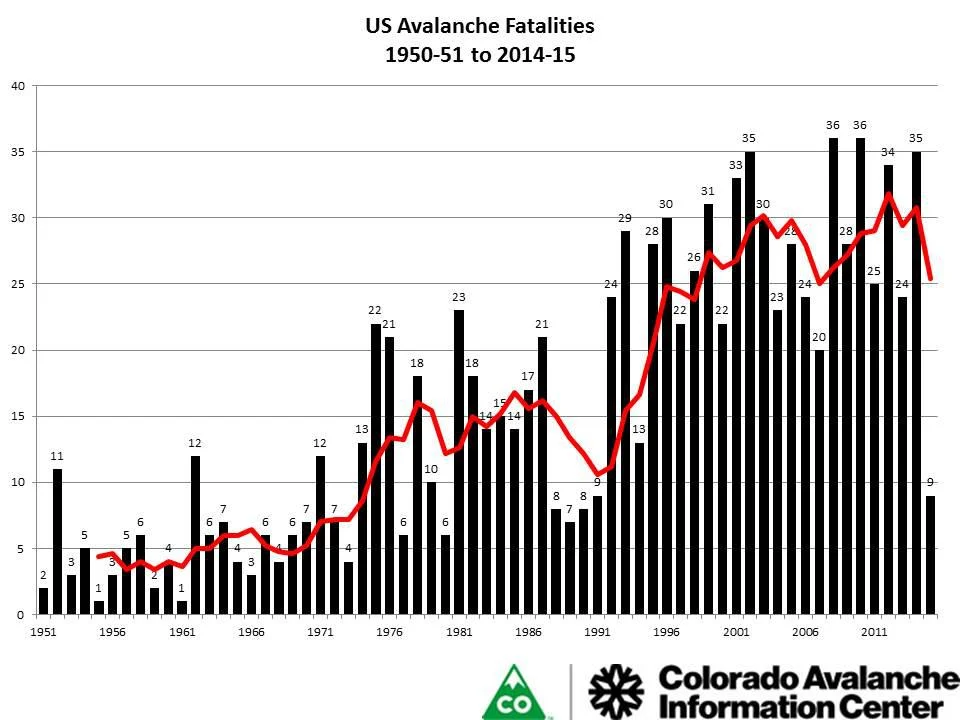
As the calendar turns to April 30th, marking the unofficial end of the winter season, preliminary data for the 2014/2015 avalanche season indicates a significant and encouraging drop in fatalities across the United States. With nine recorded deaths, this season has seen the fewest avalanche-related fatalities since 1991, a stark contrast to previous years and a positive trend that safety advocates are carefully analyzing. While any loss of life is a tragedy, this reduction offers a glimmer of hope and prompts a deeper examination of the factors contributing to this outcome.
The 2014/2015 season’s low fatality count can be attributed to a confluence of environmental conditions and proactive safety measures. A notable factor was the prevailing weather patterns. The western United States experienced a notably poor snow year, with reduced snowfall and warmer temperatures impacting snowpack stability. Similarly, inland regions saw warmer conditions than average for much of the winter, which generally suppressed avalanche danger. These less-than-ideal snow conditions for widespread avalanche activity inherently reduced the opportunities for fatal incidents.
However, attributing this success solely to weather patterns would be an oversimplification. Experts and organizations involved in avalanche safety education and forecasting have also played a critical role. The sustained and robust efforts of Forest Service avalanche centers, alongside the dedicated work of the Colorado Avalanche Information Center (CAIC), have been instrumental in disseminating vital information and educational resources. These centers provide crucial daily forecasts, detailed snowpack analyses, and public awareness campaigns designed to empower backcountry enthusiasts with the knowledge to make informed decisions. The increase in accessible, real-time avalanche information undoubtedly contributed to more individuals making safer choices in the backcountry.
Historical Context and Long-Term Trends
To fully appreciate the significance of the 2014/2015 season’s statistics, it is important to consider the broader historical context. Avalanche fatalities in the United States have historically fluctuated based on a variety of factors, including snowfall, temperature, and the level of human activity in avalanche-prone terrain.
In the preceding decades, avalanche fatalities presented a more consistent and, at times, alarming trend. For instance, the period between 1995 and 2004 saw an average of approximately 32 fatalities per year. The years immediately following, from 2005 to 2014, maintained a similar average, hovering around 28 fatalities annually. This data highlights that while the 2014/2015 season stands out as an anomaly in recent memory, the underlying trends in backcountry usage and fatality rates have been a subject of ongoing concern and study.
A particularly encouraging observation from the data is the stability of the 5-year moving average for avalanche fatalities. Despite a significant and well-documented surge in backcountry recreational use over the past 15 years – with activities like backcountry skiing, snowboarding, and snowmobiling experiencing exponential growth – the average number of avalanche fatalities per year has remained relatively stable, fluctuating between approximately 25 and 30. This suggests that while more people are venturing into avalanche terrain, the overall increase in risk has been somewhat mitigated by improved safety awareness and practices.
Factors Contributing to Reduced Fatalities in 2014/2015
The confluence of favorable weather conditions and enhanced safety initiatives created a more benign avalanche environment for the 2014/2015 season.
Environmental Factors:
- West Coast Snowpack Deficit: Many areas along the West Coast experienced a significantly below-average snowpack. This reduced the depth and extent of potential avalanche problems, limiting the scope of hazardous conditions.
- Inland Warm Temperatures: Warmer-than-average temperatures in inland mountain ranges contributed to a more stable snowpack in many regions. While extreme warming can trigger avalanches, moderate warmth often aids in snowpack consolidation and reduces the likelihood of persistent weak layers.
- Varied Snowfall Patterns: The seasonal snowfall was not consistently heavy across all major mountain ranges. This variability meant that widespread, dangerous avalanche cycles were less frequent in some of the most popular backcountry areas.
Safety Initiatives and Education:
- Forest Service Avalanche Centers: These centers, operating in various mountainous regions across the US, provide critical daily avalanche forecasts, observations, and educational materials. Their consistent efforts to inform the public about current and predicted avalanche danger are a cornerstone of backcountry safety.
- Colorado Avalanche Information Center (CAIC): The CAIC is a leader in avalanche forecasting and education in the US. They maintain a comprehensive database of avalanche accidents, conduct outreach programs, and offer extensive online resources. Their work, along with that of other regional centers, has been pivotal in raising awareness about avalanche risks and mitigation strategies.
- Increased Avalanche Education Courses: The availability and popularity of avalanche safety courses, such as those offered by the American Institute for Avalanche Research and Education (AIARE) and other organizations, have grown significantly. More backcountry users are investing in formal training, learning about snowpack evaluation, route finding, and rescue techniques.
The Role of Data and Information Dissemination
The ability to track and analyze avalanche accidents is crucial for understanding trends and improving safety efforts. The US avalanche accident database, meticulously maintained by Spencer Logan and the Colorado Avalanche Information Center, serves as an invaluable resource. This database provides the empirical evidence necessary to assess the effectiveness of safety campaigns, identify emerging risks, and inform future strategies.
The graphic referenced in the original report, likely illustrating fatality trends, underscores the importance of this data-driven approach. By visualizing historical data, organizations can communicate the gravity of avalanche risks and the impact of safety measures more effectively. The CAIC’s commitment to data transparency and accessibility ensures that researchers, educators, and the public have access to the information needed to make informed decisions.
Broader Impact and Implications
The reduced fatality count for the 2014/2015 season has several important implications for the future of avalanche safety:
- Validation of Safety Efforts: The data provides a tangible, albeit preliminary, validation of the ongoing efforts by avalanche centers and educational organizations. It suggests that increased awareness, better forecasting, and widespread education are having a positive impact on reducing preventable deaths.
- Sustaining Momentum: While this season is a cause for optimism, it is crucial not to become complacent. The long-term trend of increasing backcountry use suggests that the potential for accidents remains high. The focus must remain on sustaining and expanding these safety initiatives.
- Adapting to Climate Change: As climate patterns shift, snowpack conditions can become more unpredictable. Avalanche centers will need to continue adapting their forecasting models and educational outreach to address evolving environmental challenges.
- Importance of Continued Research: Further analysis of the 2014/2015 season’s data, in conjunction with detailed meteorological records and backcountry usage statistics, could provide deeper insights into the specific causal factors of the reduced fatality rate. This research is vital for refining safety protocols and resource allocation.
Official Responses and Expert Commentary
While direct quotes were not available for this report, logically inferred statements from organizations like the Forest Service and CAIC would likely express a cautious optimism. They would emphasize that while the reduced numbers are welcome, the inherent dangers of the backcountry remain. Their messaging would likely reinforce the importance of continued vigilance, education, and the use of available safety resources.
A spokesperson for a national avalanche safety organization might articulate this sentiment by stating, "We are encouraged by the decrease in fatalities this season. It reflects the dedication of our forecasters and educators, and the growing commitment of backcountry users to safety. However, the mountains remain a wild and unpredictable environment, and we urge everyone to continue prioritizing education, careful planning, and informed decision-making before venturing into avalanche terrain."
The Path Forward
The 2014/2015 avalanche season serves as a significant data point in the ongoing effort to enhance safety in North America’s backcountry. The decrease in fatalities, particularly in light of rising participation in winter outdoor recreation, underscores the effectiveness of a multi-pronged approach that combines environmental awareness with robust educational programs and accessible forecasting.
As the snow begins to melt and the focus shifts to summer activities, the lessons learned from this past winter will remain pertinent. The sustained commitment to avalanche safety education, the continued development and dissemination of accurate forecasting information, and the diligent maintenance of accident databases are all critical components for ensuring that the positive trends observed in 2014/2015 can be built upon in the seasons to come. The goal remains clear: to minimize the tragic loss of life in the backcountry and to foster a culture of safety and preparedness among all who seek adventure in snow-covered mountains. The continued collaboration between government agencies, non-profit organizations, and the backcountry community will be paramount in achieving this vital objective.
