

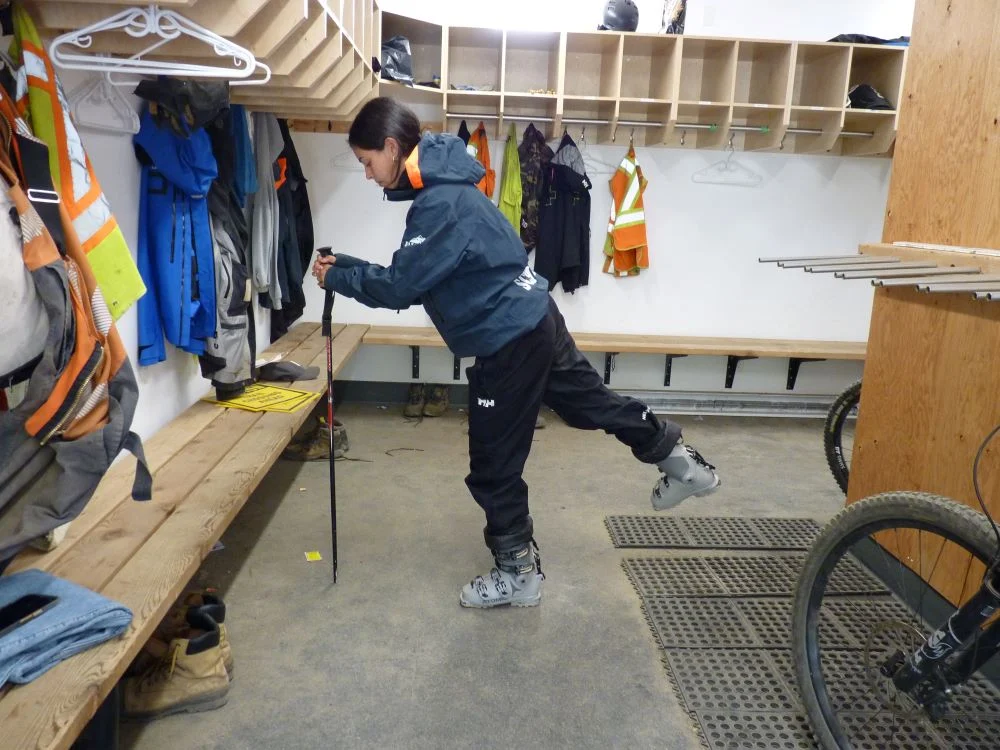
The pursuit of peak performance and injury resilience in snowsports, whether skiing or snowboarding, is intrinsically linked to the foundational strength and stability of the human core. Recent insights from sports science, highlighted in the Spring 2026 issue of 32 Degrees by Dr. Delia Roberts, PhD, underscore that effective movement on snow is fundamentally about managing force—harnessing gravity and momentum, storing energy in equipment, and translating it into speed and direction. Crucially, just as the rigidity of a boot or board dictates energy transfer efficiency, a robust and stable core serves as the indispensable platform against which the legs operate, directly enhancing control, boosting performance, and significantly mitigating the risk of common snowsports-related injuries, particularly lower back pain. This scientific understanding, now more widely accessible through practical, do-anywhere exercise regimens, represents a significant evolution in training paradigms for snowsports professionals and enthusiasts alike.
The Evolving Landscape of Snowsports Conditioning
The trajectory of physical conditioning for snowsports has undergone a profound transformation over the past few decades. Historically, training often focused on generalized strength and endurance, with little sport-specific nuance. Early conditioning for skiers in the mid-20th century might have involved basic calisthenics, running, and rudimentary weightlifting. However, as the biomechanics of skiing and snowboarding became better understood, and as equipment technology advanced, so too did the sophistication of training methodologies. The late 1990s and early 2000s marked a significant shift, with a growing emphasis on functional training and core stability, largely influenced by advancements in rehabilitation science and the insights gleaned from elite athlete programs.
Professional athletes and their support teams were among the first to integrate highly specialized core training into their routines, recognizing its direct correlation with performance in dynamic, multi-planar movements. This emphasis gradually permeated down to recreational athletes and, critically, to snowsports instructors, who require exceptional physical conditioning to perform their duties safely and effectively for extended periods. Organizations like the Professional Ski Instructors of America and American Snowboard Instructors (PSIA-AASI) and the Canadian Ski Instructors’ Alliance (CSIA) have increasingly incorporated sports science principles, including core training, into their certification standards and continuing education programs, reflecting a broader industry commitment to instructor wellness and performance.
Despite this growing awareness, a persistent challenge has been the practical implementation of consistent core training among snowsports instructors. Many, like other busy professionals, cite constraints such as limited time, lack of access to suitable gym facilities, or the perceived inconvenience of traditional floor-based exercises. This gap between knowledge and practice is precisely what Dr. Roberts’ latest work aims to bridge, offering a pragmatic solution designed for the unique demands of an instructor’s lifestyle.
The Science of Core Stability in Snowsports
The core, often misunderstood as merely the abdominal muscles, is a complex network of muscles encompassing the deep abdominal muscles (transversus abdominis, obliques), pelvic floor, diaphragm, and multifidus (deep back muscles). Together, these muscles form a natural corset that stabilizes the spine and pelvis, acting as a central anchor for all limb movements. In snowsports, this stability is paramount. When carving a turn, absorbing moguls, or executing complex maneuvers, the legs and upper body move independently and often rapidly. Without a stable core, this independent movement becomes inefficient, leading to wasted energy, compromised balance, and an increased susceptibility to injury.
Dr. Roberts emphasizes that gravity and momentum provide the energy, but it is the core that facilitates its efficient management. A strong core allows for better force transfer from the ground up through the skis/board and vice versa. This translates to more precise edge control, quicker reaction times, and the ability to maintain optimal body position (center of mass) even in challenging terrain or high-speed scenarios. Studies published in journals such as the Journal of Strength and Conditioning Research have repeatedly demonstrated that individuals with stronger core musculature exhibit superior balance, agility, and power output in dynamic athletic tasks. Furthermore, research compiled by the American Academy of Orthopaedic Surgeons indicates that lower back pain is one of the most common complaints among skiers and snowboarders, often stemming from repetitive torsional forces and inadequate core support. Targeted core exercise programs have shown significant efficacy in reducing short-term pain symptoms and, crucially, lowering the long-term risk of re-injury.
Addressing the Training Compliance Gap
Recognizing the widespread acknowledgment of core training’s importance versus the often-low adherence rates among snowsports instructors, Dr. Roberts’ "do-anywhere" approach directly tackles practical barriers. The innovation lies in exercises that can be performed in ski or snowboard boots, without needing to lie on the floor, thus integrating seamlessly into otherwise "wasted" pockets of time—such as waiting at a bus stop, during a chairlift ride, or even while standing in line. This accessibility is critical for professionals whose schedules are often dictated by weather, lesson times, and mountain operations.
The rationale is clear: by removing common excuses related to time and space, the likelihood of consistent engagement in core training dramatically increases. This pragmatic approach resonates with the needs of a workforce that values efficiency and practical application, allowing instructors to prioritize their physical well-being without disrupting their demanding work schedules.
Foundational Principles: Neutral Posture and Core Activation
Before delving into specific exercises, Dr. Roberts stresses the importance of establishing a neutral posture and proper core activation. This preparatory step is fundamental to ensuring that the subsequent exercises effectively target the intended muscles and promote spinal stability, rather than reinforcing compensatory movement patterns.
- Neutral Posture: This involves aligning the spine and pelvis to minimize stress on joints and maximize muscular efficiency. It’s about finding that natural, slight curve in the lower back, dropping shoulders down and back without excessive rib lifting, and orienting the face forward. The hip bones and pubic bone should lie in the same plane, avoiding anterior or posterior pelvic tilt. This posture is not merely static but serves as the optimal starting point for dynamic movement, allowing for efficient force generation and absorption.
- Core Activation: Once neutral posture is achieved, specific muscles of the deep core are engaged. This involves a gentle "pulling in and up" of the lower belly, creating a subtle tension without hollowing the abdomen. Simultaneously, the pelvic floor is lifted, akin to the action of holding back urination. This integrated engagement ensures that the deep stabilizers are active and ready to support the spine and pelvis throughout any subsequent movement. Neglecting these initial steps can render even the most advanced core exercises less effective, potentially leading to strain rather than strengthening.
Key Do-Anywhere Core Exercises for Snowsports Professionals
Dr. Roberts’ recommended routine starts with 10 repetitions of each exercise, progressing to 30 repetitions for two to three sets, two to three times per week. This manageable volume is designed to yield significant benefits without requiring excessive time commitment.
Exercise 1: Seated Pelvic Stabilizer
- Execution: Begin in neutral posture with activated core. While seated (e.g., on a chairlift or bench), lift one foot an inch off the floor, hold for a count of three, then slowly lower. Alternate legs.
- Science & Benefits: This exercise directly targets core stability, specifically the deep abdominal, hip, and back muscles crucial for providing a solid platform while the legs move independently—a cornerstone of edging and terrain absorption in snowsports. The goal is to resist any twisting or shifting in the pelvis as the leg lifts. By placing fingers on the front of the hip bones, one can self-monitor for unwanted movement. If twisting occurs, reduce the leg lift or start with just weight transfer without lifting the foot.
- Make it Harder:
- Increase the hold time for each leg lift.
- Perform the exercise on a slightly unstable surface (e.g., a thick cushion or balance pad, if available and safe).
- Add a light ankle weight to the lifted leg, gradually increasing the load.
- Perform while standing, maintaining stability (progressing towards a single-leg stance with minimal leg movement).
Exercise 2: Single-Leg Deadlift
- Execution: From a standing neutral posture with an activated core, extend one leg straight back while tilting the upper body forward from the hips, keeping the standing leg slightly bent. Maintain square shoulders and hips, avoiding any rotation or hiking of the hip. Aim to reach a horizontal position with the body and extended leg, then return to upright.
- Science & Benefits: This is a powerhouse exercise for snowsports, known for its high recruitment of the gluteal muscles, spinal and pelvic stability, and significant balance demands. It directly translates to maintaining optimal center of mass positioning and controlling edge angulation. Importantly, the single-leg deadlift emphasizes eccentric muscle contractions—where muscles lengthen under tension. In skiing and snowboarding, most movements involve controlling downhill momentum, requiring muscles (especially quadriceps and back extensors) to work eccentrically. Training these muscles eccentrically prepares them for the specific demands of snowsports, reducing soreness and injury risk associated with unaccustomed eccentric loading.
- Make it Harder:
- Hold a light weight (e.g., a water bottle, small dumbbell) in the hand opposite the standing leg, or in both hands.
- Increase the range of motion, reaching further forward with the upper body and leg while maintaining form.
- Perform with eyes closed (advanced), significantly increasing the balance challenge.
- Integrate a dynamic element, such as reaching the non-standing foot towards a target behind you.
Exercise 3: Standing Core Rotation (Inferred for Completeness)
- Execution: Stand tall in neutral posture with core activated, feet hip-width apart. With arms bent at 90 degrees and elbows tucked close to the body, gently rotate the torso a few inches to one side, leading with the ribcage while keeping the hips relatively stable. Return to center and rotate to the other side. The movement should be controlled and initiated from the core, not by swinging the arms.
- Science & Benefits: This exercise develops rotational core stability, which is vital for initiating turns, absorbing rotational forces, and maintaining alignment in snowsports. It engages the oblique muscles effectively, preparing the body for the subtle but powerful rotational movements inherent in skiing and snowboarding. The key is to control the movement, preventing the hips from rotating excessively, thereby isolating the core.
- Make it Harder:
- Increase the speed of rotation while maintaining control.
- Hold a light medicine ball or weight at chest height during the rotation.
- Perform in a staggered stance, with one foot slightly forward, to add a balance challenge.
Broader Impact and Implications
The widespread adoption of accessible core training methodologies, such as those advocated by Dr. Roberts, carries significant implications for the snowsports industry beyond individual performance.
- Instructor Longevity and Career Sustainability: A healthier, more resilient instructor workforce is crucial for the long-term viability of snowsports schools. Reduced incidence of lower back pain and other common injuries means fewer days missed, extended career spans, and a more experienced pool of educators. This translates to better instruction for clients and reduced turnover costs for resorts.
- Enhanced Client Experience and Safety: Fit and stable instructors are better equipped to demonstrate techniques, react quickly to unexpected situations, and provide a safer learning environment. Their sustained energy levels throughout a long day also contribute to a more positive and effective learning experience for students.
- Democratization of Elite Training Principles: By distilling complex sports science into practical, time-efficient exercises, Dr. Roberts’ work makes high-level conditioning accessible to a broader audience, not just professional athletes. This empowers instructors, and by extension their students, to integrate advanced training concepts into their daily lives.
- Future Trends in Snowsports Fitness: This emphasis on accessible, functional training aligns with broader trends in fitness towards personalized, integrated, and technology-supported programs. As wearables and smart equipment become more common, future iterations of "do-anywhere" training might incorporate real-time feedback and adaptive programming, further enhancing effectiveness and compliance.
- Economic Benefits: Reduced healthcare costs associated with injury treatment and rehabilitation for instructors, coupled with increased productivity and job satisfaction, present tangible economic benefits for individuals and the industry at large.
In conclusion, the renewed focus on core stability, underpinned by rigorous sports science and made practical through innovative, accessible exercise protocols, marks a pivotal moment in snowsports conditioning. Dr. Delia Roberts’ contribution through 32 Degrees serves as a compelling call to action, urging snowsports professionals to prioritize their core health not just for personal gain, but for the collective advancement of safety, performance, and longevity within the sport. This pragmatic approach ensures that the benefits of a strong, stable core are no longer an elusive ideal but an achievable reality for every individual who moves on snow.
