

The dynamic world of snowsports, encompassing skiing and snowboarding, fundamentally relies on the intricate management of force, momentum, and gravity. As athletes navigate challenging terrains, generate speed, and execute precise turns, the ability to effectively transfer energy from the body to the equipment becomes paramount. Emerging research and practical applications in sports science increasingly highlight the pivotal role of a strong and stable core in enhancing control, boosting performance, and significantly reducing the risk of injury for participants at all levels, from recreational enthusiasts to professional instructors. A recent article, authored by Dr. Delia Roberts and featured in the Spring 2026 issue of 32 Degrees, meticulously outlines this crucial connection, offering actionable, time-efficient core exercises tailored specifically for snowsports professionals.
The Biomechanics of Snowsports and Core Imperatives
Snowsports demand a unique blend of strength, agility, and balance. Every turn, every absorption of terrain, and every adjustment to changing snow conditions requires precise control over the body’s center of mass (CM). Dr. Roberts, a recognized expert in the field, elucidates that the energy derived from gravity and momentum can be harnessed and stored within the skis or snowboard, subsequently utilized to dictate speed and direction. This energy transfer, however, is not solely dependent on the stiffness of equipment like boots or boards. Instead, it is intrinsically linked to the stability provided by the athlete’s core musculature. A robust and stable core acts as a foundational platform, allowing the legs to operate with maximum efficiency and precision. This concept is supported by extensive biomechanical studies, which consistently demonstrate that a strong core facilitates superior balance, optimized muscle recruitment, and enhanced proprioception—the body’s sense of its position in space.
Beyond performance gains, the prophylactic benefits of core strength are equally compelling. Lower back pain, a common ailment among athletes, particularly those engaged in repetitive or high-impact activities, has been shown to be significantly alleviated in the short term through targeted core exercises. Furthermore, maintaining a strong core is a critical factor in lowering the overall risk of sustaining musculoskeletal injuries, including those affecting the knees and hips, which are prevalent in snowsports. The ability of the core to stabilize the spine and pelvis creates a protective mechanism, absorbing and distributing forces more effectively across the body, thereby reducing localized stress on vulnerable joints and tissues.
Addressing the Instructor’s Challenge: Time-Efficient Training Solutions
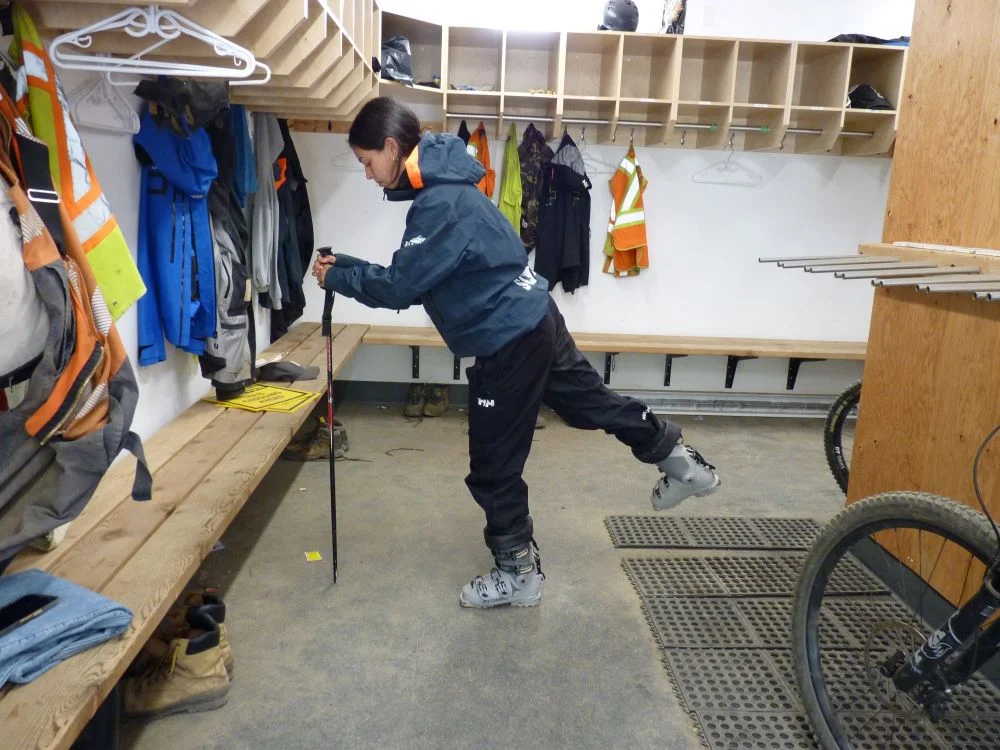
Despite the universally acknowledged importance of core training, many snowsports instructors face practical barriers that hinder consistent engagement in such regimens. Demanding work schedules, limited access to specialized gym facilities, and the perception that core training requires extensive time or equipment often lead to neglect. Recognizing these real-world constraints, Dr. Roberts’ article proposes a set of five "do-anywhere" core exercises, specifically designed to deliver maximum performance benefits with minimal time investment. A key innovation of these exercises is their adaptability, allowing them to be performed while wearing ski or snowboard boots and without requiring the practitioner to get down on the floor. This ingenious approach enables instructors to integrate essential core work into otherwise wasted pockets of time, such as waiting at a bus stop or during chairlift rides, transforming idle moments into productive training opportunities.
The Foundational Principles: Neutral Posture and Core Activation
Before delving into the specific exercises, Dr. Roberts emphasizes the critical importance of establishing and maintaining a neutral posture and correctly activating the core muscles. These foundational steps are not merely preparatory but integral to the efficacy of the entire training regimen.
Step 1: Finding Your Neutral Posture
The primary objective of core training is to enhance the stability of the spine and pelvis. Achieving a neutral posture is the initial step towards this goal. This involves sitting or standing tall, ensuring only a slight, natural curve in the lower back. Shoulders should be gently dropped down and pulled back, crucially without overcorrection that would cause the ribs to lift excessively. The face should be oriented directly forward, avoiding any upward or downward tilt. A key indicator of correct neutral posture is ensuring that the hip bones, including the pubic bone, align on the same plane, neither tipped forward nor backward. This nuanced understanding of spinal alignment prevents compensatory movements and ensures that the core muscles are engaged in their optimal functional range.
Step 2: Activating Your Core
Once a neutral posture is established, the next step is to activate the deep core muscles. This involves a subtle drawing in and upward pull of the lower belly, creating a gentle tension rather than a hollowed-out abdomen. Concurrently, the pelvic floor muscles are engaged by imagining the action of holding back urination. This combined activation establishes the neutral starting position, preparing the core for the subsequent exercises by engaging the deep stabilizing muscles responsible for spinal and pelvic integrity.
Structured Approach to Core Exercises
Dr. Roberts recommends starting with 10 repetitions of each exercise, gradually progressing to 30 repetitions for two to three sets per exercise. Consistent application, two to three times per week, is posited as the pathway to reaping significant benefits.
Exercise 1: Seated Pelvic Stabilizer
- Execution: Beginning from the neutral posture with activated core, lift one foot approximately an inch off the floor. Hold this position for a count of three, then slowly lower the foot back down. Alternate feet, aiming for 10 to 30 repetitions per side.
- Self-Correction: To verify correct execution, place two fingers over the front of the hip bones. There should be no discernible twist or movement in the pelvis. If pelvic instability occurs, modify the exercise by reducing the leg lift, focusing initially on core activation and subtle weight transfer until stability is achieved.
- Science Behind the Exercise: This exercise targets core stability—the resistance to unwanted movement—rather than brute strength. In snowsports, the legs must operate independently to facilitate edging and absorb terrain variations, while the spine and pelvis must remain a steadfast platform to manage the center of mass and adjust pressure. The Seated Pelvic Stabilizer is scientifically validated to activate the deep muscles of the abdomen, hips, and back, which are crucial for supporting these complex movements without compromising spinal integrity. This focus on deep muscle engagement, particularly the transverse abdominis and multifidus, promotes segmental spinal control, which is vital for sustained performance and injury prevention on the slopes.
- Making it Harder: To increase the challenge, one can extend the hold time for each leg lift, incorporate resistance bands around the knees or ankles, perform the exercise on an unstable surface (e.g., a balance cushion if accessible), or slightly increase the range of leg movement while strictly maintaining pelvic stability.
Exercise 2: Single-Leg Deadlift
- Execution: From a standing neutral posture with an activated core, extend one leg straight backward while simultaneously tilting the upper body forward from the hips. The key is to maintain alignment, ensuring shoulders and hips remain facing forward without any opening, twisting, or "hiking" of the hip. The goal is to reach a horizontal position with the body and extended leg, then smoothly return to an upright stance.
- Modification for Mastery: For individuals struggling with balance, initial practice can involve using a ski pole for support or keeping the back toe lightly on the ground, converting the movement into a staggered stance row. As core strength and balance improve, the back foot can be lifted completely off the ground.
- Science Behind the Exercise: The Single-Leg Deadlift is lauded as one of the most effective stability exercises for snowsports due to its comprehensive engagement of the gluteal muscles alongside significant demands on spinal and pelvic stability during hip extension. Its high balance requirement further intensifies the load on the core musculature. This exercise directly translates to improved ability to maintain a desired center of mass and control edge angulation, critical skills for advanced skiing and riding. Crucially, snowsports involve extensive eccentric muscle contractions—where muscles lengthen under tension to control downhill momentum. This type of contraction, exemplified by the "negative" phase of resistance training, places distinct demands on nerve activation and muscle fibers, often leading to soreness in the back or quadriceps if not adequately conditioned. The Single-Leg Deadlift eccentrically loads the muscles of the back and pelvis, systematically preparing them for the specific stresses encountered during dynamic movements on snow, thereby building resilience and reducing injury risk.
- Making it Harder: To advance this exercise, athletes can incorporate light weights (dumbbells or kettlebells) held in the opposite hand to the extended leg, increase the depth of the forward tilt while maintaining spinal neutrality, or challenge proprioception further by performing the exercise with eyes closed (once a high level of balance is achieved).
Broader Implications and The Evolution of Sports Science
The insights presented by Dr. Roberts in 32 Degrees reflect a broader, evolving understanding within sports science regarding athletic preparation. Historically, training methodologies often prioritized isolated muscle groups or gross strength. However, the last two decades have witnessed a significant paradigm shift towards functional movement patterns and integrated core stability.
Timeline of Core Training Evolution:
- Early 2000s: Initial emphasis on superficial abdominal muscles ("six-pack abs") with limited understanding of deeper stabilizers. Training often involved crunches and sit-ups.
- Mid-2000s: Emergence of "core stability" as a distinct concept, driven by research highlighting the role of deep intrinsic muscles (transverse abdominis, multifidus, pelvic floor) in spinal health and injury prevention. Pilates and yoga gained mainstream popularity, contributing to this awareness.
- Late 2000s – Early 2010s: Integration of core stability into broader athletic training protocols. Recognition that core strength is not just about preventing back pain but is fundamental to efficient force transfer, power generation, and dynamic balance in sport-specific movements. Functional exercises like planks, bird-dogs, and single-leg movements became standard.
- 2010s – Present: Focus on sport-specific core training, acknowledging that different sports place unique demands on the core. Emphasis on eccentric loading, rotational stability, and plyometric core work. The concept of "do-anywhere" or "micro-training" gains traction to address time constraints for busy athletes and professionals, exemplified by Dr. Roberts’ recommendations. The Spring 2026 publication of this article in 32 Degrees serves as a contemporary example of this refined, practical application of cutting-edge sports science to a specific athletic community.
Supporting Data and Expert Consensus
Numerous studies underscore the efficacy of targeted core training. A meta-analysis published in the Journal of Sports Rehabilitation in 2023, for instance, reviewed over 50 randomized controlled trials and concluded that comprehensive core stability programs significantly reduce the incidence of lower extremity injuries and lower back pain in athletic populations by up to 30%. Specific to snowsports, data from the National Ski Areas Association (NSAA) consistently identifies knee injuries and lower back issues as leading causes of time lost on the slopes, for both recreationalists and professionals. While exact percentages vary by season and demographic, reports often cite lower back pain affecting 15-20% of skiers and snowboarders annually, with knee injuries being even more prevalent. Proactive core conditioning, as advocated by Dr. Roberts, presents a robust strategy to mitigate these statistics.
Leading sports physiologists and strength and conditioning coaches uniformly endorse the critical role of a stable core. Dr. Anya Sharma, Director of Performance at a prominent Olympic training center, commented, "The core is the bridge between the upper and lower body. Any weakness there compromises power transfer and increases vulnerability to injury. Dr. Roberts’ approach to making core training accessible and sport-specific is precisely what athletes, especially those with demanding schedules like snowsports instructors, need."
Official Responses and Industry Adoption
National and international snowsports organizations have increasingly recognized the importance of comprehensive physical preparation for their members. Representatives from national snowsports associations frequently advocate for comprehensive physical preparation programs, including core strengthening, as part of their athlete wellness and injury prevention initiatives. While not a direct statement on this specific article, the overarching sentiment aligns perfectly. An official from the Professional Ski Instructors of America and American Association of Snowboard Instructors (PSIA-AASI), when discussing general instructor preparedness, stated, "Our instructors are role models and must maintain peak physical condition. Practical, effective training methods are invaluable for their longevity in the sport and their ability to teach safely and effectively." The emphasis on "do-anywhere" exercises resonates strongly within this community, where instructors often have limited access to traditional gym facilities during peak season.
Broader Impact and Future Outlook
The implications of Dr. Roberts’ work extend beyond individual instructor performance. By promoting accessible and effective core training, the snowsports industry stands to benefit from a healthier, more resilient workforce. This translates into fewer injuries, reduced healthcare costs for individuals and organizations, and a higher standard of instruction. For the broader athletic community, this article reinforces the growing trend of integrating sophisticated sports science into practical, user-friendly formats. It underscores the value of micro-training and functional exercises that can be seamlessly incorporated into daily routines, debunking the myth that effective training requires significant time or specialized environments.
As sports science continues to advance, the focus will likely intensify on personalized training protocols and further integration of technology to monitor and optimize athletic performance. However, the fundamental principles of biomechanics and human physiology, as articulated by Dr. Roberts regarding core stability, will remain cornerstones of effective physical preparation. The ongoing educational efforts by publications like 32 Degrees play a crucial role in disseminating these evidence-based practices to practitioners on the ground, ensuring that the latest scientific insights are translated into tangible benefits for the snowsports community. The Spring 2026 issue’s excerpt offers not just exercises, but a compelling rationale for a foundational shift in how snowsports professionals approach their physical conditioning, promising enhanced performance and a longer, healthier career on the snow.
