

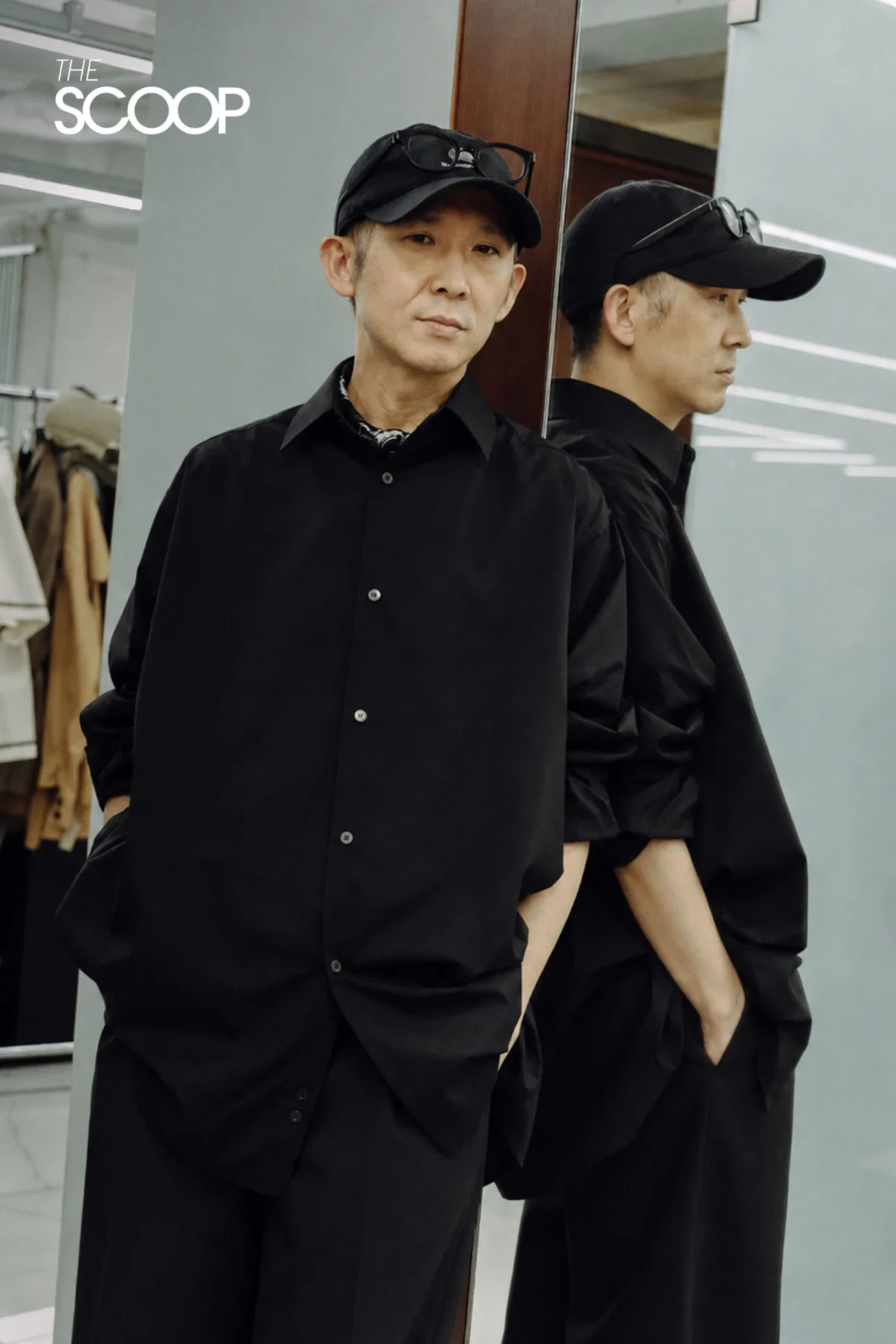
The fashion industry is abuzz with the announcement of a significant collaboration between Japanese high-fashion label Kolor and global retail giant Zara. This partnership, set to launch on December 3rd, with a special pop-up event in Tokyo on December 2nd, marks a pivotal moment for Kolor, representing its first major global collection since Taro Horiuchi assumed the role of Creative Director in 2025. The collection, which will encompass womenswear, menswear, and for the first time in Kolor’s history, childrenswear, aims to bridge the gap between avant-garde design and everyday wear, offering a unique proposition to a broad consumer base.
Horiuchi, a graduate of London’s Kingston University for photography and the Royal Academy of Fine Arts in Antwerp, where he studied alongside prominent designers Demna Gvasalia and Glenn Martens, has consistently been recognized for his ability to reimagine and elevate basic garments. His tenure at Kolor, taking over from founder Junichi Abe, has been characterized by a commitment to this ethos. Prior to leading Kolor, Horiuchi helmed his eponymous womenswear label, launched in 2010 after his move to France, and the menswear line TH Product, founded in 2018. These two lines were merged into Kolor’s creative direction in 2025, streamlining his design portfolio under the esteemed Japanese brand.

The genesis of the Kolor x Zara collaboration lies in Horiuchi’s artistic philosophy. "The theme for this project is ‘World Uniform,’" Horiuchi explained in an interview. "It’s something we do at Kolor: take something basic and turn it into something a little different. Fans of Kolor are always on the cutting edge of fashion, and they are always seeking something new. But those who shop at Zara are looking for clothes for their daily lives. So our challenge was to find the perfect balance between familiar and inspirational." This approach signals an intent to infuse Kolor’s signature innovative design sensibility into more accessible price points, a strategy that has proven successful for Zara in its numerous high-profile collaborations.
The Challenge of Childrenswear and Accessible Innovation
A notable aspect of the Kolor x Zara collection is the inclusion of childrenswear, a territory previously unexplored by Kolor. Horiuchi acknowledged the unique challenges associated with designing for younger demographics. "The core challenge for us in this project was expressing the brand without the high pricing and intricate details," he stated. "We wanted to make good, interesting clothes regardless of whether it was for children or adults. However, there are constraints when it comes to making clothes for children, both in terms of the textiles you can use and because the accessories and the parts on the clothing are very small. That was definitely a learning experience for us, which we took on happily."
The decision to venture into childrenswear for this collaboration underscores Zara’s expansive market reach and Kolor’s willingness to adapt its creative vision to new formats. Historically, children’s fashion has often been a realm of playful motifs and simpler designs. By integrating Kolor’s sophisticated approach to deconstruction and material innovation, the collection promises a fresh perspective on kids’ apparel, potentially influencing trends in this segment of the market.

A Symbiotic Partnership: Kolor’s Innovation Meets Zara’s Scale
The collaboration’s success hinges on the synergy between Kolor’s design prowess and Zara’s operational might. Horiuchi expressed his admiration for Zara’s capabilities, noting, "One thing that really stood out to me through this experience was the very high quality of fabrics and operations that Zara offers. My family and friends wear a lot of Zara, though I personally haven’t, so I wasn’t aware of the way they work. But the whole process was very inspirational to me. Both the product quality and the speed of responding were quite remarkable."
This sentiment highlights a reciprocal relationship. While Kolor brings its distinctive design language, Zara offers its unparalleled global supply chain, manufacturing efficiency, and extensive retail network. This allows for the realization of ambitious design concepts on a scale that would be unattainable for Kolor alone. "When it comes to any collaboration, it doesn’t make sense for me to make anything you can make alone," Horiuchi emphasized. "I am very happy to say we managed to realize something that Kolor couldn’t have made on its own, and I believe Zara feels the same way about us." This strategic alignment is crucial for collaborations aiming to democratize high fashion, making designer-led pieces accessible to a wider audience.
Navigating Legacy and the Future of Design Leadership
Horiuchi’s leadership at Kolor comes with the significant responsibility of building upon the brand’s established legacy, a dynamic often fraught with pressure. He succeeded founder Junichi Abe, who remains involved with the brand, a situation that mirrors other instances in the industry where new creative directors are tasked with evolving established houses. When asked about the pressure of following in Abe’s footsteps, Horiuchi offered a nuanced perspective, drawing on Abe’s own guidance: "Of course, I feel the pressure, and I also respect Abe-san incredibly. All I can do is what Abe-san told me to do at the very beginning of my time at Kolor: ‘Don’t repeat what I could. Just make Kolor unique to you,’ he said." This advice underscores the importance of individual creative vision in brand evolution, suggesting that true success lies not in imitation but in authentic interpretation.

The fashion industry is currently experiencing a period of significant flux, with frequent changes in creative directors at major luxury houses. This trend, Horiuchi noted, has implications for the creative process and industry stability. "Things change much faster than when I started in fashion around maybe 2005," he observed. "As I was saying earlier, building a brand takes time because it needs to have a culture and a philosophy. The compatibility of the brand and the designer is very important too in all that. In that sense, speedy changes are not good because they don’t allow the two to get to know each other." This sentiment suggests a preference for longer-term creative partnerships that allow for deeper brand immersion and development, contrasting with the rapid turnover often seen in the market.
The Enduring Importance of Emerging Talent and Accessibility
Horiuchi’s own career trajectory, from winning the Diesel Award at ITS (International Talent Support) 20 years ago to his current role, provides a valuable perspective on the significance of industry support for emerging designers. Reflecting on his early career, he stated, "Looking back now, this was a big turning point in my career. It wasn’t so much about winning the award, but more about the people I met." He highlighted the networking opportunities and community building fostered by such events, emphasizing that "those prizes and competitions are meaningful because of the communities they draw together."
However, Horiuchi also raised a critical concern regarding the increasing cost of fashion education. He noted the substantial rise in tuition fees at institutions like the Royal Academy of Fine Arts in Antwerp, observing, "The people who can’t afford such high tuition will not be entering the fashion industry. Demna wouldn’t have been at Antwerp if the tuition was any more expensive." This points to a potential narrowing of talent pipelines, where financial barriers could exclude promising designers. His suggestion for organizations supporting emerging talent to focus more on scholarships and grants is a call to action for greater inclusivity and sustainability within the industry’s future workforce.

The Kolor x Zara collaboration, therefore, represents more than just a fashion collection; it embodies a confluence of creative vision, industrial scale, and a thoughtful approach to making innovative design accessible. As the collection rolls out globally, its impact will be closely watched, not only for its aesthetic appeal but also for its potential to redefine the landscape of accessible luxury and foster a more inclusive future for fashion talent. The partnership stands as a testament to the evolving dynamics of the fashion world, where established luxury brands can leverage mass-market platforms to democratize style and introduce their unique design philosophies to a broader global audience. The success of this venture could pave the way for further collaborations that challenge traditional industry boundaries and offer consumers novel ways to engage with high fashion.
