

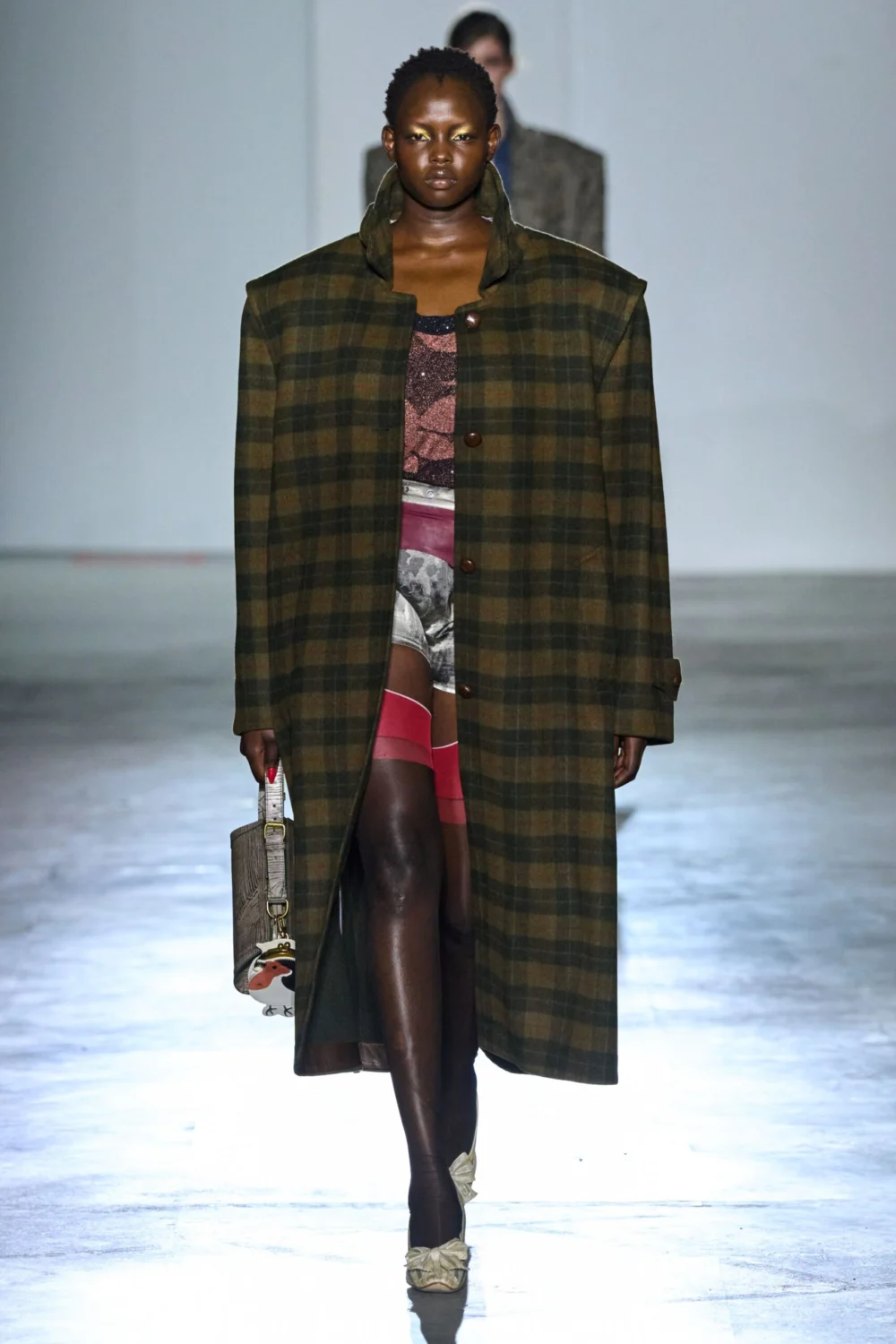
Andreas Kronthaler, the creative force behind the iconic Vivienne Westwood brand, presented his Fall 2026 Ready-to-Wear collection with a show that was as audacious as it was meticulously curated, drawing inspiration from the raw, earthy spirit of Pier Paolo Pasolini’s 1972 film adaptation of The Canterbury Tales and the luminous aura of Austrian screen legend Romy Schneider. The collection, unveiled amidst a palpable buzz of anticipation in Milan, transformed the runway into a vibrant, almost anarchic landscape, where historical references collided with a distinctly modern, liberated sensuality. Kronthaler himself described the collection’s genesis with a vivid metaphor: "I wanted the show to feel a bit like we’ve thrown the collection up into the sky and it landed in a big pile, a mountain. And everybody’s just grabbing something out of it and putting it on." This sentiment of organic discovery and personal interpretation permeated every aspect of the presentation.
The narrative woven through the collection was one of a modern pilgrimage, populated by a diverse cast of characters who embodied a spirit of defiant individuality. Kronthaler’s vision eschewed conventional runway order, presenting a "ramshackle crew of pilgrims" whose attire celebrated difference as the ultimate unifying element. This was evident in the eclectic mix of garments that graced the catwalk. Traditional Milanese loden coats, a staple of alpine attire, were reinterpreted in unexpected, striking checks and paired with artfully smudged lipstick and artfully distressed stockings, suggesting a journey marked by both ruggedness and a touch of rebellious glamour.
A standout piece, exemplifying Kronthaler’s ability to marry classic silhouettes with avant-garde detailing, was a finely powerful nylon cloqué wrap coat. Cinched with a striking gold grommeted belt, it exuded an air of sophisticated practicality. This was worn above flat, knee-high silk upper boots, creating a silhouette that was both grounded and ethereal. Further demonstrating the collection’s embrace of textural contrast, an almost debutante-worthy dress, crafted from a delicate check fabric, featured voluminous sleeves and a flattering skirt. This inherently feminine piece was subverted with an unexpected "animal shagginess," achieved through strategically woven clumps of blue thread that bristled out from the fabric, adding a wild, untamed element. This play on materials and perceived notions of beauty underscored Kronthaler’s commitment to pushing the boundaries of traditional fashion.
A Deconstruction of Eroticism and Archetypes
The collection’s embrace of sensuality was particularly noteworthy. Kronthaler applied the erotic signifiers traditionally associated with lingerie with a "gleeful permissiveness," extending them to both male and female models. This deconstruction of gendered aesthetics was a bold statement, reflecting a contemporary dialogue around fluidity and self-expression. A prime example of this was a net dress intricately patterned with sinuous wanderings of embroidered orange braid, a design that was both suggestive and artistic.
Playsuits, reimagined from refashioned underwear, featured playful frills, while a strapless bias minidress, expertly crafted from shirting silk and cotton, presented a more refined yet equally daring silhouette. These garments were juxtaposed against "wildly archaic hats," evocative of the imaginative and often anachronistic costume design of Danilo Donati, Pasolini’s celebrated costume designer. This deliberate anachronism created a rich tapestry of historical and contemporary influences, blurring the lines between past and present, and between the sacred and the profane.
The inspiration drawn from Pasolini’s The Canterbury Tales was more than superficial; it extended to the very spirit of the collection. Pasolini’s film, known for its unflinching portrayal of human nature and its often transgressive sexuality, provided a fertile ground for Kronthaler’s exploration of desire, earthiness, and the uninhibited expression of self. The designer’s admiration for Romy Schneider, a figure of immense beauty and independent spirit, further informed the collection’s ethos. "She embodied everything," Kronthaler stated, drawing a parallel between Schneider and Vivienne Westwood herself. "And she was a bit like Vivienne, a fearless woman who always went for the artistry." This admiration for strong, artistic women who defied convention resonated deeply with the collection’s overall message.
The Grand Finale: A Modern Bride and a Symbolic Bouquet
The free-association meander through this medieval-inspired, yet undeniably modern, landscape culminated in a truly memorable finale. A bride, adorned in an unfinished double duchesse satin gown, emerged clutching a bouquet not of delicate flowers, but of vibrant radishes. The choice of a radish, a humble yet potent root vegetable, offered a stark, earthy contrast to the bridal tradition, symbolizing a connection to the land and a rejection of conventional bridal sweetness. Her smudged lipstick, a deliberate detail, suggested a journey marked by passion and perhaps a moment of indiscretion en route to the altar, further reinforcing the collection’s playful subversion of tradition.

As the models took their final bow, Andreas Kronthaler offered a simple, "airily waved" acknowledgement to his captivated audience. This gesture, seemingly understated, encapsulated the designer’s confident approach: he had presented his vision, a world where the beautiful and the bawdy, the refined and the raw, coexisted with exhilarating abandon. The collection’s success lay in its ability to provoke thought and evoke emotion, demonstrating that fashion, at its most potent, is a form of storytelling, a reflection of our deepest desires and our most authentic selves.
Context and Industry Impact
The Fall 2026 Ready-to-Wear season in Milan has been a focal point for the global fashion industry, with designers showcasing their interpretations of emerging trends and responding to the prevailing cultural climate. Vivienne Westwood, a house with a legacy of pioneering punk aesthetics and championing social and environmental causes, consistently presents collections that go beyond mere aesthetics. Andreas Kronthaler’s tenure as creative director has seen a continuation of this ethos, blending historical influences with a progressive, often rebellious, sensibility.
This particular collection arrives at a time when discussions around authenticity, sustainability, and the deconstruction of traditional gender norms are at the forefront of public discourse. By drawing inspiration from Pasolini’s raw portrayal of humanity and the fearless spirit of icons like Romy Schneider and Vivienne Westwood, Kronthaler has tapped into a zeitgeist that values individual expression and a rejection of superficiality. The collection’s emphasis on unique styling and the mixing of disparate elements can be seen as a sartorial echo of the growing consumer desire for personalized fashion and the embrace of pre-loved or upcycled garments.
Supporting Data and Trends
While specific sales figures for individual collections are proprietary, the enduring appeal of the Vivienne Westwood brand, particularly under Kronthaler’s direction, speaks to its resonance with a discerning clientele. The brand consistently attracts attention for its innovative designs and its commitment to a distinct brand identity. Industry analyses of the luxury fashion market frequently highlight the growing importance of heritage brands that can successfully evolve their narratives for contemporary audiences. Furthermore, the trend towards more inclusive and gender-fluid fashion continues to gain momentum, with designers increasingly challenging traditional sartorial boundaries. Kronthaler’s bold application of lingerie-inspired elements to all models directly addresses this evolving landscape.
Reactions and Analysis
While direct quotes from industry insiders were not immediately available, the prevailing mood following the show suggested a strong positive reception. Fashion critics and editors present at the event are expected to publish their detailed reviews in the coming days. However, the immediate visual impact of the collection—its vibrant energy, its daring juxtapositions, and its confident embrace of sensuality—points towards a strong commercial and artistic statement. The collection’s ability to evoke a sense of narrative and character will likely be a key talking point, appealing to consumers who seek fashion that tells a story. The strategic use of historical references, particularly from cinema and art, also appeals to a more culturally engaged consumer base.
The implications of this collection extend beyond the runway. It reinforces the Vivienne Westwood brand’s position as a leader in setting trends that are both aesthetically compelling and culturally relevant. The focus on craftsmanship, evident in the detailed construction of the garments, alongside the innovative use of materials, suggests a commitment to enduring quality. In an era where fast fashion is increasingly scrutinized, collections like this serve as a reminder of the value of thoughtful design and the power of fashion to inspire and provoke. Andreas Kronthaler for Vivienne Westwood has once again demonstrated that true artistry lies in the courage to be bold, to be authentic, and to celebrate the multifaceted nature of human experience.
