

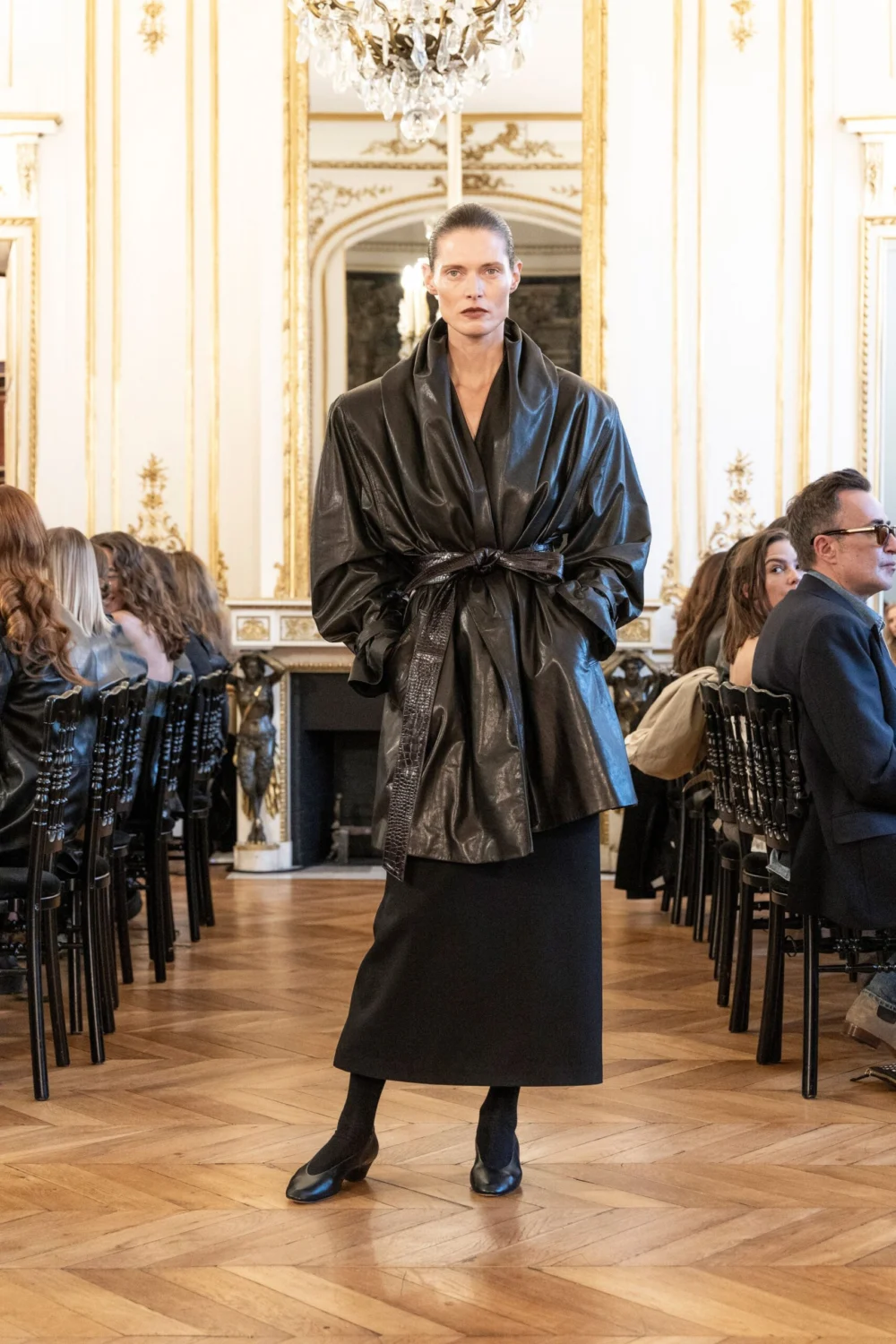
Paris Fashion Week witnessed a significant moment for Polish designer Magda Butrym as she unveiled her most expansive Paris Fashion Week presentation to date, a collection aptly titled "Zima," the Polish word for winter. This highly anticipated show, which opened with the iconic Polish supermodel Malgosia Bela – a familiar face from Butrym’s 10th-anniversary campaign, "Decade of the Rose" – signaled a profound shift in the designer’s creative direction. Backstage, Butrym described the collection as a "big switch in my head," a realization that the rich tapestry of Polish New Wave cinema, particularly Andrzej Wajda’s seminal 1969 film Polowanie na muchy ("Hunting Flies"), offered as much fertile ground for inspiration as its French counterparts. This pivot represents a sophisticated reclamation of a powerful, yet often misunderstood, cinematic archetype, reframing it for the contemporary woman.
The Genesis of "Zima": A Cinematic Awakening
The inspiration for "Zima" stemmed from Butrym’s deep dive into the cultural landscape of her native Poland, leading her to the raw, sensual, and remarkably relevant aesthetic of Polish cinema from the late 1960s. "It was so sensual, effortless and relevant to today," Butrym remarked, speaking about the impact of Polowanie na muchy. The film, in its original context, depicted its central character, Irena, as a controlling, almost predatory figure, a "mantis-like creature." However, Butrym’s 2026 interpretation flips this narrative on its head. She reclaims Irena and her signature oversized sunglasses, transforming her into a heroine who, as stated in her show notes, "doesn’t perform femininity, she claims it." This assertion is a powerful statement in a fashion season that has been largely dominated by discussions of women reclaiming physical and metaphorical space through amplified silhouettes and assertive design elements.
Strategic Volume and Evolving Silhouettes
In a week where power shoulders and voluminous skirts have been prevalent themes, Butrym’s approach to volume was characterized by a deliberate restraint and nuanced execution. While strategic padding made a reappearance from her pre-fall collection, it was integrated with a keen eye for enhancing rather than overpowering the female form. The collection saw an amplification of volume through the artful manipulation of bustle-like layers, notably featured on a striking black taffeta bustier dress. This piece showcased ample layering and discreetly integrated pockets, a testament to Butrym’s blend of high fashion and practical design.
Traditionally known for her penchant for mini-lengths, Butrym surprised by extending hemlines to midi and even near-ankle lengths. This deliberate choice, as she explained, acknowledged that "not all women are 34s" (referring to a typical model’s inseam measurement), signifying a broader and more inclusive vision of feminine style. This move towards more encompassing silhouettes aligns with a growing trend in the fashion industry towards greater diversity and representation on the runway and in campaign imagery.
Knitwear also played a significant role in the "Zima" collection, with everyday wardrobe staples elevated through Butrym’s distinctive design language. Her signature Slavic details, such as intricate hand crochet and delicate kerchiefs, were incorporated with a light, almost ethereal touch, preventing them from becoming overtly thematic or costumey. This subtle integration allows these elements to enhance the overall aesthetic without dominating it.
Texture as a Dominant Force
Butrym’s most compelling looks in the "Zima" collection were those that masterfully played with texture, creating a tactile and visually rich experience. A standout piece was a impeccably tailored black leather coat, cinched with an espresso-hued croc-embossed belt, exemplifying Butrym’s ability to marry classic tailoring with bold, statement-making details. Another notable iteration featured an ample, glossy leather coat, cropped and cinched high on the waist, exuding an aura of effortless chic. The collection also included several striking black shearling pieces, offering a luxurious and textural counterpoint to the sleeker leather garments.
A black skirt paired with a white bustier dress, embellished with feather-like fabric fringe and beads, presented a vision of chic yet relaxed sophistication. Butrym’s enduring affinity for the blazer was evident, with a double-breasted, hourglass silhouette offered alongside fluid trousers, a combination that speaks to both power and ease. Furthermore, a structured, cropped jacket crafted from shaved faux fur delivered the season’s power-dressing statement with an uncompromised sense of personal space, a nod to the collection’s overarching theme of empowered femininity.
The "Barbara" Bag: A New Icon
Accessorizing the collection was the introduction of the "Barbara" bag, a soft-bodied yet structurally defined accessory named after the designer’s long-time friend and confidante. This new handbag is poised to become a significant addition to the Magda Butrym offering, embodying the collection’s blend of refined elegance and practical functionality.
Market Implications and Future Outlook
The "Zima" collection’s debut in Paris marks a significant milestone for Magda Butrym, signaling her growing influence on the global fashion stage. The successful staging of her most comprehensive PFW presentation to date, coupled with the collection’s sophisticated exploration of themes like feminine empowerment and cinematic inspiration, positions the brand for continued success.
The collection’s strategic blend of statement pieces and wearable essentials is likely to resonate strongly with consumers. The emphasis on luxurious textures, refined silhouettes, and the nuanced integration of signature details suggests a strong commercial appeal. Industry analysts are anticipating robust sales, particularly with the upcoming opening of the new Magda Butrym store on Mercer Street in September. The brand’s ability to translate high-concept design into desirable, market-ready pieces has been a key driver of its growth, and "Zima" appears to be a potent continuation of this strategy.
The "Decade of the Rose" campaign, which garnered significant attention and celebrated Butrym’s ten-year milestone, demonstrated the brand’s capacity for impactful storytelling and its strong connection with established fashion figures. The return of Malgosia Bela for the "Zima" show underscores this narrative continuity and reinforces the brand’s association with sophisticated, confident femininity.
The fashion industry’s ongoing conversation around female empowerment and the reclamation of personal space provides a fertile backdrop for Butrym’s latest collection. By drawing inspiration from a less-explored cinematic tradition and reinterpreting its complex female characters, Butrym offers a fresh perspective on power dressing. Her designs do not shout for attention but rather exude a quiet confidence and an undeniable self-assuredness. This nuanced approach to empowerment is likely to appeal to a discerning clientele seeking fashion that is both intellectually engaging and aesthetically refined.
The "Zima" collection, therefore, represents more than just a seasonal offering; it is a declaration of intent. It signals Magda Butrym’s maturation as a designer, her willingness to push creative boundaries, and her deep understanding of how fashion can serve as a vehicle for cultural commentary and personal expression. As the collection makes its way to retail, its impact is expected to be felt not only in sales figures but also in its contribution to the evolving discourse on femininity and power in contemporary fashion. The strategic use of volume, the masterful play of textures, and the subtle yet impactful references to Polish cinema all converge to create a collection that is both timeless and thoroughly modern, solidifying Magda Butrym’s position as a significant voice in the global fashion landscape.
