

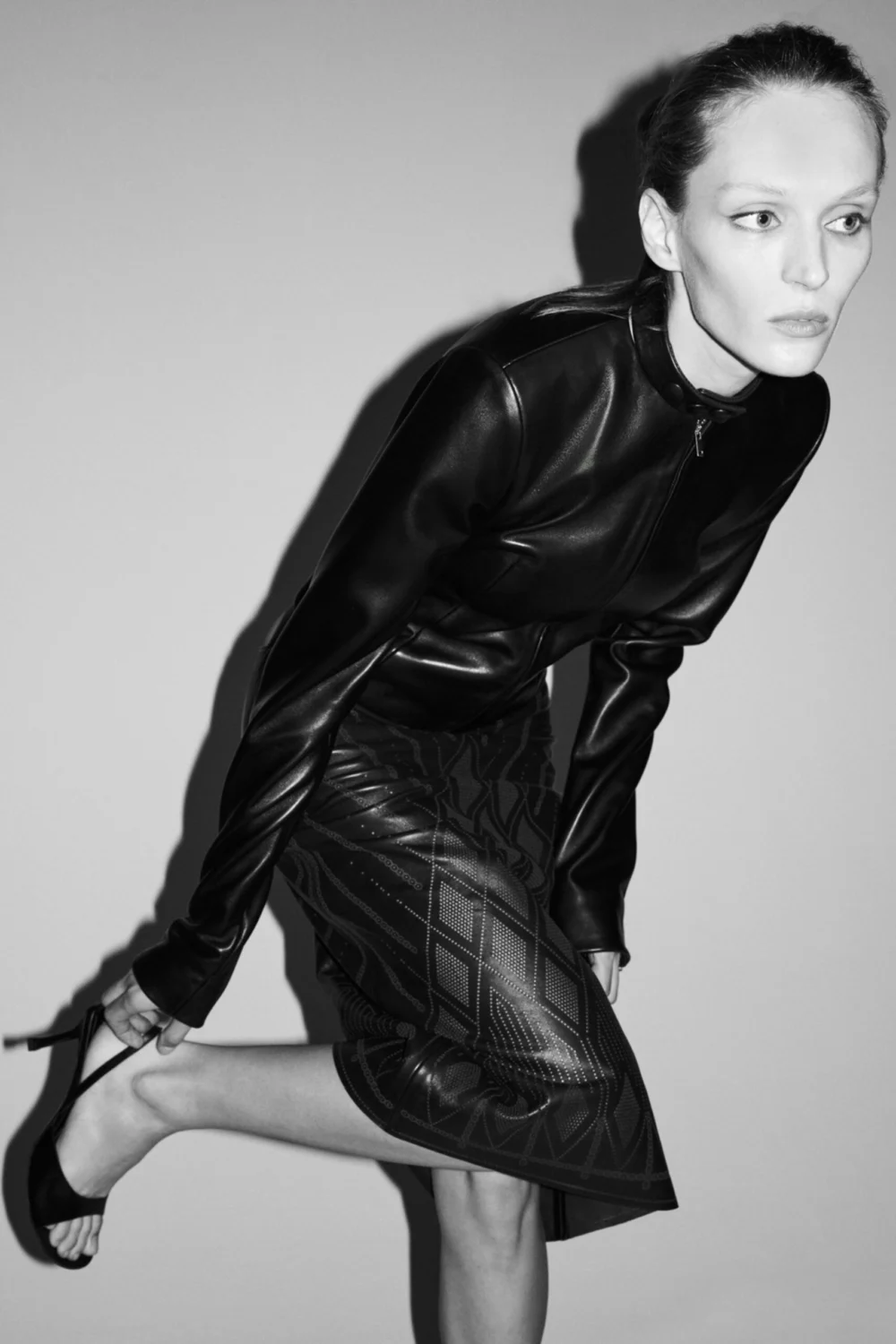
The stark, almost clinical beauty of David Cronenberg’s 1996 film Crash served as the unlikely muse for Christopher Esber’s latest Fall collection, a sartorial exploration that eschews overt sexuality for a more nuanced and compelling dialogue between the human form and engineered surfaces. Esber, speaking from his studio via Zoom, articulated a vision that sought to translate the tactile, protective, and often sensual elements of automotive design into wearable art. The collection, unveiled as part of the broader fashion calendar for the Fall season, resonated with a sophisticated audience attuned to conceptual depth and meticulous craftsmanship.
The Genesis of an Automotive Aesthetic
The inspiration behind the collection can be traced directly to Esber’s re-watching of Crash, a film notorious for its exploration of human attraction to car crashes and the subsequent fascination with the mechanical and physical aftermath. Esber identified a potent aesthetic in the film’s visual language: the plushness of upholstered materials, the sleek curves of metal, the reassuring presence of padded surfaces, and the functional, yet often evocative, details of buckles and harnesses. His ambition was not to replicate the film’s transgressive themes but to distill its essence into a collection that explored "a quiet charge" derived from the interplay of skin and fabricated surfaces, softness and structural integrity.
"Looking at technology and the body, from airbags and seatbelts to the interior of cars and how we feel protected and enveloped by them, sort of like a womb, is something we hadn’t explored before," Esber revealed. This inward-looking examination of technological integration within personal space opened up a vast landscape of textural possibilities and finishes, with a particular nod to the aesthetic sensibilities of the 1970s, a decade synonymous with both automotive innovation and bold design.
A Convincing Synthesis of Mechanics and Fashion
While the trend of drawing inspiration from mechanical engineering was not unique to Esber’s Fall offering, his collection stood out for its convincing and sophisticated execution. The designer masterfully integrated automotive-inspired elements without succumbing to literal interpretation. This was evident in the subtle yet impactful details: diamond perforations adorning a leather skirt, a nod to the intricate patterns found in vehicle interiors, and a retro-plaid lining that lent a season-defining slouch to a bomber jacket.
One particularly innovative piece was a bomber jacket crafted from laminated leather. Its circular silhouette was entirely delineated by a strategically placed zipper, hinting at the functional artistry of automotive closures. The jacket featured a tech nylon lining that could be detached and worn independently, showcasing a layered approach to design and utility. Despite the evident technical complexity of its construction, the garment exuded an effortless ease, a hallmark of Esber’s design philosophy. Sculptural blazers offered sharp, tailored lines, providing a structural counterpoint to the softer elements. A standout piece, a cocoon-shaped cream sweater, incorporated airbag nylon into its back panel, a direct and striking reference to the collection’s core inspiration.
From Chassis to Spirals: A Natural Progression
The designer’s exploration of mechanical forms extended beyond the immediate visual cues of a car’s exterior and interior. Esber drew a parallel between the functional components of machinery and organic forms, specifically the concepts of springs and spirals. He noted that these shapes are inherent to both mechanical engineering and the natural world, a duality that fueled further creative exploration.
Spirals manifested as a recurring motif throughout the collection. They appeared as intricate patterns on black lace, adding a delicate yet structured embellishment. In a more abstract interpretation, spirals were used to frame negative space, creating conch-like whorls at the shoulders and hips of a white jersey dress. This subtle yet impactful use of form demonstrated Esber’s ability to translate abstract concepts into tangible design elements.
A Palette of Depth and Dramatic Texture
Esber deliberately adopted a predominantly black palette for the Fall collection. This strategic choice allowed him to place a greater emphasis on fabric manipulation and textural exploration, ensuring that the innovative materials and construction techniques took center stage. The collection featured a range of dramatic treatments that amplified the tactile experience.
Fur-like cashmere knitwear was employed on a circular jacket, offering a luxurious and voluminous silhouette. A chevron faux fur coat provided a bold statement piece, its pattern echoing the dynamic lines of racing aesthetics. Feather-like effects, achieved through shredded silk georgette on a trench coat silhouette, introduced an element of ethereal lightness to the collection. Tassels, traditionally associated with furnishings, were reinterpreted with a modern edge, appearing on evening wear and in a shaggy treatment on a pale mint evening coat.
Racing stripes, another direct reference to the automotive world, were rendered in silk georgette and individually finished. Assembled with meticulous pique stitching, these stripes adorned easy caftans and bags, evoking the dynamism of speed. Esber himself described these stripes as looking "like an open road," a poetic encapsulation of the collection’s journey.
Industry Context and Market Reception
Christopher Esber’s Fall collection was presented within the broader context of the Fall fashion week circuit, a highly anticipated period for designers to showcase their upcoming offerings to buyers, press, and industry influencers. This season, a notable undercurrent among many designers involved a departure from overt futurism towards a more grounded, introspective approach, often drawing inspiration from past decades or specific cultural touchstones. Esber’s focus on automotive themes aligned with this broader trend of referencing established aesthetic languages but with a distinctively contemporary sensibility.
The collection’s emphasis on sophisticated construction and nuanced inspiration suggests a target demographic that values both intellectual design and refined craftsmanship. Retail buyers, tasked with curating collections for discerning consumers, would likely have responded positively to the blend of commercial appeal and artistic merit. The use of high-quality materials and the innovative application of techniques point towards a pricing strategy that reflects luxury positioning.
While specific sales figures for individual collections are typically proprietary, the critical reception and the designer’s established reputation within the industry suggest a strong commercial outlook. Esber’s previous collections have consistently garnered positive reviews for their innovative silhouettes and modern sensuality, and this Fall offering appears to build upon that success. The collection’s ability to translate a complex thematic inspiration into wearable, desirable garments is a key indicator of its potential market success.
Broader Implications: Technology, Sensuality, and the Future of Fashion
The implications of Christopher Esber’s Fall collection extend beyond the immediate trends of the season. His exploration of the relationship between technology and the human body, particularly through the lens of automotive design, taps into a growing cultural conversation about our increasing integration with engineered environments. The idea of being "protected and enveloped" by technology, as Esber described, is a pertinent reflection of how we interact with the devices and systems that shape our daily lives.
Furthermore, the collection’s success in navigating the fine line between sensuality and overt sexuality offers a valuable commentary on contemporary fashion discourse. By focusing on the subtle interplay of skin and fabric, softness and structure, Esber demonstrates that allure can be found in restraint and suggestion, rather than explicit declaration. This approach resonates with a growing demand for fashion that empowers rather than objectifies, fostering a sense of confidence and self-possession.
The influence of retro aesthetics, particularly the 1970s, also highlights the cyclical nature of fashion and the enduring appeal of design eras characterized by bold experimentation and a distinct sense of optimism. Esber’s ability to fuse these vintage sensibilities with modern techniques and a contemporary thematic framework speaks to his skill as a designer who can both honor the past and shape the future.
In conclusion, Christopher Esber’s Fall collection represents a compelling fusion of automotive inspiration, technical innovation, and sophisticated design. By transposing the tactile and structural elements of cars into a sartorial expression, he has created a collection that is both thought-provoking and undeniably chic. As Esber himself suggested, with this lineup, he "seemed ready to shift into high gear," a sentiment that encapsulates the collection’s dynamic energy and its promising trajectory within the fashion landscape. The collection’s success lies in its ability to provoke a deeper contemplation of our relationship with technology, our perception of sensuality, and the evolving definition of modern luxury.
