

The Autumn/Winter collection presented by Véronique Leroy offers a compelling insight into the art of building a wardrobe that transcends fleeting trends, embodying the very essence of Parisian chic through a lens of longevity and personal expression. For over three decades, the Belgian designer has carved a niche as an independent force in the fashion industry, consistently delivering pieces that are not only infused with her distinctive signature but are also crafted to endure. Her loyal clientele, a testament to this philosophy, frequently venture beyond conventional shopping districts to her serene atelier, a luminous space situated adjacent to the historic Père Lachaise cemetery. This deliberate choice of location mirrors the designer’s own approach to her craft: quiet, considered, and deeply rooted.
"Clients from France, Belgium, and elsewhere know that what’s here will go with what they already have, plus we’ll adapt things for them," Leroy remarked during a recent visit, underscoring the collaborative and personalized nature of her design process. "Often, they rediscover and rewear things from their closets too. I love the idea of keeping clothing for a long time, forgetting about it, and then finding it again." This sentiment champions a philosophy that predates the current widespread embrace of "slow fashion," a principle Leroy has championed since the inception of her career. Her formative experiences, including her time working under the tutelage of the legendary Azzedine Alaïa, appear to have instilled a profound appreciation for craftsmanship, durability, and the intrinsic value of well-made garments.
A Palette of Enduring Tones and Contrasting Textures
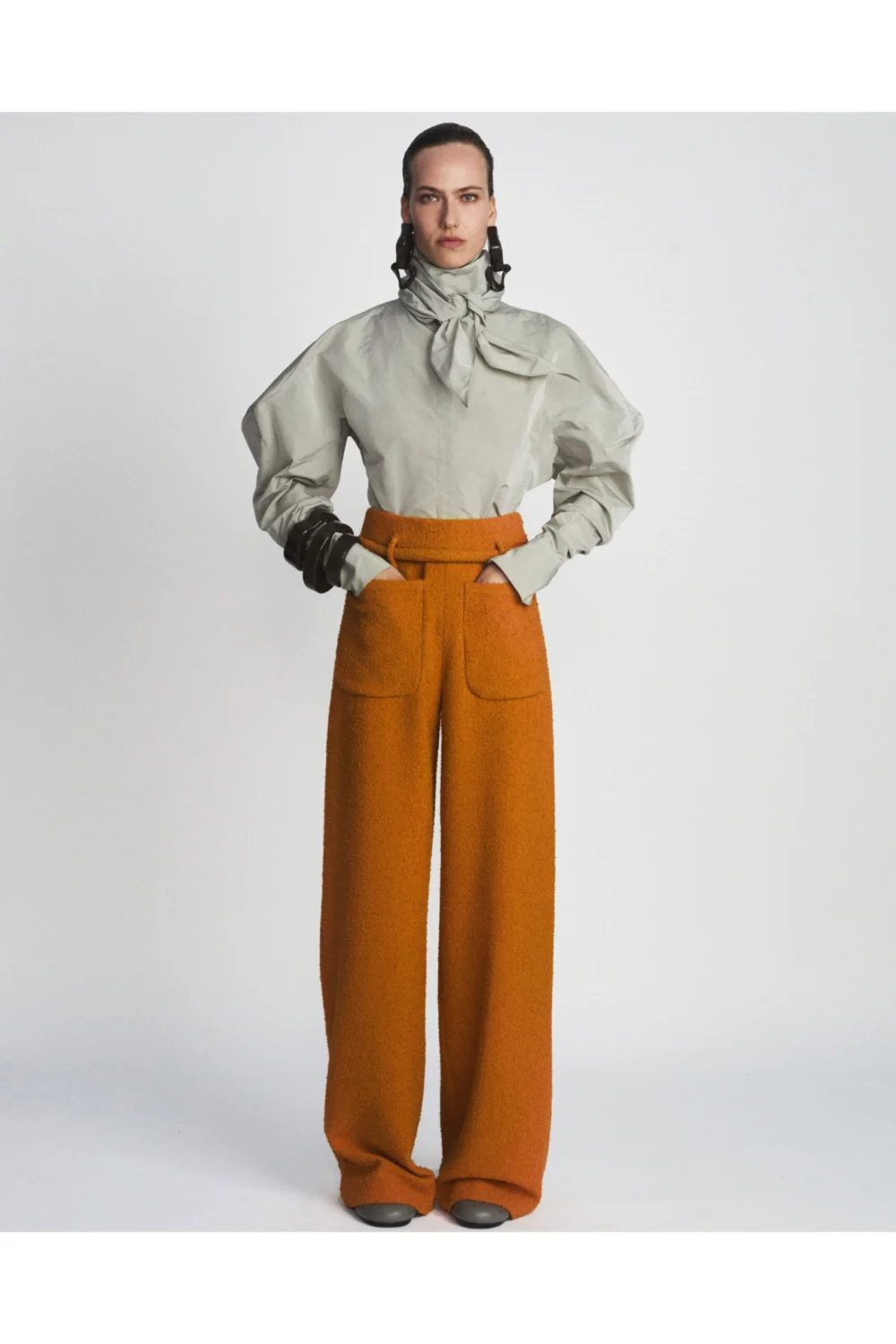
Leroy’s Autumn/Winter collection is built upon a foundation of two seemingly disparate yet complementary materials: a Japanese silk-polyester taffeta and a robust, felted wool. The color palette for this season draws inspiration from the "wartime ’40s" era, featuring a sophisticated array of dove gray, prune, and black. These muted tones are strategically punctuated by vibrant accents of red and orange, injecting a contemporary dynamism into the collection.
The choice of taffeta, as explained by Leroy, was driven by its inherent sculptural quality. This material allows for a unique wearer-initiated finishing process, where the garment’s volume and drape are ultimately defined by the individual. "I like the idea of a garment only being finished once it’s worn," she stated, highlighting her belief in the symbiotic relationship between clothing and its wearer. The juxtaposition of the fluid, crisp taffeta with the dense, substantial felted wool is not presented as mere contrast, but rather as a deliberate "confrontation" – a term that suggests a powerful dialogue between opposing forces, resulting in a harmonious and compelling whole.
In a fashion landscape often dominated by exaggerated shoulder silhouettes, Leroy’s outerwear offers a measured approach to power dressing. The jackets and coats feature squared, dropped shoulders that exude strength without overwhelming the wearer, striking a balance between assertiveness and wearability. The trousers are designed with a precise attention to fit, offering options that sit comfortably at the natural waist or slouch with relaxed elegance. The collection also incorporates thick knits, rendered in multicolored yarns. Examples, such as a rich chocolate and royal blue combination, are intentionally worked to appear slightly random, eschewing a perfectly matched aesthetic for a more organic, almost artfully haphazard feel. At times, these knits feature a gathered effect, cleverly mimicking the natural drape and flow of fabric.
The Genesis of a Collection: A Three-Decade Journey
Véronique Leroy’s consistent presence in the fashion industry for over thirty years is a remarkable achievement, especially within the dynamic and often volatile Parisian fashion scene. Her journey began with an early apprenticeship, including her significant time spent under Azzedine Alaïa. This period was formative, not just in honing her technical skills but in understanding the fundamental principles of design: impeccable fit, luxurious materials, and garments that empower the wearer. Alaïa, renowned for his mastery of silhouette and his unwavering commitment to quality, served as a powerful influence. His approach, which often involved a deep understanding of the female form and a dedication to creating timeless pieces, is clearly reflected in Leroy’s own design ethos.
Leroy launched her eponymous label in the late 1980s, at a time when independent designers were navigating a fashion world increasingly dominated by larger houses. Her decision to focus on building a loyal customer base through personalized service and inherently wearable designs set her apart. Her atelier, situated in the 20th arrondissement of Paris, has become a destination for those seeking an alternative to the high-street and the ostentatious displays of luxury fashion. The proximity to Père Lachaise cemetery, a place of quiet contemplation and enduring legacies, subtly underscores the timeless nature of her creations.
The brand’s commitment to "slow fashion" is not a recent adaptation to market trends but a foundational aspect of its identity. This philosophy translates into collections that prioritize quality over quantity, timeless design over ephemeral fads, and responsible production practices. Unlike many brands that churn out multiple collections annually, Leroy’s approach allows for a more considered development process, focusing on creating pieces that can be cherished and worn for years, even decades. This is evident in her client interactions, where adapting existing pieces and encouraging the re-discovery of older items from their wardrobes are integral parts of the experience.
The Context of Paris Fashion Week and Industry Trends
The presentation of Véronique Leroy’s Autumn/Winter collection typically occurs within the esteemed calendar of Paris Fashion Week. This biannual event, held in February and September, is the pinnacle of the global fashion calendar, attracting designers, buyers, press, and influencers from around the world. Paris Fashion Week is not merely a showcase for new collections; it is a crucial barometer for future fashion trends, a platform for establishing brand narratives, and a significant economic driver for the French fashion industry.
In recent years, the fashion industry has been grappling with increasing calls for sustainability and ethical practices. The rise of "slow fashion" as a movement, advocating for mindful consumption, durability, and fair labor, has gained significant traction. Leroy’s long-standing adherence to these principles positions her as a pioneer rather than a follower. While many brands are now actively promoting their sustainability initiatives, often as a response to consumer pressure, Leroy’s approach has always been intrinsically linked to the longevity and quality of her garments. Data from industry reports consistently highlight a growing consumer demand for sustainable fashion. For instance, a 2023 report by Edited indicated a significant increase in searches for "sustainable fashion" and "eco-friendly clothing" globally, suggesting a shift in consumer priorities.
Leroy’s collection, with its emphasis on durable materials like felted wool and high-quality taffeta, and its focus on timeless silhouettes, directly addresses this growing market concern. The "confrontation" between materials, while artistically driven, also speaks to the inherent strength and resilience of the chosen fabrics, contributing to the longevity of the garments. The deliberate choice of "wartime ’40s" tones further evokes a sense of historical resilience and resourcefulness, a subtle nod to periods where durability and functionality were paramount.
Statement Jewelry: A Counterpoint to Considered Silhouettes
Complementing the thoughtful construction and understated elegance of the clothing, Véronique Leroy’s collection is punctuated by statement jewelry. These pieces are designed to provide a bold counterpoint to the more subdued garments, adding a distinctive artistic flourish. This season, the designer explored voluminous, organic-looking forms crafted from hand-sculpted aluminum. This material choice represents a continuation of her experimentation with unconventional yet impactful mediums, following last season’s exploration of wood.
The jewelry, particularly the earrings, are striking in their sculptural quality. Their organic, almost abstract shapes draw the eye, offering a focal point without overwhelming the overall look. Crucially, Leroy has prioritized wearability, ensuring that these statement pieces are lighter than they appear, a consideration that is vital for any piece of jewelry intended for extended wear. This attention to detail, even in the realm of accessories, underscores her holistic approach to design, where every element is considered for its aesthetic appeal and functional comfort. The use of aluminum, a material that can be both robust and malleable, allows for the creation of substantial forms that remain surprisingly lightweight, a testament to Leroy’s innovative spirit.
Broader Implications and Enduring Legacy
Véronique Leroy’s Autumn/Winter collection serves as a powerful reminder of the enduring appeal of well-crafted, thoughtfully designed clothing. In an era characterized by rapid consumption and the relentless pursuit of newness, her steadfast commitment to quality, longevity, and personal style offers a compelling alternative. Her success, built on a foundation of integrity and a deep understanding of her clientele, has significant implications for the broader fashion industry.
Firstly, it validates the "slow fashion" movement, demonstrating that profitability and ethical practices are not mutually exclusive. Leroy’s loyal customer base, willing to travel to her atelier and invest in pieces that will last, signifies a growing segment of the market that prioritizes substance over superficiality. This can encourage other designers and brands to reconsider their production models and marketing strategies, shifting the focus from disposability to durability.
Secondly, her design philosophy underscores the importance of a designer’s personal vision and connection with their customers. The intimate setting of her atelier, the personalized service, and the emphasis on adapting garments for individual needs create a unique brand experience that fosters deep customer loyalty. This stands in contrast to the often impersonal nature of large-scale fashion retail.
Finally, Leroy’s continued innovation in material and form, as seen in her use of taffeta, felted wool, and sculpted aluminum, proves that creativity and sustainability can go hand-in-hand. Her ability to translate artistic concepts into wearable, enduring pieces ensures her legacy as a designer who not only understands fashion but also its profound connection to personal identity and responsible consumption. As the fashion industry continues to evolve, Véronique Leroy’s work offers a blueprint for a more considered, sustainable, and ultimately more fulfilling approach to style. Her collection is not just a presentation of clothing; it is a manifesto for enduring elegance and a testament to the power of thoughtful design.
