

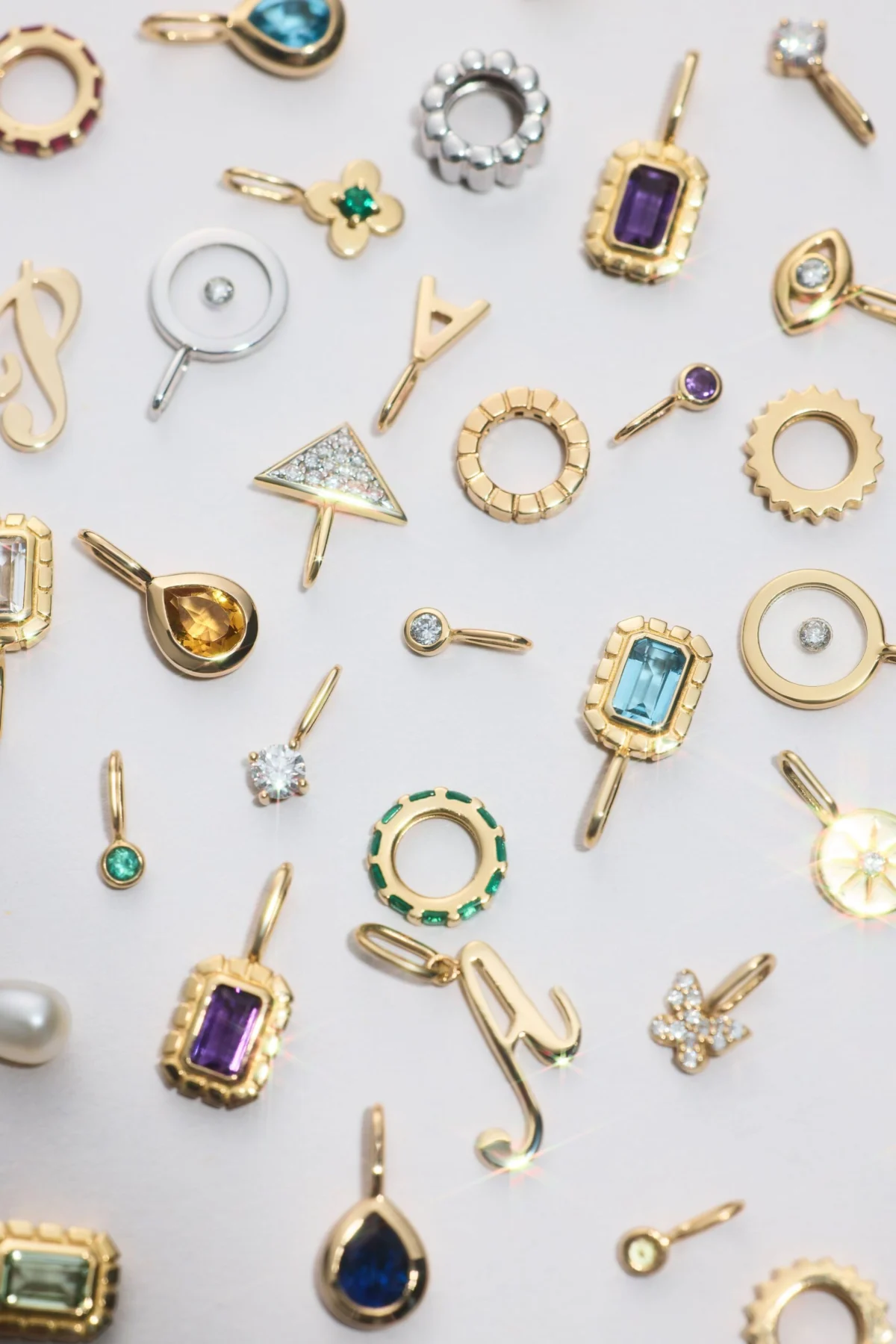
The price of gold has surged to historic highs, presenting a significant challenge for a new generation of jewelry brands that built their success on offering accessible luxury. These brands, often prioritizing high-quality craftsmanship at attainable price points, are now grappling with the escalating cost of their primary material, forcing them to re-evaluate their business models and pricing strategies.
A Meteoric Rise in Gold Prices
The gold spot price, the real-time market valuation of the precious metal, breached the $3,000 per ounce threshold in March 2025. This upward trajectory continued with remarkable speed, surpassing $5,000 per ounce by January 2026. This represents a staggering 162% increase in just five years, a phenomenon largely attributed to global market turmoil. During periods of high inflation and a weakening U.S. dollar, investors increasingly turn to gold as a safe-haven asset, driving up demand and, consequently, its price.
This surge has directly impacted the cost of materials for jewelry brands. While luxury jewelry houses, catering to a clientele that views their purchases as investments, have largely absorbed the price increases without significant shifts in consumer behavior, the demi-fine sector—a segment positioned between fashion jewelry and high jewelry—is experiencing a palpable change in shopping patterns.
The "Canary in the Coal Mine" for Consumer Spending
"Jewelry generally is the canary in the coal mine," explains Ankur Daga, co-founder and CEO of Angara. "In the sense that whenever the U.S. consumer struggles, jewelry is the first to get hit because it’s not a necessity. It’s a pure discretionary purchase." Angara, like many in the industry, has been compelled to raise prices. The brand implemented its latest price adjustment in December and typically revises pricing twice a year. However, Daga indicated a potential shift towards quarterly adjustments to keep pace with market volatility. He reiterated that while high-end jewelry consumers demonstrate a greater willingness to absorb increased costs, the mid-tier market is reacting inversely.
The K-Shaped Economy’s Influence on Jewelry Choices
The current economic climate appears to be fostering a "K-shaped economy" within the demi-fine jewelry market. Consumers are bifurcating their purchasing decisions, with some opting for more affordable alternatives like lower-karat gold (10-karat) and other precious metals, while others remain steadfast in their preference for 14-karat and 18-karat pieces. This dynamic presents brands with a critical choice: maintain stable pricing by reducing the karat count of their offerings or risk alienating their core customer base by increasing prices.

The Emergence of 10-Karat Gold as a Viable Alternative
The prevailing economic conditions are inadvertently creating a new market niche within demi-fine jewelry: the expanded prominence of 10-karat solid gold. Many brands that previously focused exclusively on 14-karat or higher have begun to incorporate 10-karat options into their collections. This strategic move aims to preserve the allure of solid gold as a key selling point while making products more accessible to a broader consumer base.
Ten-karat gold comprises 41.7% pure gold, a lower proportion compared to 14-karat gold’s 58.3% pure gold content. While 10-karat gold is generally considered less prone to scratching and bending than higher purities, it is also the least hypoallergenic among common gold karatages. Despite this, the perceived value proposition of solid gold at a more attainable price point is proving compelling.
David Benayoun, co-founder and CEO of Ana Luisa, a brand specializing in affordable jewelry staples, including fashion jewelry, 10k solid gold, and 14k-plated pieces, notes the positive reception to 10-karat offerings. "Ten-karat, in our opinion, has the same durability as 14 karats, and our intuition was that customers were completely open to that new category," Benayoun stated. Ana Luisa introduced its 10-karat solid gold line in March 2023, and Benayoun reports a threefold increase in sales within its solid gold category over the subsequent 18 months.
Industry Leaders Embracing 10-Karat Gold
Other prominent brands are following suit. Mejuri, a well-established name in affordable luxury jewelry, has recently shifted its focus to include 10-karat gold, having previously offered only 14-karat items and 18-karat vermeil. The brand communicated a price increase to its customers on March 9, with some of its most popular items, such as 18-millimeter diameter 14k hoop earrings, experiencing a price hike exceeding 20%, now retailing for close to $400.
Noura Sakkijha, CEO and co-founder of Mejuri, explained the rationale behind this strategic pivot: "This shift ensures we never compromise on the quality or the values that brought you to us in the first place." She further elaborated on the brand’s commitment to diversification, stating, "We are focusing on introducing more 10k gold into our collections alongside 14k gold. This lets us offer the durability of solid gold at a more approachable price, while still designing in 14k for those who prefer it."
Navigating Material Cost Volatility
Even with the adoption of 10-karat gold, brands face challenges in managing the unpredictable costs of precious metals. "We’re trying to find ways to mitigate the volatility of the metal, and it’s almost like every technique they used to have in the industry for the last couple of years is out the window because the volatility has increased so much," Benayoun observed.

To counter this volatility, Ana Luisa employs a strategy of using "gold locks," a method where the company places a deposit on gold it intends to use over a specific period. While this incurs a higher upfront cost, the deposit helps stabilize jewelry production costs and, consequently, retail pricing, regardless of fluctuations in the market price of gold.
Strategies for Maintaining Quality and Affordability
Beyond shifting karatage, some brands are committed to upholding higher karatage in their solid gold lines and are exploring alternative strategies to mitigate cost pressures without compromising product quality or significantly increasing prices.
Sebastian Picardo, CEO of Monica Vinader, highlighted the company’s focus on "finding opportunities to unlock operational efficiencies." This includes standardizing components, such as clasps, across various product categories to achieve economies of scale. By using the same clasps across multiple designs, Monica Vinader can secure better pricing through bulk purchasing.
Picardo also emphasized the brand’s diligent monitoring of price elasticity, reserve values, and key price movements to anticipate future market shifts. Monica Vinader utilizes financial instruments like forward contracts to "hedge some of these [gold] price increases… to have certainty as to what the price will be, so that when we buy and price the product, and we sell it, we know roughly what the cost will be."
The production lead times also play a crucial role in how brands manage gold hedging. Angara, for instance, operates on a made-to-order model and purchases gold daily. Despite an over 100% year-on-year increase in 18-karat yellow gold sales in February 2026, the brand experienced a reduction in its gross margin between December 2025 and February 2026. This was a strategic decision, as Daga noted, "thinking that prices, just because they went up so quickly, may come back down." However, given the rapid ascent of gold prices, the brand anticipates the need for quarterly price updates in the future. Angara is also exploring a reduction in the amount of gold used in new pieces and a greater emphasis on gemstones as a cost-hedging strategy.
Monica Vinader, with production lead times ranging from three to six months, relies heavily on predictive tools to forecast gold prices, thereby protecting the company from the financial impact of significant price swings. "We also use instruments to protect significant volatility on karats, as well, because we sell globally," Picardo added, underscoring the importance of hedging against price fluctuations across different gold purities for their international market presence.
Echoes of 2008: A Shift Towards Alternative Metals and Fashion Jewelry
The current market dynamics bear resemblances to the 2008 Great Recession, which significantly reshaped the jewelry landscape, particularly in the mid-market segment. During that period, companies like Pandora rose to prominence by leveraging more affordable materials such as silver.

Monica Vinader, a brand that emerged from the post-2008 economic environment, is drawing lessons from that era. "The reason why this brand proposition resonated so well since then is that we were offering, and have since then, a product that was affordable, and that’s why we think that that needs to continue to be our focus," Picardo stated, emphasizing the brand’s ongoing commitment to "value for money."
A similar shift towards alternative metals and fashion jewelry may be on the horizon. Taylor and Mackinley Hill, co-founders of Stone Fruit, are observing a notable increase in sales of their silver pieces, alongside growing interest in mixed metals and vermeil. "As gold prices climb, silver allows for bolder silhouettes at a more accessible price point. The silver look is back… not just as a response to gold prices, but as a styling shift toward bolder, more sculptural jewelry," the co-founders commented. Stone Fruit launched in September 2025 amidst a period of significant precious metal price volatility, during which silver prices more than doubled.
Ankur Daga of Angara also foresees substantial growth in mixed metals, particularly combinations of silver and gold accents. This trend has prompted Angara to experiment with such designs, which have "started to take off quite nicely." Daga anticipates a continued rise in the popularity of these mixed-metal pieces.
The economic pressure on mid-market consumers could also spur growth in the fashion jewelry sector. "What you cannot afford to buy in solid gold, you’ll buy in fashion jewelry," Benayoun observed, highlighting a potential pivot towards more budget-friendly alternatives for those seeking adornment.
The Unpredictable Future of Gold Prices
Bart Melek, managing director and global head of commodity strategy at TD Securities, predicts continued volatility in gold prices. He notes that the metal’s rapid ascent over the past year is unusual and deviates from its typical market behavior.
Melek points to a confluence of factors contributing to this unpredictability. Beyond existing trade policies and potential interest rate adjustments by the Federal Reserve, geopolitical tensions play a significant role. "We’re in a war. We have no idea what’s going on," Melek stated, referencing the ongoing conflicts and the resultant information uncertainty. He further elaborated that the perceived imminent end to certain conflicts, as suggested by some official statements, is met with conflicting reports, making it difficult to ascertain the true situation and its impact on gold prices.
As the cost of gold remains a significant variable, jewelers are navigating a complex landscape. They are tasked with maintaining cost stability for consumers while simultaneously strategizing on whether to double down on higher-karat gold, expand their offerings of lower-karat options, or redesign pieces to reduce weight and, consequently, cost, without sacrificing overall quality. As Benayoun aptly put it, "Every gram counts." The industry faces a period of strategic adaptation, where innovation in design, material sourcing, and financial hedging will be paramount for survival and success in an era of unprecedented precious metal price volatility.
