

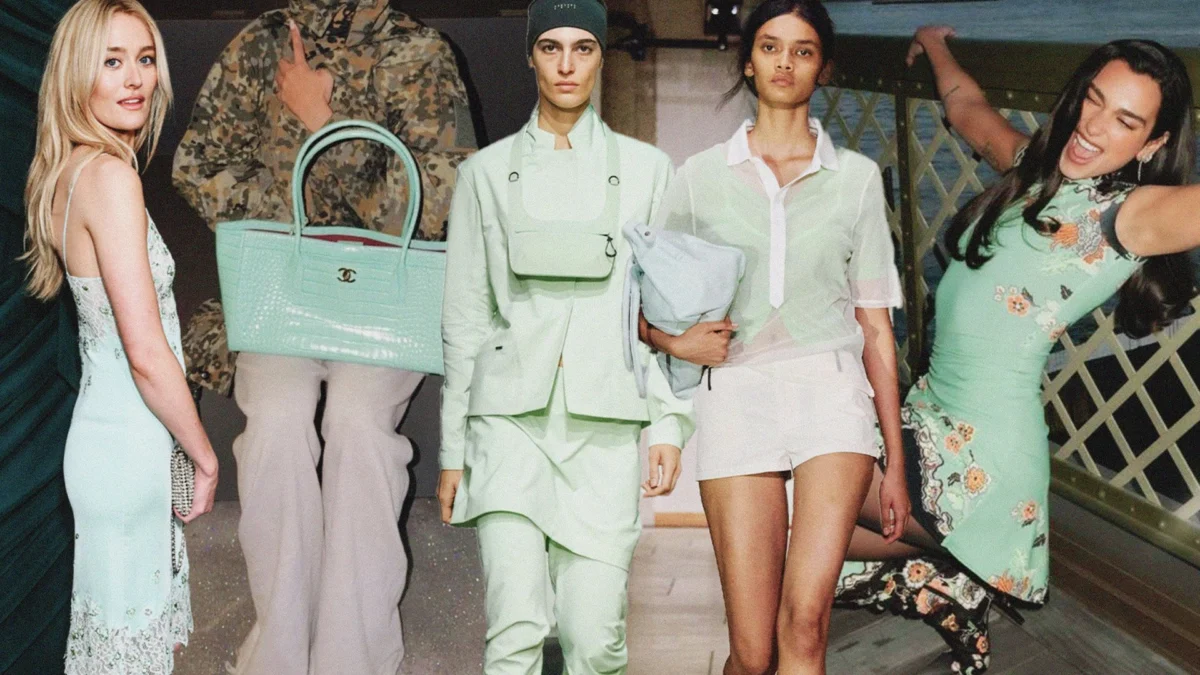
The fashion world, ever a carousel of evolving aesthetics, has seen a spectrum of color trends dominate recent seasons. From the sophisticated depth of pistachio and the vibrant warmth of tomato red to the soft embrace of butter yellow and the zesty allure of lemon-tini, palettes have been inspired by the edible and the effervescent. Now, a new chromatic wave is cresting, bringing with it a wave of refreshing coolness: "toothpaste dressing." This trend, characterized by its crisp mint greens and serene, icy blues, is offering a palate cleanser for the fashion landscape, signaling a shift towards a more playful yet polished sensibility.
From Runways to Red Carpets: The Emergence of Mint and Icy Blues
The genesis of this cool-toned trend can be traced back through recent fashion cycles, with designers consistently weaving these shades into their collections. For Spring/Summer 2025, mint green emerged as a prominent replacement for the ubiquitous blush pink, appearing in ethereal, sheer layers and soft, tonal ensembles. At Fendi, gauzy organza dresses embodied this delicate aesthetic, while Chanel showcased this trend with sparkle-smattered mint tweed suits and diaphanous icy blue capes against the backdrop of the Grand Palais, a collection that celebrated botanical greens. The London-based designer Johanna Parv, known for her fusion of sporty silhouettes and functional fabrics, also embraced lush, light greens, striking a balance between beauty and practicality.

The influence of these cool tones extended into Fall/Winter 2025, where pastel hues disrupted traditionally rich winter palettes, injecting a sense of lightness into heavier ensembles. This manifested at Givenchy and Stella McCartney, with mint green integrated into structured silhouettes and thoughtfully paired with classic brown and charcoal tailoring.
The trajectory continued into 2026, with mint green evolving to encompass a broader spectrum of organic greens, including jade and moss tones. Simultaneously, cool blues gained significant traction. Simone Rocha’s Spring 2026 collection, imbued with a debutante-like charm, featured frosty blue chiffons adorned with floral and pearl accents. Dior presented the shade in architectural bubble dresses, playing with ladylike silhouettes. These lighter tones provided designers with a versatile canvas to explore various facets of femininity.
Celebrity Endorsement and Designer Vision
The "toothpaste dressing" trend has not only graced the runways but has also found its way onto the red carpet and into the wardrobes of style icons. Sarah Pidgeon, star of "Love Story," recently described her Matthieu Blazy Mètiers d’Art 2026 collection sequin slip as feeling "like a mermaid," elaborating, "This color! It’s like toothpaste…but super chic toothpaste." This sentiment, expressed during her first Oscars weekend, underscores the trend’s ability to blend playfulness with sophisticated allure.

Dua Lipa was also spotted embracing the aesthetic, donning a floral blue-green Roberto Cavalli dress complemented by matching minty boots, further cementing the color’s presence in mainstream fashion.
Matthieu Blazy’s debut collection for Chanel has been particularly instrumental in popularizing this colorway. The collection featured an array of mint-toned pieces, from mint-capped pumps and foamy-hued bags to openwork crochet skirts, macramé belts, bouclé dresses, and tweed blazers. Presented within a broader palette of reds, pinks, golds, and grays, the mint green offered a refreshing and playful counterpoint. Fashion writer Alice Betts noted, "I love that this fresh colorway is having a comeback all thanks to Blazy. On top of my wishlist is the Chanel small tote bag, it adds a perfect pop of colour that feels like a much needed playful antidote or pick me up." This sentiment highlights the color’s perceived ability to uplift and invigorate personal style.
Independent Designers and the "Color Obsessive"
Beyond the haute couture houses, independent designers are also championing the mint and icy blue trend, often integrating it into their brand’s core identity. Hattie Tennant, founder of the London-based intimates and clothing brand Fruity Booty, shared insights into their creative process. "Jazz [Mignone], our creative director, is a color obsessive," Tennant explained. "We always joke that she goes through little relationships with different shades. She properly fell in love with mint this time last year, and because of the design cycle, it took a while to come through, but it ended up landing exactly when we needed it."

Fruity Booty first explored mintier tones in their Fall/Winter 2025 collection. Tennant observed, "when all your clothing naturally leans a bit more muted, and it just lifts the whole palette." Examples include seafoam green bras styled under neutral, sheer tops, and pale blue lingerie layered with see-through short-shorts and a lacy top, as seen on model Mia Regan. "There’s something about a flash of mint—like a bra strap under a gray knit—that feels really fresh or fruity," Tennant added. She further emphasized the color’s universal appeal: "It’s also one of those colors that just works on everyone, and feels feminine without being too sweet or twee."
Navigating the Nuances: Styling Challenges and Solutions
While undeniably appealing, mint green and pale blues can present styling challenges, risking a sterile or overly saccharine appearance. Los Angeles-based designer Brooke Callahan, known for her vibrant cotton pants and skirts in hues like turquoise, tomato red, and orange, acknowledged this difficulty. "I usually work with poplin, and lighter blues and greens can be tricky," Callahan stated. "It can go in the way of hospital scrubs pretty quickly."
To overcome these limitations, Callahan collaborated with London-based brand Hai on a limited-edition capsule collection. This collaboration reimagined Callahan’s signature shapes in Hai’s luxurious dupion silks, including a striking cool blue. "Silk gave me the opportunity to explore, as the fabric is a bit more elevated," Callahan noted. "The right blue can be so inviting—something you wanted to reach out a touch or swim in. Icy blues can make an outfit feel fresh and clean without much effort."

Tessa Vermeulen, founder and designer of Hai, echoed this sentiment, highlighting the collaborative process. "The haze blue felt like a natural middle ground," Vermeulen said, referring to the first shade chosen for the collaboration. "Balancing Brooke’s more colorful pieces with our softer, more muted silks. They feel fresh but still quite soft, which felt right for the collaboration."
A Broader Spectrum of "Toothpaste" Hues
The "toothpaste" palette extends beyond a singular mint shade. Designer Lucila Safdie, whose "internet it girl"-beloved Alice bands are often rendered in mint green alongside grape, raspberry, and pastel yellows, sees the color as a key component of her Sofia Coppola-coded aesthetic. Her collections feature micro-shorts, bodysuits, and puff-sleeved polo shirts, where mint adds lightness and humor to melancholic tones, leaning into girlishness. "I love mint green because it’s so flattering for all skin colors, and it gives a fun touch without being overpowering," Safdie commented.
For Fall 2026, Parisian designer Fidan Novruzova drew inspiration from the Polish art deco icon Tamara de Lempicka, exploring modern femininity through structured shirting and hybrid sportswear. Her collection features a spearmint shirt with a peplum skirt and her signature boots, alongside a mint-lined bolero, injecting a playful irony into disciplined silhouettes. Similarly, Paloma Wool’s Fall 2026 collection utilized the color as a contrast to solemn uniform dressing, embodying a sense of disciplined playfulness.

The Cultural and Emotional Resonance of the Trend
The resurgence of mint green and icy blues signifies a broader shift in fashion’s narrative. After a period often dominated by the "clean girl" aesthetic, there is a palpable yearning for romance, whimsy, and a return to storytelling in fashion. "Toothpaste dressing," whether through a full mint ensemble or a subtle accent, reflects this desire for more expressive and emotionally resonant clothing.
The trend’s versatility is a key factor in its widespread adoption. While it can be intimidating for some to incorporate such a bold yet soft color, the runways demonstrate its surprising adaptability. Mint green and icy blues can effectively liven up neutral palettes, offering a refreshing contrast, and can also play harmoniously with other vibrant hues. This adaptability suggests that the "toothpaste" trend is not merely a fleeting fad but a significant stylistic development, offering a clean, cool, and optimistic outlook for the seasons ahead. As designers and consumers alike embrace these refreshing tones, they are not just adopting a color; they are embracing a mood—one of renewed optimism and playful sophistication.
