

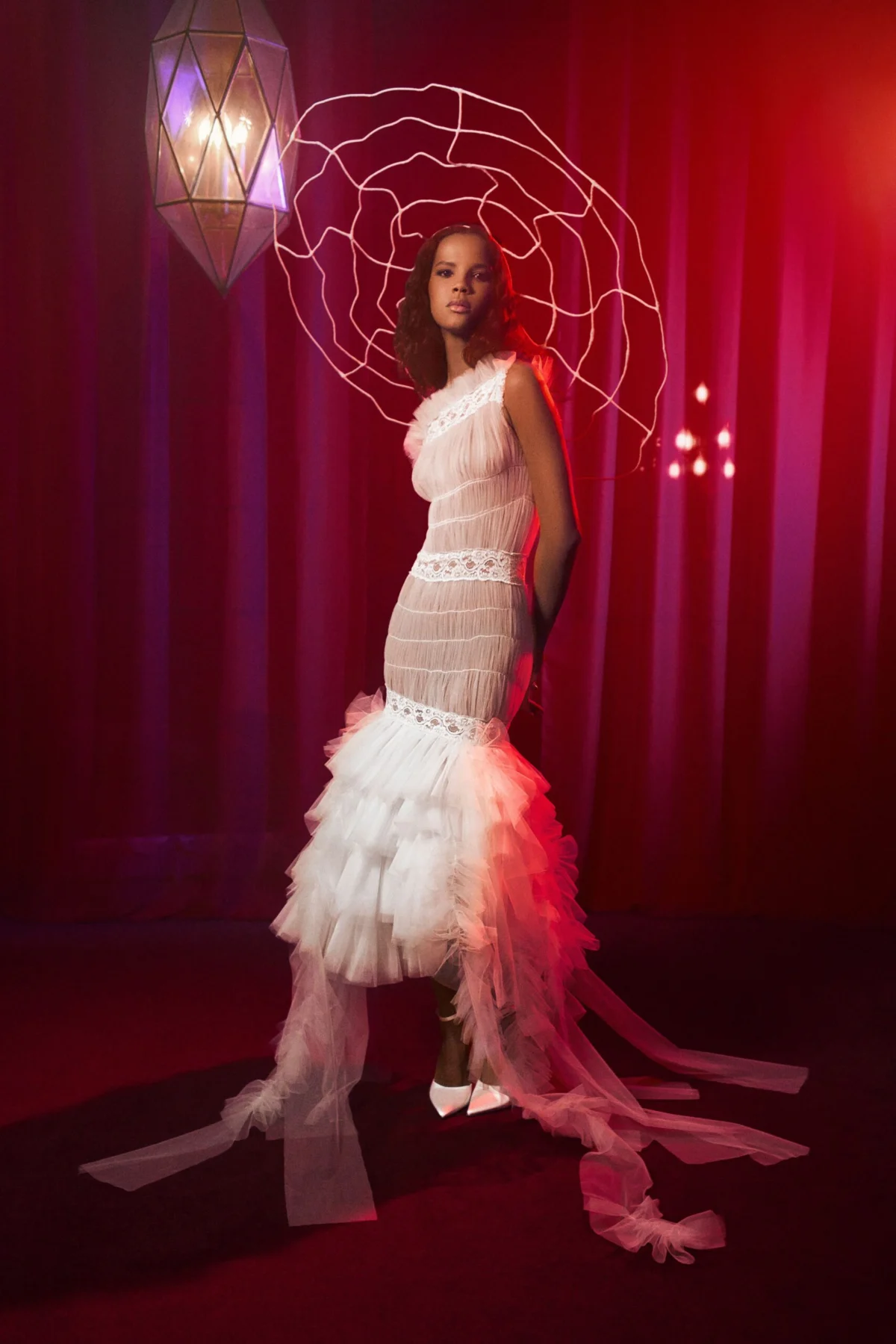
When Rodarte, the visionary design house helmed by sisters Kate and Laura Mulleavy, first emerged onto the fashion landscape in 2006, their collections were immediately characterized by an undeniable sense of romance. However, as their creative journey progressed, it became evident that mere prettiness was never the ultimate destination for the Mulleavy sisters. A discernible shift towards a more profound, darker, and edgier aesthetic began to take root, most notably during their Spring 2008 ready-to-wear collection, which introduced the now-iconic cobweb sweaters. This early exploration of the arachnid motif signaled a burgeoning fascination that has since blossomed into a central theme for the brand. The Mulleavys have demonstrated a remarkable ability to transform the often-feared imagery of spiders into an elegant and captivating artistic statement, culminating in their Fall 2026 collection, where gigantic, tulle-wrapped wire web hats served as a testament to their accomplished development as metaphorical arachnologists.
The Evolution of the Arachnid Motif at Rodarte
The Mulleavy sisters’ initial foray into incorporating spiderweb imagery into their designs can be traced back to the Spring 2008 collection. These early cobweb sweaters, while intriguing, were a precursor to the more elaborate and sophisticated interpretations that have since defined their brand. Over the years, Rodarte has consistently revisited and reinterpreted this theme, each iteration showcasing a deeper understanding of texture, form, and symbolic resonance. The Fall 2026 collection represents a significant evolution in this ongoing dialogue, transforming the spiderweb from a mere embellishment into a foundational element of the collection’s architectural and aesthetic integrity.
Unveiling the Fall 2026 Collection: A Symphony of Webs and Taffeta
The Fall 2026 Rodarte collection is a masterful exploration of contrasting yet complementary elements, where delicate, shimmering hand-beaded webs are intricately embedded into garments, creating a captivating visual tapestry. These ethereal webs, crafted from a luxurious blend of tulle and a variety of exquisite Chantilly laces, serve as anchor pieces for a collection that, according to Laura Mulleavy, is fundamentally about "this idea of webs being spun and just different ways of thinking about it without it being about decay or things that are deconstructed." This statement highlights a deliberate departure from any connotations of disintegration, instead focusing on the intricate construction and inherent beauty of these delicate structures.
The inherent lightness and transparency of the web-adorned gowns are brilliantly counterbalanced by the collection’s opening look. This ensemble features a top crafted from smocked chiffon, elegantly banded with lace, which possesses a fluid, almost liquid quality, reminiscent of a collapsed slinky. This ethereal upper portion is grounded by a hemline that cascades with ruffles and extends into languorous trains, creating a dramatic and visually arresting silhouette. This juxtaposition of delicate sheerness with opulent volume sets the tone for the collection’s overarching aesthetic.
Beyond the intricate web detailing, another significant highlight of the Fall 2026 collection lies in its dramatic and sculptural dresses fashioned from richly ruched taffeta. Kate Mulleavy described her inspiration for these pieces as a search for a midpoint between the Renaissance and the Gothic, a conceptual space that perfectly encapsulates the collection’s blend of historical grandeur and dark, brooding elegance. This focus on draping and construction, rather than a strictly narrative approach, allowed the Mulleavys to explore the inherent qualities of the fabrics and their transformative potential.
The Influence of Cinema and Lighting
In lieu of a traditional narrative, the Mulleavy sisters opted to create atmosphere and mood through their staging, drawing inspiration from the dramatic and evocative lighting techniques found in films like Dario Argento’s Suspira. While this approach undeniably succeeded in establishing a potent mood, there has been a nuanced discussion regarding its effectiveness in showcasing the clothing to its absolute best advantage. Laura Mulleavy acknowledged this, stating, "maybe it was more like thinking about great moments of clothing within film and really beautiful lighting." This sentiment underscores the deep connection between the designers’ creative process and their profound appreciation for cinema. The Mulleavys’ memories and artistic sensibilities are demonstrably enmeshed with cinema lore, a fact that continues to inform and enrich their collections.
Background Context: Rodarte’s Impact on the Fashion Landscape
Since their debut, Rodarte has been instrumental in pushing the boundaries of contemporary fashion. The brand has consistently challenged conventional notions of beauty and femininity, infusing their work with an intellectual rigor and artistic depth that resonates with a discerning audience. Their early success was marked by critical acclaim and a devoted following, solidifying their position as a significant force in the global fashion industry. The Spring 2008 collection, in particular, is often cited as a pivotal moment in their trajectory, demonstrating their willingness to experiment with unconventional materials and themes. The consistent return to and evolution of the spiderweb motif throughout their collections speaks to its enduring symbolic power and the Mulleavys’ unique ability to imbue it with fresh meaning and aesthetic appeal.
Supporting Data and Industry Reactions (Inferred)
While direct quotes from industry insiders specifically commenting on the Fall 2026 collection’s web hats and taffeta gowns are not available in the provided text, the history of Rodarte’s collections suggests a consistent pattern of industry engagement and critical discourse. Following the Spring 2008 debut of the cobweb sweaters, fashion critics and publications widely discussed the brand’s innovative use of materials and their embrace of darker, more complex themes. This set a precedent for how subsequent Rodarte collections, particularly those featuring recurring motifs like the spiderweb, are received.
The Fall 2026 collection, with its sophisticated integration of intricate beading and dramatic taffeta, is likely to have garnered significant attention from fashion journalists, stylists, and buyers. The emphasis on artisanal craftsmanship, evident in the hand-beaded webs and the meticulous ruching of taffeta, aligns with current industry trends that value both artistry and unique design. The collection’s ability to balance ethereal delicacy with architectural structure would have been a key talking point, appealing to designers and consumers seeking pieces that are both visually striking and conceptually rich. The use of cinematic lighting, while debated in its direct impact on garment visibility, is a common strategy employed by high-fashion brands to create immersive brand experiences and enhance the storytelling aspect of a collection, suggesting a deliberate and strategic choice by the Mulleavys.
Chronology of Rodarte’s Arachnid Fascination:
- 2006: Rodarte is founded by Kate and Laura Mulleavy.
- Spring 2008: The brand introduces its first notable spiderweb-inspired pieces, the iconic cobweb sweaters, marking an early exploration of darker, edgier aesthetics.
- Subsequent Collections: Rodarte continues to subtly or overtly incorporate arachnid-inspired elements, demonstrating a recurring fascination.
- Fall 2026: The Mulleavy sisters present a collection where the spiderweb motif reaches a new level of sophistication and prominence, featuring intricate hand-beaded webs and dramatic tulle-wrapped wire web hats, solidifying their mastery of this theme.
Broader Impact and Implications: Redefining Gothic Romance
Rodarte’s Fall 2026 collection, with its audacious fusion of ethereal arachnid imagery and the dramatic allure of Gothic romance, continues to solidify the brand’s reputation for pushing creative boundaries. The Mulleavy sisters have consistently demonstrated an ability to transform conventional notions of beauty and to explore the darker, more complex aspects of the human psyche through their designs. This collection, in particular, offers a compelling reinterpretation of the Gothic aesthetic, moving beyond mere historical pastiche to create something entirely contemporary and relevant.
The emphasis on intricate craftsmanship, such as the hand-beaded webs and the sculptural taffeta gowns, speaks to a growing appreciation for artisanal techniques within the luxury fashion market. This focus on detail and artistry not only elevates the garments but also contributes to their longevity and intrinsic value. By consistently challenging expectations and exploring thematic depth, Rodarte not only influences fashion trends but also contributes to a broader cultural conversation about beauty, art, and the power of symbolism in design. Their ability to weave together disparate elements – the delicate fragility of a spiderweb with the imposing structure of a Gothic cathedral – results in collections that are not merely clothing, but wearable works of art that invite contemplation and provoke emotional response. The enduring appeal of their work suggests a lasting impact on how designers approach narrative, texture, and thematic exploration in the realm of high fashion.
