

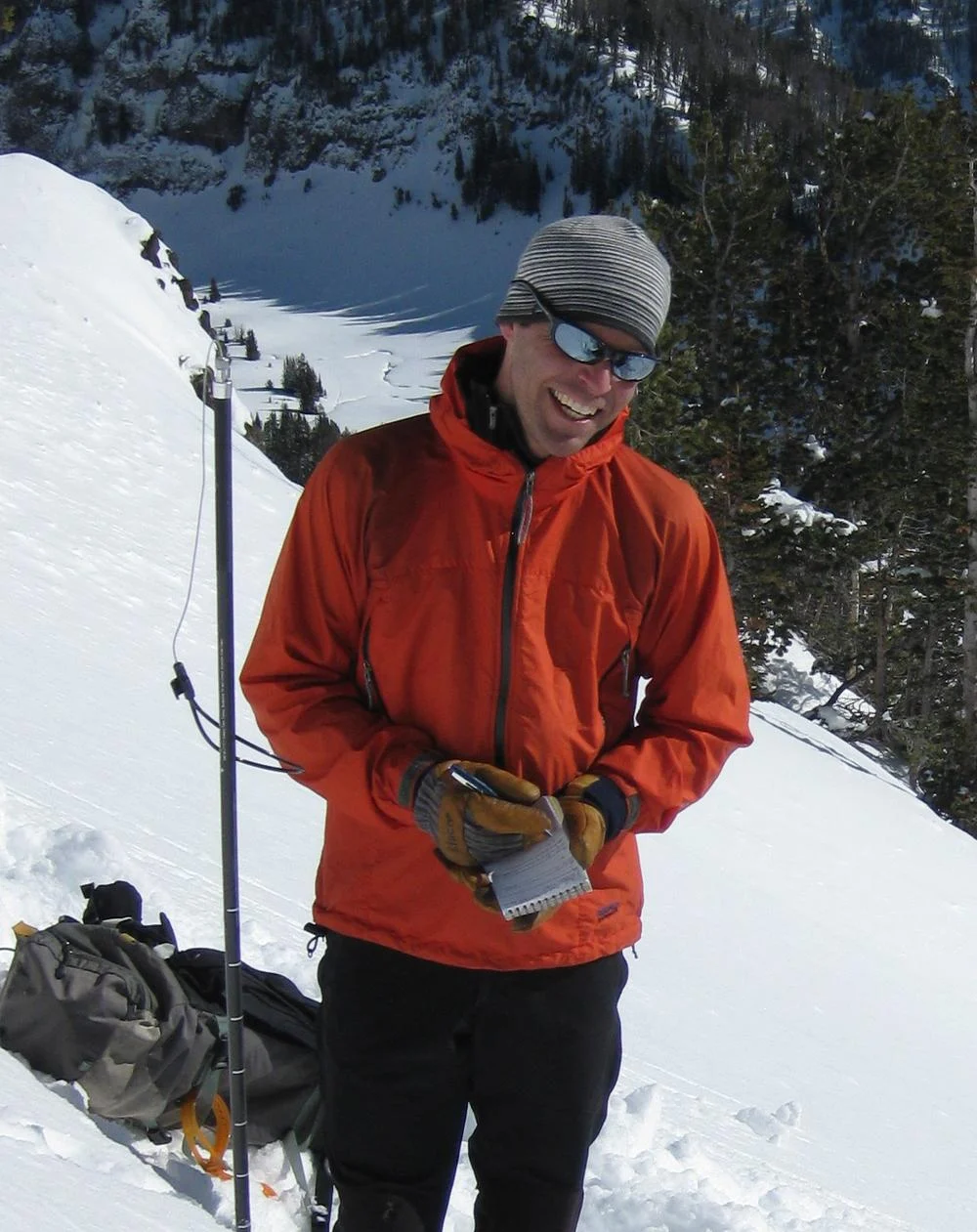
The Utah Avalanche Center has officially announced the retirement of its long-standing director, Bruce Tremper, who will step down from his role with the United States Forest Service at the conclusion of August. Tremper’s departure marks the end of a nearly three-decade tenure characterized by transformative leadership, scientific innovation, and an unwavering commitment to public safety in the rugged backcountry of the Wasatch Range. As one of the most recognizable figures in the global avalanche community, Tremper’s retirement signifies a major leadership transition for the organization, which has simultaneously confirmed that Mark Staples, a seasoned forecaster and researcher, will succeed him as the new Director of the Utah Avalanche Center (UAC).
Throughout his 29-year career at the helm of the UAC, Tremper has been instrumental in evolving the way avalanche information is communicated to the public. Under his stewardship, the center transitioned from a local advisory service into a world-class institution that sets the standard for snow safety protocols and education. While Tremper often joked that his administrative duties kept him confined to an office more than he would have liked, his impact on the field is widely regarded as both foundational and visionary. His retirement comes at a time when backcountry recreation is seeing unprecedented growth, placing the importance of the UAC’s mission in sharp relief.
A Career Defined by Science and Practical Application
Bruce Tremper’s journey into the world of snow science began in the mountains of Montana. He pursued a Master of Science degree at Montana State University (MSU) in Bozeman, an institution renowned for its contributions to glaciology and avalanche research. At MSU, Tremper studied under the tutelage of Dr. John Montagne, a pioneer in the field. This academic foundation provided Tremper with the theoretical framework necessary to understand the complex mechanics of snowpack failure, but he was equally driven by the practical application of this knowledge.
Following his academic work, Tremper entered the operational side of avalanche safety, performing high-stakes avalanche control work at Montana’s Bridger Bowl and Big Sky Resort. These roles required not only technical expertise in explosives and terrain management but also a keen intuition for mountain weather patterns. His career later took him to the Alaska Avalanche Center, where he collaborated with legendary figures in the industry, including Doug Fesler, Jill Fredston, and Jim Woodmency. This period in Alaska exposed Tremper to large-scale maritime snowpacks and extreme conditions, further diversifying his expertise before he accepted the directorship of the Utah Avalanche Center in 1986.
Innovating the Modern Avalanche Advisory
When Tremper first took the lead at the UAC, avalanche forecasting was in its relative infancy regarding public outreach. Advisories were primarily disseminated via recorded telephone messages, which limited the amount of detail and visual data that could be shared with skiers and snowmobilers. Recognizing the limitations of this medium, Tremper became a driving force behind the digitalization of avalanche safety information.
As the internet began to reshape communications in the 1990s and early 2000s, Tremper and the UAC team were among the first to develop comprehensive web-based products. They moved beyond simple danger ratings to provide nuanced, data-rich reports. One of Tremper’s most significant contributions to the field was the introduction of "avalanche problems" into daily advisories. Rather than just providing a single danger level (such as "Moderate" or "High"), the UAC began identifying the specific type of threat—such as wind slabs, persistent weak layers, or wet loose avalanches. This shift allowed backcountry users to tailor their travel plans to the specific risks present on a given day, a methodology that has since been adopted by avalanche centers across the globe.
Literary Contributions and Global Influence
Beyond his administrative and forecasting duties, Tremper has been a prolific educator and author. He served as the editor for The Avalanche Review, the flagship publication of the American Avalanche Association, for six years. His ability to translate complex geophysical concepts into accessible language for the general public led to the publication of several seminal works, most notably Staying Alive in Avalanche Terrain. This book is widely considered the "bible" of avalanche safety for recreationalists and has been translated into multiple languages, saving countless lives by teaching travelers how to recognize dangerous terrain and snow conditions.
Tremper’s expertise was also called upon for high-profile international events. He was tasked with overseeing backcountry avalanche safety for the 2002 Winter Olympics in Salt Lake City. The logistical challenge of ensuring the safety of thousands of visitors and athletes in the steep terrain surrounding the Olympic venues was a monumental undertaking that Tremper managed with professional precision. Furthermore, his work on the 2010 Conceptual Model of Avalanche Danger helped standardize the North American Avalanche Danger Scale, ensuring that safety terminology remained consistent across state and international borders.

The Economic and Social Importance of the UAC
The Utah Avalanche Center plays a critical role in the state’s economy, which is heavily reliant on the "Greatest Snow on Earth." The Wasatch Range is one of the most heavily utilized backcountry areas in the world, largely due to its proximity to a major metropolitan area. According to data from the Utah Office of Outdoor Recreation, the outdoor industry contributes billions of dollars to the state’s GDP annually. The safety net provided by the UAC allows this industry to flourish by mitigating the inherent risks of winter mountain travel.
During Tremper’s nearly three decades of service, the demographic of backcountry users shifted from a small group of specialized mountaineers to a broad segment of the general public. This surge in popularity necessitated a shift in the UAC’s funding and outreach models. Tremper was central to fostering a unique public-private partnership between the U.S. Forest Service and the non-profit Friends of the Utah Avalanche Center. This model has allowed the center to expand its staffing, equipment, and educational programs beyond what federal funding alone could support.
Transition of Leadership: Mark Staples Takes the Helm
With Tremper’s retirement, the Forest Service has appointed Mark Staples to lead the UAC into its next chapter. Staples is no stranger to the demands of high-consequence snow safety. His background mirrors Tremper’s in several key ways, including a strong academic foundation and extensive field experience. Staples earned a Master of Science in Engineering from Montana State University, where his research focused on the mechanical properties of snow and avalanche triggers.
Staples brings a wealth of practical experience to the position, having spent eight seasons as a backcountry forecaster at the Gallatin National Forest Avalanche Center in Bozeman, Montana. His resume also includes years of service as a ski patroller and snow safety specialist at Big Sky Resort, as well as work on special projects for the National Avalanche Center. His appointment is seen as a strategic move to ensure continuity in the UAC’s scientific rigor while bringing in a new perspective on modern forecasting challenges.
In a statement regarding his new role, Staples expressed his enthusiasm for joining the Utah team, noting the UAC’s reputation for excellence and innovation. "The Utah Avalanche Center has long been a leader in the industry," Staples noted. "I am honored to follow in Bruce’s footsteps and look forward to working with the talented team of forecasters and the community to continue providing the highest level of safety information."
The Future of Avalanche Safety in the Wasatch
As Bruce Tremper moves into a new phase of his life, he does not intend to disappear from the avalanche world entirely. He has indicated plans to continue teaching, writing, and contributing to various safety projects. His retirement from the Forest Service will likely afford him more time to enjoy the Wasatch backcountry as a recreationalist alongside his wife, Susi, though colleagues warn that anyone hoping to keep up with the couple on the skin track will need to be in peak physical condition.
The transition from Tremper to Staples comes at a pivotal time for snow science. Climate change is increasingly affecting snowpack stability, leading to more erratic weather patterns and "unusual" avalanche cycles that defy historical norms. The UAC will need to continue its legacy of innovation to address these emerging threats.
The broader avalanche community has reacted to the news with a mixture of celebration for Tremper’s career and optimism for Staples’ leadership. Industry experts suggest that the "Bozeman connection"—referring to the Montana State University background shared by both men—highlights the importance of rigorous scientific training in modern land management and public safety roles.
Bruce Tremper’s legacy is not merely found in the reports he wrote or the books he published, but in the culture of safety he fostered. By prioritizing clear communication and empowerment of the individual backcountry traveler, he transformed the Utah Avalanche Center into a beacon of reliability. As Mark Staples assumes the role of Director, he inherits an organization that is better equipped, more technologically advanced, and more deeply integrated into the community than ever before, ensuring that the mission of "staying alive in avalanche terrain" remains the central focus of the Wasatch winter experience.
