

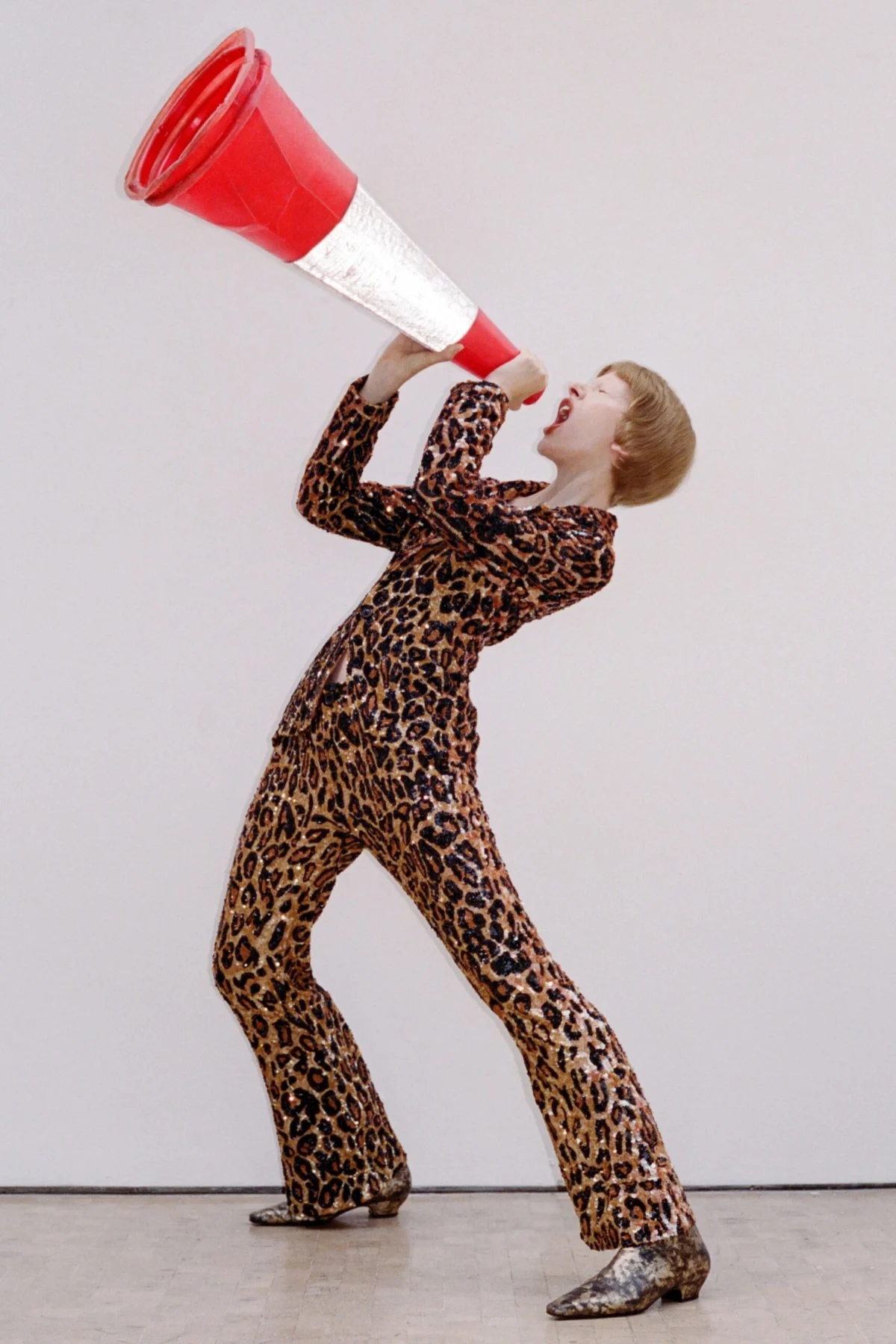
The hallowed halls of Central Saint Martins (CSM), a crucible of fashion innovation, recently played host to a unique celebration of artistic longevity and pointed social discourse. Designer Ashish Gupta, a distinguished alumnus, returned to his alma mater not for a formal runway show, but to unveil a hilariously subversive spring lookbook shot amidst the very studios, corridors, and library where his journey began 25 years ago. This creative endeavor, featuring 25 distinct looks each bearing potent messages, marks a significant milestone for the London-based designer, whose work has consistently blended dazzling aesthetics with incisive commentary.
The decision to return to CSM was deeply personal for Gupta. "It’s been 25 years since I started," he shared, explaining the genesis of the project. "So I thought: let’s do 25 looks, one for each year, with messages." This reflective approach underscores Gupta’s enduring connection to the institution that shaped his formative years. His presence was welcomed by Fabio Piras, the current MA tutor, who facilitated the use of the college’s iconic spaces, underscoring the strong alumni ties CSM fosters. Gupta’s path to fashion design was not a direct one; he initially studied advertising in India, harboring aspirations of becoming a copywriter. "First of all I thought I wanted to write," he revealed. This background undoubtedly informs his remarkable ability to craft impactful slogans, a skill that has become a signature element of his brand, Ashish.
Gupta’s graduation from the CSM MA class of 2000, under the formidable tutelage of the late Professor Louise Wilson OBE, was a pivotal moment. Wilson, known for her rigorous approach and sharp intellect, was instrumental in shaping a generation of designers. Her influence is clearly visible in Gupta’s ability to imbue his creations with both artistic merit and intellectual depth. His return to CSM, therefore, is more than just a nostalgic revisit; it’s a testament to the lasting impact of his education and his continued commitment to the principles of thoughtful design.
A Visual Manifesto: Slogans Take Center Stage
This season, Gupta eschewed the traditional format of printed slogans on garments, opting instead for hand-written placards that were integral to the lookbook’s narrative. These placards served as a vibrant and direct conduit for his messages, saluting students and protest movements worldwide with his characteristic pithy style. Among the striking declarations were: "Libraries Not Data Centres," "Put Smart People in Charge," "It’s a Dress Not a Yes," and a particularly resonant, "One of my best friends is Straight." These phrases, appearing in bold, often whimsical lettering, juxtaposed against the vibrant sequined creations, create a powerful visual dialogue, inviting viewers to engage with the underlying social and political themes.
The chosen slogans reflect a global landscape marked by increasing political polarization and social unrest. Gupta openly acknowledged the gravity of the current climate: "I feel like globally there’s been such a move towards fascism. And I just think it’s a dark time, and it doesn’t feel like a particularly hopeful time." His statement, "UK Garage Not UK Farage," directly confronts the rise of the far-right in Britain, a message that resonates particularly strongly within the UK context, leveraging a cultural reference familiar to many. However, Gupta’s commentary is not always overtly explicit. He admits that "It’s very coded," revealing layers of meaning that require closer attention.
Decoding the Ashish Lexicon: Symbolism and Subversion
Gupta’s ability to weave intricate layers of meaning into his work is a hallmark of his design philosophy. The lookbook features subtle yet significant sartorial choices that serve as visual metaphors. A leopard print trouser suit, for instance, is a deliberate nod to Jane Fonda’s iconic protests against the Vietnam War, a powerful evocation of activism and defiance. Similarly, images of models carrying pots and pans reference the use of everyday objects by street protesters, transforming the mundane into symbols of resistance. These coded references enrich the visual narrative, transforming the lookbook into a multi-layered commentary on social and political engagement.
The "Ashish" brand, known for its dazzling, multicolored sequin-spangled creations, has long been a beacon of joy and optimism in the fashion world. For 25 years, Gupta has provided a much-needed antidote to gloom, his work consistently lifting spirits. The more challenging the global atmosphere, the more appreciated his vibrant contributions become. The tactile reality of his garments often surpasses their on-screen appearance. Even what might appear to be crochet or argyle knit is, in fact, meticulously crafted by skilled artisans in the Ashish atelier in New Delhi. This commitment to artisanal craftsmanship is a core tenet of his brand, a fact he celebrated with the lookbook’s poignant inscription: "A Handmade Tale."
The Chronology of a Creative Force
Ashish Gupta’s journey began in the late 1990s, a period of significant cultural and political shifts globally. Graduating from CSM in 2000, he entered a fashion industry already grappling with the rise of fast fashion and the increasing commercialization of design. His early collections, characterized by their bold use of embellishment and playful subversion, quickly garnered attention. By the mid-2000s, Ashish had established a distinct voice, one that celebrated individuality and challenged conventional notions of luxury.
The brand’s consistent presence at London Fashion Week over two decades has provided a reliable platform for Gupta’s evolving artistic and social commentary. His work has often coincided with significant political events, from the Iraq War to the global financial crisis, and more recently, the rise of populism and social justice movements. The lookbook shot at CSM can be seen as a retrospective of this journey, each look a visual timestamp of the issues and sentiments that have shaped the past quarter-century.
Key Milestones:
- Late 1990s: Ashish Gupta studies at Central Saint Martins, honing his craft under the mentorship of Louise Wilson.
- 2000: Graduates from the CSM MA program, launching his career in the fashion industry.
- Early to Mid-2000s: Establishes the Ashish brand, known for its signature sequins and subversive messaging, gaining traction on the London fashion scene.
- 2010s: Continues to present collections at London Fashion Week, often incorporating social and political commentary into his designs, aligning with major global events and movements.
- 2024: Returns to CSM to shoot a special 25th-anniversary lookbook, celebrating his career and reflecting on the current socio-political climate.
Supporting Data and Industry Context
The fashion industry, while often perceived as purely aesthetic, is increasingly recognized for its economic and cultural impact. According to a 2023 report by Statista, the global fashion market was valued at over $1.7 trillion USD, highlighting its significant economic footprint. Within this vast landscape, designers like Ashish Gupta occupy a unique niche, where commercial viability intersects with artistic integrity and social responsibility.
The rise of social media has further amplified the reach of designers’ messages. Instagram, in particular, has become a crucial platform for disseminating visual content, including lookbooks and campaign imagery. Gupta’s choice to shoot a lookbook rather than a traditional runway show for this milestone suggests an adaptation to evolving media consumption habits and a desire for a more intimate, narrative-driven presentation of his work. The use of hand-written placards, easily shareable as individual images, further leverages the power of social media to spread his message.
Furthermore, the fashion industry is facing increasing scrutiny regarding its ethical and environmental practices. Designers who engage with social issues, as Ashish does, are often seen as more authentic and relevant by a growing segment of conscious consumers. The emphasis on "A Handmade Tale" directly addresses the value of craftsmanship in an era of mass production, aligning with broader trends towards sustainability and ethical sourcing.
Inferred Reactions and Broader Implications
While direct statements from other parties were not included in the original content, it is reasonable to infer a positive reception to Ashish Gupta’s return and his commemorative project. Central Saint Martins, as a leading fashion institution, would likely view the project as a testament to its educational legacy and its ability to foster designers who contribute meaningfully to both the industry and society. Fabio Piras’s welcoming of Gupta back to use the studio spaces signifies institutional support and recognition of alumni achievements.
The lookbook’s themes of protest, social justice, and individuality resonate with a generation that is increasingly vocal about its concerns. By using fashion as a vehicle for these messages, Gupta not only creates beautiful garments but also sparks conversations. The implication of his work is that fashion can and should be more than just adornment; it can be a tool for activism, a reflection of societal values, and a catalyst for change.
The success of "A Handmade Tale" could inspire other designers to consider similar retrospective projects that blend personal narrative with social commentary. It also reinforces the idea that longevity in the fashion industry can be achieved through a consistent and authentic voice, one that evolves with the times while staying true to its core principles. Ashish Gupta’s 25-year career demonstrates that dazzling aesthetics and profound social engagement are not mutually exclusive, but can, in fact, be powerfully intertwined, creating a legacy that is both visually stunning and intellectually stimulating. The lookbook, shot in the very place where his dreams began to take shape, serves as a powerful reminder of the enduring impact of education, mentorship, and the courage to speak one’s truth, even – and perhaps especially – in challenging times.
