

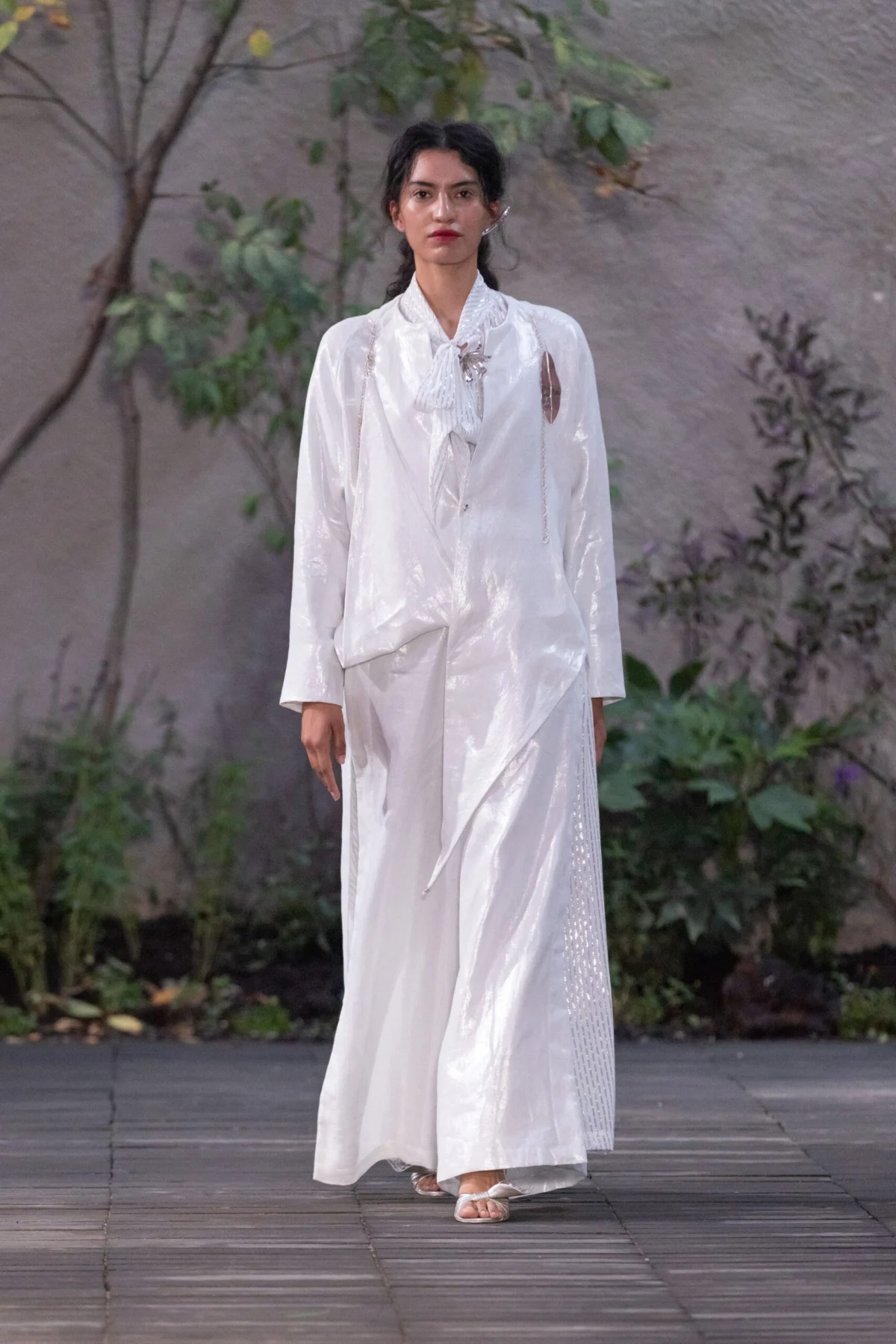
Mexico Fashion Week (MXFW) unfurled its vibrant tapestry on its opening day, with designer Carla Fernández at the helm, presenting a collection that transcended mere fashion to become a profound narrative of Mexico’s historical interconnectedness. Fernández, renowned for her commitment to indigenous craftsmanship and cultural preservation, unveiled a collection deeply inspired by the Manila Galleon trade route, a pivotal artery of global commerce and cultural fusion that shaped Mexico’s identity for over two and a half centuries. The show, held at a prominent venue in Mexico City, drew an international audience of fashion critics, buyers, and enthusiasts, underscoring MXFW’s growing stature on the global fashion calendar.
The Manila Galleon: A Historical Anchor for Fashion
Fernández’s choice of the Manila Galleon as her muse is a testament to her distinctive approach to design. This historical maritime trade route, established in 1565 and lasting until 1815, was instrumental in forging a direct link between Acapulco, Mexico, and Manila, Philippines, across the vast Pacific Ocean. This oceanic highway facilitated the exchange of goods, ideas, and cultural practices, not only between these two pivotal ports but also extending Mexico’s commercial and cultural reach to Europe and Asia. For over 250 years, this route was a conduit for textiles, precious metals, exotic spices, culinary traditions, and intricate crafts, embedding a global perspective into the fabric of Mexican society.
"The Manila Galleon was more than just a trade route; it was a catalyst for cultural exchange, a bridge that connected worlds and fostered a rich cross-pollination of traditions," stated a spokesperson for Carla Fernández’s studio in a pre-show briefing. "Our aim with this collection was to not only acknowledge this significant historical period but to celebrate how it has shaped contemporary Mexican identity and artistry." This sentiment was powerfully translated onto the runway.
A Choreographed Narrative of Connection
The collection’s thematic depth was further amplified by an accompanying performance featuring dancers adorned in Fernández’s creations. These garments, characterized by their loose, flowing silhouettes and dyed with natural pigments, moved gracefully around a staged arrangement of chairs, reminiscent of a game of musical chairs. This visual metaphor powerfully conveyed the dynamic interplay of cultures, illustrating how different traditions converge, influence, and interweave to create something new and unique. The performance underscored the inherent fluidity and adaptability of cultural exchange, a core tenet of the Manila Galleon era.
From Historical Echoes to Contemporary Design
The initial ensembles presented on the runway presented a striking visual contrast to the minimalist dancer costumes. These opening looks were a celebration of opulence and intricate detail. Lustrous fabrics shimmered, catching the light, while elaborate embroidery, directly inspired by papel picado – the iconic Mexican decorative paper cutouts adorning festive occasions – lent an artisanal charm. A recurring motif of knots, tied at unexpected points such as the hip or shoulder, served as a potent symbol.
"These knots represent the ties that bind us, the interweaving that leads to unity," Fernández explained backstage, her voice resonating with passion. "They speak to how cultures, like threads, come together to form a stronger, more beautiful whole." This sentiment echoes the historical reality of the Manila Galleon, where diverse peoples and goods were brought into contact, forging new connections and shared identities.
The practicalities of trade were also subtly integrated into the collection. Bags, designed with a nod to the merchants who traversed these historic routes, were presented not as mere accessories but as integral components of the ensembles, reflecting their functional and symbolic importance in the era of extensive trade.
Geometric Foundations and Artisanal Flourishes
A hallmark of Carla Fernández’s design aesthetic is her masterful use of geometric silhouettes. This season, these signature shapes were manifest in elegantly draped wrap skirts, flowing wide-leg trousers, and impeccably tailored pieces. Each garment was further elevated by exquisite floral embroidery, a vibrant testament to Mexico’s rich botanical heritage and the enduring skill of its artisans.
The accompanying jewelry line further amplified the collection’s thematic resonance. Silver pieces featured playful chili pepper-shaped earrings and pendants, a nod to Mexico’s iconic culinary staple. Engraved hoop earrings and delicate leaf-shaped ear cuffs that extended artfully across the ear added touches of refined elegance, demonstrating a harmonious blend of traditional motifs and contemporary craftsmanship.
A Personal Journey Rooted in Heritage
Fernández’s profound connection to this particular chapter of Mexican history is not merely an intellectual pursuit but a deeply personal one, nurtured from her childhood. Her father’s distinguished career as director of museums and exhibitions at Mexico’s National Institute of Anthropology and History provided her with an intimate exposure to the nation’s vast archaeological treasures and rich cultural heritage. This upbringing instilled in her a profound appreciation for the artistry, ingenuity, and historical significance embedded within Mexican craftsmanship.
This personal connection imbues the collection with an added layer of authenticity and emotional resonance. It is not just an academic exploration of a historical period but a heartfelt homage to her own roots and the enduring legacy of Mexican culture. The collection, therefore, stands as a dual tribute: to the historical forces that shaped Mexico and to the personal journey of a designer deeply committed to preserving and celebrating that legacy.
Broader Implications and the Future of Cultural Heritage in Fashion
The success of Carla Fernández’s collection at Mexico Fashion Week carries significant implications for the broader fashion industry and for the preservation of cultural heritage. In an era where fast fashion often overlooks the value of tradition and artisanal skill, Fernández’s work serves as a powerful counter-narrative. Her commitment to collaborating with indigenous communities and utilizing traditional techniques not only ensures the survival of these crafts but also elevates them to a global platform.
The data on the economic impact of traditional crafts in Mexico is substantial. According to reports from Mexico’s National Institute of Statistics and Geography (INEGI), the artisan sector contributes significantly to the national GDP and provides employment for millions, particularly in rural areas. Collections like Fernández’s not only create market demand for these crafts but also foster a sense of pride and economic empowerment within these communities.
Furthermore, the collection’s thematic exploration of cultural exchange is particularly relevant in today’s increasingly globalized world. By drawing parallels between the historical interconnectedness facilitated by the Manila Galleon and the contemporary flow of ideas and influences, Fernández highlights the enduring human impulse to connect and create shared meaning. This resonates with a growing consumer base that is increasingly seeking fashion that is not only aesthetically pleasing but also ethically produced and culturally informed.
Industry analysts have noted that designers who authentically engage with cultural heritage are increasingly capturing the attention of both consumers and investors. The demand for "storytelling" in fashion – where garments carry a deeper narrative beyond their visual appeal – is on the rise. Carla Fernández’s collection exemplifies this trend, demonstrating that a deep understanding and respectful celebration of history can be a powerful engine for creative innovation and commercial success.
The performance element of the show, which incorporated dance and theatricality, also points towards a growing trend in fashion presentations. Moving beyond simple runway walks, designers are increasingly using immersive experiences to convey the conceptual underpinnings of their collections. This approach not only captivates audiences but also allows for a more profound understanding and appreciation of the artistic vision at play.
As Mexico Fashion Week continues to establish itself as a significant platform for global fashion, designers like Carla Fernández are instrumental in shaping its identity. Her work, rooted in a deep respect for history and a forward-looking vision for cultural preservation, sets a compelling example for the industry, demonstrating that fashion can be a powerful vehicle for storytelling, cultural dialogue, and meaningful economic impact. The echoes of the Manila Galleon, carried on the winds of fashion, continue to shape Mexico’s narrative on the global stage, proving that the past, when thoughtfully reinterpreted, can profoundly illuminate the present and inspire the future.
