

The recent Frieze Week in London, typically a beacon for the contemporary art world and its associated fashion vanguard, provided an unlikely yet fitting backdrop for a significant announcement regarding the future of a venerable British institution. Amidst the sophisticated buzz at The Hart, a venue that could have easily hosted any number of ephemeral brand activations, Church’s, the 150-year-old Northampton shoemaker, unveiled a bold new chapter under the stewardship of the Prada Group. The presence of classic Church’s silhouettes – the Stanhope Chelsea boot, the Skipton Oxford, and the Sidley lace-up, alongside the women’s Sloane collection exemplified by the Susan ankle boot – served as a tangible testament to the brand’s enduring legacy, a legacy that Denni Manzatto, CEO of Church’s since 2022, is determined to not only preserve but elevate.
Manzatto, a former Goldman Sachs executive who first encountered Church’s during his private equity days in London, navigating the city’s financial district with its iconic Jermyn Street store just a stone’s throw away, articulated the strategic importance of the brand within the Italian luxury conglomerate. "Church’s has a higher than proportional meaning for the Prada Group relative to its business size," he stated, underscoring that while the brand represents a modest 1% of the Prada Group’s total business, contributing approximately £32 million in annual sales according to H1 earnings reports, its cultural and historical value is immeasurable. "It is a jewel that we should preserve, we should restore, and take to new heights." This sentiment signals a departure from years of what could be perceived as discreet stewardship, ushering in an era of intensified investment in its Northampton heritage and a renewed focus on cultivating a new generation of discerning clientele.

A Legacy Forged in Northampton’s Industrial Revolution
The story of Church’s is intrinsically linked to the industrial heritage of Northampton, a town that has been a global center for shoemaking since the Middle Ages. Founded in 1873 by Thomas Church, the company, along with his sons Alfred and William, played a pivotal role in transforming the region’s cottage industry into a sophisticated manufacturing powerhouse. A key innovation, the 1881 "Adapted" boot, was revolutionary for its time, being the first to offer industrially scaled, differentiated left and right shoes. This commitment to craft and innovation propelled Church’s to the forefront of the industry.
By its postwar zenith in 1955, Northampton’s shoemaking output was staggering, with Church’s and its neighboring factories producing an estimated 160 million pairs of shoes annually. However, the latter half of the 20th century brought significant challenges. The decline of the British Empire, coupled with the rise of globalized manufacturing in increasingly dynamic centers like Italy and lower-cost production hubs in India and Southeast Asia, led to a protracted downturn in Northampton’s output. Yet, a select group of heritage brands, including Tricker’s, Cheaney, and Edward Green, alongside Church’s, managed to not only survive but thrive by transforming their traditional manufacturing prowess into a distinct and highly valued asset.
Prada’s Acquisition: A Blend of Business Acumen and Romantic Fascination
The acquisition of Church’s by the Prada Group in 1999 marked a significant turning point. Prada, then a publicly listed entity, secured the historic shoemaker for £106 million, outmaneuvering interest from figures like Diego Della Valle of Tod’s. At the time of the acquisition, Patrizio Bertelli, CEO of Prada Group, made a clear commitment to safeguarding the brand’s British identity and its Northampton manufacturing base. He pledged to "maintain and possibly strengthen the British identity of Church’s" while "preserving and developing its industrial presence in Northampton."

Denni Manzatto acknowledges that this acquisition was likely driven, in part, by a romantic sensibility. He explained that Bertelli and Miuccia Prada grew up in an era when Church’s epitomized "the pinnacle of English shoemaking and shoemaking in general." This inherent admiration and fascination with the brand’s storied past were undoubtedly key factors in Prada’s decision to invest in its future.
The Strategic Imperative: Integrating and Innovating
Upon assuming the role of CEO in 2022, Manzatto inherited a business facing complexities that transcended mere historical romanticism. "Business-wise, the situation was more difficult than I had originally anticipated," he admitted. A significant part of his mandate has been to meticulously integrate Church’s more closely within the broader Prada Group structure. This integration aims to leverage the Italian parent company’s extensive corporate, industrial, technological, and commercial infrastructure to bolster the smaller British entity.
Currently, Church’s core Goodyear-welted footwear is produced in Northampton. However, other models, such as the Shanghai shoe and certain sneaker designs, are manufactured within Prada’s own production network in Italy. Manzatto revealed a strategic vision that extends beyond this division: "Our vision over the next few years is to bring everything back to the UK." This ambitious plan encompasses not only traditional English shoemaking categories but also those not historically associated with British footwear manufacturing, signifying a profound commitment to reinvesting in the brand’s domestic capabilities.

This repatriation of production necessitates substantial investment in both the Northampton factory and its skilled workforce. "We are investing a lot," Manzatto confirmed. Church’s is actively collaborating with local institutions to cultivate a new generation of craftspeople, addressing the natural retirement of long-serving shoemakers. Simultaneously, the manufacturing operation will need to acquire the expertise and technology to produce a wider array of product types. Manzatto emphasized that the resources provided by the Prada Group are instrumental in achieving this goal: "If we were on our own, it would probably not be possible."
Navigating the Challenges of Modern British Manufacturing
The strategic push to centralize production in the UK comes at a time when British manufacturing and retail sectors face considerable headwinds. Post-Brexit duties and administrative complexities, escalating employment costs, and the cessation of tax-free shopping for international visitors have collectively impacted businesses operating within the country. "That has impacted both our top line and our bottom line. It’s a fact," Manzatto stated candidly. Despite these challenges, Prada’s response has been not to diminish Church’s presence in Britain but rather to "double down on the UK."
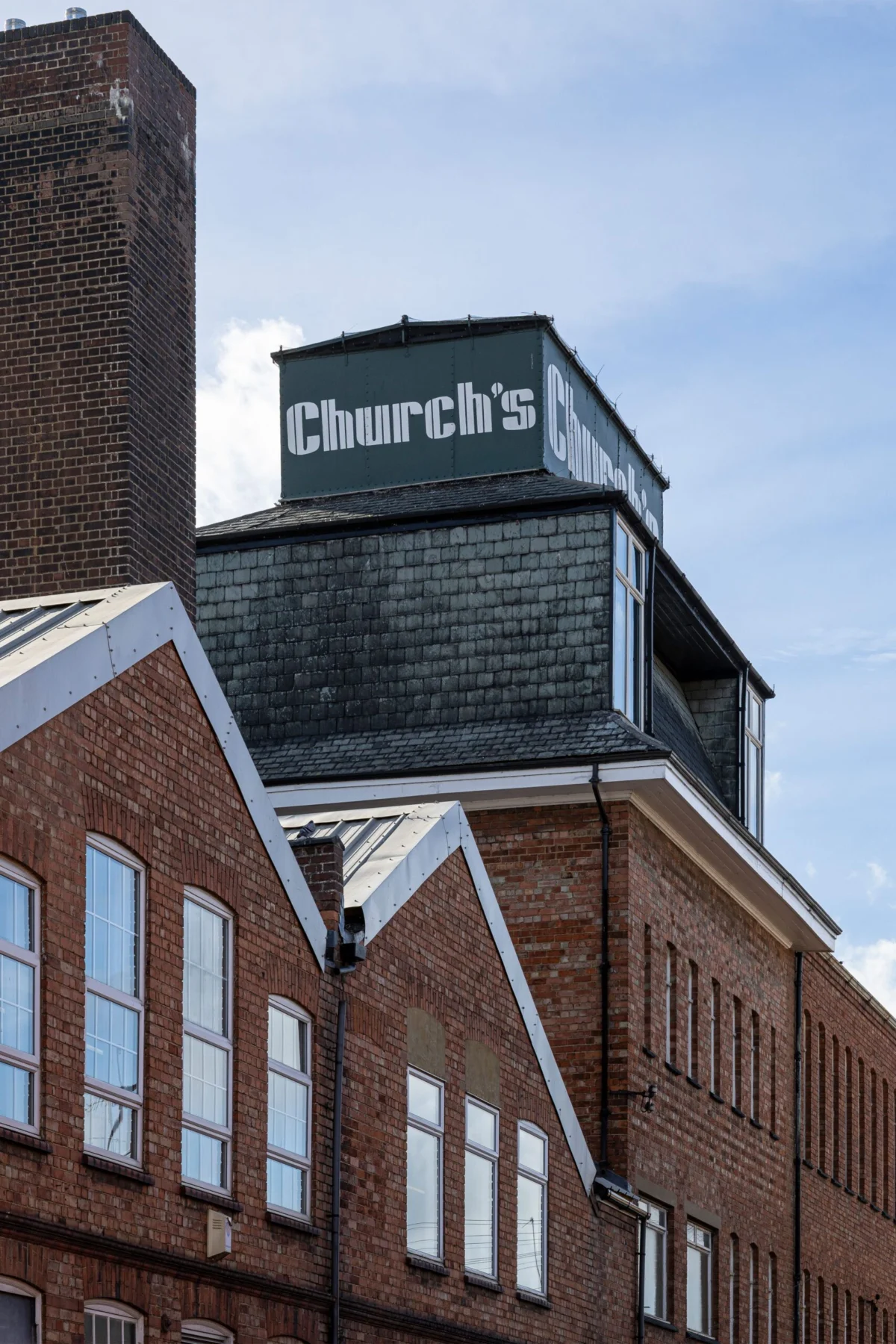
The St James Road factory in Northampton remains the heart of Church’s manufacturing, employing 137 individuals. Production meticulously follows the time-honored sequence of specialized rooms established by the Church family: clicking (leather cutting), closing (stitching the upper), lasting (shaping the upper over the last), making (attaching the sole), finishing, and polishing. During a recent factory tour attended by international editors, the technical intricacies of traditional English shoemaking were on full display, underscored by the unexpected soundtrack of "Boogie Shoes" by KC and the Sunshine Band playing over the factory’s tannoy system.

Cultivating Craftsmanship and Communicating Value
Within the factory, a spirit of creative exploration is encouraged. One former apprentice, now a full-time artisan, demonstrated her mastery of hand-painting shoes from the Crown collection, Church’s premium line. Her skill with a spray gun and her distinctive punk aesthetic highlighted the blend of tradition and contemporary individuality fostered within the company. Simon Hill, the company archivist, showcased shoes she had previously engraved and decorated, emphasizing how such creative freedom in apprenticeship can translate into enhanced production skills.
Manzatto pointed to the Crown and Royal collections, where shoes can involve up to 12 weeks of labor and over 320 distinct processes, as evidence that discerning clients are willing to invest in exceptional craftsmanship when its inherent value is effectively communicated. "If you come out with exceptional products, and of course, if you’re able to share with your clients what it takes to create these products… there is no price resistance," he asserted.
However, Manzatto’s strategy is not to transform Church’s into a trend-driven fashion brand reliant on constant novelty. "The vast majority of our sales come from continuity products," he clarified. While seasonal collections remain an important component, the perennial offering forms the bedrock of the business. He noted that a significant influx of new customers are specifically seeking out the iconic Goodyear-welted shoes that have defined Church’s for generations.

A Vision for Global Expansion and Enduring Englishness
The factory floor, while respecting its heritage, also showcases a modern integration of technology. New screens, bearing the Prada Group logo, meticulously record workflow, signifying Church’s enhanced operational integration. Manzatto believes this synergy will enable the brand to "look to scale up again." He identified womenswear as a key area for future growth and indicated that North America is slated to be the primary focus for expansion from 2027.
The overarching ambition is clear: "We aim to do more and better of the same," Manzatto concluded. "to become even more established, even more recognized, even more iconic, even more English." This encapsulates a strategic vision that honors the brand’s deep roots while embracing a future of global reach and continued dedication to the quintessential qualities of English shoemaking. The Church’s revival under Prada is not merely about business growth; it is about safeguarding a legacy of unparalleled craftsmanship and reintroducing it to a world that, despite its rapid evolution, still values enduring quality and authentic heritage.
