

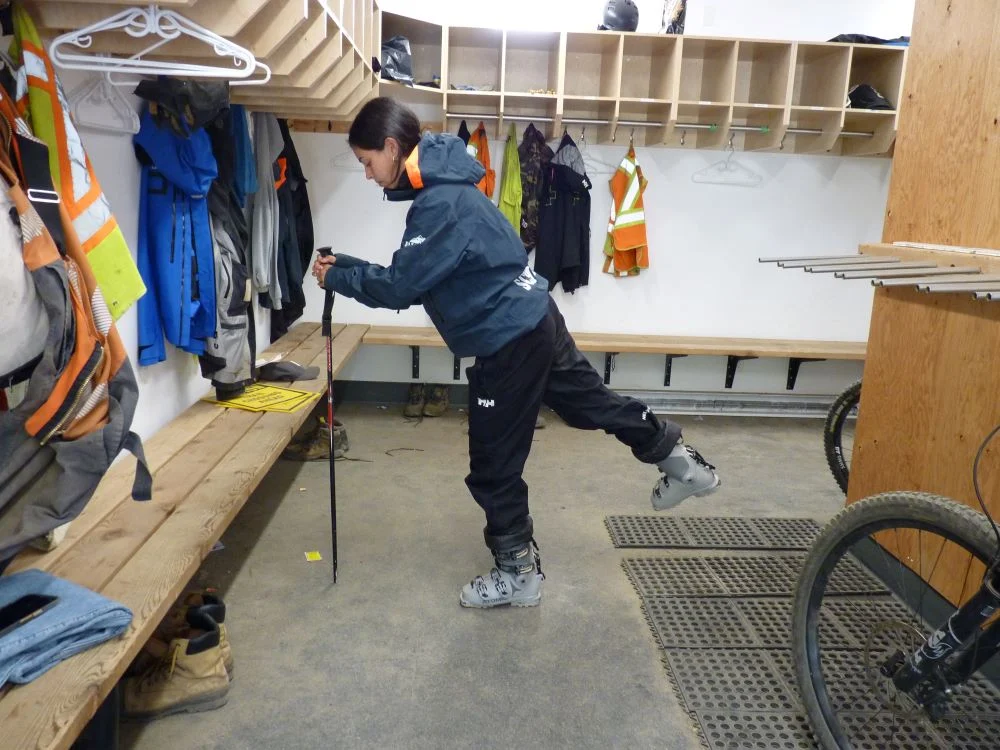
The pursuit of peak performance and sustained safety in snowsports, whether skiing or snowboarding, fundamentally hinges on the effective management of kinetic forces. Gravity and momentum, while providing the exhilarating energy that propels athletes down the slopes, also demand a robust physiological response from the human body. As detailed by Dr. Delia Roberts in the Spring 2026 Issue of 32 Degrees, the ability to store and release this energy through a ski or board to generate speed and direction is directly amplified by a strong, stable core. Much like a stiffer boot or board enhances energy transfer efficiency, a well-conditioned core serves as an unyielding platform, empowering the legs to operate with greater control and boosting overall athletic output. Beyond performance gains, core exercise has been scientifically linked to improved balance, optimized muscle recruitment, and a significant reduction in the incidence and severity of lower back pain, alongside a decreased risk of sustaining further injuries.
Despite the well-established benefits, a prevalent challenge among snowsports instructors and enthusiasts alike is the consistent integration of core training into their routines, often citing constraints such as lack of time or access to suitable training facilities. This article expands upon Dr. Roberts’ practical solutions, presenting five top "do-anywhere" core exercises specifically designed to deliver maximum performance benefits with minimal time investment. Crucially, these exercises are engineered to be performed while wearing ski or snowboard boots and without requiring floor access, making it feasible to weave daily repetitions into often-wasted moments, such as waiting at a bus stop or riding a chairlift. This innovative approach addresses a critical gap in traditional training methodologies, democratizing access to essential conditioning for everyone from recreational riders to seasoned professionals.
The Biomechanics of Snowsports: Why Core Stability Reigns Supreme
Snowsports are inherently dynamic and demand a complex interplay of strength, balance, and agility. The act of carving a turn, absorbing moguls, or executing a jump involves continuous adjustments to body position, pressure distribution, and edge angulation. From a biomechanical perspective, the human body acts as a kinetic chain, where forces generated in one part of the body are transferred through adjacent segments. The core, encompassing the muscles of the abdomen, lower back, pelvis, and hips, functions as the central link in this chain.
When the core is strong and stable, it provides a solid foundation from which the limbs can exert force. For instance, initiating a turn requires the legs to drive against the snow, applying pressure to the edges of the skis or board. Without a stable core, this force dissipates, leading to inefficient energy transfer, reduced edge grip, and compromised control. Conversely, a stable core allows for precise control of the body’s center of mass (CM), enabling a skier or rider to maintain balance over varying terrain and at different speeds. This enhanced control directly translates to improved speed, more precise turns, and a greater ability to adapt to unexpected changes in snow conditions or terrain.
Furthermore, snowsports involve significant eccentric muscle contractions, particularly in the quadriceps and glutes, as the body resists the downward pull of gravity and absorbs impacts. As Dr. Roberts notes, training muscles in one way doesn’t necessarily translate to better function for a specific sport. The eccentric phase of resistance training, where muscles lengthen under tension (e.g., squatting down, landing a jump), places unique demands on muscle fibers and nerve activation. Without a strong core to stabilize the trunk during these movements, the load can be improperly distributed, leading to strain on the lower back, knees, and ankles. Therefore, exercises that specifically train the core’s ability to stabilize during eccentric loading are paramount for snowsports athletes.
Injury Prevention: Safeguarding the Slopes Experience
The exhilarating nature of snowsports, while rewarding, also carries an inherent risk of injury. Statistics from various snowsports safety organizations consistently highlight common injury patterns. For instance, data from the National Ski Areas Association (NSAA) indicates that knee injuries, particularly anterior cruciate ligament (ACL) tears, remain among the most frequent, especially in skiing, while wrist injuries are more common in snowboarding. Lower back pain, however, is a pervasive issue across both disciplines, often stemming from repetitive torsional forces, prolonged flexed postures, and the cumulative impact of uneven terrain.
This is where a robust core becomes a critical preventative measure. A strong core directly contributes to spinal stability, reducing the risk of disc injuries and muscle strains in the lower back. By maintaining proper spinal alignment and supporting the vertebral column, core muscles act as a natural brace, mitigating the forces transmitted through the spine during impacts or sudden movements. Research published in journals like Spine and Journal of Orthopaedic & Sports Physical Therapy consistently demonstrates that comprehensive core stability programs are effective in both the short-term reduction of lower back pain and the long-term prevention of recurrent episodes.
Moreover, core strength indirectly protects peripheral joints. When the core is stable, it allows for more efficient movement patterns in the hips, knees, and ankles. This improved biomechanics reduces abnormal stresses on ligaments and tendons, thereby lowering the risk of sprains and tears. For instance, a stable pelvis and strong hip musculature, often trained synergistically with the core, can help control knee valgus (inward collapse of the knee) during landing or turning, a common mechanism for ACL injuries. The emphasis on improved balance through core training further reduces the likelihood of falls, which are a primary cause of many snowsports injuries. Therefore, incorporating dedicated core conditioning is not merely about enhancing performance; it is a fundamental pillar of a comprehensive injury prevention strategy for anyone engaging in snowsports.
The Evolution of Core Training and Practical Integration
The approach to core training in sports science has undergone a significant evolution over the past few decades. Historically, core exercises often focused on superficial abdominal muscles through traditional sit-ups and crunches. However, advances in understanding human biomechanics and functional anatomy, championed by pioneers in sports medicine and physical therapy, shifted the paradigm towards functional core stability. This modern approach emphasizes the activation of deeper core muscles—such as the transverse abdominis, multifidus, and pelvic floor—which are crucial for spinal stabilization and efficient force transfer throughout the kinetic chain. This shift has been influenced by disciplines like Pilates and functional fitness, which advocate for integrated movements that mimic real-world activities.
Dr. Roberts’ "do-anywhere" methodology represents the next logical step in this evolution: making highly effective, functional core training accessible to individuals with demanding schedules or limited resources. Snowsports instructors, for example, often spend long hours on the slopes, with minimal downtime and limited access to gyms. The ability to perform targeted exercises in their boots, during brief breaks, revolutionizes how they can maintain their physical conditioning. This innovative integration acknowledges the practical realities of the snowsports lifestyle, transforming traditionally "wasted" moments into valuable training opportunities. This not only enhances individual fitness but also sets a precedent for how preventative health can be woven into professional and recreational routines.
Establishing the Foundation: Neutral Posture and Core Activation
Before embarking on any core exercise, establishing a neutral posture and activating the core muscles are paramount. This foundational step ensures that the exercises effectively target the intended muscles and minimizes the risk of compensatory movements or strain.
Step 1: Finding Your Neutral Posture
Neutral posture refers to the natural alignment of the spine, where its curves are maintained without exaggeration. It serves as the optimal starting point for generating spinal stability. To achieve this, sit or stand tall, ensuring a small, natural curve in the lower back. The shoulders should be relaxed, dropped down and gently pulled back, but without overcorrection that would cause the ribs to lift. The gaze should be directed forward, avoiding any upward or downward tilt of the head. Crucially, the hip bones, including the pubic bone, should reside in the same horizontal plane, neither tipped forward (anterior pelvic tilt) nor backward (posterior pelvic tilt). This alignment, as referenced in 32 Degrees Spring 2019’s "At the Core of All Movement," is fundamental for effective core engagement.
Step 2: Activating Your Core
Once in neutral posture, the next step is to activate the deep core muscles. This involves a gentle engagement of the lower abdominal muscles and the pelvic floor. Pull the lower belly slightly in and up, imagining a gentle tightening without hollowing or sucking in the abdomen forcefully. The goal is to generate subtle tension, not maximal contraction. Concurrently, lift the pelvic floor, similar to the sensation of stopping the flow of urination. This combined activation creates a stable, engaged core, ready to support movement and resist external forces. This neutral starting position ensures that subsequent exercises are performed with optimal muscle recruitment and spinal protection.
Step 3: Executing the Exercises
For optimal results, consistency and progressive overload are key. Begin with 10 repetitions of each exercise, gradually building up to 30 repetitions for two to three sets. Aim to complete the routine two to three times per week. This systematic progression allows the muscles to adapt and strengthen over time, maximizing the benefits.
Core Exercises for On-Snow Dominance
Exercise 1: Seated Pelvic Stabilizer
Objective: To enhance the stability of the spine and pelvis, crucial for independent leg action and efficient edge control in snowsports. This exercise specifically targets the deep muscles of the abdomen, hips, and back.
Execution:
- Start in your neutral posture, seated firmly, with your core activated (lower belly gently in and up, pelvic floor lifted).
- Lift one foot approximately an inch off the floor, maintaining the engaged core and ensuring no movement or twisting in your pelvis.
- Hold this position for a count of three, then slowly lower the foot back down.
- Alternate feet, completing between 10 and 30 repetitions on each side.
Self-Correction: To verify correct execution, place two fingers over the front of your hip bones. You should not detect any twist or lateral movement in your pelvis. If stability is compromised, reduce the load by either performing only the core activation and weight transfer without lifting the foot, or by lifting the foot minimally until pelvic stability can be maintained. Gradually increase the leg movement as stability improves.
Making it Harder:
- Increase the duration of the hold for each lift (e.g., hold for 5-10 seconds).
- Perform the exercise on a slightly unstable surface (e.g., a thick mat or cushion, if done off-piste in a safe environment).
- Add light ankle weights (0.5-1 kg) once perfect form is mastered without additional load.
- Perform while standing, challenging balance and core stability further (transitioning from "seated" to "standing pelvic stabilizer").
Scientific Rationale: Skiing and snowboarding demand that the legs move independently of the upper body to manage edges, absorb terrain, and control pressure. The Seated Pelvic Stabilizer directly trains the deep abdominal and hip muscles (e.g., transverse abdominis, internal obliques, gluteus medius/minimus) to provide a stable platform for the spine and pelvis, allowing the legs to articulate effectively. This resistance to unwanted movement is a cornerstone of functional stability, directly translating to superior edge control and dynamic balance on the slopes.
Exercise 2: Single-Leg Deadlift
Objective: This exercise is highly effective for snowsports as it combines significant recruitment of the gluteal muscles with robust spinal and pelvic stability during extension. It also demands a high level of balance, which intensifies the load on the core musculature.
Execution:
- Begin in a standing neutral posture with core activated.
- Extend one leg straight back behind you, allowing your upper body to tilt forward from the hips. Simultaneously, lift the extended leg off the ground.
- Maintain square shoulders and hips, ensuring there is no opening, twisting, or "hiking" of the hip on the lifted leg side.
- Aim to reach a horizontal position with your torso and extended leg, forming a straight line from head to heel.
- Slowly return to the upright starting position.
- Complete 10 to 30 repetitions on each leg.
Modification for Balance: If balancing on one leg is challenging, start by using a ski pole for support or keep the back toe on the ground, making the movement akin to a staggered stance row. As core strength and balance improve, gradually lift the back foot completely.
Making it Harder:
- Hold light dumbbells or a kettlebell in the opposite hand to the extended leg, increasing the load on the core and glutes.
- Increase the range of motion, ensuring perfect form throughout.
- Perform the movement slower, emphasizing the eccentric (lowering) phase to maximize muscle time under tension.
- Incorporate a slight knee bend in the standing leg to engage more gluteal and hamstring muscles.
Scientific Rationale: Snowsports predominantly involve controlling downhill momentum, which means many muscles operate under eccentric contraction—lengthening while contracting. This type of contraction, as seen in the negative phase of a deadlift, results in a distinct level of nerve activation and places greater load on individual muscle fibers. This explains why activities like running downhill or a full day of skiing can lead to significant muscle soreness (Delayed Onset Muscle Soreness, or DOMS), often manifesting as sore quads or lower back pain. The Single-Leg Deadlift specifically loads the muscles of the back, glutes, and pelvis eccentrically, preparing them for the intense demands of controlling descents, absorbing impacts, and executing turns on snow. It directly improves the ability to maintain the CM over the base of support and control edge angulation, critical for high-performance skiing and riding.
Exercise 3: Standing Marching Abs
Objective: To improve dynamic core stability and hip flexor strength while maintaining an upright posture. This exercise mimics the subtle balance shifts required in various snowsports maneuvers.
Execution:
- Stand tall in your neutral posture, core activated.
- Slowly lift one knee towards your chest, aiming for a 90-degree angle at the hip, while keeping your standing leg slightly bent and stable.
- Hold briefly at the top, focusing on maintaining pelvic stability and preventing any rocking or twisting of the torso.
- Lower the leg with control and immediately lift the opposite knee.
- Alternate legs for 10-30 repetitions per side.
Making it Harder:
- Increase the speed of the march while maintaining control.
- Add a light resistance band looped around the feet or ankles to challenge hip flexors and core.
- Perform with eyes closed to significantly increase the balance challenge.
Scientific Rationale: The Standing Marching Abs exercise engages the deep core stabilizers (transverse abdominis, obliques) to prevent rotation and lateral flexion, while also activating the hip flexors. In snowsports, maintaining an upright, balanced stance while the legs are performing independent actions (e.g., moguls, traversing) requires precisely this type of dynamic core stability. It helps to train the body’s proprioceptive awareness, allowing for quicker reactions to shifts in balance.
Exercise 4: Standing Oblique Twists
Objective: To enhance rotational stability and strength in the oblique muscles, vital for initiating turns and absorbing torsional forces in snowsports.
Execution:
- Stand with feet shoulder-width apart, knees slightly bent, in your neutral posture with core activated.
- Place your hands clasped behind your head or crossed over your chest.
- Keeping your hips relatively stable and facing forward, slowly rotate your upper torso to one side, engaging your oblique muscles.
- Control the movement, avoiding jerky motions or excessive rotation that strains the lower back.
- Return to the center and rotate to the opposite side.
- Complete 10-30 repetitions per side.
Making it Harder:
- Hold a light weight (e.g., a small water bottle or light dumbbell) with both hands, extending it slightly forward as you twist.
- Increase the speed of the twist while maintaining control and core engagement.
- Perform with one leg slightly lifted off the ground (e.g., heel lifted) to add a balance challenge.
Scientific Rationale: Turning in skiing and snowboarding involves significant rotational forces. The oblique muscles play a crucial role in initiating and controlling these rotational movements while stabilizing the spine. By training the obliques in a standing, controlled manner, the Standing Oblique Twist directly translates to improved turn initiation, better absorption of torsional forces, and enhanced spinal protection during dynamic maneuvers on snow.
Exercise 5: Standing Calf Raises with Core Hold
Objective: To combine lower leg strength, essential for boot control, with continuous core engagement for overall stability.
Execution:
- Stand tall in your neutral posture, core activated. Feet should be hip-width apart.
- Slowly raise yourself onto the balls of your feet, lifting your heels as high as possible. Maintain your core engagement throughout, ensuring your body moves as one stable unit without swaying.
- Hold briefly at the top, squeezing your calf muscles.
- Slowly lower your heels back down to the floor with control.
- Perform 10-30 repetitions.
Making it Harder:
- Perform single-leg calf raises, significantly increasing the load on the calf and the balance challenge for the core.
- Add a slight pause at the bottom before initiating the next raise to eliminate momentum.
- Perform on an elevated surface (e.g., a curb or step) to increase the range of motion and stretch the calves further.
Scientific Rationale: The calf muscles (gastrocnemius and soleus) are critical for precise control within ski and snowboard boots, influencing pressure application and edge control. By integrating calf raises with a conscious core hold, this exercise ensures that lower leg strength is developed synergistically with trunk stability. This integrated approach mirrors the demands of snowsports, where movements in the feet and ankles are always supported by a stable core, leading to more responsive and controlled performance on the slopes.
Broader Impact and Implications
The widespread adoption of accessible core conditioning, as championed by Dr. Roberts, holds significant implications for the snowsports community. For snowsports instructors, a stronger core translates directly into enhanced teaching capabilities. Improved stability and control allow them to demonstrate techniques with greater precision, reducing fatigue during long days, and ultimately prolonging their professional careers by mitigating injury risks. This also enhances their credibility and ability to inspire confidence in their students.
For recreational enthusiasts, the benefits are equally profound. A robust core means longer, more enjoyable days on the slopes, reduced muscle soreness, and a significantly lower risk of injury. This fosters greater participation and retention in snowsports, making the activity more accessible and sustainable for individuals across all age groups and skill levels. By empowering individuals to take ownership of their physical preparedness through simple, integrated routines, Dr. Roberts’ approach contributes to a broader cultural shift towards preventative fitness in recreational sports. This paradigm move from reactive injury treatment to proactive injury prevention and performance enhancement is poised to make snowsports safer, more enjoyable, and more enduring for generations to come. This approach aligns seamlessly with recommendations from leading sports medicine organizations, which increasingly advocate for functional, sport-specific training to optimize athletic longevity and overall well-being.
In conclusion, the seemingly simple act of engaging the core is anything but. It is the linchpin of stability, the conduit of power, and the shield against injury in the dynamic world of snowsports. By integrating these "do-anywhere" core exercises into daily life, snowsports participants can unlock new levels of performance, enjoyment, and safety, proving that even small, consistent efforts can yield monumental results on the mountain.
