

Published August 29, 2026 06:00 AM
While the allure of a steep, challenging ski run is undeniable, the difference between knowing a run is difficult and truly understanding its demands can be vast. This guide delves beyond mere bragging rights, offering an in-depth look at six of North America’s most formidable ski descents. We explore the specific terrain, strategic approaches, and optimal equipment choices for skiers seeking to test their mettle on these legendary slopes.
Banana Chute, Crested Butte, Colorado
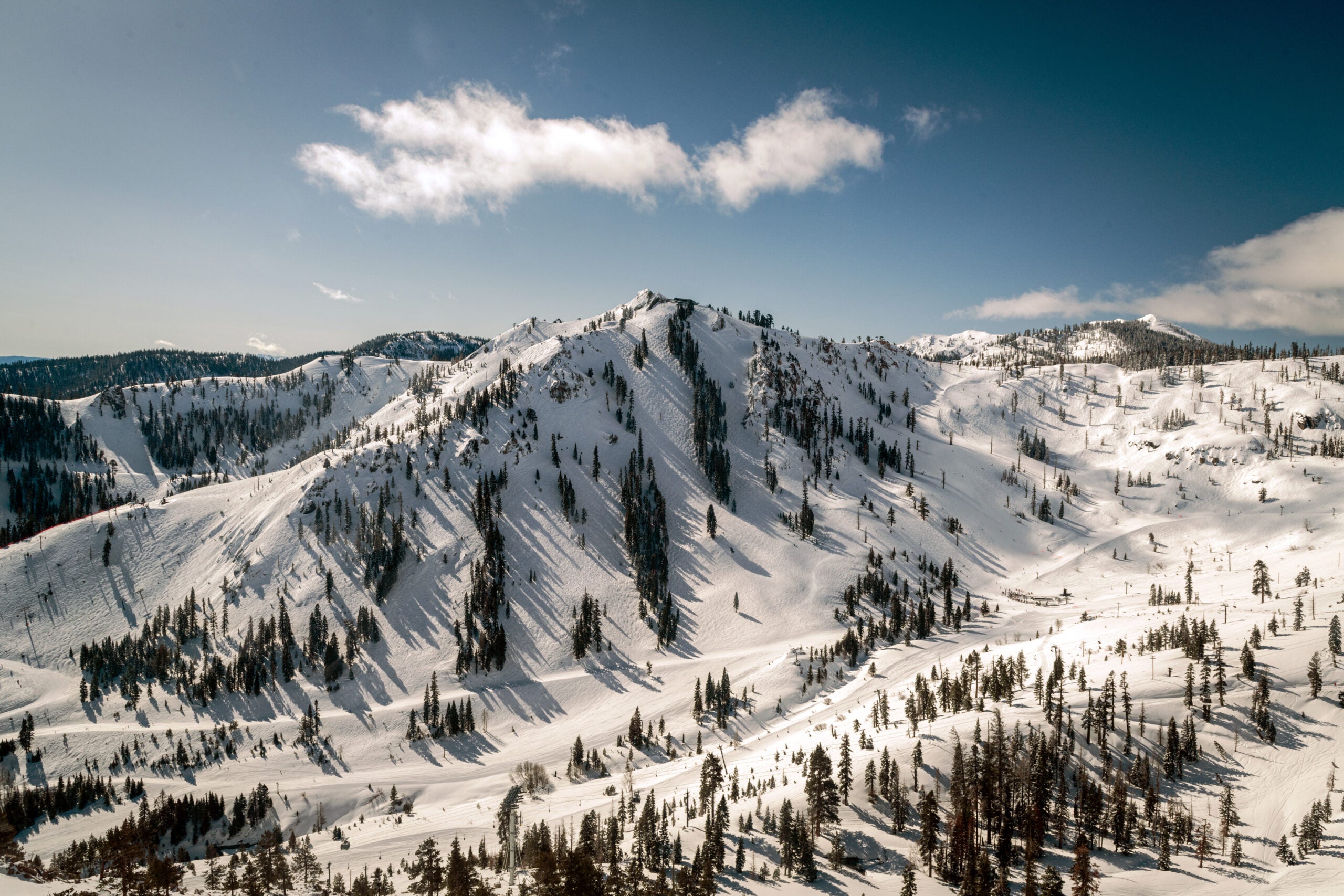
Banana Chute at Crested Butte, Colorado, offers more than just an intimidating appearance from its summit; it provides tangible proof of accomplishment. Visible from the town of Crested Butte, its prominent location on the mountain’s west face allows skiers to definitively point and claim, "I skied that." Dropping from an elevation of nearly 11,000 feet, the run descends approximately 3,000 vertical feet. Its namesake curved shape maintains a consistent pitch throughout, delivering some of Crested Butte’s most celebrated skiing conditions when the snow is favorable. Conversely, poor snow conditions can transform it into a treacherous, rock-strewn obstacle course.
What to Expect:
Banana Chute features two access points: one from the High Lift mid-station and another from below the summit of the Silver Queen lift. Skiers will encounter rocky terrain at the upper reaches, transitioning into a steep, sustained descent that progressively narrows into a choke point. Strategic skiers will seek protected snow on the left side of the main bowl and diligently manage their speed as the terrain constricts. The lower section is characterized by dense, small evergreen trees that possess a notorious ability to catch ski tips before the run ultimately opens into a more open area known as the Hockey Rink. The consistent pitch and the potential for variable snow conditions necessitate a high level of technical proficiency and adaptability.
Optimal Ski Selection:
For Banana Chute, a relatively wide ski with a softer flex is recommended, though excessively long skis should be avoided. The primary consideration is maneuverability, particularly within the narrower choke sections. Skis that facilitate easy pivoting are essential for maintaining control and navigating the tight confines effectively. A ski in the 95-105mm underfoot range, with a moderate amount of rocker, would be a suitable choice, offering both flotation in softer snow and the agility required for quick edge-to-edge transitions.
KT-22, Palisades Tahoe, California
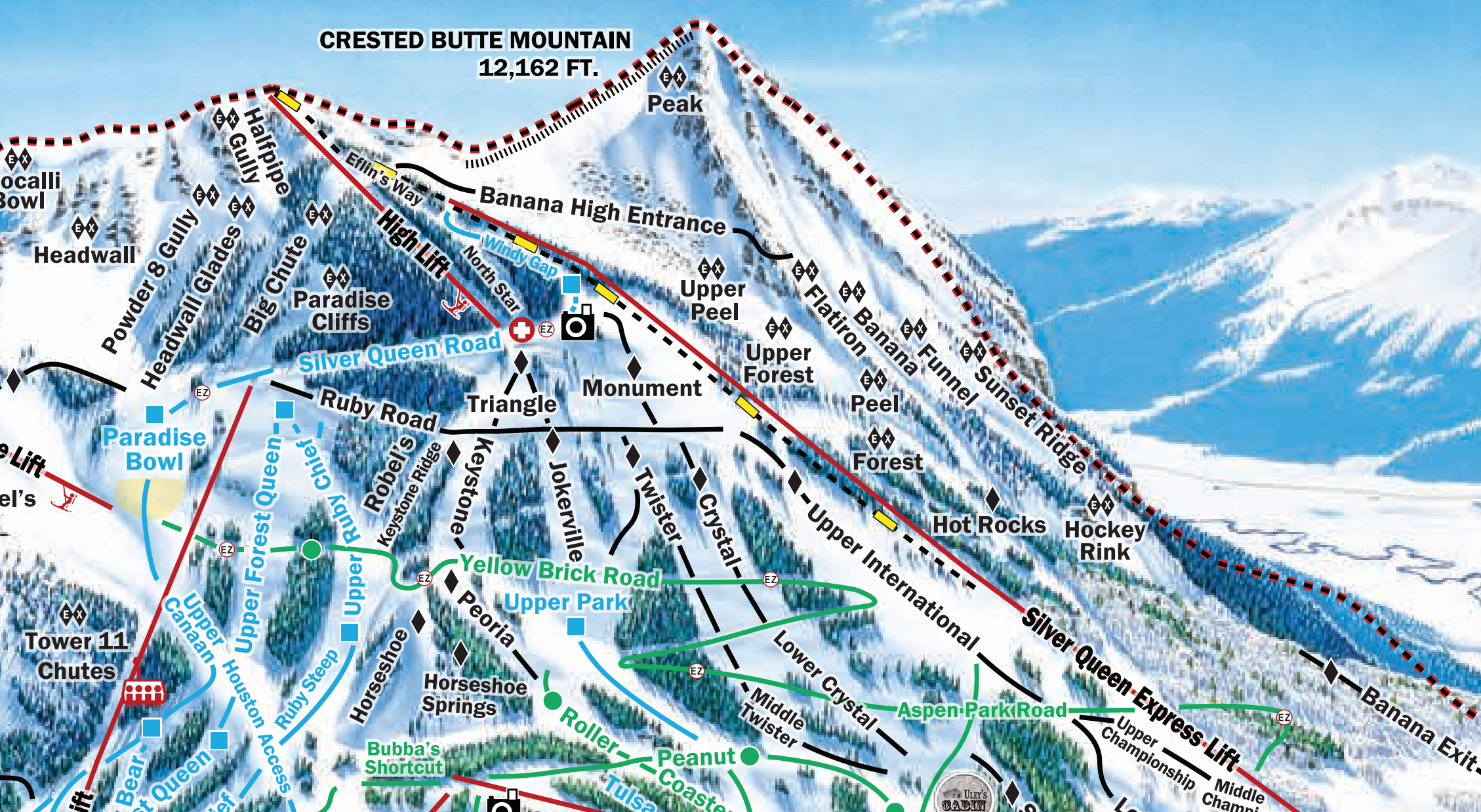
KT-22 at Palisades Tahoe, California, is not a single run but rather an entire mountain face accessible by its own dedicated chairlift, offering a multitude of expert-level routes. This 2,000-vertical-foot zone is a complex playground for advanced skiers, incorporating cliff bands, steep chutes, open bowls, dense glades, and challenging mogul fields. The name originates from 1946, when Sandy Poulsen, wife of Palisades founder Wayne Poulsen, reportedly hiked the 8,200-foot peak and executed 22 kick turns on her descent. In contemporary conditions, the abundant powder can dissipate rapidly, prompting local advice to rise early for fresh tracks.
What to Expect:
The terrain visible from the KT-22 chairlift is undeniably intimidating, and for good reason. An introductory approach involves traversing left towards Red Dog Ridge and the adjacent trees, where snow deposits from post-storm wind patterns may linger even after the readily accessible powder has been tracked. Upon committing to a descent, skiers must establish and maintain a rhythm of controlled turns. The gradient fluctuates significantly, ranging from relatively moderate sections to steep pitches, presenting ample opportunities for speed to escalate beyond comfort levels. Straight-lining is strongly discouraged. Depending on individual confidence and skill, skiers can progressively explore more challenging terrain or opt to repeatedly lap the tree runs until fatigue sets in. The diverse features of KT-22 demand constant assessment of snow conditions and terrain transitions.
Optimal Ski Selection:
A mid-fat all-mountain ski serves as a competent starting point for KT-22. For days with deeper snow accumulations, wider skis are advantageous for flotation. However, it is crucial not to overemphasize width at the expense of agility, as KT-22 rewards skis capable of rapid turning just as much as those that excel in powder. A ski in the 95-105mm waist width range, with a versatile profile combining camber underfoot for edge grip and early rise in the tip and tail for maneuverability, would be well-suited. The ability to transition quickly between carved turns and quick adjustments in variable snow is paramount.
Dave Murray Downhill, Whistler Blackcomb, British Columbia
In contrast to the intricate navigation required by Banana Chute, the Dave Murray Downhill at Whistler Blackcomb, British Columbia, emphasizes raw speed and controlled aggression. This iconic run descends over 3,300 vertical feet in just over 1.5 miles, positioning it as one of the world’s longest downhill courses. It has been described as the "Autobahn of black diamonds," characterized by its broad width, significant rollers, sweeping turns, and opportunities for substantial airtime. This course served as the venue for the 2010 Vancouver Winter Olympics downhill skiing events, underscoring its pedigree and demanding nature.
What to Expect:
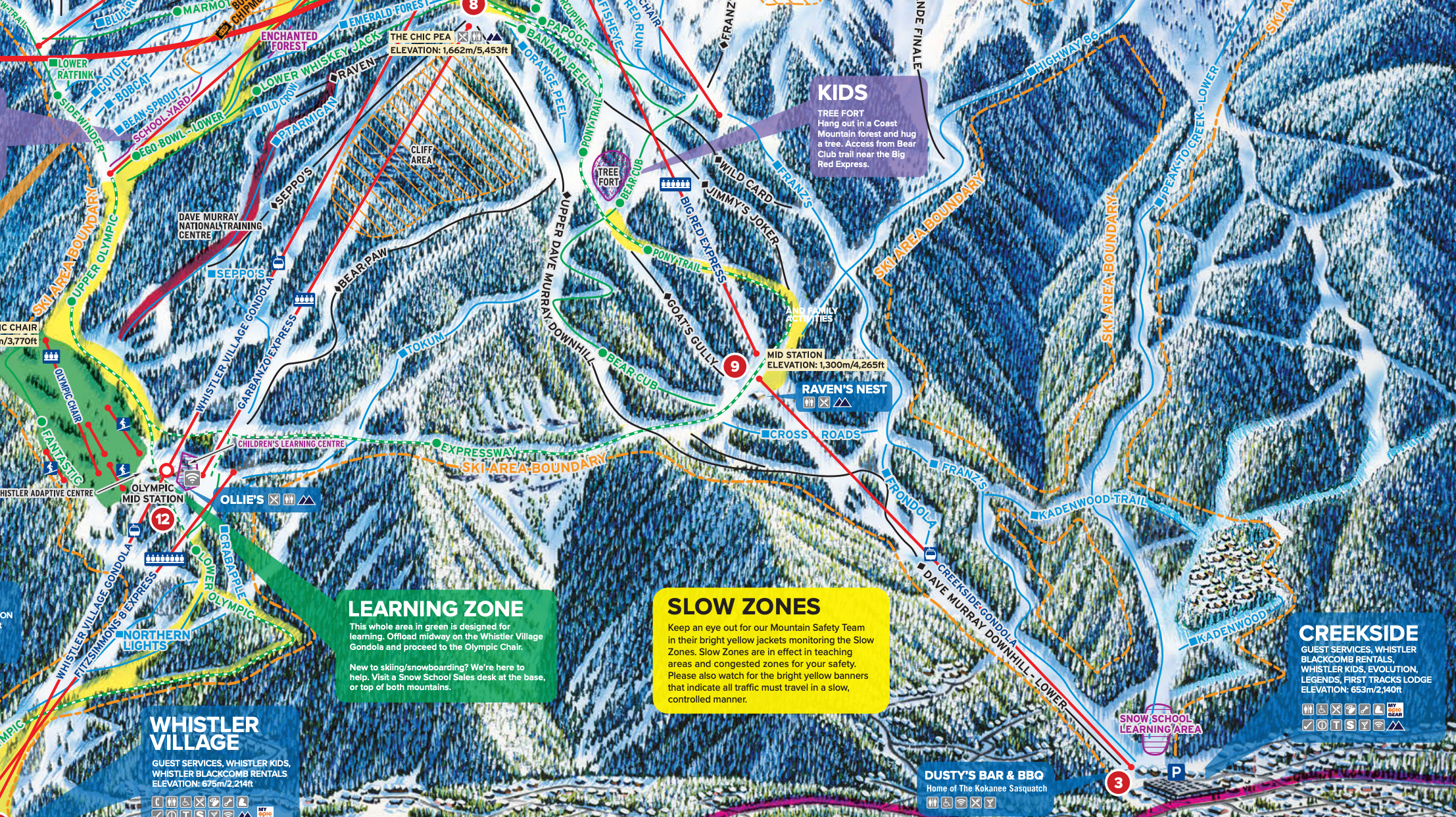
The Dave Murray Downhill initiates with a rapid descent, featuring a straight section over the Double Trouble rollers before sweeping into the aptly named Toilet Bowl. Skiers are advised to maintain a low profile and execute clean, carved turns as the trail narrows. Following this is "Weasel," a substantial right-hand sweeping turn, leading into a steep pitch, approximately 45 degrees, and a significant roller that can launch skiers airborne if speed is not adequately managed. Caution is advised when crossing Expressway due to potential traffic. Skiers must remain vigilant through "Fall Away," a blind turn that can lead skiers into the adjacent woods. The lower section of the run accelerates further, presenting steep gradients, sharp turns, and "Hot Air," a long, spectacular jump for those inclined to take flight. The finish requires a sustained tuck, often leaving skiers with profoundly fatigued legs.
Optimal Ski Selection:
When the Dave Murray Downhill is fully groomed, it presents an ideal scenario for utilizing long Giant Slalom (GS) or Super-G skis. These skis are designed for high-speed stability and powerful carving on firm snow. For skiers seeking maximum performance on a groomed course of this magnitude, a ski with a radius between 21-25 meters and a length of 200-210cm would be appropriate. The inherent stability and edge hold of these race-inspired skis are crucial for maintaining control at extreme velocities and navigating the challenging contours of the course.
Corbet’s Couloir, Jackson Hole, Wyoming
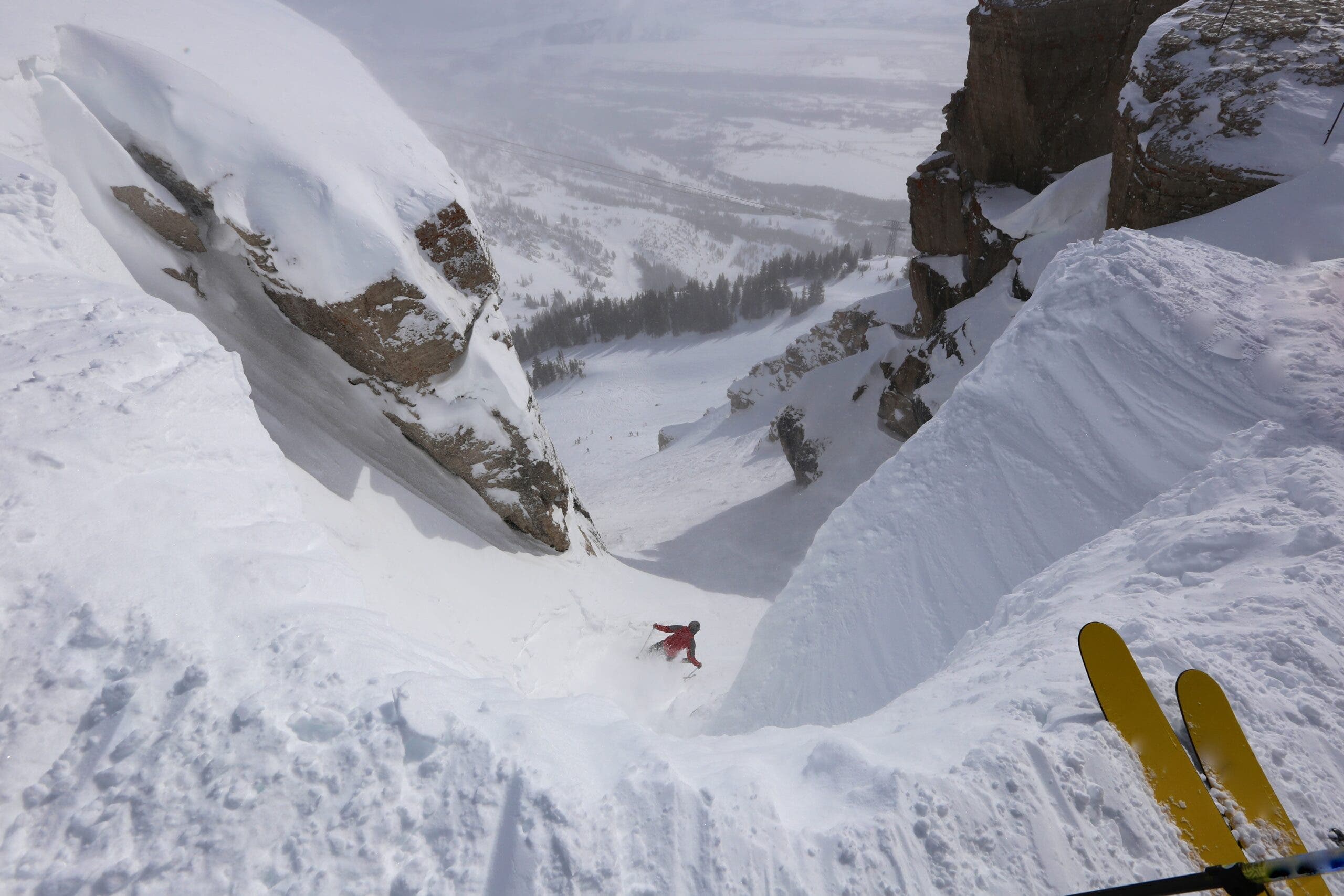
Corbet’s Couloir at Jackson Hole, Wyoming, stands as a legendary test of nerve and skill, named after Jackson Hole instructor and guide Barry Corbet. In 1960, Corbet famously surveyed the intimidating chasm and predicted its future as a ski run, a prophecy that has since been fulfilled. Corbet’s remains the ultimate "put up or shut up" line at Jackson Hole, with the psychological challenge of committing to the drop-in being as significant as the skiing itself.
What to Expect:
The entrance to Corbet’s Couloir is the defining feature of the experience. Depending on snowfall, the initial drop can range from 10 to 30 feet. The critical element upon committing to the drop is to land with skis pointed downhill and immediately establish balance. The upper section of the couloir can be rutted and bumpy, leading to rapid acceleration. Once past the initial entrance, skiers find a brief respite as the couloir widens into a broad apron, offering space for controlled turns and speed management. The pitch gradually eases but remains substantial. Skiers must select their line based on prevailing snow conditions and their personal confidence levels. The run ultimately merges with other terrain, but the initial descent is the primary challenge. The potential for hidden rocks and debris beneath the snowpack necessitates extreme caution and precise execution.
Optimal Ski Selection:
For hard, chalky snow conditions, an all-mountain ski is recommended. Following a significant snowfall, a dedicated powder ski would be more appropriate. A helmet is an absolute necessity due to the inherent risks associated with the terrain. The ability to absorb varied snow surfaces and maintain stability during the initial drop is paramount. A ski in the 98-108mm waist width range, with a strong camber profile and a forgiving tip and tail, would offer a balance of performance and control. The emphasis should be on a ski that can handle unpredictable snow and provide confidence during the critical entrance phase.
Outer Limits, Killington, Vermont
Originally carved as a potential alpine training venue for the 1980 Olympic Games, Outer Limits at Killington, Vermont, proved too steep for that purpose. It has since evolved into one of the Eastern United States’ longest, steepest, and most notorious mogul runs. This iconic trail represents a significant challenge for even seasoned skiers, demanding exceptional stamina and technical proficiency.
What to Expect:
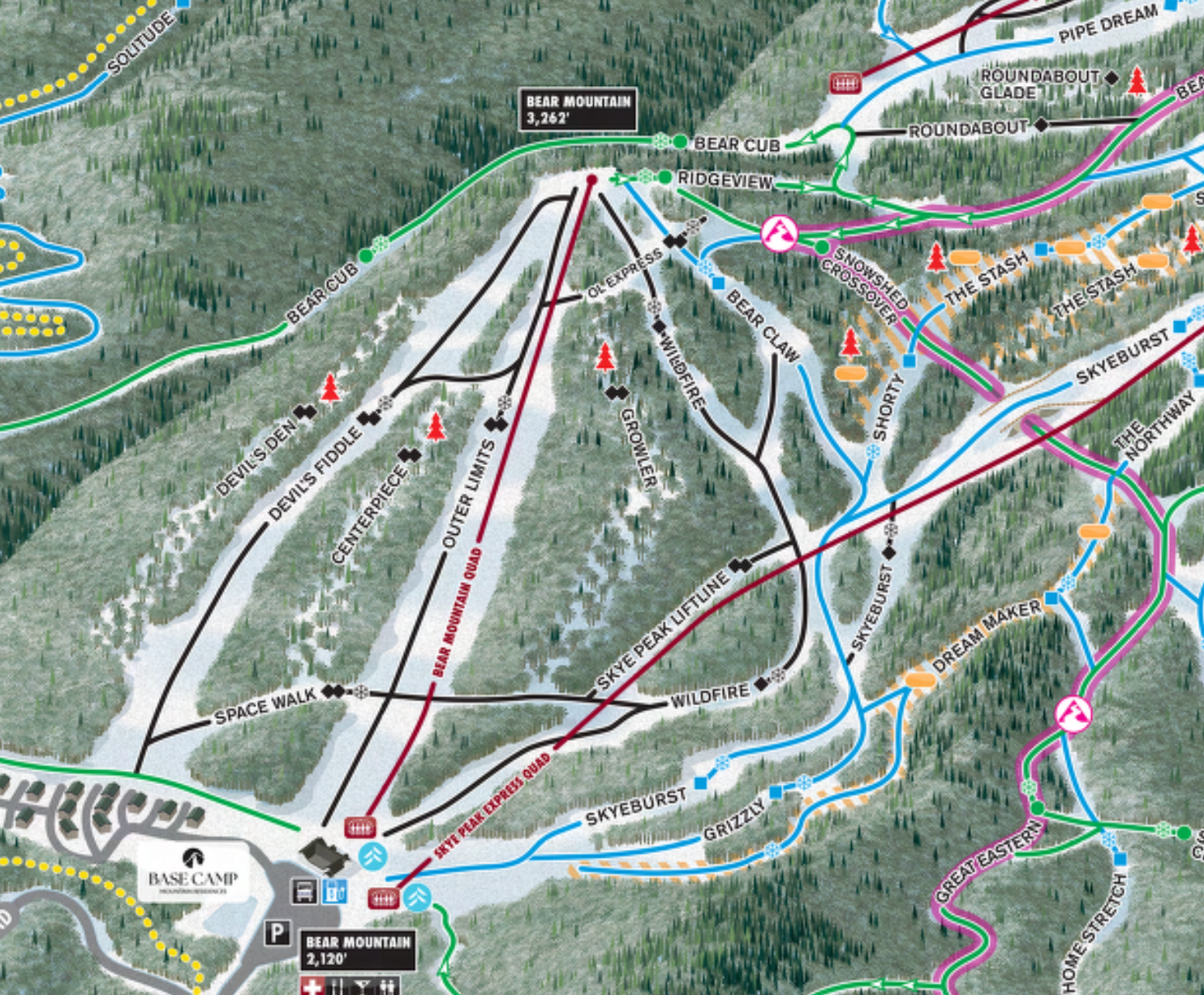
From the summit, skiers have a choice: the wider line situated beneath the chairlift or a narrower route to the left. Regardless of the chosen path, the gradient quickly becomes severe. The middle section of Outer Limits is the heart of the challenge, characterized by relentless, large moguls and minimal opportunities for respite. Skiers must maintain focus and adaptability. Seeking the edges of the run can sometimes reveal softer snow, and skiers are encouraged to tackle the run in sections if necessary. The lower portion of the run sees a slight easing of the pitch as the bumps round out, though the sustained effort required may leave skiers’ thighs burning. The sheer consistency of the steep pitch and the size of the moguls are the defining characteristics of this demanding trail.
Optimal Ski Selection:
For Outer Limits, a relatively short ski with minimal sidecut is advisable. Excessive sidecut can lead to unexpected hooking in the irregular surfaces of the bumps. Shorter poles can also be beneficial, aiding in quick, fluid movements and maintaining balance. A ski in the 85-95mm waist width range, with a moderate sidecut radius and a firm flex, would be suitable. The emphasis is on a ski that allows for quick edge changes and can absorb the impact of repetitive mogul skiing without becoming overly demanding to control.
National, Stowe, Vermont
National, established in 1952 for the U.S. Championships, is the oldest of Mount Mansfield’s renowned "Front Four" trails. It descends 1,590 vertical feet over a length of 3,875 feet, boasting an average pitch of 36 degrees. Its northeast-facing aspect allows it to retain snow, and consequently ice, for extended periods after other trails have softened. This characteristic adds a significant layer of challenge to an already formidable run.
What to Expect:
The upper section of National can be notoriously icy, steep, and strewn with awkward bump formations, necessitating a strategic choice of path rather than navigating the crowded center. The right side is often considered the most manageable, though the left side can also be skied, albeit with potential complications from snowmaking equipment. Below "Birch Tree," the pitch moderates slightly. The right side of this section is sometimes groomed, while the left can develop substantial moguls. Near the base, a final steep pitch can approach 40 degrees before yielding to an easier run-out. It is crucial to understand that skiing only the lower, less challenging section does not constitute a complete descent of National.
Optimal Ski Selection:
For National, a narrow and nimble ski is the preferred choice. The ideal ski should be capable of quickly engaging its edge and be short enough to facilitate maneuverability in steep, tight terrain. A ski in the 75-85mm waist width range, with a pronounced camber and a sharp edge, would be highly effective. The ability to initiate quick turns and maintain precise edge control on potentially icy surfaces is paramount. The agility provided by a narrower ski is essential for navigating the varied and often challenging conditions encountered on this historic trail.
