

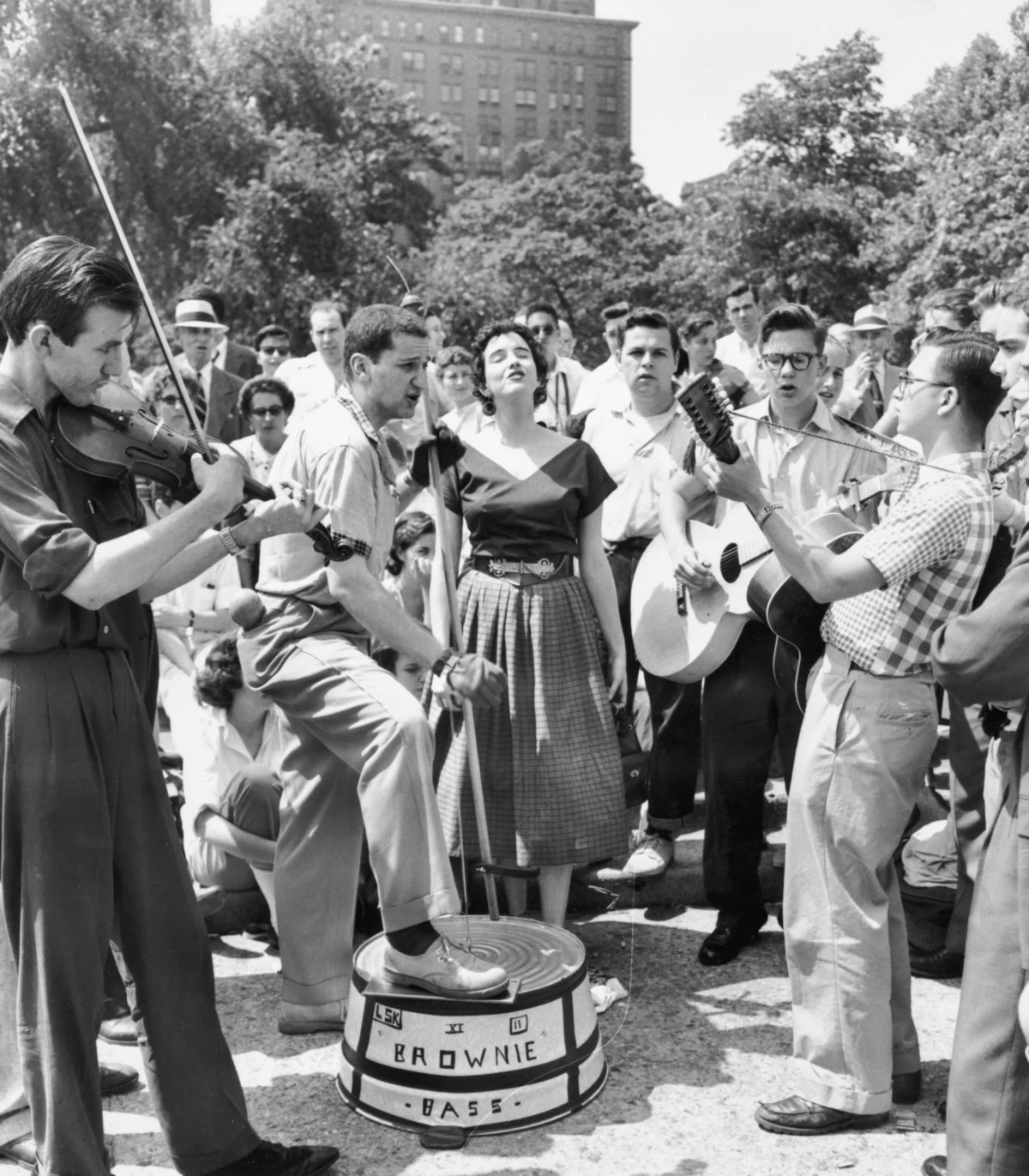
In 1984, a chance encounter at the Limelight nightclub in Manhattan offered a prescient glimpse into a cultural resurgence. Author Tad Friend, amidst the thirtieth-birthday revelry for William Burroughs, found himself in conversation with Allen Ginsberg. A decade prior, Ginsberg had expressed a somber outlook on America’s prospects, lamenting the perceived fading of the Beat Generation’s revolutionary spirit. However, at the Limelight, surrounded by a diverse array of cultural figures, Ginsberg’s mood shifted. Friend recalled his earlier college visit, where Ginsberg had led a meditation session amidst swirling marijuana smoke, and mentioned his recent enjoyment of Jack Kerouac’s seminal novel, On the Road.
Ginsberg’s response, a smile illuminating his face, proved remarkably prophetic. "The Beat influence will come around again," he stated, predicting a natural resurgence following what he characterized as "years of the Reagan-Nixon ugly spirit." He punctuated this observation with a Kerouac haiku: "Useless, useless,/the heavy rain/Driving into the sea." This seemingly abstract verse, Friend noted, was "off the point? No, Beat."
Ginsberg’s intuition was not misplaced. By the mid-1990s, the Beat Generation, once a countercultural fringe, was experiencing a significant revival, permeating various facets of art, literature, and popular culture. New York University, a hub of intellectual discourse, hosted substantial conferences dedicated to the Beats and Kerouac, with a striking seventy percent of attendees at the latter being under the age of twenty-five. Online, the website Literary Kicks served as a digital agora for discussions on Beat philosophy and works. The literary world saw renewed interest with the release of Kerouac’s letters and a portable edition of his fiction. Anticipation was building for a major exhibition at the Whitney Museum of American Art, "Beat Culture and the New America: 1950-1965," scheduled for November.
Further solidifying this resurgence, filmmaker Francis Ford Coppola announced his intention to adapt Kerouac’s 1957 novel On the Road for the screen. The project, slated for a 1996 production, was envisioned in black-and-white, aiming to capture the restless spirit of protagonists Sal Paradise and Dean Moriarty as they traversed the American landscape, grappling with women, alcohol, and the law in their ceaseless quest for experience. The open audition held in February in New York City drew an overwhelming response, with over 5,000 hopefuls braving the snow, a testament to the enduring allure of the Beat mythos. Coppola, reportedly attuned to the "aura" of these aspiring actors, personally greeted each applicant.
The Pervasive Influence of Beat Aesthetics
The renewed interest in the Beat Generation manifested in a diverse array of cultural phenomena. A subtle, yet concerning, uptick in heroin use was observed, which some commentators linked to a romanticized perception of the Beat lifestyle. Fashion saw the return of the goatee and Vandyke beard, sported by figures like Ethan Hawke and Nicolas Cage. Literature majors at prestigious Ivy League institutions were noted for adopting a uniformly black wardrobe and cultivating an air of "poetic depression." The revival of long-board surfing, with its vaguely Zen undertones, and the proliferation of coffeehouses, where the resident feline might bear the name Ferlinghetti, further signaled a cultural shift. Even the automotive industry, with Volkswagen’s plans for an updated Beetle, seemed to tap into this nostalgic current.
Bill Adler, president of NuYO Records, a label specializing in spoken word recordings, declared, "The Beats are everywhere. It’s undeniable. It’s like mold." This sentiment was echoed by Anne Waldman, director of the Jack Kerouac School of Disembodied Poetics at a Boulder, Colorado, writing program. She observed, "There’s a real Renaissance on. The young are drawn to the Beats’ camaraderie, the idea of travel, the experimentations with drugs and consciousness—the whole desire to go offtrack."
Echoes in the East Village and Beyond
The poet Sparrow, writing from the East Village, described the prevailing style in his neighborhood as "people in shapeless clothes drinking coffee in cafes and writing in their spiral notebooks while listening to jazz—modern jazz." His own group of anarchic poets, the UNbearables, even staged a protest at NYU’s Kerouac conference, deeming it a commodification of the outsider myth. Sparrow, known for his wry slogans, famously declared, "We’re a Bunch of Juvenile Idiots" and "They’re Right and We’re Wrong," a sentiment that underscored the group’s anti-establishment ethos.
The apartment of Beat musician David Amram in Greenwich Village became a pilgrimage site for attendees of the Kerouac conference. Amram, clad in denim and adorned with a large beaded necklace, shared his apartment, filled with jazz posters and bongo drums, with visitors eager to "feel the angels of the place" and connect with the spirit of his departed friend Kerouac. Over 200 individuals ascended the "dingy stairs," seeking what Amram described as "apostolic succession," leaving with a sense of renewed inspiration.
The resurgence indicated a broader cultural shift away from the pervasive irony of the late 1980s and early 1990s. Director John Carlin, working on a forthcoming CD-ROM titled "The Beat Experience," noted the move towards sincerity. "No parody, no irony; we’re trying to be very sincere," he stated, emphasizing the Beat "pad" as the central environment for the interactive experience. He acknowledged the Beats’ role in inventing the counterculture, a feat that defied easy mockery. This embrace of sincerity contrasted sharply with the perceived decline in popularity of late-night talk shows like David Letterman’s, which had long relied on ironic humor. Ginsberg’s dictum, "First thought, best thought," a principle of spontaneous creation, was being rediscovered, a stark departure from its earlier, more limited application, such as by Jeopardy! contestants.
The "Mad Ones" and the Allure of the Legend
The enduring appeal of the Beats was inextricably linked to their feverish spirit, famously articulated by Kerouac in On the Road: "The only people for me are the mad ones, the ones who are mad to live, mad to talk, mad to be saved… [who] burn, burn, burn like fabulous yellow roman candles exploding like spiders across the stars." Kerouac, the author who famously composed On the Road on a continuous roll of paper in a three-week Benzedrine-fueled spree, and who succumbed to alcoholism at 47, continued to ignite imaginations as an alluring legend.
Artist Jack Pierson, whose work often evokes road trips and melancholic motels, expressed his admiration for Kerouac’s philosophy: "I love to hear the name of Kerouac crop up for the idea of traveling around, living life as it comes." Pierson viewed his own art as a "postcard from the life—which is the real art," though he admitted he did not necessarily seek to engage deeply with Kerouac’s literary output.
This distinction highlighted a common phenomenon: the Beat influence often triumphed as a potent metaphor rather than a purely literary legacy. While works like William Burroughs’s Naked Lunch retained their critical acclaim, many of Kerouac’s twenty-five books were deemed by some critics, such as Truman Capote, to be mere "typing" rather than profound literature. The cultural fascination often centered on Beat artifacts and imagery, sometimes overshadowing the core ideals. Johnny Depp’s acquisition of Kerouac’s raincoat for $15,000 exemplified this trend, prioritizing material relics over the movement’s philosophical underpinnings. Daisy von Furth, a designer for X-Girl, recounted her attempt to embody Beat style with a daily black dress and confidence, only to find the fashion trends had become too ephemeral, losing their substance.
Fashion’s Interpretation: Style Over Substance
The fashion industry, in particular, was prone to interpreting Beat aesthetics through a fragmented lens. Donna Karan’s fall collection featured an all-black ensemble with skinny pants and flats, while Ralph Lauren’s Ralph collection incorporated berets and striped T-shirts. Miuccia Prada opened her fall show with a Beat-inspired segment of black pencil pants and boxy coats. Von Furth acknowledged this trend, stating, "Our fisherman’s T-shirts and black leggings are definitely a Beat appropriation, style over content." She described their aim as an "international-beatnik-and-Godard-film thing," yet conceded that this was often misconstrued as simply emulating the "Jackie O. look."
Musician David Amram offered a historical correction, noting that the visual cues often associated with Beat fashion, such as berets and dark glasses, originated not with the Beats themselves but with bebop musicians like Dizzy Gillespie and Thelonious Monk in the early 1940s, who wore them as a nod to Jean-Paul Sartre and European intellectualism.
Even mainstream brands like The Gap attempted to leverage Beat associations, advertising that both Kerouac and Ginsberg "wore khakis." In reality, these garments were often sourced from the Salvation Army. Joyce Johnson, Kerouac’s former girlfriend, recalled that Jack "just wore whatever he could manage to pick up," and that he possessed "the most horrible, gaudy Hawaiian shirts." Robert Frank’s seminal 1959 film Pull My Daisy, which featured Kerouac, Ginsberg, Amram, Gregory Corso, and Larry Rivers, depicted their actual attire: "nubby sweaters, threadbare khakis, and flannel shirts." This understated, unpretentious style, the article suggested, was a precursor to the grunge aesthetic.
The Mythologized Beats: Separating Fact from Fiction
The enduring power of the Beat legend lay in its ability to present the movement as inherently "cooler" than contemporary society. This often led to a selective memory, omitting less glamorous aspects of the Beats’ lives. Kerouac, for instance, spent much of his adult life with his mother, enforced strict rules for guests in his home, and publicly denounced the hippie movement. His biographer, Ann Charters, noted that Kerouac would have likely disapproved of Bill Clinton and Hillary Clinton, due to his conservative views on women in authority and his support for the Vietnam War, and might have found Newt Gingrich "an interesting guy."
Kerouac’s infamous, drunken message to President Eisenhower in the mid-1950s—"Dear Eisenhower, We love you—You’re the great white father. We’d like to fuck you"—while overtly crude and juvenile, also contained an element of defiant admiration, reflecting a complex form of rebellion that continued to fascinate and perplex.
The Genesis of "Beat": Exhaustion, Rebellion, and Spontaneity
Allen Ginsberg recalled the origin of the term "beat" as coined by Jack Kerouac in 1948. It signified a state of being "exhausted, at the bottom of the world… rejected by society, on your own, streetwise." The Beat Generation, a loose collective of writers and artists in New York and San Francisco during the 1950s and early 1960s, championed spontaneity, Zen Buddhism, experimentation with drugs (marijuana, peyote, gin), coffee, cross-country road trips, and an unflinching honesty in transforming personal experiences into public art. They embraced a playful, often nonsensical use of language, creating evocative phrases like "peanut-butter cockroaches" and "fried shoes."
The literary movement was deeply influenced by the rhythmic innovations and improvisational spirit of bebop musicians such as Charlie Parker and Dizzy Gillespie. Like Elvis Presley’s appropriation of Black music, the Beats adapted the energy and structure of jazz into a new, albeit arguably diluted, aesthetic. Beat culture also expanded to encompass experimental art forms like Assemblage, happenings, and independent cinema.
The Beats’ radical search for an alternative America, far removed from the conformity of the McCarthy era, suburban sprawl, and prevailing social norms, deeply unsettled the mainstream. Publications like Playboy demonized them as "modern-day nihilists." The media further diluted their impact by popularizing the "beatnik" stereotype—the mumbling, bongo-playing, fringe-bearded layabout, epitomized by the character Maynard G. Krebs in the television show The Dobie Gillis Show. By 1959, the beatnik persona was so commodified that one could rent a "beatnik" for parties, and comedians routinely joked about "cats" and "chicks" in their "pads," indulging in "weed" and "wigging out" while avoiding "squares."
The Shadow of the Stereotype and the Erosion of Authenticity
This superficial imitation proved difficult to dislodge. Artist Jack Pierson admitted to being more captivated by the pop culture portrayal of Beats, as seen in The Lucy Show where Lucy and Vivian attempt to infiltrate a beatnik club, than by the actual movement. The article argued that Beat mannerisms devoid of the underlying spirit were not genuinely Beat. A comparison was drawn between Ginsberg’s profound and visceral 1955 poem "Howl" and the 1987 song "Hey Jack Kerouac" by 10,000 Maniacs, which used similar imagery but lacked the original’s raw power. The proliferation of "feeble beatniky ads" for products ranging from cappuccino to fast food further illustrated the commercialization and dilution of Beat culture.
Even genuine Beat traits were often transmitted in exaggerated, isolated forms. The bleak wanderings chronicled by Larry Clark in his photographic works and films like Kids; the confessional nature of talk shows like Jenny Jones and Ricki Lake; the New Age spirituality espoused by Shirley MacLaine; and the visibility of gay pride—with Burroughs and Ginsberg as pioneering openly gay figures—all bore tangible Beat roots.
Feminist thinker Barbara Ehrenreich suggested that the Beats, by undermining traditional family structures and the allure of consumerism, inadvertently contributed to the women’s movement. She argued that their dual critique of the white-collar work world and suburban domesticity constituted "the first all-out critique of American consumer culture."
The Intangible Legacy and its Tangible Manifestations
The inherent interpretability of Beat culture stemmed from its emphasis on an internal state of consciousness. Unlike more visually defined movements like mod, punk, or disco, the Beats did not immediately conjure specific physical objects to mind. Their influence, therefore, was often apprehended through tangible interpretations in later eras, particularly as visual culture—and eventually Coppola’s film—made their existence more concrete. Interior designer Jeffrey Bilhuber, whose work evoked the spirit of early James Bond bachelor pads, explained his approach: "What we’re doing is taking the Beats’ intangible ideas and trying to create tangible goods in their spirit." He saw their "stream of consciousness and simplicity" as a guiding principle for creating a cohesive aesthetic.
The impact of the Beats resonated powerfully across the arts, with pop music being a particularly fertile ground. Bob Dylan acknowledged their significant influence on his hallucinatory lyricism and his aversion to multiple recording takes. Ray Manzarek of The Doors stated that the band would not have formed without Kerouac’s inspiration. Kurt Cobain collaborated with William Burroughs, who was also revered by punk figures like Patti Smith and David Bowie, as well as the band Steely Dan, whose name was derived from a dildo in Naked Lunch.
Sonic Youth guitarist Lee Ranaldo highlighted the Beats’ influence on his band’s approach: "We’ve been very influenced by the Beats in terms of the joy of manipulating language. Also in using our lives as subject matter, and in our disenfranchised view of modern life." The Grateful Dead’s ethos, characterized by a relaxed, improvisational, and communal spirit, was also deeply rooted in Beat principles, achieving mainstream success and widespread public mourning following Jerry Garcia’s death.
The experimental filmmaking of Bruce Conner, Kenneth Anger, and Stan Brakhage, with their nonlinear and imagistic styles, now appeared as prescient precursors to the MTV and Oliver Stone aesthetic. Hank Corwin, an editor involved in Stone’s JFK and Natural Born Killers, was even working on the "Beat Experience" CD-ROM, underscoring this cinematic lineage. Writer Rick Woodward observed that the "beautifully bleak, high-grain, low-definition MTV video" often reflected the visual language of Beat photographer and filmmaker Robert Frank.
While MTV and VH1 attempted to capitalize on the neo-Beat spoken-word phenomenon and beat-rap artists like Digable Planets, these efforts were often criticized for commercializing the very essence of Beat culture. The article suggested that the seemingly spontaneous, meandering quality of films by directors like Robert Altman, Jim Jarmusch, and Richard Linklater, as well as the enduring genre of the road movie, all owed a debt to On the Road‘s narrative blueprint. Gus Van Sant, a director known for his unconventional narrative structures, cited Burroughs as a foundational influence, describing his method of splicing screenplays as something "he would have done," allowing "the universe to dictate."
Beat Ideals in Unexpected Arenas
Even the seemingly insincere world of stand-up comedy saw an infusion of Beat ideals. Kathy Griffin’s "Hot Cup of Talk" series at Los Angeles’s Groundling Theatre, which encouraged off-the-cuff storytelling rather than rehearsed acts, was described as embodying a "very Beat" spirit. The emphasis on authenticity and spontaneity, charging only $3 admission, fostered a sense of community and a search for "freshness," a stark contrast to the commodified joke-telling of mainstream comedy.
Curiously, in the realm of contemporary literature, direct Beat acolytes were elusive. Paul Beatty, identified by the Whitney Museum as influenced by Beat culture, himself disclaimed the direct impact. The poet Sparrow expressed a similar sentiment, laboring to rebel against what he perceived as the Beats’ "babbling style," yet acknowledging the frequent categorization of his work as "third-generation Beat poet." Modern poets, according to UNbearable Ron Kolm, aimed to "clear the Beats’ overweening psychic space, kill off Daddy a little bit," mirroring the Beats’ own rejection of literary modernism in favor of jazz.
Writers expressed apprehension about relinquishing irony, a key tool in their arsenal. Daniel Pinchbeck, co-founder of the literary journal Open City and son of Beat writer Joyce Johnson, lamented the shift towards joke-telling among young writers, attributing it to their awareness of marketing mechanisms rather than a search for spiritual values. Bob Holman, proprietor of the Nuyorican Poets Cafe, noted that contemporary poets no longer aspired to the outsider status of the Beats, instead seeking mainstream success and publication.
The Paradox of Fame and the Enduring Rebellion
Ironically, the Beats themselves often harbored a desire for centrality. Burroughs’s appearance in Nike advertisements, Ginsberg’s sale of his archives for over $1 million, and Kerouac’s persistent attendance at literary conferences for validation, all pointed to a complex relationship with fame and acceptance. The Beat Generation was, in fact, the first movement to strategically employ media to craft its image and mythologize itself. Kerouac’s desire to retitle On the Road as The Rock and Roll Generation and Robert Frank’s original intention to name his film The Beat Generation underscore this self-awareness. John Clellon Holmes, author of the first Beat novel, Go, later expressed regret over the group’s vigorous self-promotion, musing that only "a rash of vaporous anecdotes, and the few solid works that were produced" would endure, having "paid for the audacity of daring to label ourselves a ‘generation.’"
Despite their image of footloose rebellion, the Beats were not entirely anarchic. Art critic Peter Schjeldahl, who still identified as a Beat, characterized their movement as a "nationalistic, patriotic rebellion" against the liberal orthodoxies of the FDR era, akin to Huck Finn’s independent spirit.
David Amram’s upcoming musical composition, A Little Rebellion: Thomas Jefferson, premiering at the Kennedy Center, was set to conclude with narrator E. G. Marshall reading from On the Road, drawing a parallel between Thomas Jefferson and Jack Kerouac as patriots who sought to recall America to its foundational ideals.
The Modern Beat: A Complex Legacy
The pervasive influence of Beat culture was undeniable and, in many ways, positive. Cultural critic Dave Hickey noted that the shift from apathy to boredom signaled a "desire for desire," a more engaged state. However, the article cautioned against attempting to replicate the Beat lifestyle, deeming such efforts "decades late and doomed to unwitting parody." The act of smoking pot, once a symbol of rebellion, had become commonplace, even among aspiring politicians.
The article concluded by identifying a surprising figure as the modern-day embodiment of the actual Beats: a conservative patriot who challenged prevailing orthodoxies, alarmed liberals, exhibited childish spontaneity, struggled with monogamy, and possessed a talent for language and shrewd self-promotion. This individual, the article posited, was Rush Limbaugh—a figure who, in his own way, represented "the Beat we deserve," demonstrating how drastically times had changed and how the core rebellious spirit, however reinterpreted, continued to manifest in unexpected corners of American culture.
