

Published September 30, 2026, 06:45 AM PST
SKI editors and a dedicated field team of seasoned testers, comprised of ski patrollers, mountain guides, and lifelong powder enthusiasts, have meticulously evaluated 16 top-tier powder skis across the iconic ski regions of Utah, Colorado, and the Pacific Northwest. This comprehensive assessment followed a series of significant snowfall events that blanketed these areas with 10 to 14 inches of fresh, pristine powder. The distinguished roster of the best powder skis for the 2027 season includes the Armada Antimatter 114, the Atomic Maverick 115 CTi, the Rossignol Sender 110, the Blizzard Canvas 118, the Blizzard Sheeva 11 (recognized as the best for women), the Fischer Nothing, the 4FRNT Sinister, and the DPS Lotus 112.
The allure of floating effortlessly through knee-deep powder is an unparalleled indulgence for any skier. In the expansive landscape of outdoor equipment, powder skis stand out as cherished possessions, each pair carrying the indelible memories of extraordinary days on the snow. This year’s testing period, while challenging at times due to fluctuating snow conditions, ultimately provided ample opportunity to evaluate the latest innovations in powder ski technology. The SKI team strategically selected testing days following substantial snowfalls, ensuring a genuine powder experience. Over the course of this extended testing period, 16 powder skis were put through their paces. This selection included both brand-new models slated for release in 2027 and enduring favorites that continue to impress testers with their performance.
The powder ski category, as defined by SKI, encompasses skis with waist widths ranging from 110 to 120 millimeters. The evaluation team was robust, comprising SKI and Outside magazine staff, experienced ski patrollers, certified guides, dedicated ski professionals, enthusiastic 9-to-5 skiers seeking weekend powder adventures, and former competitive racers. The top five powder skis highlighted in this review emerged as unanimous favorites among this diverse group of experts.
Best Powder Skis: At a Glance
The 2027 season promises an exciting array of powder skis, with innovations focusing on enhanced flotation, increased maneuverability in varied snow conditions, and sustained energy return for dynamic skiing. The testing process emphasized performance in deep powder, but also considered how these skis handle crud, variable snow, and even the occasional groomed run, reflecting the real-world scenarios skiers encounter.
More Powder Skis We Recommend
Beyond the top selections, several other skis demonstrated exceptional capabilities in specific niches, offering compelling options for skiers with particular preferences.
| Ski | Price | Pros | Cons |
|---|---|---|---|
| Armada Antimatter 114 | $950 | Excellent float; Energetic | Too much ski for intermediates; Only available in long lengths |
| Atomic Maverick 115 CTi | $900 | Excellent flotation; Dependable in variable snow | Lacks some maneuverability |
| Rossignol Sender 110 | $900 | Powers through crud; Can handle high speeds | Less responsive in tight terrain; Requires a strong skier |
| Blizzard Canvas 118 | $900 | Playful and maneuverable; Excellent float | Slightly less stable |
| Blizzard Sheeva 11 | $900 | Dependable in crud; Stable at high speed | Not very playful; Doesn’t float as well as other wide skis |
The Reviews: The Best Powder Skis of 2027
From a field of 176 powder skis subjected to rigorous testing, a distinguished group of five emerged as the leading contenders for the title of best powder skis of 2027. These skis achieved the highest scores across eight critical performance criteria, with particularly strong showings in flotation and playfulness—the two paramount characteristics prioritized in the evaluation of wide all-mountain skis. For a detailed understanding of our testing methodology, readers are encouraged to consult our comprehensive guide to ski test scoring criteria.
Editors’ Choice: Armada Antimatter 114
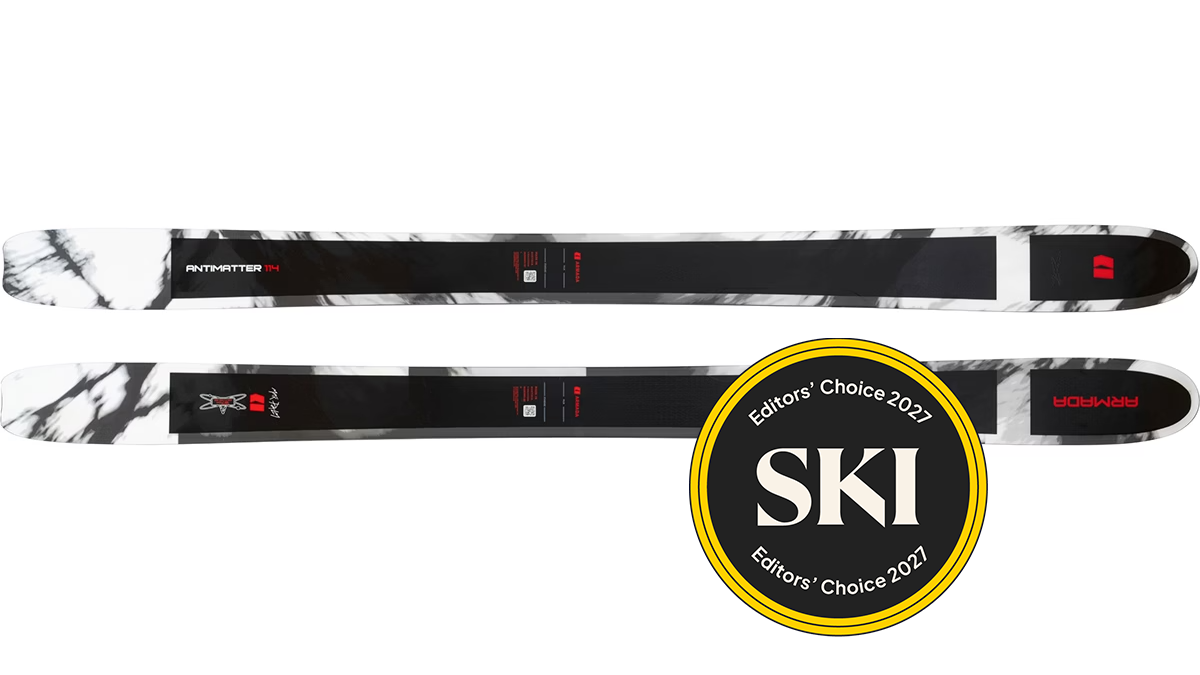
(Photo: Courtesy Backcountry)
Lengths: 181, 187, 193 cm
Dimensions: 138-114-132 mm
Pros and Cons
- Excellent float
- Energetic
- Too much ski for intermediates
- Only available in long lengths
The all-new Armada Antimatter 114 has secured its position at the apex of our list by successfully bridging the gap between a true freeride platform and a ski that offers genuine energy and agility across a diverse range of conditions. This ski is not a one-trick pony designed solely for storm days; it excels in deep powder, carves on firm groomers, and navigates afternoon chop with remarkable proficiency. Developed in collaboration with Freeride World Tour athlete Max Palm, the Antimatter 114 embodies a compelling fusion of power and playfulness. "An ideal ski for a strong freeride skier who wants a real platform underfoot, but not something dead or one-dimensional," remarked one tester, encapsulating the ski’s versatile yet potent character.
The ski’s design features significant rocker in the tip and tail, complemented by a 114-millimeter waist, making it an exceptional choice for deep powder days. The poplar wood core contributes to the energetic feel that testers consistently praised. "Does not lag," stated one tester enthusiastically. "It’s got energy and agility. Like a well-trained horse, it responds on-command." Armada’s proprietary Speedmetal Titanal layup strategically places metal edge-to-edge underfoot, with a tapered design that minimizes weight in the tip and tail to enhance maneuverability. The outcome is a remarkably stable platform with an impressively planted feel upon impact, encouraging skiers to boost off cliffs and natural features with confidence. Consequently, this ski is best suited for aggressive, hard-charging freeriders.
It is important to note two caveats. A few testers observed some minor instability when the ski was pushed to its absolute top speed—a factor to consider for those prioritizing maximum speed potential. Additionally, the ski is available only in three sizes, with the shortest being 181cm. While shorter skiers might be excluded, sizing up for increased stability at higher speeds does not present a significant issue.
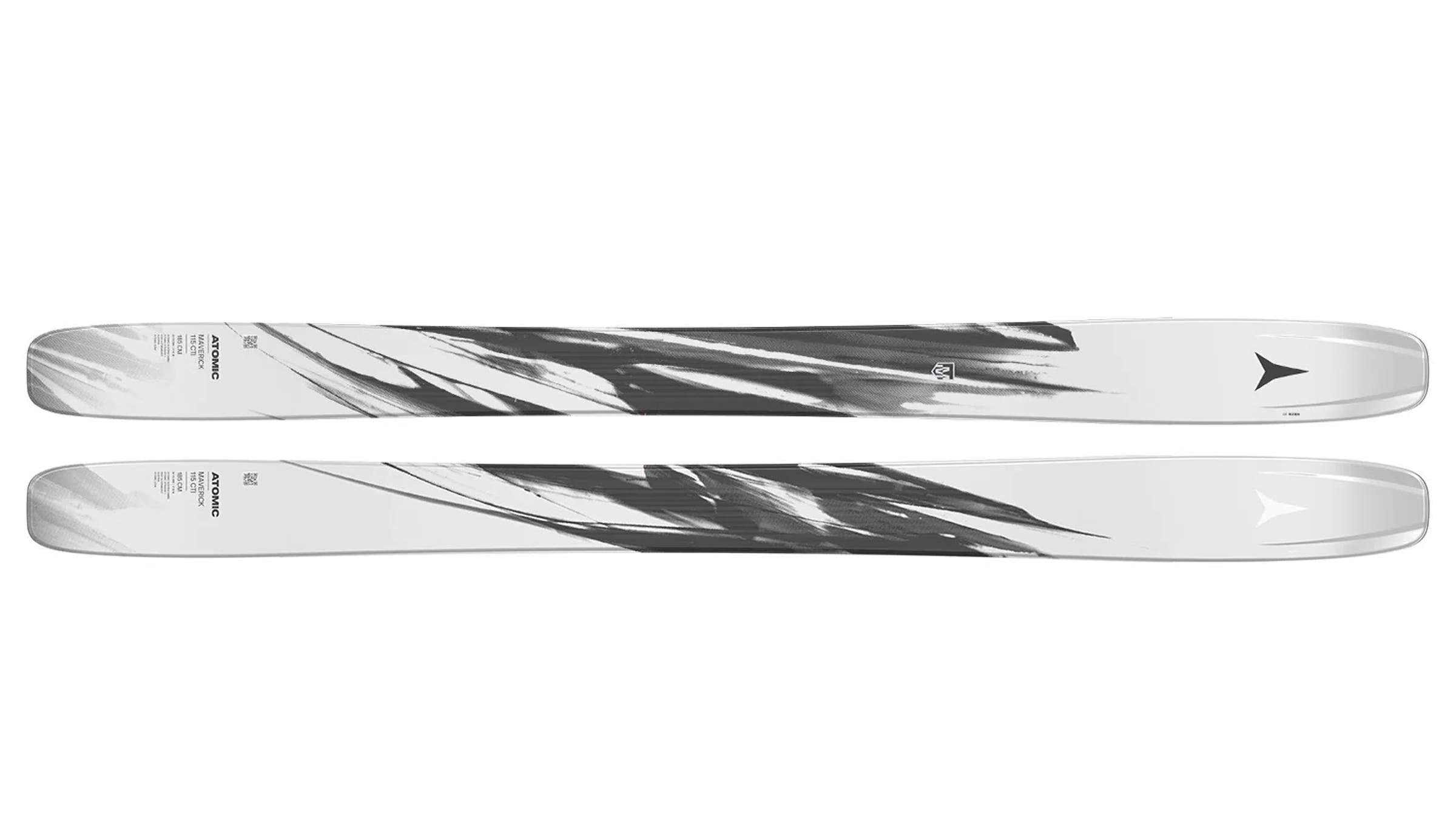
Runner-Up: Atomic Maverick 115 CTi
(Photo: Courtesy Atomic)
Lengths: 177, 185, 193 cm
Dimensions: 140.5-115-129.5 mm (185 cm)
Pros and Cons
- Excellent flotation
- Dependable in variable snow
- Lacks some maneuverability
The Atomic Maverick 115 CTi has narrowly missed the top spot, demonstrating exceptional performance that placed it as a close second for the best powder ski of the year. Its strengths lie in its outstanding flotation, remarkable stability in variable snow conditions, and accessibility for a broad spectrum of skiers. "This ski was stable, predictable, and easy," commented one tester. "It was always one step ahead of me—it knew where I wanted to go, got there, and then opened the door for me."
The Maverick 115 CTi features a core constructed from a blend of poplar and ash wood, contributing to a lively yet smooth ride. A sophisticated combination of carbon and Titanal laminates—the ‘CTi’ designation—provides the necessary heft for stability and confidence, even when navigating challenging snow conditions. With a 115-millimeter waist and a pronounced rocker profile in the tip and tail, the ski delivered outstanding flotation, performing admirably in everything from heavy powder to light, blower snow.
The Maverick 115 CTi is engineered as a directional ski, and while not universally noted, a few testers did observe a slight deficit in maneuverability. However, for skiers capable of driving this ski, it still offers a considerable amount of energy and playfulness. "It’s nimble and responsive, but also has some backbone," stated another tester. "It’s like jumping on a trampoline while riding a rocket." This vivid description underscores the ski’s dynamic capabilities.
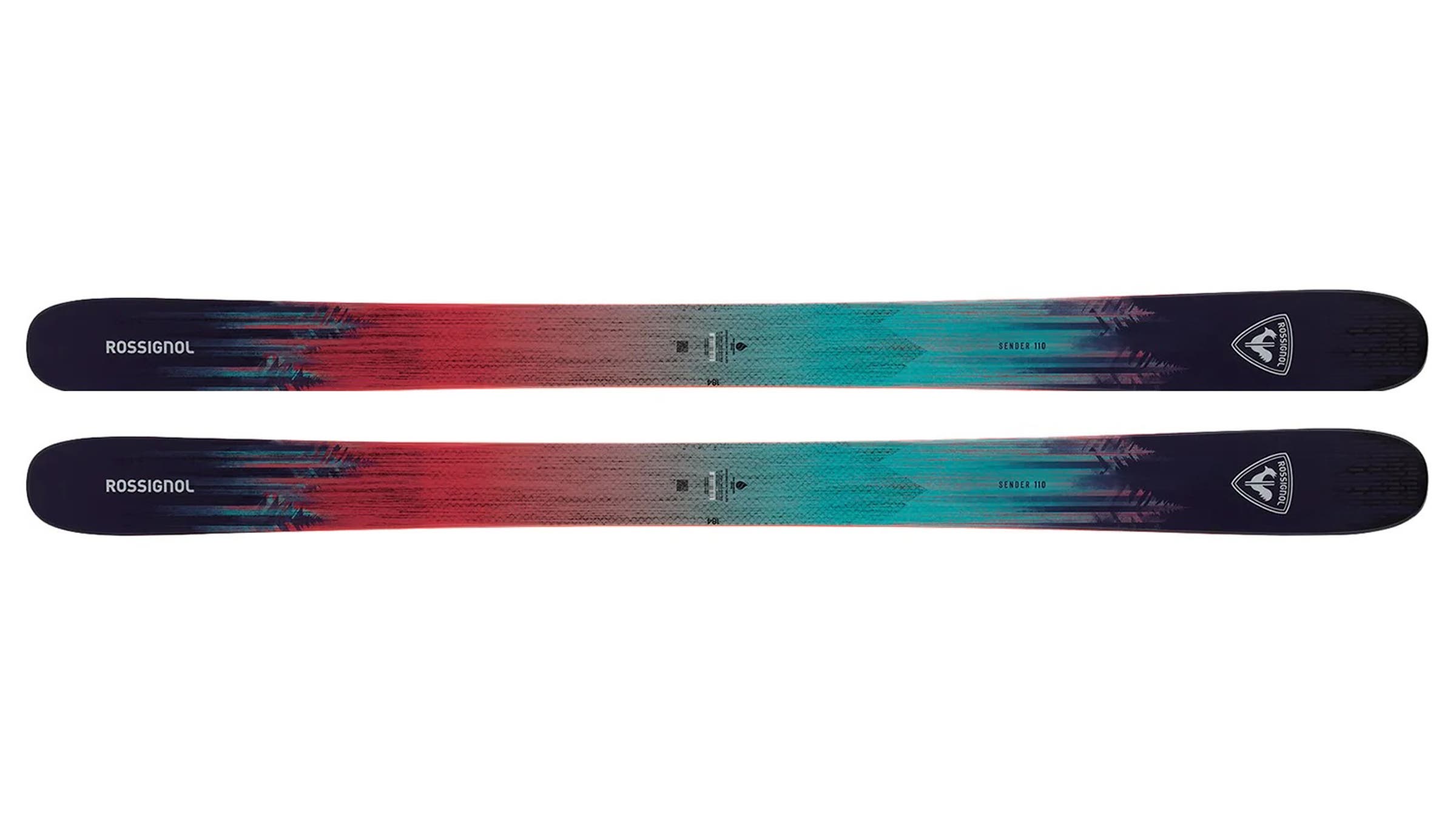
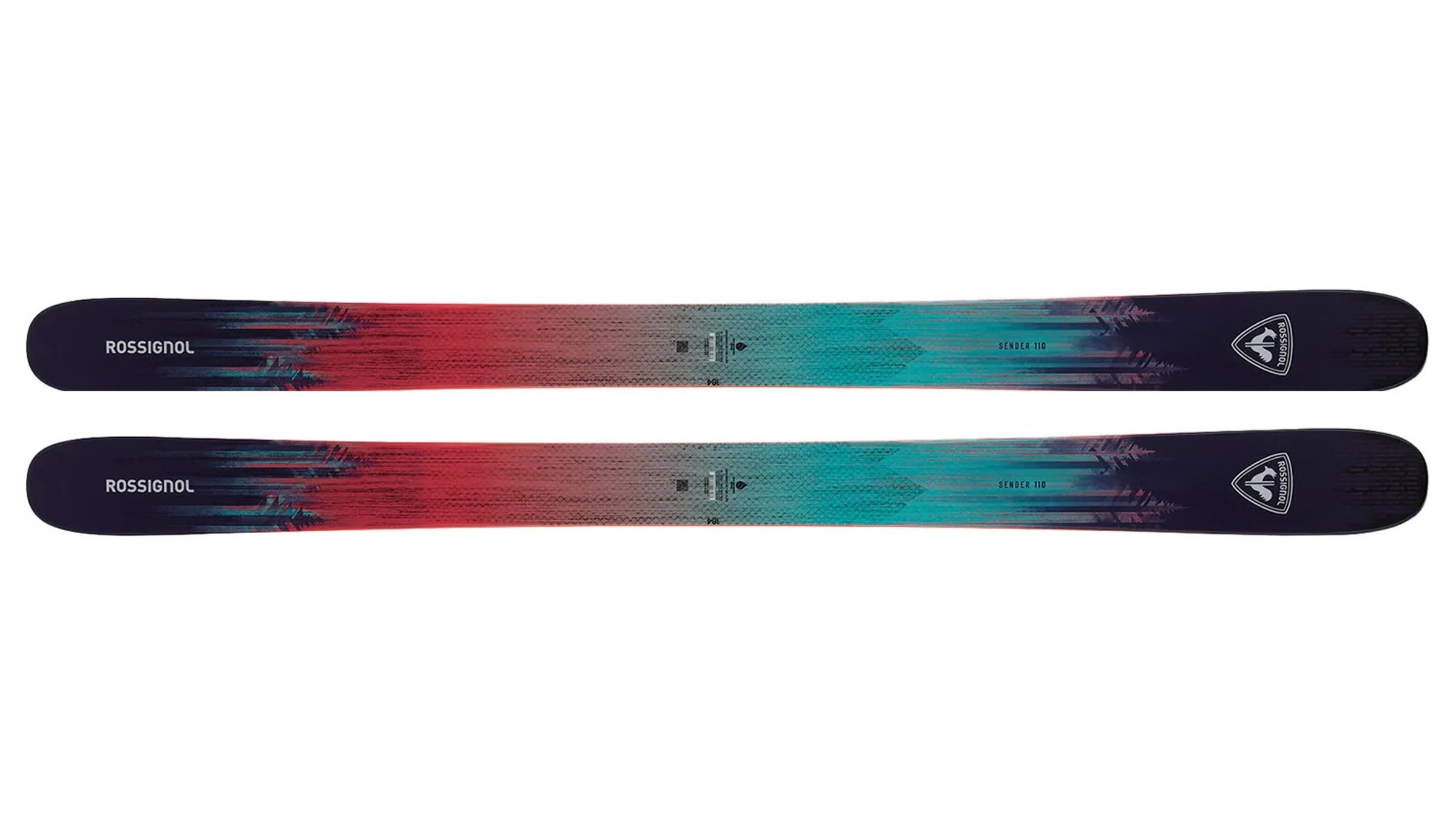
Best for Resort Powder Days: Rossignol Sender 110
(Photo: Courtesy Rossignol)
Lengths: 168, 176, 184, 191 cm
Dimensions: 140-110-133 mm
Pros and Cons
- Powers through crud
- Can handle high speeds
- Less responsive in tight terrain
- Requires a strong skier
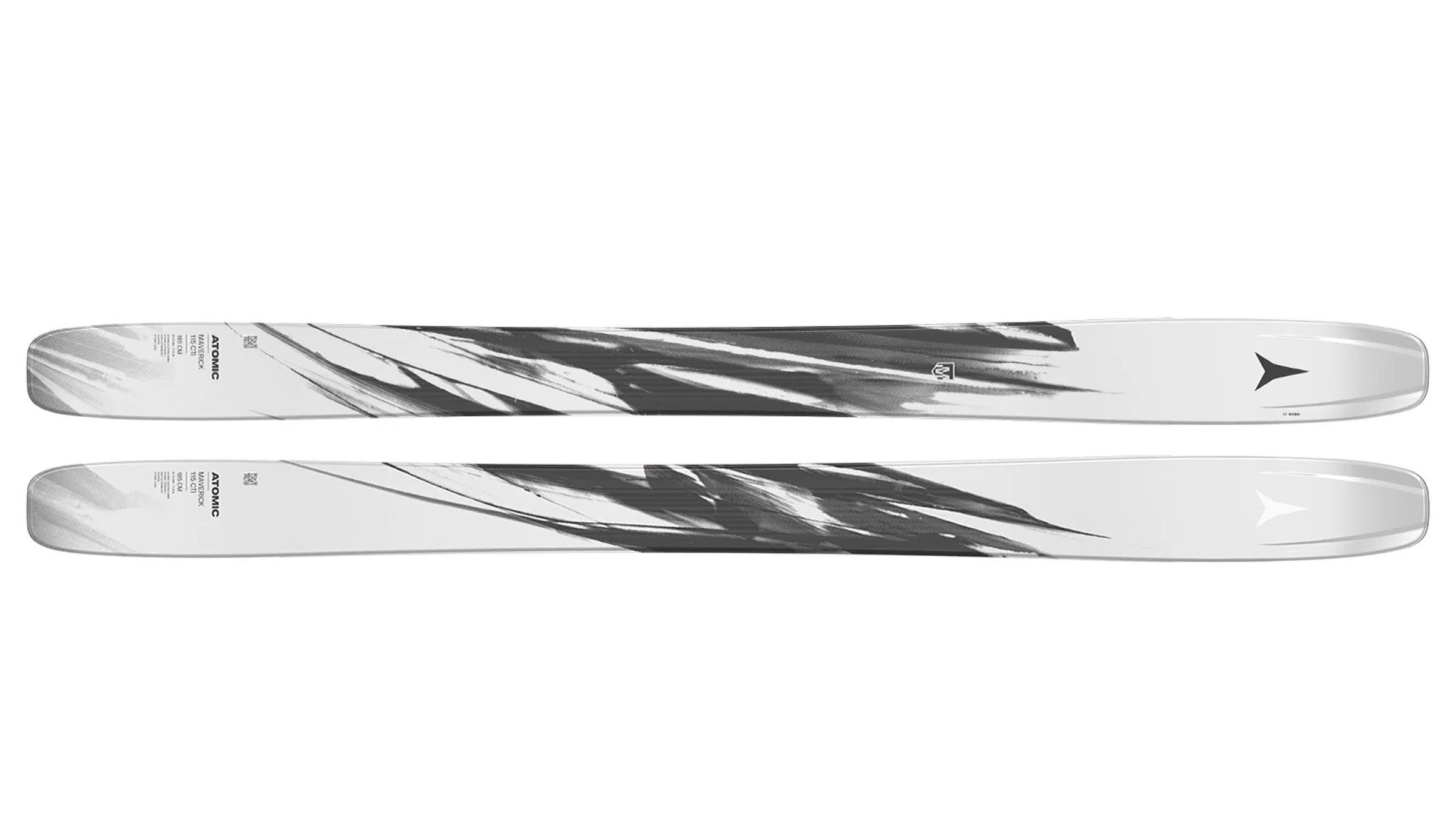
Returning for the 2027 season with updated graphics and a simplified name (formerly the Sender Free 110), the Rossignol Sender 110 has solidified its reputation as a formidable powder ski, renowned for its ability to charge through any condition. Despite being one of the narrower skis tested at 110 millimeters underfoot, its performance in deep snow is exceptional, thanks to generous tip and tail rocker that ensures ample flotation. A lively poplar wood core, combined with Titanal underfoot, effectively dampens vibrations and maintains stability at speed and through unexpected turbulence.
"A great ski for an expert-level freeride skier who likes big lines and wants something both maneuverable and stiff," remarked one tester. "It pivots underfoot but can also plow through a choppy open bowl with ease." The Sender 110 proved to be an ideal companion for resort powder days, adeptly handling crud and the occasional groomer, making the most of any afternoon conditions encountered.
It is important to acknowledge that this ski demands a proficient skier. "This is not a ski for a skier with a big ego and zero skills," cautioned one tester. Those seeking a more forgiving powder ski might consider other options. However, for skiers ready to embrace speed and challenge, the Sender 110 is a highly capable partner.
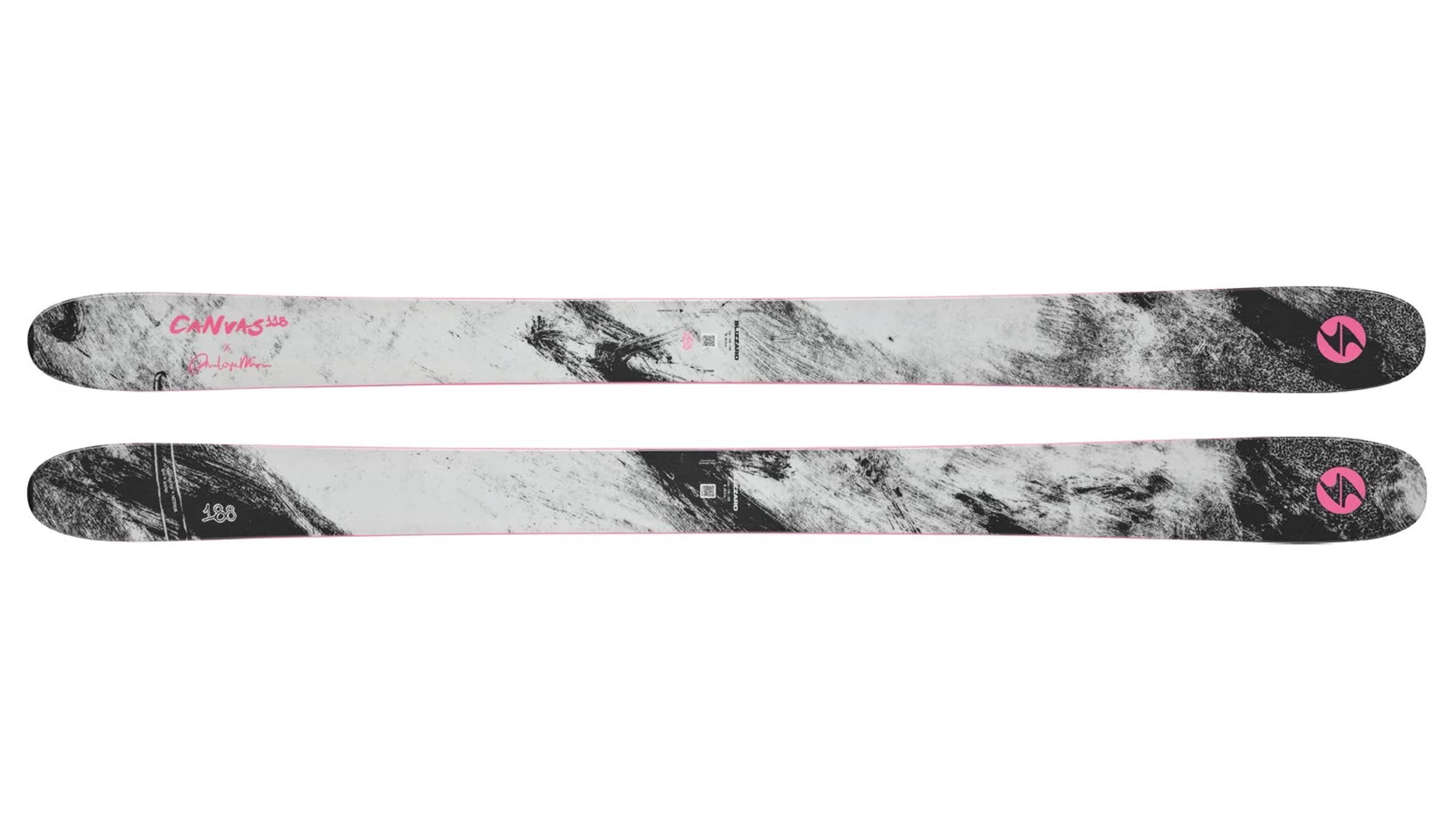
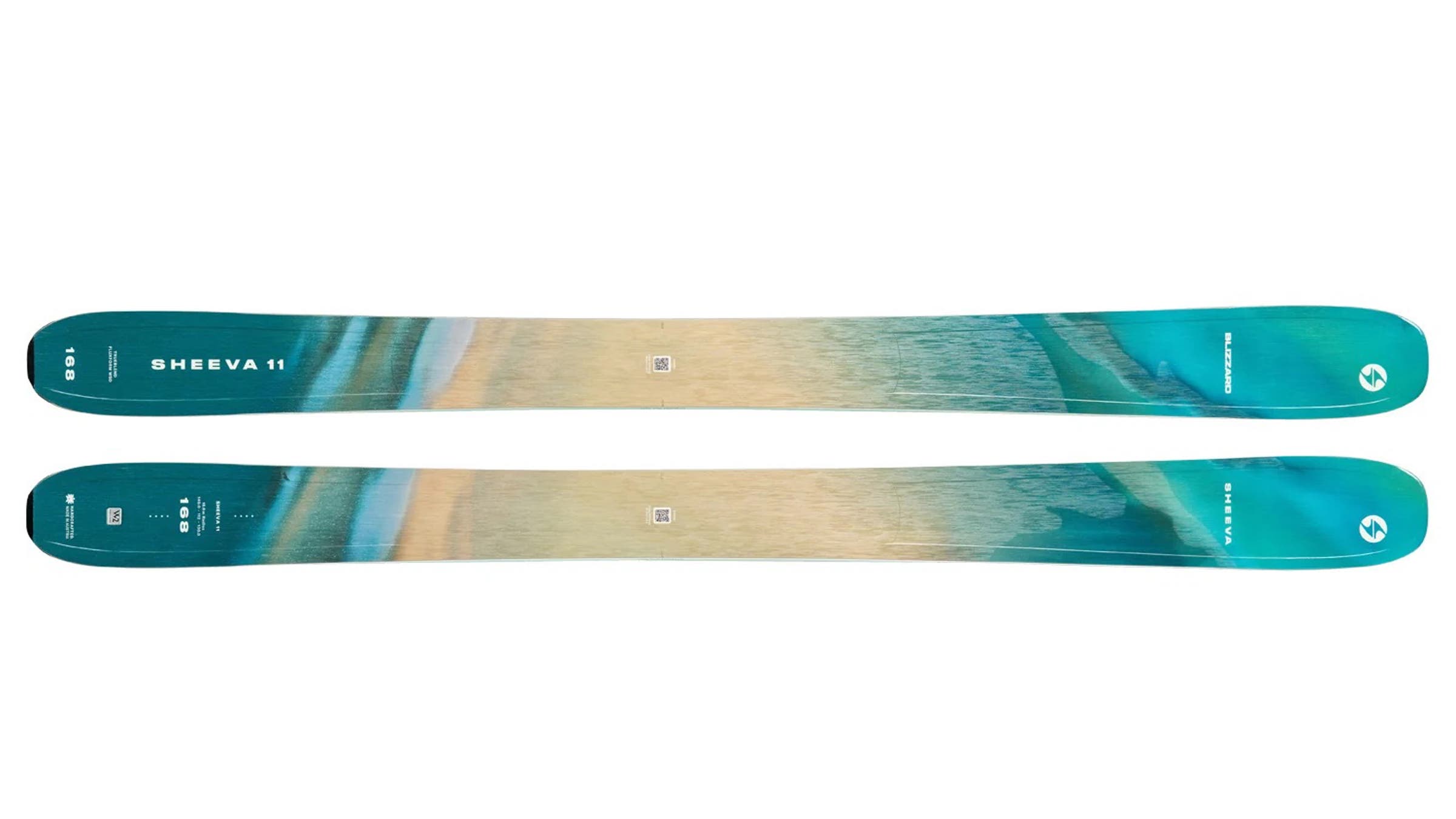
Most Playful: Blizzard Canvas 118
(Photo: Courtesy Blizzard)
Lengths: 172, 180, 188 cm
Dimensions: 145-118-134 mm
Pros and Cons
- Playful and maneuverable
- Excellent float
- Slightly less stable
The Blizzard Canvas 118 represents an exciting, all-new addition to the freeride category, meticulously engineered for skiers who approach powder skiing as an art form rather than a race. This ski offers a playful departure from Blizzard’s traditionally stiffer and more demanding lineup. Featuring a core constructed from poplar and paulownia wood and minimal metal—limited to a Titanal mounting plate underfoot—it delivers an energetic ski eager for deep days and side hits. "A clear counterpoint to traditional Blizzard offerings, the Canvas is a light, playful freeride tool with enough backbone to keep it from feeling flimsy when you hit choppy or firmer snow on the way back to the lift," observed one tester.
With a turn radius of 19 meters (in the 180cm length) and pronounced rocker in the tips and tails, the Canvas 118 demonstrated impressive maneuverability in tight tree runs and proved equally at home in wide-open bowls and steep chutes. "This ski does not feel like a 118," reported one tester. "It is far more maneuverable and doesn’t feel that fat. It handled everything really well and blasted through the crud nicely."
One tester noted that "ride or die Blizzard lovers may be left wanting more stability," but for all but the most aggressive skiers, the added element of fun provided by this ski is a significant advantage.
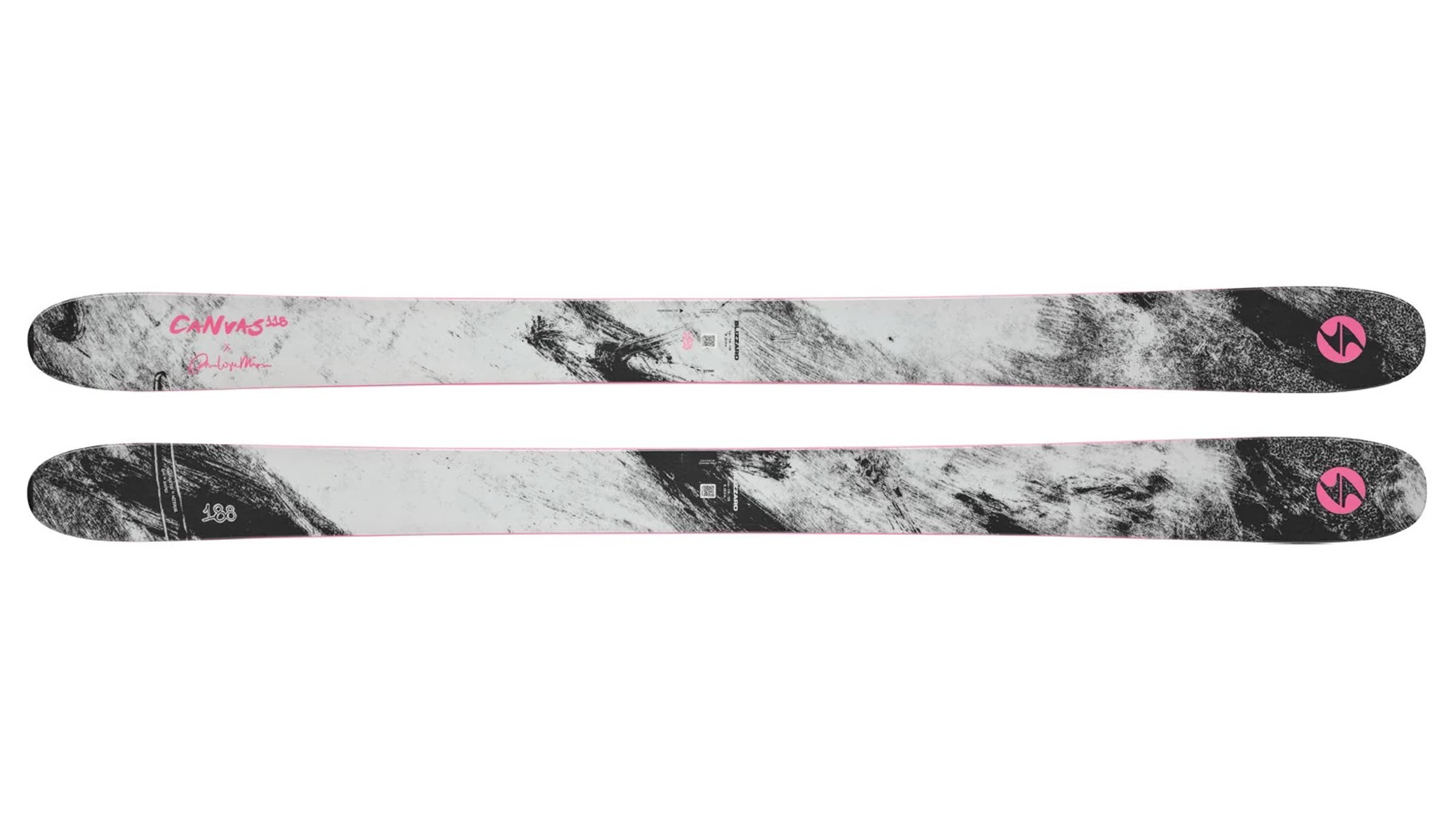
Best Women’s Powder Ski: Blizzard Sheeva 11
(Photo: Courtesy Blizzard)
Lengths: 168, 174, 180 cm
Dimensions: 140-112-130 mm
Pros and Cons
- Dependable in crud
- Stable at high speed
- Not very playful
- Doesn’t float as well as other similarly wide skis
The Blizzard Sheeva 11 stands as the pinnacle of the Sheeva collection—a women’s-specific freeride line developed by and for women skiers. Balanced, precise, and designed for aggressive skiing, it rewards skiers who push its limits. Returning this season with the same robust construction that garnered acclaim in previous years, the Sheeva 11 is a ski that truly shines when driven hard.
The Sheeva 11’s multi-wood core and strategically placed Titanal create an optimal blend of stability and playfulness. It offers a damp and stable feel underfoot, while the softer flex in the tip and tail enhances maneuverability. With a 112-millimeter waist, it provides good flotation, although its added heft slightly limits its playfulness and floatation in extremely light, low-density snow. Its greatest strengths lie in its performance when aggressively navigated through mixed conditions. "This is a dependable and balanced ski that gives you confidence in any conditions," stated one tester. "It glides like butter through choppy snow and powder."
Testers universally agreed that the Sheeva 11 is best suited for advanced skiers ready to embrace its performance capabilities. "Rippable and chargeable, this ski seems to be able to do it all," commented one tester after experiencing a 10-inch storm day at Bridger Bowl.
More Powder Skis We Recommend
The following powder skis excel in specific performance aspects such as quickness or stability at high speeds, offering strong alternatives for skiers with distinct performance preferences.
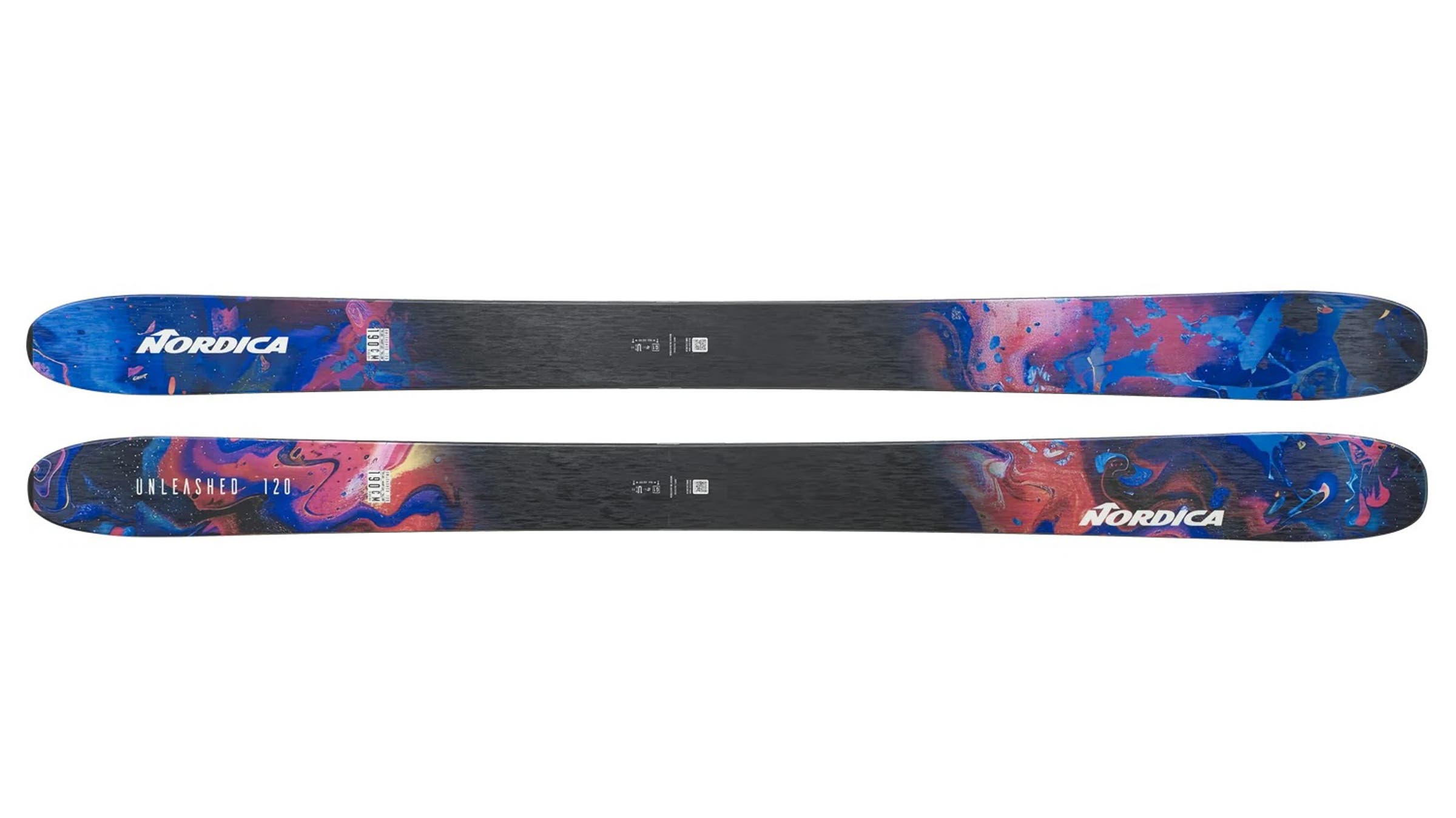
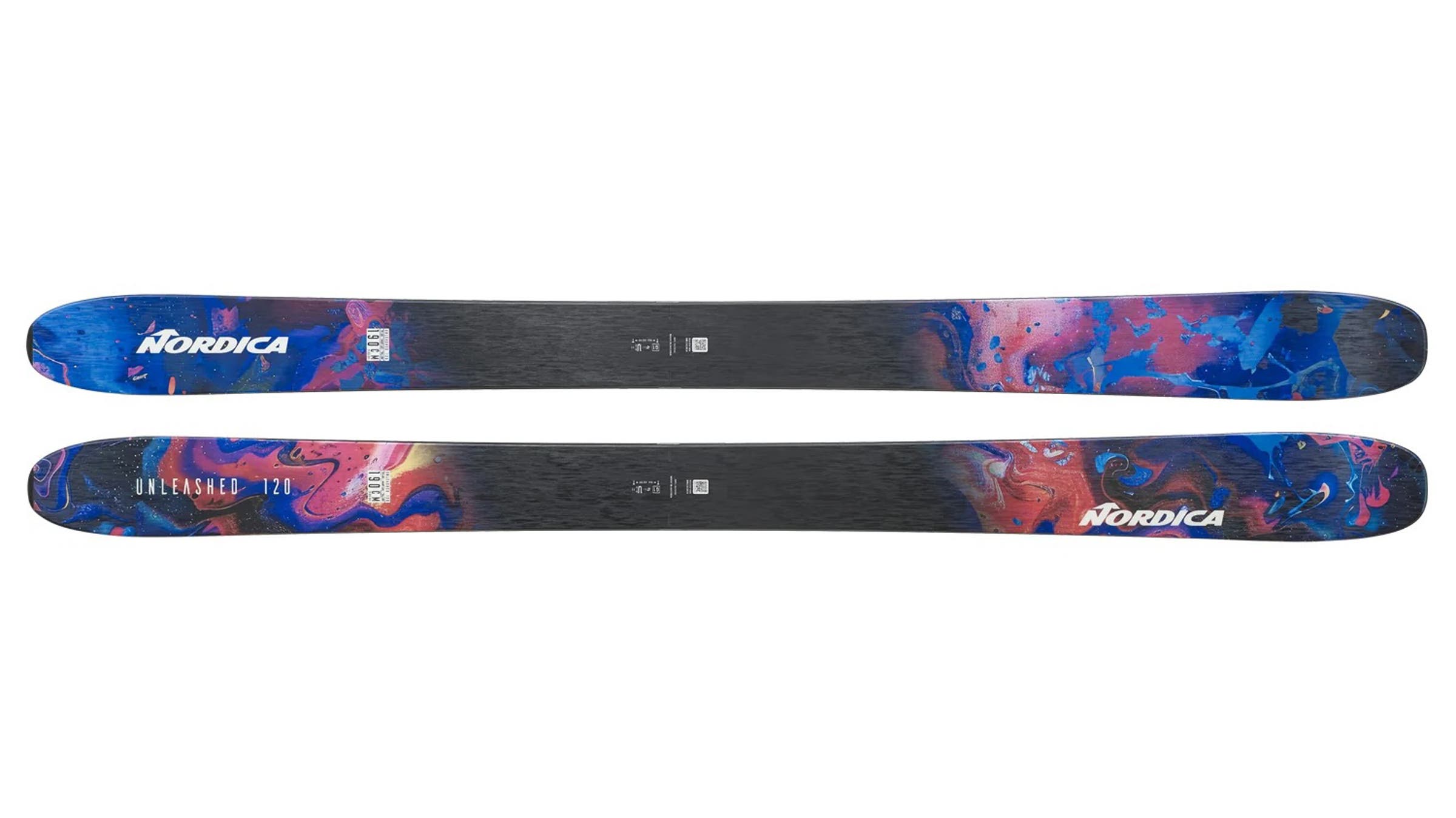
Nordica Unleashed 120
(Photo: Courtesy Nordica)
Lengths: 180, 190 cm
Dimensions: 150-120-139 mm
Pros and Cons
- Best-in-test flotation
- Stable at high speeds
- Not great in firm snow
- Best for strong skiers
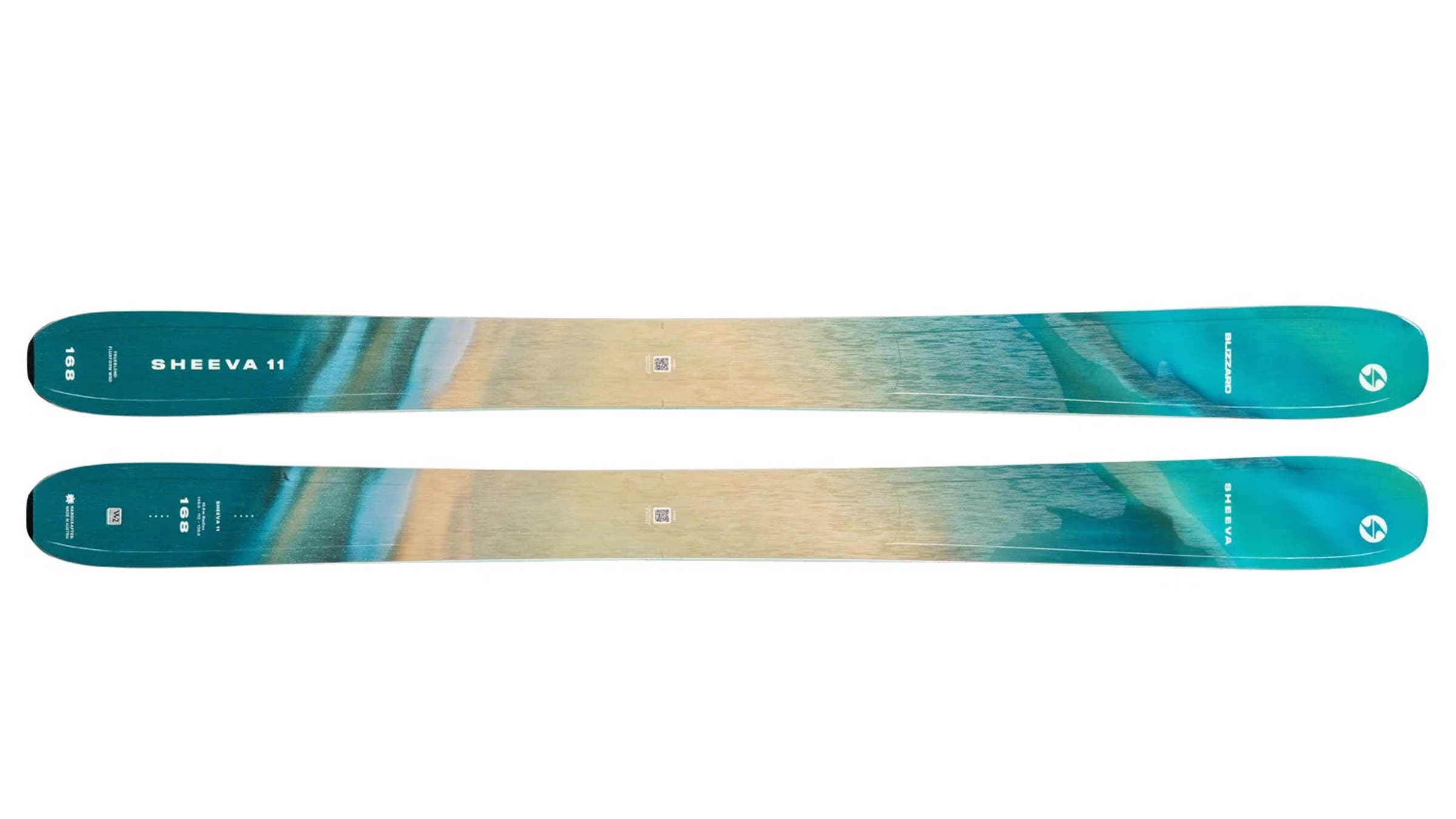
Reaching for the Nordica Unleashed 120 indicates an expectation of an exceptional day. With a generous 120-millimeter waist—the widest in our test lineup—it’s unsurprising that the Unleashed delivered the best flotation. What was more surprising was its maneuverability and stability at speed, especially considering its pronounced tip and tail rocker.
"Solid and dependable, and surprisingly nimble for its size," said one tester. "The Unleashed gets sideways easily for slashes in the deep stuff, yet holds steady at speed and stays beneath you when straight-lining through chop and moguls below any drop."
A lightweight wood core reinforced with carbon keeps the Unleashed 120 relatively light for its width, while a single, narrow sheet of Titanal adds stability. Unsurprisingly, firm snow is not this ski’s forte; testers noted it felt unwieldy. However, the expectation when choosing a 120mm ski is typically powder, not hardpack. "It skied so much better than I was expecting for its size," remarked one female tester. "You still need to be strong to get it to turn, but once you do, it’s smooth sailing."
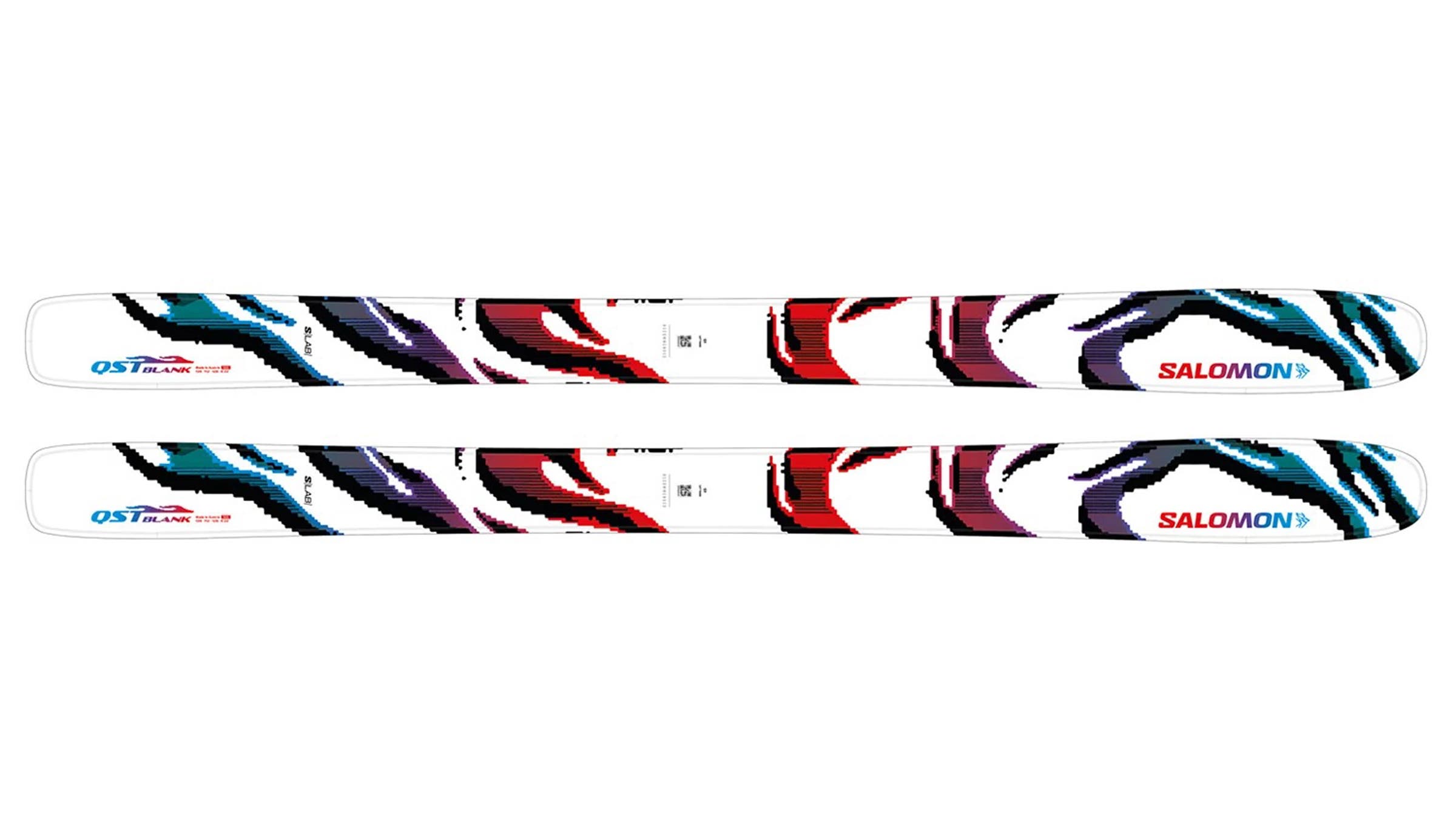
Salomon S/Lab QST Blank
(Photo: Courtesy Salomon)
Lengths: 170, 178, 186, 192 cm
Dimensions: 139-112-128 mm
Pros and Cons
- Super smooth in choppy terrain
- Dependable at high speed
- Less nimble in tight terrain
- Not the best flotation
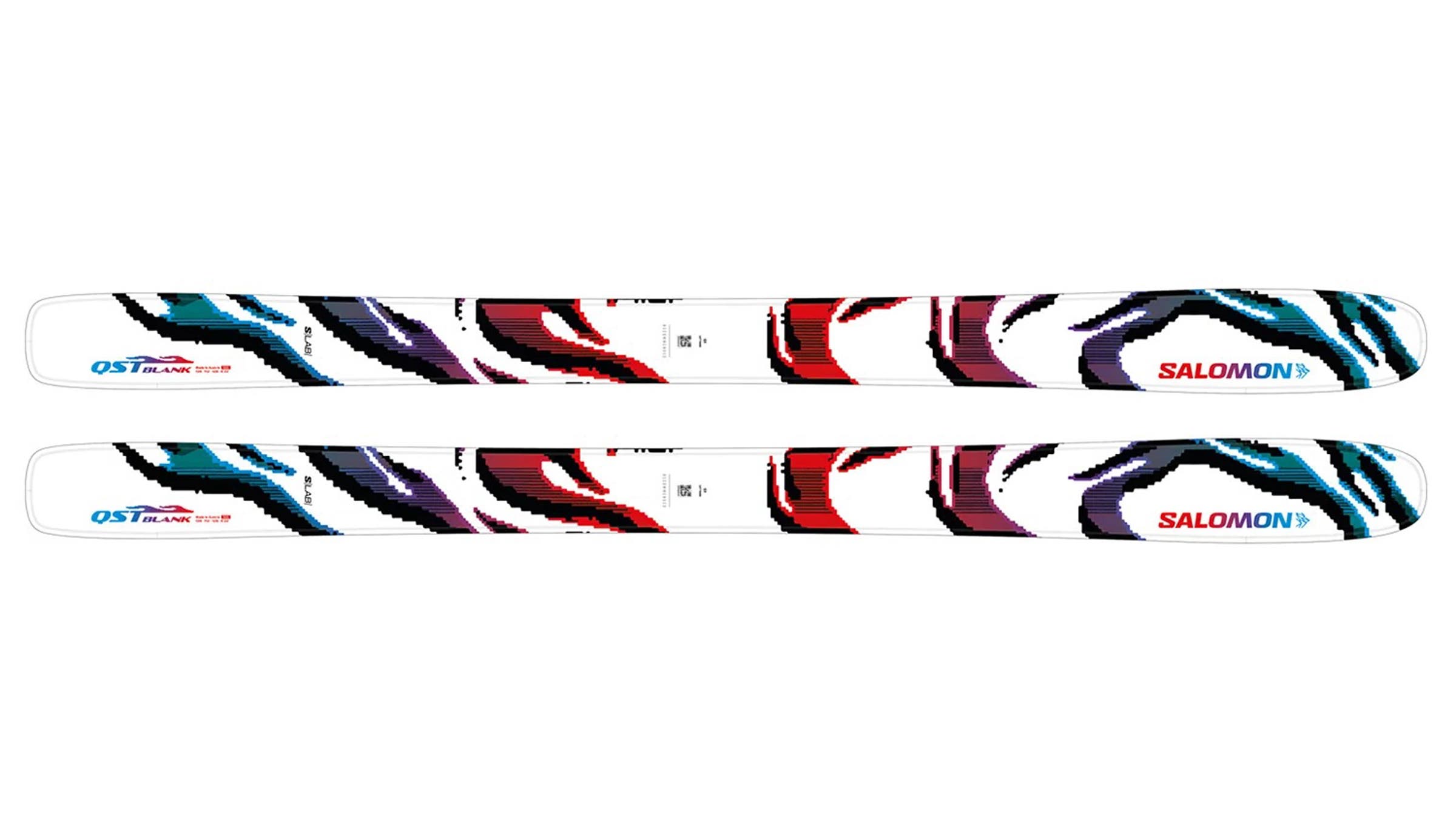
Now in its second season since a significant redesign, Salomon’s S/Lab QST Blank continues to earn high marks for its freeride prowess. Redesigned prior to the 2025-2026 season, the QST Blank retains its 112-millimeter waist but now features a stiffer tail, a slightly longer turn radius, and a redesigned cork insert to enhance smoothness in rough terrain.
"It’s a perfect medium between a softer, playful ski and a stiffer, chargy ski," said one tester. "It holds up at high speeds, cutting through chop and popping off rocks."
The full poplar wood core preserves the light, springy feel that skiers appreciate in the previous QST Blank, complemented by a single piece of cork and TPU in the tip and tail to minimize vibrations in variable conditions. Despite its respectable 112-millimeter waist, it is not the most buoyant ski in its class. While it excels at high speeds, it sacrifices some nimbleness for enhanced stability. This ski is ideal for aggressive skiers rather than those seeking a more casual approach.
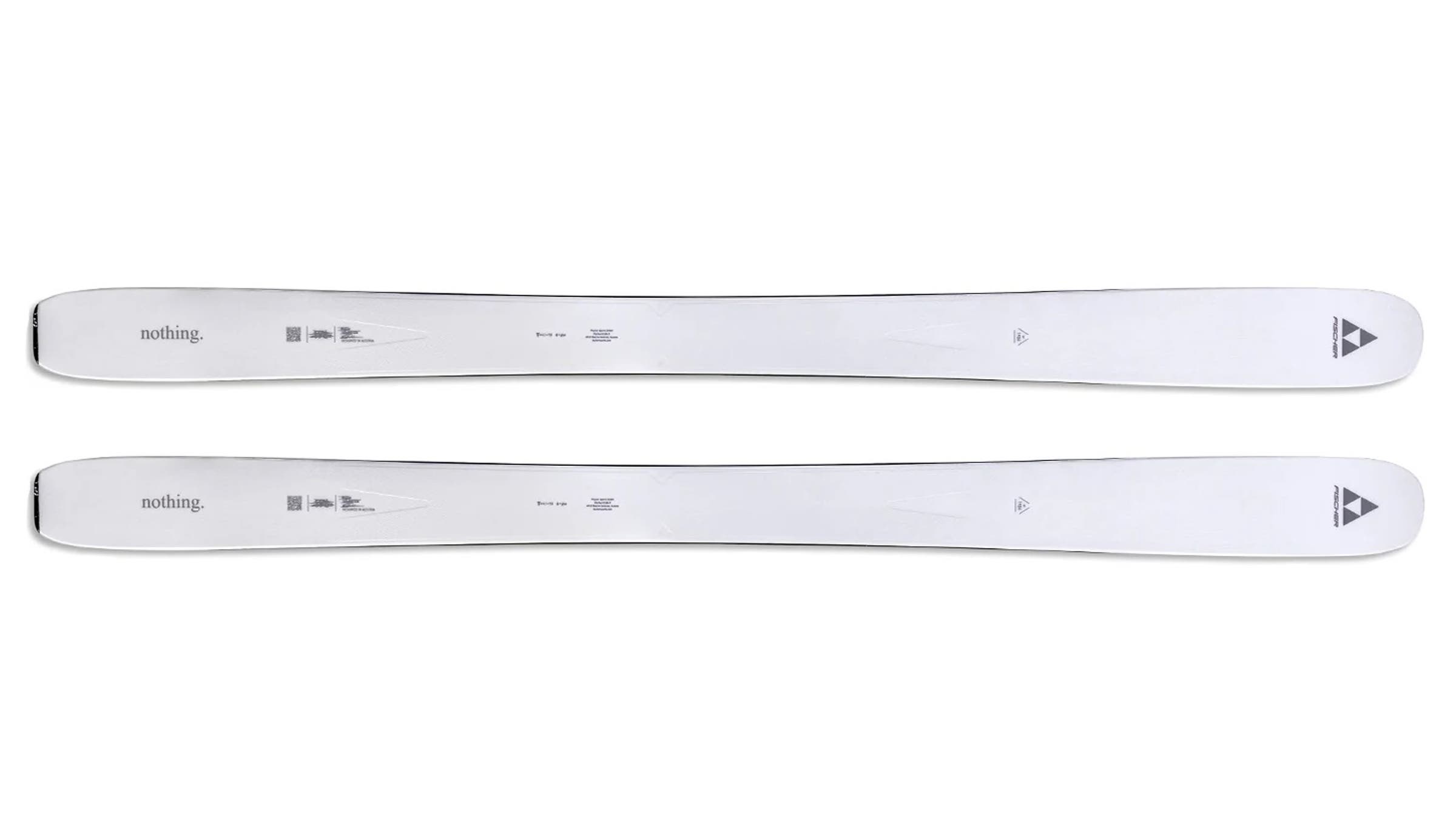
Fischer Nothing
(Photo: Courtesy Fischer)
Lengths: 176, 186, 196 cm
Dimensions: 143-112-133 mm
Pros and Cons
- Approachable
- Transitions well between soft and firm snow
- Less float on a super deep day
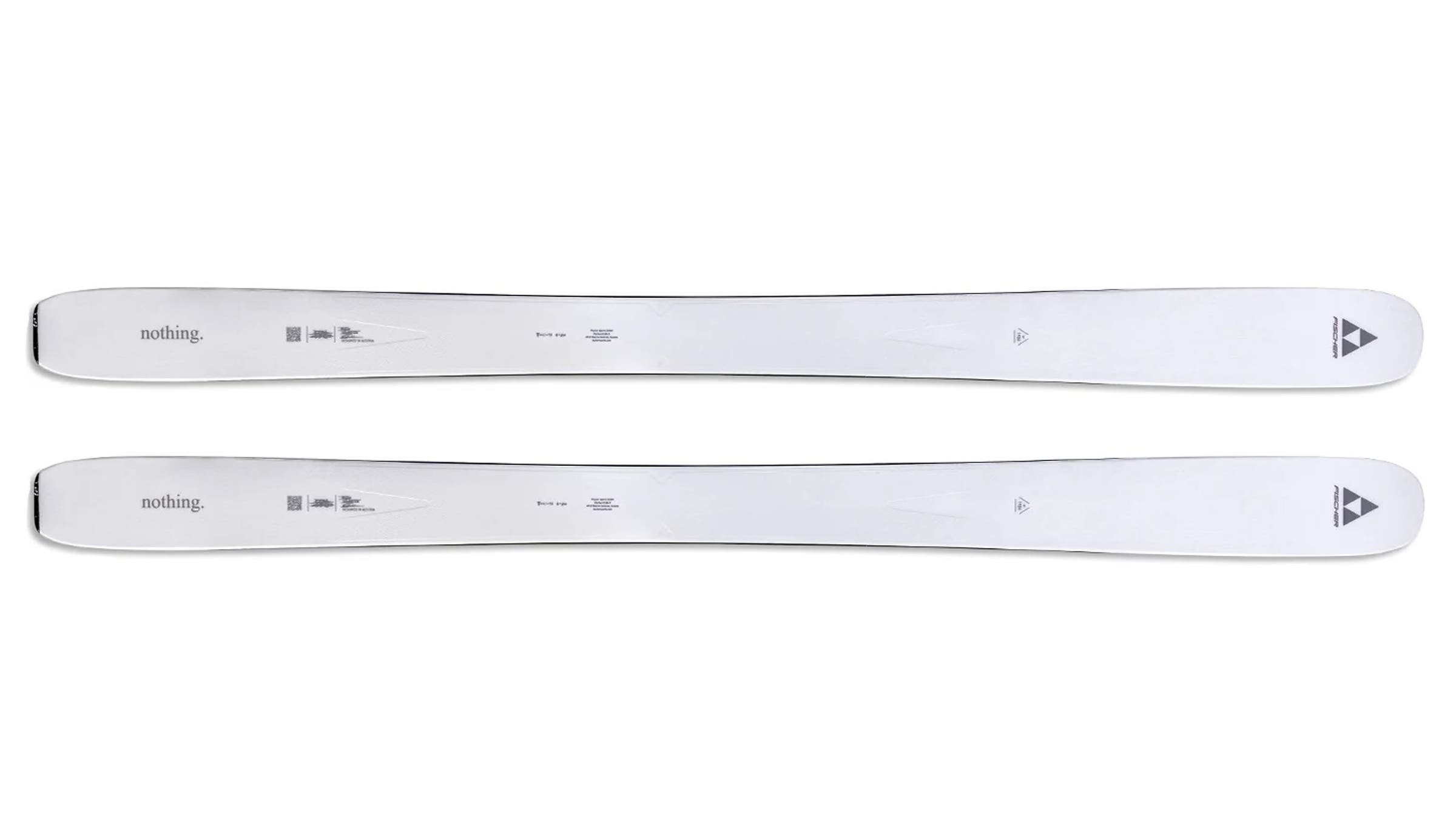
- Plain white topsheets get lost in the snow
Fischer offered minimal specifications for their new Nothing ski, encouraging testers to "ski it and find out." Following extensive testing in conditions ranging from low-density powder and spring slush to firm groomers and mank, testers found it to be "damp, easy to love, and dependable"—an approachable ski suitable for solid intermediates and advanced skiers alike.
Beyond a wood core of undisclosed origin, testers detected the presence of metal, contributing to a stable and reliable feel in chop. At 112 millimeters underfoot (in the 186 cm length), its waist width is mid-pack for powder skis. A combination of camber underfoot and a rockered tip and tail creates a balanced blend of float and stability. This is a ski that can be confidently taken to the mountain on most days of the season, especially in the Western United States. A minor drawback is the plain white topsheet, which can make the skis difficult to track visually in the snow. "I did feel like it was slow to rotate in the air on simple shifties, so I’d probably say it’s not the best freestyler’s pow ski," noted one tester. "That said, it’s playful in that it’s easy to ski switch, easy to slash and get face shots. Generally easy to get along with."
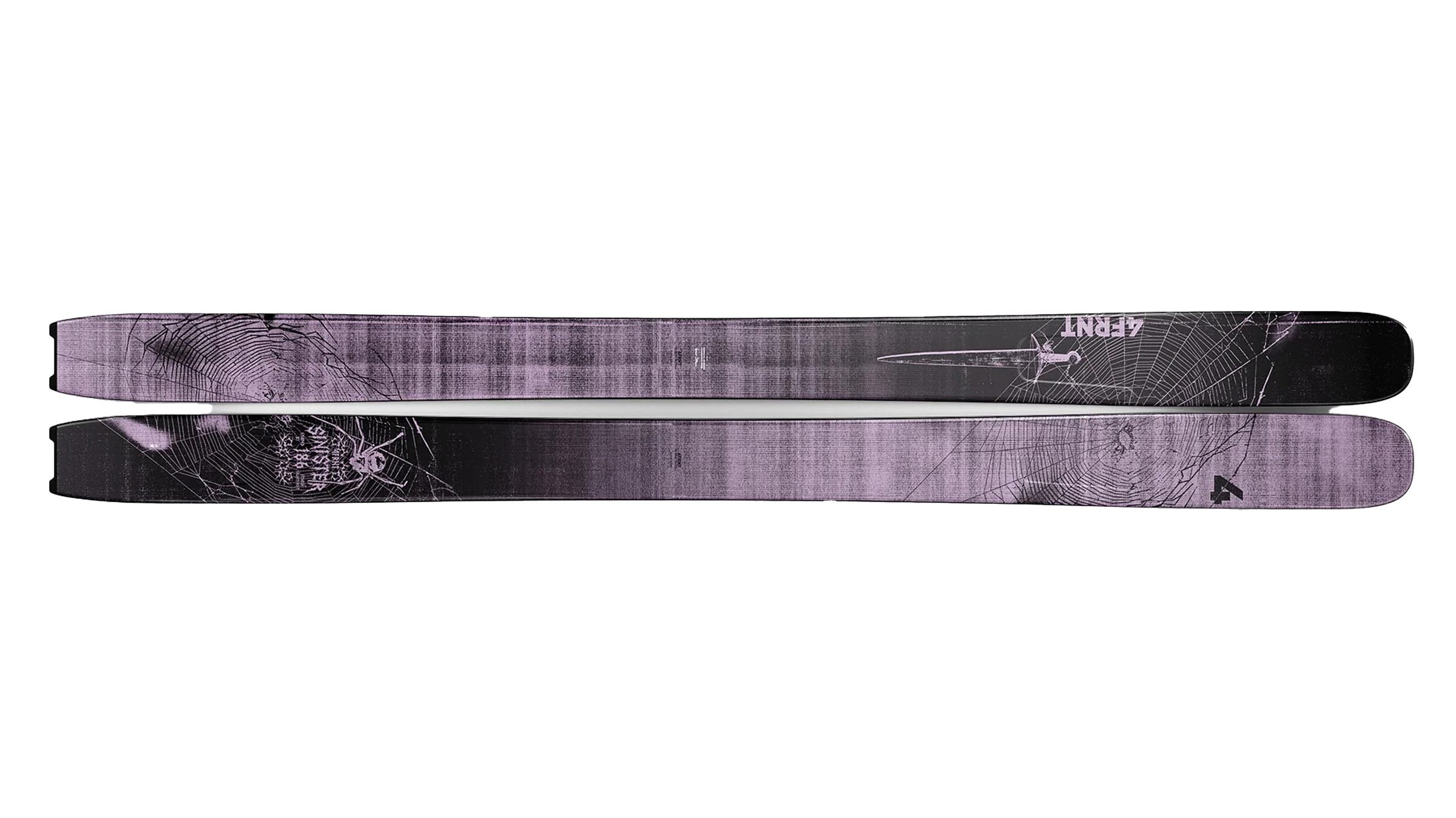
4FRNT Sinister
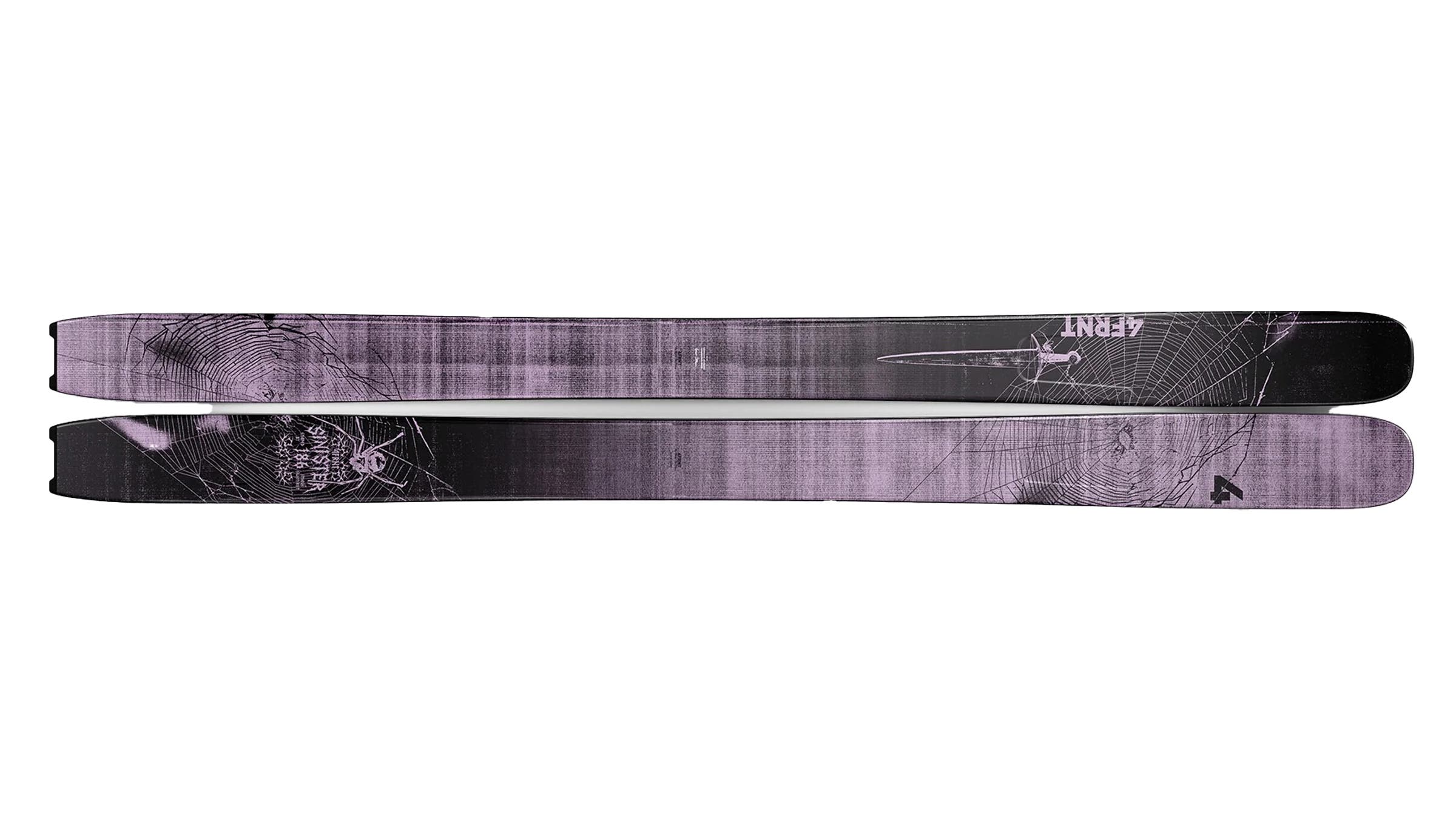
(Photo: Courtesy 4FRNT)
Lengths: 179, 186, 192 cm
Dimensions: 134-113-125 mm
Pros and Cons
- Excellent crud-busting capabilities
- Powerful and stable
- Not fun in firm bumps
- Less approachable for newer skiers/intermediates
Powerful, predictable, and composed at high speeds, the 4FRNT Sinister was engineered as an everyday charger for freeride terrain. This ski is an excellent choice for skiers looking to boost off natural features. As Norwegian skier Stinius Skjørstad’s first pro model, it offers a glimpse into his fluid and creative skiing style.
"This ski outperforms most in heavy PNW powder," commented one tester. "Super rockered, and eats up stiffer, wind-affected snow." Featuring a 113-millimeter waist and rockered tip and tails, the Sinister is well-equipped for chasing storms. An aspen core provides a smooth, energetic flex. Underfoot, a reinforced Titanal Stomp-Zone places metal in the center of the ski for stability without compromising maneuverability, empowering skiers to push their limits with confidence.
The Sinister is not designed for intermediate skiers seeking a relaxed experience. While one tester found it to be somewhat limited in firm bumps, it performed admirably across a range of spring conditions, including deep slush and mank. This ski is best suited for skiers ready to charge.
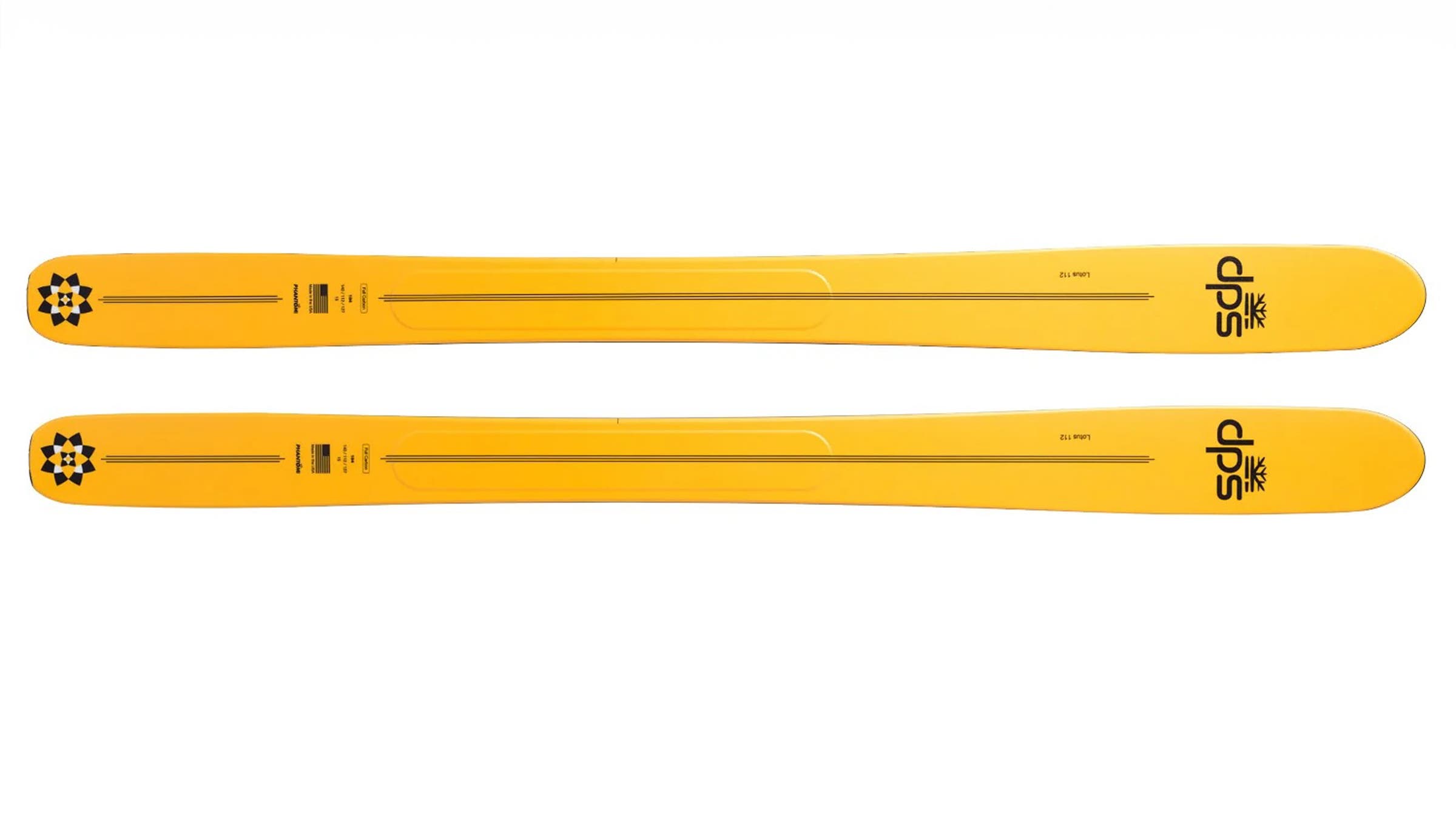
DPS Lotus 112
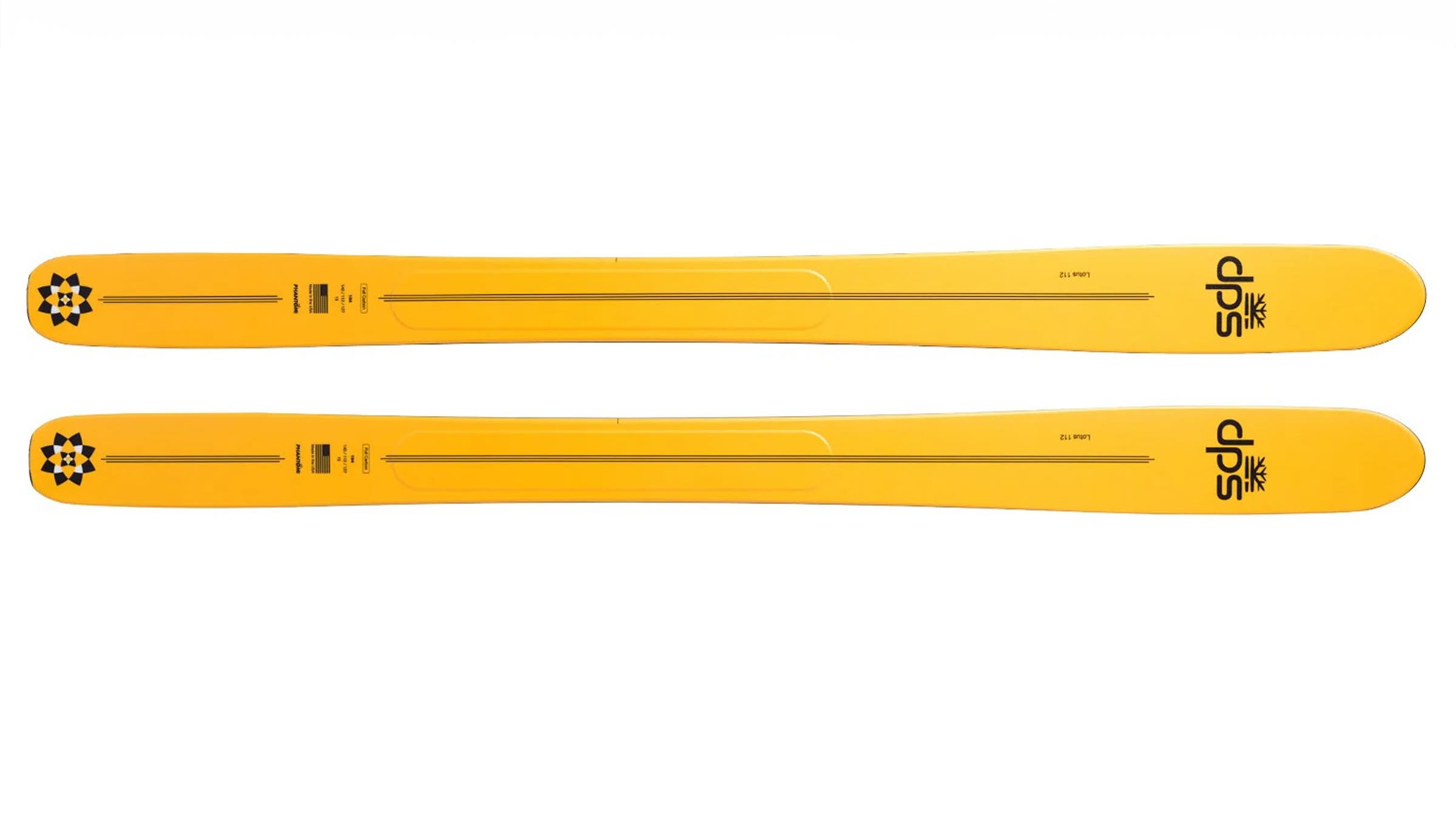
(Photo: Courtesy DPS)
Lengths: 158, 168, 178, 184, 189 cm
Dimensions: 140-112-125 mm (178 cm)
Pros and Cons
- Excellent float
- Nimble and intuitive
- Unstable at speed
- Pricy
Celebrating its 20th anniversary, the DPS Lotus 112 pays homage to the original 112 that launched the Utah-based company, and it skis with a distinct reverence for powder. This intuitive ski is purpose-built for the deep snow conditions that skiers dream of, offering an effortless feel in powder. "Ideal for a skier who values feel in powder above brute-force authority," said one tester. "Someone who wants to enter the turn smoothly, float effortlessly, plane quickly, and provide an energetic release from turn to turn."
DPS’s full carbon construction enhances their proprietary wood core, maintaining a light and energetic feel with a smooth, responsive flex that feels like an extension of the skier’s legs. A short 15-meter turn radius and rockered design facilitate easy navigation through trees, and the 112-millimeter waist floats well in deep snow without feeling cumbersome on softer, spring snow. "This most recent riff on the 112 provides easier planing, smoother initiation, cleaner release, and less of the hooky, turnier feel that had crept into the 112 lineage with the Kaizen, Pagoda, and Alchemist 112s," noted one tester.
While testers agreed this is not the ski for high-speed descents down large faces due to stability limitations, its price point is also a consideration. Nevertheless, one tester described the experience as a "transcendental powder experience," suggesting that its limitations at extreme speeds are somewhat forgivable given its exceptional performance in its intended environment.
Best Powder Skis Comparison
SKI measures powder ski performance across eight scoring criteria, including flotation, playfulness, responsiveness, and crud performance, which are the most important criteria for a powder ski.
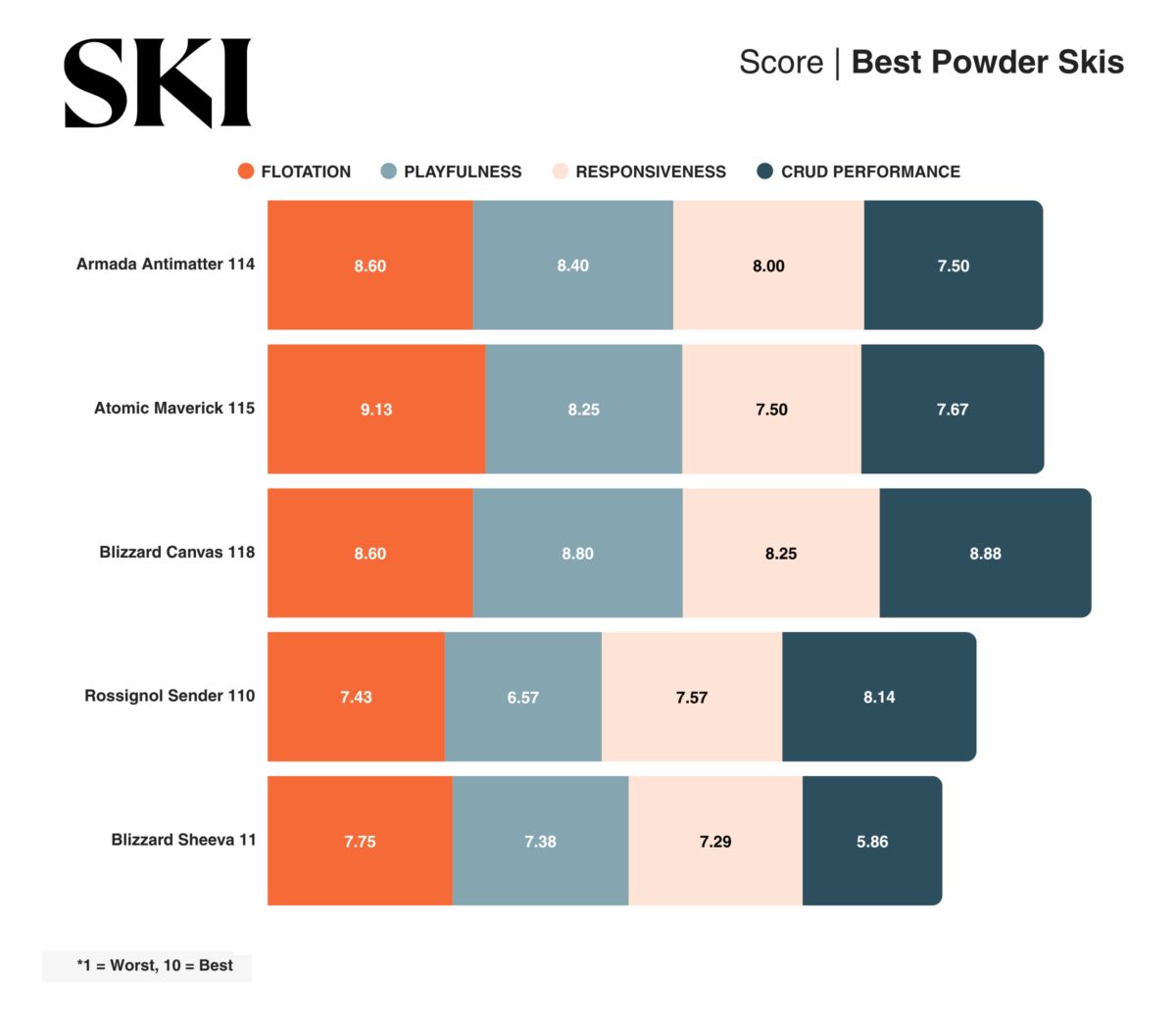
(Illustration: Tyler Hartlage)
Frequently Asked Questions
What is a powder ski?
Powder skis are characterized by their wide waist widths, designed to maximize flotation in deep snow. The best powder skis typically feature waists exceeding 110 millimeters, generous rocker profiles, and larger turn radii. While they excel in soft snow, many can also handle crud and variable conditions, with a select few even performing adequately on groomed terrain. However, they are generally not considered one-ski-quiver options and are best utilized when conditions are optimal for deep snow skiing.
What’s the best powder ski for experts?
The Armada Antimatter 114 was named the best powder ski of 2027 by expert testers. Developed with Freeride World Tour skier Max Palm, it offers a versatile freeride platform with significant energy and agility across various conditions. For those seeking skis for the deepest days, the Atomic Maverick 115 CTi is also a strong contender, providing exceptional flotation and versatility for strong intermediates and experts.
What’s the best powder ski for women?
The Blizzard Sheeva 11 earned the distinction of best women’s powder ski. Developed through Blizzard’s Women 2 Women program, this women’s-specific freeride ski offers ample length options and appeals to strong intermediates and experts alike with its flotation, playfulness, and versatility in variable conditions.
Who are powder skis for?
Skis with waist widths exceeding 105 millimeters are best suited for skiers who frequently encounter soft and deep snow. These wide skis often utilize lighter materials, incorporate less metal, and have reduced effective edge, making them less ideal for hard snow, groomers, or bumps. While they enhance any powder day, they can feel cumbersome in less than five inches of fresh snow.
How long should a powder ski be?
For powder skis, it is generally advisable to err on the longer side. A ski that is at least as tall as the skier is recommended. A longer powder ski increases flotation and provides more effective edge for firmer snow. Shorter powder skis offer greater nimbleness but can feel exceptionally short due to the increased rocker profiles common in these skis.
What’s the difference between men’s and women’s skis?
Most skis are unisex, with brands often producing identical constructions for both men and women, differing primarily in top sheet aesthetics. However, some brands, like Blizzard with its Women 2 Women program, develop truly women’s-specific skis that consider a woman’s physique during construction. While men and women can ski the same models, length selection may vary based on height and ability.
How We Test Powder Skis
This year, SKI adopted a novel approach to powder ski testing, dispatching 16 skis to veteran testers across the American West and allowing snow conditions to dictate the testing schedule. Instead of a singular test location, the team spread across Utah, Colorado, and the Pacific Northwest, evaluating skis after storms delivered 10 to 14 inches of fresh powder, creating ideal conditions for powder ski assessment. Rather than relying on a single storm day, testers strategically chose their testing days to ensure optimal conditions and evaluated each ski across the same nine criteria used annually:
- Flotation: How well the ski stays on top of the snow.
- Playfulness: The ski’s ability to be easily maneuvered and jibbed with.
- Carving: How well the ski holds an edge on groomed snow.
- Crud Performance: How the ski handles chopped-up, variable snow.
- Responsiveness: How quickly the ski reacts to skier input.
- Stability: The ski’s composure at higher speeds and in rough conditions.
- Edgehold: The ski’s ability to grip snow.
- Maneuverability: How easily the ski can be turned and changed direction.
- Forgiveness: How well the ski tolerates minor errors.
When identifying the best powder skis, SKI places the highest emphasis on flotation and playfulness, as these are key indicators of a top-tier powder ski. The six winning skis on this list consistently achieved high marks across all categories, particularly in these two crucial areas. Skis featured in the "More Skis We Recommend" section demonstrate excellence in specific niches such as quickness or stability at high speeds, offering compelling alternatives for skiers with particular performance preferences. For a deeper dive into our testing methodology and scoring criteria, please refer to our detailed explanation.
Why You Can Trust Us
Our ski reviews are the culmination of the ski industry’s largest and most rigorous on-snow testing program. We do not charge brands for participation, nor do we guarantee coverage; our annual SKI Test is a fully independent editorial initiative designed to provide objective, in-depth reviews. Our expert testers include ski instructors, ski patrollers, ski shop owners, hardgoods buyers, ski technicians, and race and freeride coaches. This team is carefully selected for their professional expertise, and we intentionally include individuals of varying body types, ages, and home mountains to ensure our reviews reflect the broader skiing community. Simply put, there is no pay-to-play here—only honest feedback from individuals with profound knowledge of skis.
