

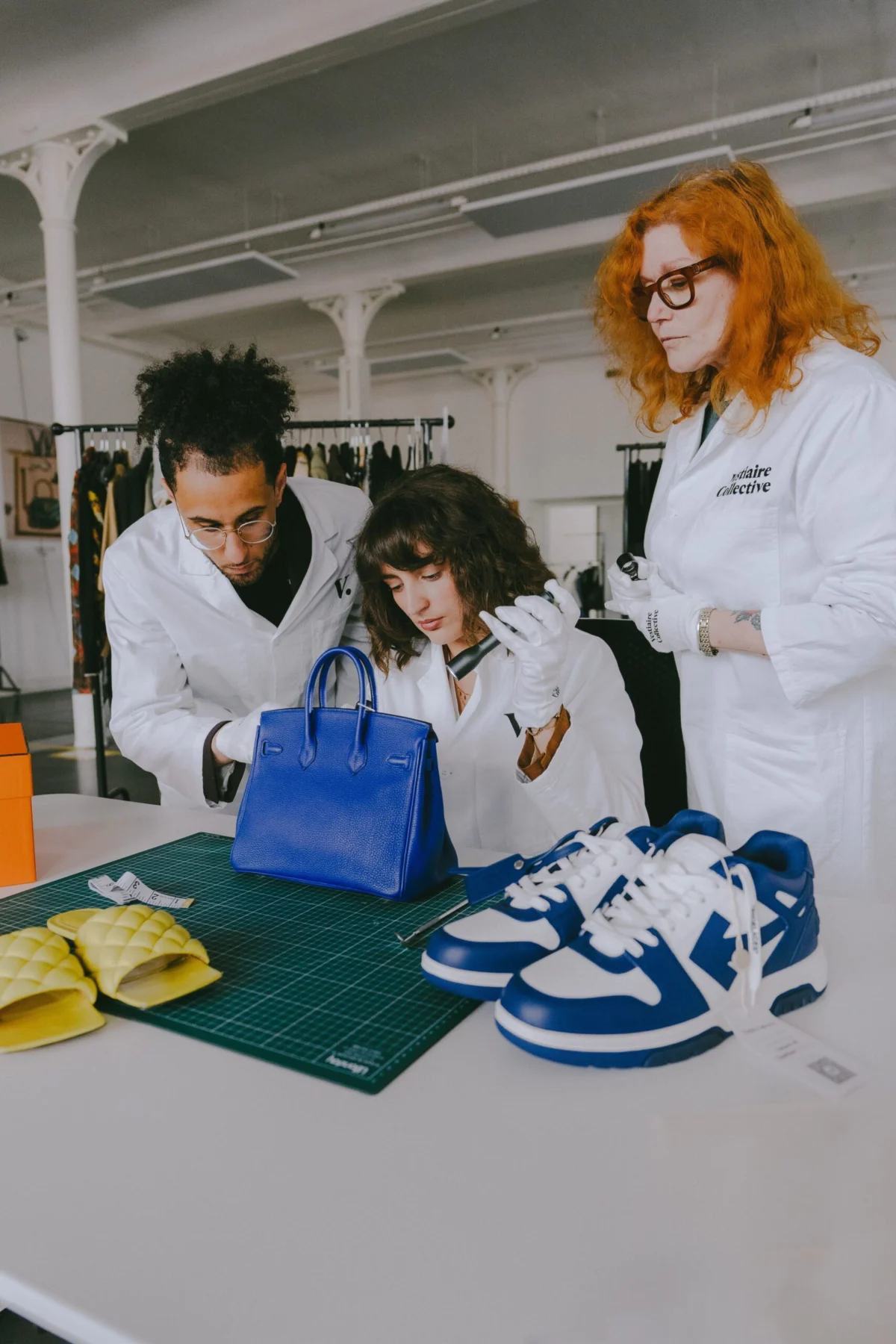
At the heart of luxury resale, where the allure of coveted fashion meets the promise of sustainability, lies a complex and increasingly critical process: authentication. Vestiaire Collective, a global leader in the pre-loved luxury market, operates its largest authentication hub in a repurposed spinning mill in Tourcoing, northern France. This sprawling facility, a testament to the scale and meticulousness of their operation, offers a glimpse into the rigorous multi-step approach designed to combat counterfeits and fraud. Guests are escorted through stringent security protocols, their belongings secured before entering a bustling factory floor where white-coated employees meticulously unpack, authenticate, assess condition, and repackage luxury items destined for discerning buyers worldwide. This sophisticated system, honed over years, is now facing an unprecedented challenge: the influx of potentially stolen luxury goods onto resale platforms following widespread looting across France and Italy in October 2026.
The Shadow of Looting on the Luxury Resale Market
The wave of unrest that swept through France and Italy beginning October 17, 2026, left a trail of shattered storefronts and pilfered luxury merchandise. Reports quickly emerged of high-value items from iconic brands like Louis Vuitton, Dior, Celine, and Hermès, staples on Vestiaire Collective’s marketplace, surfacing on resale platforms. This presented a significant ethical and operational hurdle for companies built on trust and authenticity. The challenge transcended mere counterfeit detection; it now involved discerning whether an item could be legally sold, a crucial distinction in the wake of criminal activity.
Vestiaire Collective, like many in the luxury resale sector, has long relied on a robust authentication process. This typically involves a combination of artificial intelligence (AI) for initial screening and a team of human experts who meticulously examine every detail, from stitching and materials to hardware and serial numbers. However, the sheer volume of goods potentially compromised by the looting, coupled with the speed at which such items could be relisted, demanded an immediate and heightened level of vigilance.

An Emergency Response: Heightened Vigilance and New Protocols
In the immediate aftermath of the unrest, Vestiaire Collective initiated an emergency response. On Monday, October 19, 2026, the company convened an urgent meeting involving its commercial and legal departments. The directive was clear: intensify efforts to identify suspicious listings. Employees were specifically trained to look for new seller profiles that rapidly uploaded multiple never-before-worn items in a short timeframe – a red flag that could indicate the disposal of stolen merchandise.
"All of our teams are more and more vigilant," Candice Francisco, PR Manager at Vestiaire Collective, told Vogue Business during a visit to the authentication warehouse. While the platform had not yet identified any definitively stolen goods, the increased scrutiny was a proactive measure. "If you have an account made two days ago with never worn Celine, it’s a bit suspicious," Francisco elaborated, highlighting the nuanced approach required to differentiate genuine new listings from potentially illicit ones.
The French government, recognizing the broader implications, issued stern warnings that both buyers and sellers could face legal repercussions for dealing in goods stolen during the looting. This underscored the responsibility of resale platforms not only to authenticate the genuine nature of a product but also to ensure its legitimate provenance.
Operational Adjustments and Collaboration
Vestiaire Collective’s response was multifaceted, aiming to adapt its existing systems to this new threat. The platform began implementing stricter verification processes for new members, particularly those with profiles created shortly after the looting events. For any listings flagged as potentially suspicious, immediate preventative measures were put in place. These included quarantining the listings, demanding verifiable proof of purchase or ownership from the seller, and systematically complying with official judicial requisitions to aid police investigations.

"Establishing whether a specific item has been stolen requires verified ownership and police records," stated a Vestiaire Collective representative, emphasizing their reliance on established relationships with brand rights holders, retailers, and public authorities in France and internationally. These partnerships are crucial for cross-referencing information and facilitating investigations.
Victoire de Coutard, Vestiaire Collective’s Senior Brand Manager and Authentication Specialist, further explained the company’s strategy: "When anomalies are detected, we take appropriate preventative measures, including quarantining listings to demand verifiable proof of purchase and systematically complying with official judicial requisitions to support police investigations." This highlights a proactive stance rather than a reactive one, aiming to intercept problematic items before they reach buyers.
Government Intervention and Industry-Wide Efforts
The gravity of the situation prompted a swift response from governmental bodies. On October 19, 2026, France’s Minister of the Economy, Roland Lescure, convened an emergency meeting with key resale platforms to address the issue of suspected looted goods appearing online. Platforms such as Vinted, eBay, and Leboncoin were briefed on necessary enforcement measures, including regular reporting of their activities to the authorities.
While Vestiaire Collective was not directly represented at this specific meeting, its interests were advocated for by the Fédération du e-commerce et de la vente à distance (FEVAD), of which it is a member. The ministerial discussions primarily focused on mass-market, peer-to-peer resale platforms and open classified sites that handle vast quantities of uncurated, lower-priced items. Vestiaire Collective, with its highly controlled model that leverages advanced technology and specialized human expertise, was positioned as a less direct target of these particular governmental discussions, though the principle of preventing the resale of stolen goods remains paramount across the entire sector.

The Nuances of Identifying Stolen Goods
Distinguishing between a genuine item and a counterfeit relies on the intrinsic characteristics of the product itself. Identifying stolen goods, however, presents a more complex challenge, often requiring external verification and cooperation with law enforcement. While Vestiaire Collective’s authentication process meticulously checks for authenticity, the origin of an item can be obscured, especially when sellers attempt to circumvent detection.
During peak periods, such as the upcoming Black Friday sales, Vestiaire Collective anticipates an influx of between 1,500 and 3,000 items uploaded daily. This high volume, particularly in the wake of mass looting, makes it exceedingly difficult to definitively determine if an item has been stolen without concrete evidence. "It’s not difficult to create five different accounts and post across them," observed Henric Hadrien, Authentication Site Director at Vestiaire Collective. "Sometimes, it’s impossible to know if you don’t have the serial number."
This underscores the critical role of unique identifiers. Luxury brands often embed serial numbers, RFID tags, or other proprietary markings within their products. Vestiaire Collective, in collaboration with brands, can utilize these identifiers to cross-reference against databases of stolen items, a process that has been instrumental in past successes. The platform has previously worked with Italian and German police forces, successfully removing items flagged as stolen and coordinating with legal teams and national police departments to ensure appropriate handling of such cases. In instances where a buyer had already received a potentially stolen item, Vestiaire Collective has been known to reimburse the buyer while cooperating with authorities for the recovery of the goods.
Beyond Counterfeits: A Holistic Approach to Trust
Vestiaire Collective’s commitment to trust extends beyond simply combating counterfeits and stolen goods. The platform adheres to strict commercial industry standards, which also include the prohibition of items made from fur, exotic skins, and ivory that cannot be legally exported. This comprehensive approach aims to protect the anonymity of high-profile sellers, prevent fraud, and ensure that all transactions align with ethical and legal frameworks.

The platform also maintains open communication channels with luxury brands. This allows for swift alerts regarding suspicious items or prototypes, further strengthening their authentication capabilities. In cases where an item is flagged as potentially originating from an employee or family and friends sale, which may sometimes violate brand policies, Vestiaire Collective has a policy of returning the item to the seller rather than immediately banning them, provided there has been a transparent conversation with the brand. This nuanced approach reflects the platform’s understanding of the complexities within the luxury ecosystem.
Looking Ahead: A Persistent Challenge
The proactive measures taken by Vestiaire Collective and other resale platforms are crucial in mitigating the risks associated with the illicit trade of luxury goods. The decrease in the scale of looting observed on October 24, 2026, following heightened security and precautionary measures by businesses, indicates that coordinated efforts can yield positive results. However, the challenge of identifying and intercepting potentially stolen goods will likely persist for weeks and months to come.
The future of luxury resale hinges on the continuous evolution of authentication technologies, robust collaboration between platforms, brands, and law enforcement agencies, and an unwavering commitment to transparency and ethical practices. As the market for pre-loved luxury continues to grow, the integrity of its supply chain remains paramount, ensuring that the allure of fashion can be enjoyed responsibly and sustainably. The operations at Vestiaire Collective’s Tourcoing facility, therefore, represent more than just a logistical hub; they are a critical bulwark in preserving trust and value in the dynamic world of luxury resale.
