

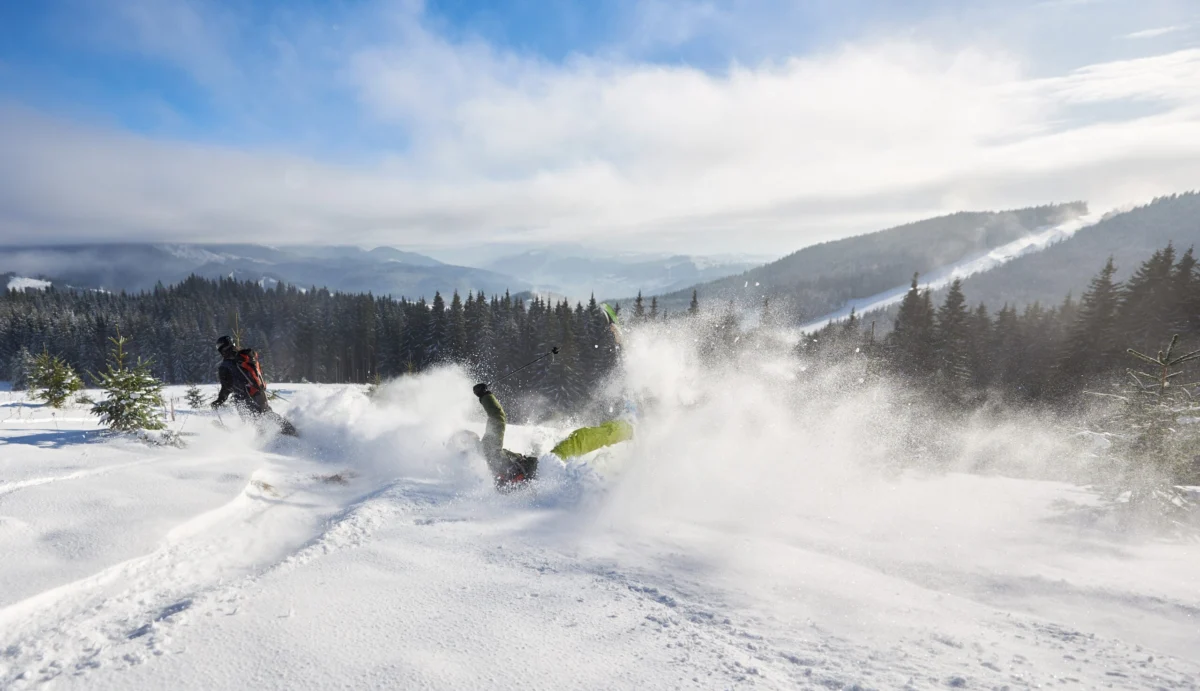
The exhilaration of carving down a snow-covered mountain is a hallmark of winter sports, yet this shared experience also carries inherent risks, particularly concerning on-slope collisions. Despite the myriad factors that can contribute to an incident – from a slow, unpredictable downhill skier to the aggressive maneuvers of an expert – one principle remains paramount and forms the bedrock of mountain safety: the uphill participant bears the primary responsibility for avoiding those downhill. This fundamental tenet, enshrined in the National Ski Areas Association’s (NSAA) Skier Responsibility Code, often sparks heated debate on social media platforms following viral collision videos, but its legal and ethical implications are clear, aiming to foster a safer environment for all who partake in winter sports.
The Immutable Rule: Uphill Responsibility
The core of the Skier’s Responsibility Code dictates that "people ahead or downhill of you have the right of way." This is not merely a suggestion but a directive that places the onus squarely on the individual in the superior position, who possesses a broader field of vision and the ability to dictate their speed and trajectory. While it may seem counterintuitive to some, especially those frustrated by perceived impediments, this rule is designed to prevent collisions by assigning responsibility to the skier or snowboarder who can most effectively see and react to potential hazards. The uphill individual has an unobstructed view of the terrain and other participants below them, making them uniquely positioned to avoid contact.
Viral social media clips frequently showcase "yard sale" type collisions, where a skier or snowboarder from behind dramatically takes out another. In nearly all such scenarios, including those widely circulated online, the primary responsibility for avoidance rests with the uphill participant. The visceral reactions often range from shock to empathy, particularly for those who have experienced such incidents. However, the online commentary often deviates from the established safety guidelines, frequently blaming the downhill skier for their speed, wide turns, or unpredictable movements, overlooking the foundational principle of mountain safety.
Historical Context and Evolution of the Skier’s Responsibility Code
The National Ski Areas Association (NSAA) developed the Skier’s Responsibility Code in 1962, a crucial response to the burgeoning popularity of skiing and the increasing number of accidents. As ski technology advanced and more people flocked to the slopes, the need for a standardized set of guidelines became evident. The code was not merely a suggestion but a concerted effort to establish clear expectations for conduct, minimize risks, and provide a framework for liability in the event of an accident. Over the decades, the code has been periodically reviewed and updated to reflect changes in equipment, resort practices, and a deeper understanding of accident prevention.
The original code emphasized courtesy and common sense, but its evolution has seen a more explicit definition of responsibilities. It is widely adopted by ski resorts across the United States and serves as a de facto standard for safe conduct. Many states have even incorporated elements of the code into their ski safety acts, giving these principles legal weight in accident disputes. This legislative backing underscores the importance of adherence, transforming what might seem like mere etiquette into a critical component of personal accountability on the slopes.
Analyzing On-Slope Collisions: Data and Contributing Factors
Understanding the dynamics of on-slope collisions requires an examination of available data and common contributing factors. According to studies compiled by organizations like the National Ski Areas Association (NSAA) and various medical journals, collisions represent a significant portion of ski and snowboard injuries. While exact figures vary annually, collisions with other skiers/snowboarders typically account for 10-20% of all reported injuries, ranging from minor sprains to severe head trauma, fractures, and even fatalities.
A disproportionate number of these incidents often occur on less challenging slopes – green circles and blue squares – which funnel down to base areas. This phenomenon can be attributed to several factors:
- Congestion: These slopes often see the highest traffic, particularly during peak hours, increasing the probability of interaction.
- Mixed Skill Levels: Beginner and intermediate skiers, who are still developing control and predictability, share these runs with more advanced skiers transiting to other areas or simply enjoying easier terrain.
- Perceptual Biases: Experienced skiers may underestimate the unpredictability of newer skiers, while beginners may overestimate their own control.
Speed is a critical factor. While the uphill skier is primarily responsible, excessive speed by any participant drastically reduces reaction time and increases the force of impact in a collision. Inattention, such as using mobile phones or simply not scanning the surroundings effectively, also plays a significant role. The "video game" analogy, where skiers perceive others as static obstacles to be navigated at the last second, highlights a dangerous mindset that contradicts the dynamic and unpredictable nature of a crowded slope.
The Enhanced Responsibility of the Experienced Skier
While the Skier’s Responsibility Code applies universally, a compelling argument can be made for an enhanced level of responsibility for more experienced skiers. Their superior skill set—the ability to turn sharply, stop quickly, and navigate varied terrain with ease—equips them with a greater capacity to avoid collisions. When an expert skier encounters a slower or less predictable individual, their advanced abilities provide them with more options for evasive action.
This perspective is not about absolving beginners of all responsibility, but rather acknowledging that skill translates to greater control and, consequently, greater capacity for safe conduct. To argue that an expert is merely "minding their own business" when a beginner appears in their line fails to recognize the dynamic environment of a ski slope. Unlike a controlled racecourse, public ski trails are shared spaces requiring constant situational awareness and proactive risk mitigation. Preventing experienced skiers from navigating the same terrain as beginners, which would be the logical extension of such an argument, is impractical and detrimental to the sport’s growth. Everyone was a beginner once, and providing safe space for learning is crucial for the sport’s future.
Addressing the Downhill Skier’s Contribution: Beyond the Right of Way
The emphasis on uphill responsibility does not grant downhill skiers carte blanche to act recklessly. The Skier’s Responsibility Code outlines several points that apply to all participants, regardless of their position on the slope. Downhill skiers can indeed contribute to, or even directly cause, collisions through irresponsible behavior. Key examples include:
- Stopping in unsafe locations: Halting directly below a blind rollover, in the middle of a narrow trail, or in high-traffic areas creates an unexpected and dangerous obstacle.
- Skiing out of control: While downhill skiers have the right of way, they are still obligated to ski within their abilities and maintain control of their speed and direction. Losing control and careening into another person constitutes a breach of the code.
- Sudden, unpredictable movements: While beginners often make wide or sweeping turns, deliberately erratic or sudden changes in direction without checking uphill can be problematic, though the ultimate burden of avoidance still rests with the uphill skier.
The challenge lies in educating all participants about these nuances. The original article highlights a critical issue: the prohibitive cost of ski lessons, which often puts professional instruction out of reach for many beginners. This creates a vacuum where informal learning, often without a comprehensive understanding of slope etiquette and safety protocols, becomes prevalent. In the absence of structured learning, social media and word-of-mouth become primary, and often unreliable, sources of information, leading to continued misunderstandings about responsibility.
Official Responses and Industry Perspectives
Ski area operators and industry associations like the NSAA consistently advocate for strict adherence to the Skier’s Responsibility Code. David Ingemie, former President of the NSAA, has often reiterated the code’s importance, emphasizing that it is a living document designed to protect all participants. Resort management typically displays the code prominently at lift lines, base areas, and on trail maps, signaling its legal and operational significance.
Ski patrol, the front-line enforcers of mountain safety, are trained to respond to incidents and determine fault based on the code. Their primary goal is to ensure safety and provide immediate aid, but they also play a crucial role in documenting incidents for potential legal or insurance purposes. From their perspective, the uphill skier’s responsibility is non-negotiable, as it is the most practical and effective way to prevent incidents.
Legal experts specializing in ski accident liability often cite the Skier’s Responsibility Code as a primary reference point in litigation. While specific state laws can introduce variations, the general principle of uphill responsibility is frequently upheld. Collisions can lead to significant legal battles, involving personal injury claims, medical expenses, lost wages, and pain and suffering. The financial implications for both individuals and resorts can be substantial, underscoring the serious nature of these guidelines.
Broader Implications: Fostering a Culture of Safety
The discourse around on-slope collisions and responsibility extends beyond individual incidents to touch upon the broader safety culture within the ski community. A robust safety culture is one where all participants actively contribute to the well-being of others, understanding their roles and responsibilities.
- Education is Key: Bridging the gap created by expensive lessons requires innovative solutions. Resorts could consider offering free basic etiquette sessions, online modules, or partnering with local ski clubs to provide affordable introductory safety clinics.
- Visibility and Reinforcement: Continual reinforcement of the Skier’s Responsibility Code through signage, public service announcements, and consistent messaging from resort staff is crucial.
- Peer-to-Peer Mentorship: Encouraging experienced skiers to model safe behavior and gently educate beginners, rather than simply expressing frustration, can foster a more inclusive and safer environment.
- Technological Solutions: While not a replacement for personal responsibility, advancements in wearable technology or resort-based monitoring could potentially assist in accident prevention or analysis, though these raise privacy concerns.
Ultimately, skiing and snowboarding are social activities, shared by millions. The enjoyment of these sports is inextricably linked to the safety of all participants. The Skier’s Responsibility Code, particularly its emphasis on the uphill skier’s primary duty to avoid those below, serves as the fundamental covenant that allows for this shared experience. It demands vigilance, foresight, and a profound respect for fellow mountain users.
In conclusion, while the actions of a downhill skier may at times be frustratingly slow, unpredictable, or expansive, the cardinal rule of the mountain remains: the individual in the uphill position is responsible for collision avoidance. This principle is not a matter of opinion but a cornerstone of safety, rooted in practicality, legal precedent, and the collective commitment to preserving the joy and integrity of winter sports. Adhering to the Skier’s Responsibility Code, understanding its nuances, and fostering a pervasive culture of safety are paramount to minimizing risks and ensuring that the slopes remain a source of recreation and exhilaration for everyone, rather than a stage for preventable accidents. Reviewing, sharing, and embodying these ten commandments of safe skiing is the collective responsibility of all who venture onto the snow.
