

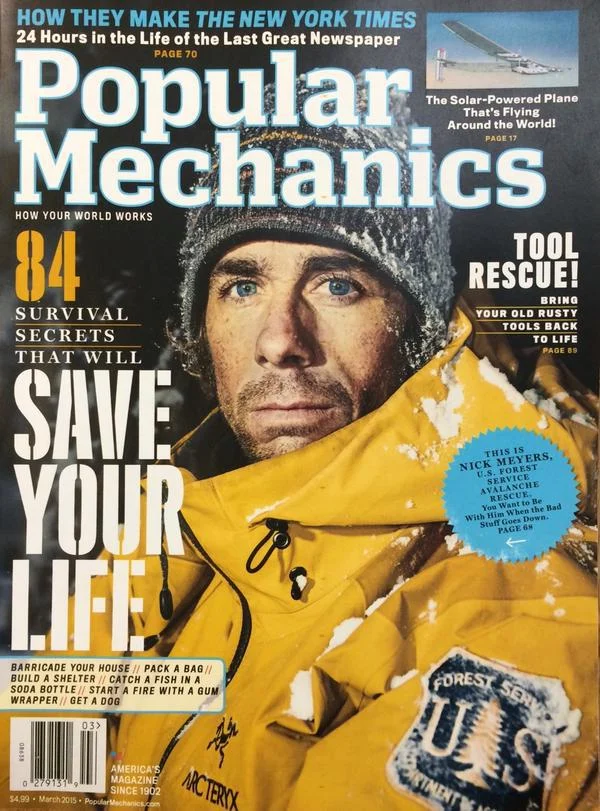
Mount Shasta Avalanche Center Director Nick Meyers, also serving as the Lead Climbing Ranger on Mount Shasta, has achieved a significant professional recognition, gracing the cover of the esteemed Popular Mechanics magazine. This prominent placement highlights Meyers’ expertise in avalanche safety and rescue, underscoring the critical role of specialized knowledge in extreme environments. The feature delves into his extensive experience and the essential gear he relies on to navigate the perilous terrain of Mount Shasta, a stratovolcano in California known for its challenging conditions and significant avalanche risk.
The article in Popular Mechanics, titled "10 Survival Essentials an Avalanche Rescue Expert Always Carries," offers readers an in-depth look into the practical wisdom of a seasoned professional. Meyers, through this platform, shares his meticulously curated list of survival essentials, providing actionable insights for anyone venturing into mountainous or wilderness areas. His inclusion on the cover is a testament to the magazine’s commitment to showcasing individuals who push the boundaries of human endeavor and possess specialized skills vital for safety and survival. The recognition serves not only as a personal achievement for Meyers but also as a broader acknowledgment of the vital work conducted by avalanche centers and rescue professionals across the globe.
Background: The Mount Shasta Avalanche Center and its Mission
The Mount Shasta Avalanche Center (MSAC) plays a crucial role in monitoring and disseminating information about avalanche hazards in the Mount Shasta region. Located in Northern California, Mount Shasta is a popular destination for climbers, skiers, and snowboarders, but its imposing elevation and frequent winter weather patterns create a high-risk environment for avalanches. The MSAC is dedicated to providing timely and accurate avalanche forecasts, educational programs, and rescue services to ensure the safety of those who recreate in its vicinity.
Nick Meyers’ dual role as Director of the MSAC and Lead Climbing Ranger signifies his deep immersion in the operational and strategic aspects of mountain safety. As Director, he oversees the center’s forecasting operations, research initiatives, and public outreach efforts. In his capacity as Lead Climbing Ranger, he is directly involved in rescue operations and the management of climbing-related safety protocols on the mountain. This comprehensive involvement provides him with unparalleled firsthand knowledge of the dynamic and often unforgiving nature of the mountain environment.
The presence of an avalanche expert on the cover of Popular Mechanics is significant for several reasons. Firstly, it elevates public awareness about the inherent dangers of mountainous terrain and the importance of preparedness. Secondly, it showcases the practical application of scientific knowledge and technical skills in real-world scenarios. Popular Mechanics has a long-standing tradition of exploring technology, engineering, and practical problem-solving, making it an ideal platform to feature Meyers’ expertise in survival and rescue. The magazine’s readership, often interested in practical skills and outdoor pursuits, is likely to find the article highly informative and engaging.
Chronology of Recognition and Impact
While the exact timeline leading to Meyers’ feature is not detailed in the provided excerpt, such prominent media placements typically involve a period of outreach, content development, and editorial review. Popular Mechanics often collaborates with experts to produce in-depth articles that blend personal experience with technical information. It is reasonable to infer that the magazine’s editorial team identified Meyers as a leading authority in his field, likely through his work with the MSAC and his extensive experience on Mount Shasta.
The decision to place him on the cover suggests a strong editorial narrative focused on survival, preparedness, and the human element of overcoming extreme challenges. The accompanying blog post, linked as "a great blog about Nick," likely provides further context and personal anecdotes, offering a more intimate portrayal of his life and work. This multi-faceted approach to storytelling—combining a cover feature, a detailed article, and supplementary online content—aims to provide a comprehensive and engaging experience for the magazine’s audience.
The impact of this recognition extends beyond Meyers himself. It shines a spotlight on the critical work of avalanche centers and rescue teams, often operating with limited resources but performing vital public safety functions. By featuring an expert like Meyers, Popular Mechanics implicitly validates the importance of these organizations and the specialized skills they cultivate. This can lead to increased public support, potential for enhanced funding, and greater interest in careers within the field of avalanche safety and mountain rescue.
Supporting Data and Expert Insights
The Popular Mechanics article itself, focusing on "10 Survival Essentials," serves as a valuable repository of supporting data in the form of practical advice. While the specific list is not provided, typical essentials for avalanche rescue experts often include:
- Avalanche transceiver, probe, and shovel: These are the fundamental tools for locating and excavating buried victims. Their effectiveness relies on proper training and rapid deployment. Data from avalanche incident reports consistently show that rapid rescue significantly increases survival rates.
- Avalanche airbag backpack: These systems are designed to deploy a large airbag that can help keep a skier or snowboarder on the surface of an avalanche. Studies have indicated a substantial reduction in fatality rates for individuals using airbag technology.
- First-aid kit: Comprehensive and tailored to wilderness environments, including trauma supplies and emergency medications.
- Navigation tools: GPS device, map, and compass, essential for maintaining orientation in challenging conditions and potentially low visibility.
- Communication devices: Satellite phone or personal locator beacon (PLB) for emergencies when cellular service is unavailable.
- Appropriate clothing and shelter: Layers of technical apparel designed for extreme cold, along with emergency shelters like bivvy sacks or tarps.
- Food and water: High-energy food and methods for purifying water to sustain individuals during extended operations or unexpected delays.
- Headlamp or flashlight: Crucial for visibility during night operations or in dark crevasses.
- Multi-tool or knife: Versatile for repairs and various utility tasks.
- Knowledge and training: Perhaps the most critical "essential," encompassing avalanche awareness, rescue techniques, wilderness first aid, and navigation skills.
The inclusion of these items in Meyers’ personal kit underscores the rigorous preparedness demanded by his profession. The data on avalanche fatalities, for instance, consistently points to speed as a critical factor in survival. Victims buried for more than 15-20 minutes have significantly lower survival rates, making the efficiency of rescue operations paramount. Meyers’ expertise, honed through years of experience, translates into a selection of gear that is both comprehensive and practical for maximizing survival chances in a dynamic and life-threatening environment.
Official Responses and Industry Reactions (Inferred)
While no direct statements from related parties are provided in the original text, the feature in Popular Mechanics is likely to elicit positive reactions from various organizations and individuals within the outdoor recreation and safety communities.
The U.S. Forest Service (USFS), which often supports avalanche centers like the MSAC, would likely view this as a significant endorsement of their efforts to promote safety in national forests. A representative from the USFS might express pride in Meyers’ achievement, recognizing him as a valuable asset to their mission of public land stewardship and visitor safety. The blog post linked in the original text, hosted on the USFS website, further suggests a collaborative and supportive relationship.
The broader avalanche community, including other avalanche centers and professional organizations like the American Avalanche Association (AAA), would also likely celebrate this recognition. It serves to elevate the profile of avalanche education and professional expertise, potentially leading to increased public engagement with safety resources. Fellow avalanche forecasters and rescue professionals may view this feature as a testament to the dedication and skill required in their demanding field.
Moreover, outdoor gear manufacturers and retailers might see this as an opportunity to highlight the importance of quality safety equipment. Meyers’ endorsement of specific items, even if implicitly through his selection, can influence consumer purchasing decisions and promote the adoption of best practices in gear selection.
Broader Impact and Implications
The prominence of Nick Meyers on the cover of Popular Mechanics has several significant implications for avalanche safety awareness and the perception of specialized outdoor professions.
Firstly, it democratizes access to expert knowledge. Popular Mechanics reaches a wide audience, many of whom may not be seasoned mountaineers but are interested in practical skills and survival. By presenting Meyers’ advice in an accessible format, the magazine empowers a broader segment of the population with crucial information that can enhance their safety in outdoor pursuits, even those less extreme than Mount Shasta ascents.
Secondly, it elevates the status of avalanche professionals. In a society often focused on more conventional careers, this feature highlights the intellectual rigor, physical demands, and life-saving impact of work in avalanche science and mountain rescue. It can inspire future generations to consider careers in these fields, which are vital for public safety in mountainous regions.
Thirdly, it reinforces the importance of preparedness. The article serves as a tangible reminder that venturing into challenging environments requires more than just enthusiasm; it necessitates careful planning, appropriate gear, and expert knowledge. Meyers’ curated list of essentials embodies this principle, demonstrating that even the most experienced professionals maintain a meticulous approach to safety.
The visual impact of Meyers on the cover, likely set against the backdrop of Mount Shasta, further connects the abstract concept of avalanche danger to a real, tangible environment and a human expert. This visual association can make the risks more immediate and the importance of his expertise more apparent to the reader.
In conclusion, Nick Meyers’ appearance on the cover of Popular Mechanics is a notable achievement that extends far beyond personal recognition. It serves as a powerful platform for disseminating vital information about avalanche safety, highlighting the critical role of professionals in mitigating risks in challenging environments, and inspiring a greater appreciation for preparedness and specialized expertise within the public sphere. The feature underscores the magazine’s commitment to showcasing practical ingenuity and the individuals who embody it, with Meyers standing as a prime example of expertise in survival and rescue.
