

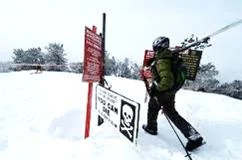
The allure of untouched powder and expansive, untamed slopes beckons many skiers and snowboarders beyond the meticulously groomed runs and patrolled boundaries of ski resorts. While many of these accessible public lands offer an unparalleled recreational experience, they exist in a state of uncontrolled and unpatricled terrain, commonly referred to as the "sidecountry." This increasingly popular extension of resort skiing presents a complex duality: an incredible resource for adventure, yet a significant departure from the safety protocols and avalanche control measures that define in-bounds skiing. As experts and safety advocates increasingly highlight, the transition from a controlled resort environment to the unpredictable backcountry is often a subtle one, raising critical questions about rider awareness, parental oversight, and the inherent responsibilities that accompany venturing into avalanche terrain.
The Growing Appeal of the Sidecountry
The phenomenon of sidecountry skiing has gained considerable traction in recent decades, fueled by a confluence of factors. Advancements in ski and snowboard technology have made it easier for recreationalists to access steeper and more challenging terrain. Furthermore, the proliferation of social media platforms, showcasing breathtaking images and videos of backcountry descents, has amplified the aspirational aspect of this type of skiing. Many resorts, strategically located near vast tracts of public land managed by agencies such as the U.S. Forest Service or Bureau of Land Management, inherently facilitate this transition. These areas often share boundary lines with or are immediately adjacent to the ski resort’s operational footprint, making them physically accessible with a short hike or traverse from established lifts.
However, this accessibility comes with a stark disclaimer: the absence of resort avalanche control. Unlike the meticulously managed slopes within resort boundaries, where ski patrols actively mitigate avalanche hazards through various techniques such as bombing, firing artillery, or hand charges, the sidecountry remains subject to the natural forces of weather and snowpack. In the event of an avalanche incident in these areas, the responsibility for rescue falls squarely on the shoulders of the individuals involved and any available resources they can summon. This critical distinction is often overlooked by those who transition from the perceived safety of the resort.
A Parent’s Dilemma: Beyond the Ski Area Gates
The inherent risks associated with the sidecountry are underscored by the stark reality of parental oversight. As articulated by Doug, a prominent voice in avalanche safety awareness, a critical question arises: "After a parent waves goodbye in the ski area parking lot, do they know what the kids are doing? Are they leaving the ski area for R-rated terrain?" This poignant query highlights a potential disconnect between the perceived safety of a child’s ski day and the actual adventures they might be embarking upon.
Many younger skiers and snowboarders, eager for challenge and adventure, may possess the technical skiing ability to navigate challenging in-bounds terrain but lack the critical decision-making skills and avalanche awareness necessary for the backcountry. The ease with which they can access these areas from a resort lift, often just a short hike away, creates a temptation that can be difficult to resist. Without explicit knowledge and understanding of the risks, or without proper training and equipment, these excursions can quickly escalate from an exciting adventure to a life-threatening situation.
Understanding the "R-Rated" Terrain
The term "R-rated terrain," used in this context, serves as a potent metaphor for the amplified risks present in the sidecountry. This designation signifies terrain that is not subject to avalanche control and can harbor significant hazards, including steep slopes, cornices, rocky outcrops, and the ever-present threat of avalanches. The snowpack in these areas is dynamic and unpredictable, influenced by factors such as recent snowfall, wind loading, temperature fluctuations, and solar radiation.
The transition to this type of terrain requires a completely different skill set and mindset than recreational skiing within a patrolled area. It necessitates a thorough understanding of avalanche formation, snowpack evaluation, route selection, and safe travel techniques. Crucially, it demands the use of essential avalanche safety gear: a transceiver, probe, and shovel, along with the knowledge of how to effectively use them. Without this foundational knowledge and equipment, individuals are essentially venturing into a highly unpredictable environment without adequate preparation, significantly increasing their vulnerability.
The Avalanche Safety Landscape in the US
The United States boasts an extensive network of ski resorts, many of which are situated in mountainous regions with significant snowfall and avalanche potential. The U.S. Forest Service, for instance, manages vast tracts of land that are popular for backcountry recreation. According to data from the National Ski Areas Association (NSAA), there are over 470 ski areas in the United States, and a significant portion of these are located in proximity to public lands. This geographical reality underscores the widespread availability of sidecountry access.
However, the infrastructure for avalanche safety varies considerably. While some resorts may offer limited backcountry access points with informational signage, they are generally not equipped to provide patrols or control in these adjacent areas. The responsibility for avalanche forecasting and safety in the backcountry primarily falls to organizations like the National Avalanche Center and regional avalanche centers, which provide vital information through snow reports and advisories. These centers rely on a network of trained professionals and volunteers to gather data and disseminate crucial safety messages.
A Chronology of Increasing Awareness and Concern
The growing concern surrounding sidecountry access is not a new development, but rather an evolving narrative that has gained momentum over the past few decades.
- Early 2000s: As backcountry skiing and snowboarding gained popularity, anecdotal evidence and a rising number of incidents in areas adjacent to ski resorts began to highlight the risks. Ski patrols and safety organizations started to voice concerns about the lack of awareness among recreationalists accessing these zones.
- Mid-2000s to Present: Avalanche education programs, such as those offered by the American Institute for Avalanche Research and Education (AIARE) and the National Outdoor Leadership School (NOLS), have become more widely available and recognized. These programs are critical in equipping individuals with the knowledge and skills to safely recreate in avalanche terrain.
- Ongoing: The advent of social media has amplified both the appeal and the potential dangers. While it showcases incredible backcountry experiences, it also contributes to a perception of accessibility that may not be accompanied by adequate preparation. This has led to increased calls for greater education and awareness campaigns targeting a younger demographic.
- Recent Incidents: While specific incidents are not detailed in the provided content, it is widely understood that tragic accidents in sidecountry terrain, often involving skiers and snowboarders who have ventured from resorts, continue to serve as stark reminders of the inherent dangers. These events often prompt renewed discussions about safety, education, and the responsibilities of both individuals and the broader outdoor recreation community.
Expert Perspectives and Official Responses
The article implicitly references the insights of individuals like "Doug," suggesting a broader discourse among avalanche safety professionals and ski area operators. While direct quotes from specific officials are not available in the provided text, the underlying sentiment reflects a common concern within the industry.
Ski patrols, while dedicated to the safety of those within their operational boundaries, are generally not authorized or equipped to patrol or conduct avalanche control in adjacent public lands. Their role is typically confined to managing the risks within the ski area’s permit boundaries. However, many patrols do engage in educational efforts, often distributing information about avalanche awareness and safety at resort access points.
Avalanche forecasting centers, such as the Colorado Avalanche Information Center (CAIC) or the Northwest Avalanche Center (NWAC), play a pivotal role in providing critical real-time information about snowpack conditions and avalanche danger levels. Their advisories are essential resources for anyone planning to enter avalanche terrain. The effectiveness of these centers relies on public engagement and the understanding of their advisories.
The Broader Impact and Implications
The implications of widespread sidecountry access without adequate preparation are significant and far-reaching:
- Increased Risk of Fatalities and Injuries: The most immediate and tragic consequence is the increased likelihood of avalanche accidents, leading to fatalities and severe injuries. This not only impacts the individuals involved and their families but also places a strain on rescue resources, which are often volunteer-based and can be stretched thin.
- Strain on Rescue Resources: Avalanche rescues in remote backcountry areas are complex, time-consuming, and inherently dangerous for rescuers. An increase in incidents directly translates to a greater demand on these limited resources.
- Liability and Responsibility: The legal and ethical responsibilities of ski areas in relation to adjacent public lands are complex. While resorts generally disclaim liability for incidents occurring outside their designated boundaries, the proximity and ease of access create a grey area that warrants careful consideration.
- Erosion of Public Land Safety Perception: A series of preventable accidents in sidecountry areas can contribute to a negative perception of public lands as inherently dangerous, potentially impacting recreational access and funding for land management agencies.
- The Importance of Education and Preparedness: The overarching implication is the critical need for comprehensive avalanche education and a culture of preparedness within the outdoor recreation community. This includes not only formal avalanche courses but also a commitment to continuous learning, staying informed about conditions, and making responsible decisions.
The existence of the linked PDF, "Sidecountry: Rated R," further emphasizes the intentional effort by safety advocates to communicate the amplified risks associated with these areas. By categorizing this terrain as "R-rated," they are employing a clear and impactful analogy to convey that it is not suitable for the unprepared or inexperienced. This highlights a proactive approach to risk communication, aiming to foster a deeper understanding and respect for the unpredictable nature of the backcountry. The article serves as a vital reminder that the thrill of untouched snow must be tempered with knowledge, respect, and the right tools to ensure a safe and rewarding experience in the unseen frontier of the sidecountry.
