

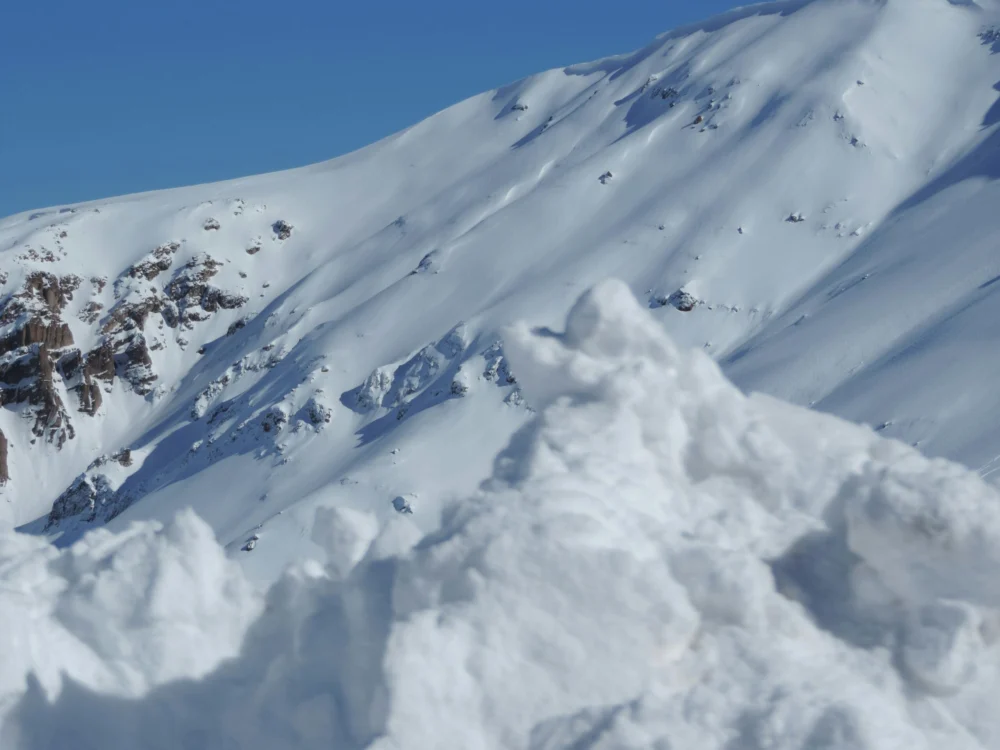
The world’s largest ski resort network, Les 3 Vallées, is confronting the formidable power of Mother Nature this week, as an unprecedented snow cycle culminates in significant infrastructural damage and a tragically high human toll across the French Alps. In the early hours of Tuesday, February 17, 2026, a massive avalanche, deliberately triggered during routine avalanche mitigation work (PIDA – Plan d’Intervention pour le Déclenchement des Avalanches), descended with overwhelming force, striking and severely damaging the Châtelet high-speed six-pack chairlift in the Méribel-Mottaret sector, adjacent to La Tania. The incident underscores the extreme conditions gripping the region, prompting an exceptionally rare Red Alert for avalanche risk from Météo-France.
The destructive slide, originating from high above, did not merely bury the lower slopes; its immense volume and velocity caused catastrophic structural failure to both the base terminal and the first lift tower of the Châtelet installation. Photographs and initial reports from the scene depict twisted metal, splintered components, and vast quantities of snow and debris engulfing the lift’s lower station. Resort officials swiftly confirmed that the Châtelet chairlift, a vital artery for intermediate terrain access and the popular terrain parks in the heart of the Méribel valley, will remain closed for the entirety of the 2025-26 winter season. While the Plattières gondola offers an alternative route, the loss of the Châtelet lift represents a significant operational challenge, particularly during what is typically one of the busiest periods of the ski calendar.
Storm Nils: A Deluge of Historic Proportions
The immediate cause of this severe incident is directly attributable to an extraordinary weather cycle, colloquially dubbed "Storm Nils" by local residents and meteorological services, which has deluged the Tarentaise Valley with an astonishing 175 centimeters (approximately 69 inches) of fresh snow over a mere five-day period. This rapid and intense accumulation has transformed the Alpine landscape, pushing snow depths to remarkable levels; in areas like Courchevel and La Tania, base depths at 2,700 meters have now surpassed the 260-centimeter (102-inch) mark, creating conditions rarely witnessed in recent decades.
Météo-France, the national meteorological service, responded to this exceptional snowfall by issuing a Red Alert (Level 5/5) for avalanche risk, a declaration of the highest severity. Such a warning is exceedingly rare, having been issued only twice in the past 25 years across the French Alps, signifying an "extremely high" danger where natural avalanches of very large size are expected, even on gentle slopes, and significant human intervention (like PIDA) carries inherent, elevated risks. The meteorological analysis indicates that Storm Nils brought a succession of moist, mild air masses from the Atlantic, encountering the cold, high-altitude terrain of the Alps. This interaction, combined with strong orographic lift, resulted in persistent, heavy snowfall concentrated across the western Alps, particularly the Savoie and Haute-Savoie departments.
The underlying snowpack structure amplified the danger. Météo-France and local avalanche experts identified a critical "persistent weak layer" formed during a colder, drier period in January. This layer, often composed of faceted snow crystals or surface hoar, acts as a fragile interface within the snowpack. When significant new snow, especially heavy and wet, falls rapidly onto such a weak layer, it creates an extremely unstable and "highly reactive" snowpack. This instability allows for the propagation of fractures over vast distances, leading to "size 4" avalanches – a classification indicating avalanches large enough to destroy forests, damage structures, or bury vehicles, making them highly destructive and potentially fatal. The avalanche that impacted the Châtelet lift is believed to be one such size 4 event, demonstrating the sheer destructive potential of the conditions.
A Deadly February Across the Alps
While the damage in Les 3 Vallées was thankfully limited to infrastructure, the human cost of this exceptional snow cycle across the wider Alpine region has been tragically staggering. Since the beginning of February, more than 25 avalanche fatalities have been recorded in France alone, painting a grim picture of the inherent dangers. These incidents have occurred across various departments, claiming the lives of off-piste skiers, snowboarders, and mountaineers, often caught in slides triggered either naturally or by their own passage. Rescue services, including mountain gendarmerie and volunteer search and rescue teams, have been working tirelessly under perilous conditions, frequently putting their own lives at risk to respond to distress calls.
The high number of fatalities serves as a stark reminder of the unforgiving nature of the mountains during periods of extreme instability. Despite extensive public awareness campaigns, the allure of fresh powder often leads individuals into high-risk areas. Authorities consistently stress the critical importance of carrying essential safety equipment—an avalanche transceiver, probe, and shovel—and knowing how to use them. Furthermore, the necessity of checking the local avalanche bulletin, understanding snowpack dynamics, and, ideally, skiing with a certified mountain guide when venturing off-piste, has never been more pertinent. This tragic tally underscores the broader challenge of managing recreational activities in an environment increasingly susceptible to extreme weather events.
Operational Challenges and Economic Implications for Les 3 Vallées

The closure of the Châtelet chairlift presents significant operational and logistical challenges for Méribel-Mottaret and the broader Les 3 Vallées network. As a high-speed six-pack, the Châtelet lift boasts a substantial uphill capacity, designed to efficiently move skiers from the valley floor to a crucial junction serving various runs, including popular terrain parks and intermediate slopes. Its absence will undoubtedly lead to increased pressure on the alternative Plattières gondola, potentially resulting in longer queues and altered skier flow patterns, particularly during the ongoing peak season of French school holidays. Resort management is actively working on re-routing skiers and optimizing other lift operations to mitigate the impact.
From an economic perspective, the costs associated with the Châtelet incident are substantial. The immediate expenses involve emergency response, assessment of damage, and initial clear-up operations. The complete replacement or extensive repair of a modern high-speed chairlift, including its base terminal, towers, and cable, can easily run into several millions of Euros. This significant investment will likely be a major project for the off-season, requiring extensive planning, engineering, and construction, with a hopeful reopening target for the start of the 2026-27 season. While Les 3 Vallées is a robust network, any disruption to key infrastructure can have ripple effects, potentially impacting visitor satisfaction and, in the longer term, local businesses that rely on a seamless skiing experience.
Statements from resort management have emphasized that safety remains the absolute priority. "Our teams are working tirelessly to ensure the safety of our guests and staff," stated a spokesperson for Méribel Alpina, the lift operating company, in a press release. "While the closure of Châtelet is regrettable, it is a necessary measure. We deeply regret any inconvenience to our visitors and assure them that all efforts are being made to maintain the highest quality skiing experience possible under these challenging circumstances." Météo-France analysts, in their updated bulletins, have highlighted the precise and unprecedented nature of the snow accumulation and snowpack instability, justifying their high-level warnings. Local authorities, including the prefecture of Savoie, have reiterated calls for extreme caution, coordinating closely with resort operators and emergency services to ensure public safety across the entire Tarentaise Valley.
Conditions for the Week Ahead: Navigating Persistent Risk
As of Wednesday, February 18, the avalanche risk across Les 3 Vallées, and indeed much of the northern French Alps, remains at a High Level 4/5. While the most intense snowfall from Storm Nils has subsided, Météo-France warns that strong winds continue to sweep and redistribute the vast quantities of new snow, creating "highly reactive" wind slabs. These wind slabs are particularly insidious: they can form rapidly on leeward slopes, often appearing stable on the surface but concealing a dangerously weak interface beneath, ready to fracture with minimal provocation.
Skiers and snowboarders in La Tania, Courchevel, Méribel, and the surrounding resorts are being issued urgent directives to stay strictly on groomed, open runs. Venturing off-piste, even slightly, is strongly discouraged and carries extreme risk. Several critical sectors within Les 3 Vallées, including the challenging Mont Vallon area and key inter-valley links, face continued closures as resort patrollers and avalanche control teams conduct extensive stabilization work. This work involves systematically triggering smaller, controlled avalanches using explosives or targeted ski-cutting techniques to release the unstable snowpack and reduce the overall risk for future openings. This process is time-consuming and dangerous for the patrollers themselves, underscoring the severity of the conditions they are managing.
The ongoing high risk necessitates a patient and disciplined approach from all mountain users. Resort signage, avalanche bulletins, and the advice of ski patrol must be heeded without exception. Ignoring closures not only endangers the individual but also puts rescue personnel at undue risk. The focus for the immediate future remains on consolidating the snowpack, allowing it to settle and stabilize naturally, while patrollers continue their essential, high-risk work to progressively secure more terrain.
Long-Term Perspectives and Adaptation
The extreme conditions witnessed in February 2026, marked by Storm Nils and the subsequent avalanche activity, serve as a potent reminder of the dynamic and increasingly unpredictable nature of alpine environments. While historical records indicate periods of heavy snowfall, the intensity and rapid succession of such events raise questions about long-term climate trends and the adaptation strategies required for ski resorts. Operators in Les 3 Vallées and across the Alps are continually investing in sophisticated snow safety technology, advanced meteorological forecasting, and comprehensive staff training to manage these evolving challenges.
The reconstruction of the Châtelet chairlift will be a testament to this commitment, representing not just a repair but a reaffirmation of the resort’s dedication to providing world-class infrastructure and safety. As the immediate crisis subsides, the focus will shift towards meticulous planning for the future, ensuring that Les 3 Vallées continues to offer an unparalleled skiing experience while prioritizing the safety and well-being of its millions of annual visitors. The immediate future, however, demands continued vigilance and respect for the powerful forces of the mountains, as the region slowly recovers from one of its most challenging winter periods in recent memory.
