

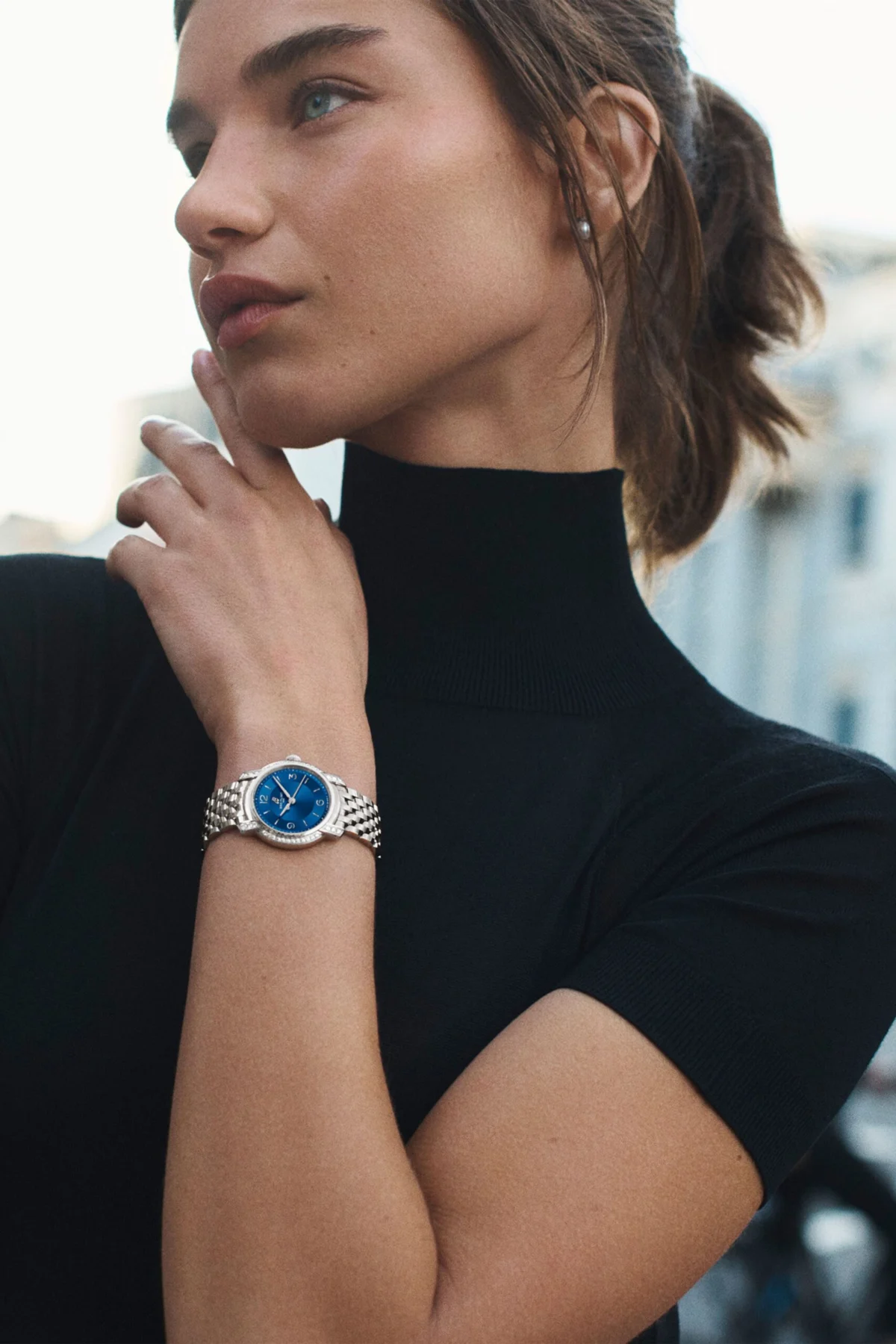
The global watch industry, poised for the upcoming Watches & Wonders exhibition in Geneva from April 14 to 18, 2026, presents a complex and often paradoxical landscape. While the prestigious event itself is experiencing robust growth, evidenced by an expanded exhibition area and a 12% year-on-year visitor increase in 2025, the broader export figures from the Federation of the Swiss Watch Industry reveal a starkly different narrative of consolidation and stratification. This year’s fair will feature 55 returning brands alongside 11 new entrants, including the highly anticipated Audemars Piguet, reflecting the industry’s continued appeal. The exhibition space has grown from 77,000 square meters in 2025 to 84,000 square meters this year, accommodating not only established maisons but also emerging musical talent and DJs, underscoring a commitment to broader cultural engagement.
However, beneath the surface of this vibrant industry gathering, a significant shift has occurred over the past quarter-century. Total Swiss watch exports have seen a dramatic decline in volume, nearly halving from 29.7 million units in 2000 to 14.6 million units in 2025. Conversely, the value of these exports has nearly tripled, soaring from CHF 9.3 billion to CHF 24.4 billion (approximately $11.8 billion to $30.9 billion) over the same period. This divergence highlights a profound market transformation: growth is increasingly concentrated at the high-end, while the mid and entry-level segments face significant contraction, leading to an industry that is becoming ever more reliant on the discerning tastes and substantial spending power of luxury watch enthusiasts.

The data from the Federation of the Swiss Watch Industry paints a clear picture of this bifurcation. The high-end segment, defined as watches priced at CHF 3,000 (approximately $3,800) and above, has experienced exponential growth. Its value surged more than sixfold between 2000 and 2025, from CHF 3.1 billion to CHF 19.5 billion ($3.9 billion to $25.7 billion). While the volume in this segment also rose, it was a more modest increase, from 488,000 units to 1.87 million. In stark contrast, the entry-level market, encompassing watches priced at CHF 200 (approximately $250) and below, has witnessed a collapse in volumes, dropping from 22.8 million to 8.3 million units. The value of this segment also declined, from CHF 1.2 billion to CHF 704 million ($1.5 billion to $892 million). The mid-range segment, defined as watches priced between CHF 200 and CHF 500 ($250-$650), also suffered a contraction, with volumes falling from 3.1 million to 1.8 million units and value from CHF 1 billion to CHF 554 million ($1.3 billion to $701 million).
This market polarization is further underscored by consumer willingness to spend. A study by Deloitte reveals that globally, only 5% of consumers are prepared to spend between CHF 10,000 and CHF 50,000 ($12,600 to $63,300) on a timepiece, and a mere 5% would exceed this threshold. However, these figures show a significant uptick in specific markets, with China reporting 20% of consumers willing to spend CHF 10,000-50,000 and 16% willing to spend above CHF 50,000. Hong Kong also demonstrates a strong appetite for ultra-high-end timepieces, with 18% of consumers open to spending over CHF 50,000. This uneven global demand landscape presents a strategic challenge for brands seeking to navigate the evolving market.
Premiumization Accelerates: The Ascent of Ultra-Luxury
The prevailing trend in the Swiss watch industry for 2026 is undeniably premiumization, a phenomenon extensively documented in the latest Annual Swiss Watcher report by Morgan Stanley and LuxeConsult. This report highlights that watches priced above CHF 50,000 accounted for a staggering 37% of total export value in 2025 and were responsible for an even more remarkable 89% of total export growth, despite representing a mere 1.4% of the total volume. This data unequivocally demonstrates an intensifying concentration of value at the apex of the watch market.

This trend is not new but has been steadily building momentum. In 2024, watches retailing above CHF 25,000 ($32,000) already contributed 69% to export growth and 44% to export value, while making up only 2.5% of unit sales. The intensification of this dynamic means the industry’s growth is becoming structurally dependent on a select few ultra-high-value timepieces. Iconic examples driving this trend include models such as the Piaget Limelight, Vacheron Constantin’s Égérie collection, and the perpetually in-demand Patek Philippe Nautilus.
The upcoming Watches & Wonders fair is expected to prominently showcase this shift, with a significant proliferation of high jewelry watches. Brands are increasingly leveraging their heritage and design prowess to create pieces that blur the lines between horology and haute joaillerie. Cartier, for instance, is set to unveil a new model inspired by its iconic Grain de Café collection, originally launched in the 1930s and famously popularized by Grace Kelly in the late 1950s. Revived in 2023, the latest iteration features diamond-tipped "coffee beans" crafted from 18-karat gold. Bvlgari continues to integrate its signature colored gemstones into its opulent Serpenti Aeterna line, while Chanel is expanding its high jewelry watch offerings with the new Nœud de Camélia collection, characterized by bow-shaped dial covers, alongside elegant pendant and ring watches.
On the men’s side, the focus remains on high-complication pieces that command premium prices and appeal to a clientele with substantial disposable income. Newer brands, such as Vanguart, which debuted its Black Hole Tourbillon in 2021, are emulating the prestige model established by Richard Mille. This heritage watchmaker, despite producing only around 5,000 watches annually, achieves one of the highest annual turnovers in the industry, reportedly $2.2 billion, driven by an average price point of $120,000.

Industry leaders often frame premiumization not as a conscious strategy but as an organic adaptation to market evolution. Benoît de Clerck, CEO of Zenith, commented, "We don’t really approach premiumization as a strategy in itself. It’s more the natural consequence of the work we’ve done over the past years on the fundamentals of the brand." He emphasizes a focus on "mechanical integrity" and the creation of rare, distinctive pieces like Zenith’s G.F.J. collection. These highly exclusive watches, produced in extremely limited quantities, aim to satisfy the demand for meticulously executed details, such as intricate guilloché decoration and highly precise mechanisms.
Culture as a Driving Force: Redefining Demand in the Digital Age
In an era increasingly defined by the omnipresence of health tracking technology and the rapidly evolving wearables market, the watch landscape is bifurcating into traditional timepieces and smartwatches. Usage patterns reveal a clear generational divide: 43% of Baby Boomers and 29% of Gen X primarily wear traditional watches. In contrast, Millennials and Gen Z show a strong preference for smartwatches, with 36% and 34% respectively reporting their main wearable as such. Notably, a significant portion of these younger demographics also engage in dual usage, with 35% of Millennials and 27% of Gen Z wearing both traditional watches and smartwatches, according to Deloitte.
Despite the dominance of smart technology among younger consumers, the purchase intent for traditional watches remains remarkably resilient, standing at 54%, almost on par with smartwatches at 53%. This suggests that mechanical watches are increasingly being positioned not merely as functional time-telling devices but as aspirational, symbolic, and collectible objects that convey identity and status.

To sustain and cultivate this demand, watchmakers are investing heavily in communication, focusing on elaborate storytelling and in-depth cultural activations to engage audiences beyond the traditional horology enthusiast. A prime example of this strategy is IWC’s partnership with the upcoming film F1: The Movie, directed by Joseph Kosinski. Instead of overt advertising, IWC has seamlessly integrated its timepieces into the narrative. Lead characters wear IWC watches, including the Ingenieur Automatic with a green dial, specially developed at the request of Brad Pitt’s character, Sonny Hayes, and the Pilot’s Watch Performance Chronograph worn by Damson Idris as Joshua Pearce. Following the film’s release, IWC plans to launch models inspired by and featured in the movie, creating a tangible link between cinematic narrative and product.
This deliberate integration into cultural narratives is a strategic playbook being adopted across the industry. George Ciz, CMO of TAG Heuer, observes, "Culture plays a central role in shaping demand today, because watches are no longer discovered only through traditional channels, but through a continuous flow of content and storytelling. Social media has accelerated visibility, celebrities have amplified desirability, and communities provide validation and education. Crucially, these elements reinforce each other: a watch can gain traction through a cultural moment, be amplified by influential figures, and then be discussed and analyzed within enthusiast communities."
This strategic evolution extends beyond marketing to the very staging of operations. Production facilities are becoming platforms for brand storytelling. Audemars Piguet, currently the third-largest watchmaker by turnover after Rolex and Cartier, is positioning the opening of its new manufacturing hub, "The Arc," as a significant brand event. Similarly, Hublot is focusing on creating a compelling visitor experience around H3, its latest production site in Nyon, Switzerland.

For smaller independent brands, the creation of unique experiences and cultural moments is equally vital. Matthieu Haverlan, Managing Director of Ulysse Nardin, a Swiss watchmaker founded in 1846, describes a deliberate departure from traditional advertising. "We focus on creative, unconventional initiatives. Our collaboration with [renowned pastry] chef Amaury Guichon, for example, generated over 600 million views," he stated. This approach was mirrored at the previous Watches & Wonders event, where Ulysse Nardin opted for an immersive, consumer-focused experience rather than a conventional product display. "We like to meet visitors personally, tell our story, and create real interaction with the brand," Haverlan added.
Female Taste Diversifies: Tapping into a Growing Market
Amidst global market uncertainties and cooling demand in key regions like China, watchmakers are increasingly targeting women as a significant growth driver. The rise of jewelry watches, evident not only from maisons like Bvlgari and Cartier but also from traditional watchmakers such as Vacheron Constantin, exemplifies this strategic pivot. Last year, Vacheron Constantin launched a trio of bejeweled bangles, signaling a clear strategic shift toward this consumer cohort.
Oliver R. Müller, founder of LuxeConsult, notes that the expanding women’s segment offers both high profit margins and substantial untapped potential.

However, female interest in watches is no longer confined solely to gem-set jewelry pieces. A growing number of women are engaging with the intricacies of mechanical watchmaking and are increasingly drawn to traditionally masculine designs. Maria Laffont, Chief Product Officer at TAG Heuer, observes, "We observe a significantly better-informed and confident female audience. Their interest is fueled by access to information, digital exposure, and a growing appreciation for mechanical watchmaking. Apart from its technical dimension, a watch is a personal statement, an object that expresses identity, heritage, and craftsmanship."
Laffont further explains that many women are now purchasing watches for themselves, demonstrating a sophisticated understanding of movements, materials, and design codes. Their preferences are broadening, encompassing not only smaller, refined pieces but also larger, more technically oriented watches.
TAG Heuer is reflecting this shift through a more flexible approach to watch design. "The focus is on offering a broad spectrum of proportions, materials, and aesthetics, allowing each individual to find a piece that resonates with their personal style, rather than segmenting products too rigidly," Laffont elaborates. "This philosophy prioritizes versatility, comfort, and authenticity, while maintaining the brand’s technical integrity." Recent Carrera timepieces, one of TAG Heuer’s most popular models, are available in dial sizes as small as 29mm, and some models feature rubber straps that are suitable for both athletic activities and evening wear, highlighting this emphasis on versatility.

Breitling has also made women’s watches a priority over the past five years. In 2024, the brand collaborated with Victoria Beckham on a limited-edition Chronomat Lady. In 2025, the launch of the Lady Premier line brought to light the creative influence of Willy Breitling’s wife, Beatrice, a significant, albeit often unacknowledged, force behind the brand. Morgan Stanley and LuxeConsult estimate that such initiatives could have boosted sales in the women’s segment by as much as 15%.
Interestingly, this trend is not unidirectional. At this year’s Watches & Wonders, brands traditionally associated with female clientele, such as Van Cleef & Arpels and Chanel, are presenting models that appear to target male consumers. Van Cleef & Arpels will feature the diamond-less, minimalist Midnight Jour et Nuit Phase de Lune, while Chanel is introducing new iterations of its ceramic sports J12 timepiece and its more sophisticated Monsieur model, indicating a cross-pollination of design appeal.
Navigating a Tricky Export Landscape: Geopolitics and Economic Headwinds
The Swiss watch market in 2025 remained characterized by fragility, marked by uneven performance and distortions stemming from evolving trade policies, according to Deloitte. A prime example of this volatility occurred in April 2025 when threats of a 31% US tariff on Swiss exports led to a surge of 150% in shipments to the United States. This front-loading effect weakened to 45% by July, before the eventual 39% tariff was implemented on August 7. As of November, tariffs have been reduced to 15%, yet persistent uncertainty clouds the outlook. The US, which accounts for 16.8% of Swiss watch exports, has become both a critical growth engine and a significant source of market volatility. Brands are responding with price increases, a strategy that carries the inherent risk of dampening demand.

Concurrently, key Asian markets continue to face pressure. Exports to China saw a decline of 26% in 2024, and Hong Kong experienced a 19% decrease. Recovery prospects in these regions are further constrained by structural economic challenges, as reported by Deloitte. Reflecting this challenging environment, 43% of industry executives anticipate a negative outlook for their primary export markets. Moreover, over 80% cite trade measures, and more than 90% reference geopolitical tensions as disruptive forces, underscoring a market increasingly shaped by external shocks.
These figures do not yet fully encompass recent developments, including the ongoing conflict in the Middle East, a region traditionally significant for luxury goods consumption. "Uncertainty is poisonous for any business, and especially for the luxury sector, where products are by definition non-essential," stated Müller of LuxeConsult. He argues that the industry is contending with a multifaceted array of pressures, combining cyclical headwinds—such as a strong Swiss franc, rising gold prices, and production overcapacity—with deeper structural shifts.
Chief among these structural shifts is the continued polarization of the market around a handful of dominant players, including Rolex, Cartier, Audemars Piguet, Patek Philippe, and Omega. This consolidation, coupled with the ongoing trend toward premiumization, means that very few brands possess the ability to scale effectively. While some independent watchmakers continue to thrive through niche appeal and exceptional craftsmanship, many struggle to sustain growth and face the likelihood of exiting the market.

Müller identifies a new challenge for the watch industry: easier access to the market. This is driven by social media and reinforced by the 2017 "Swissness" regulation, which, while clarifying production requirements, also allowed greater flexibility in sourcing components. This has lowered barriers to entry, leading to an increase in the number of new brands without necessarily improving their long-term viability. Müller concludes, "Because of cyclical pressures and structural shifts, 2026 is likely to be one of the most challenging years in recent memory." The confluence of economic uncertainty, geopolitical instability, and profound market structural changes positions the Swiss watch industry for a complex and demanding year ahead.
