

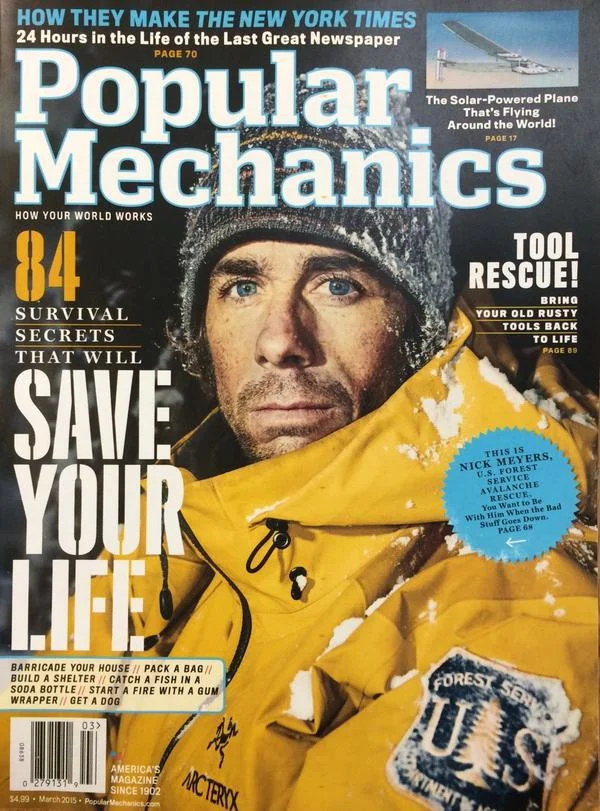
Mount Shasta, CA – Nick Meyers, a seasoned expert in mountain safety and a prominent figure in avalanche preparedness, has garnered national recognition with his appearance on the cover of the latest issue of Popular Mechanics magazine. Meyers, who holds dual roles as the Director of the Mount Shasta Avalanche Center and the Lead Climbing Ranger on Mount Shasta, was selected for his extensive knowledge and practical experience in high-risk mountain environments. The feature highlights his expertise in survival and avalanche rescue, underscoring the critical importance of specialized skills and equipment in the challenging terrain of Mount Shasta.
The Popular Mechanics article, titled "10 Survival Essentials an Avalanche Rescue Expert Always Carries," delves into the practical advice and essential gear that Meyers relies upon during his demanding work. This prominent placement signifies a broader acknowledgement of the specialized expertise required for mountaineering and avalanche safety, particularly in a region like Mount Shasta, which attracts a significant number of climbers and outdoor enthusiasts throughout the year. The magazine’s reach ensures that Meyers’ insights will be disseminated to a wide audience, potentially influencing safety practices among a diverse group of outdoor participants.
Background and Chronology of Recognition
The recognition of Nick Meyers by Popular Mechanics is not an isolated event but rather a culmination of years of dedicated service and demonstrated leadership in mountain safety. Meyers has been a pivotal figure in the Mount Shasta climbing community and the broader avalanche forecasting and education sector for an extended period. His roles at the Mount Shasta Avalanche Center and as Lead Climbing Ranger on the mountain involve constant assessment of snowpack stability, avalanche risk, and the implementation of safety protocols for climbers and backcountry users.
While the exact timeline leading to the Popular Mechanics feature is not detailed in the initial announcement, such profiles typically involve an editorial process that identifies key figures in specific fields. It is plausible that Popular Mechanics researchers or editors sought out leading experts in wilderness survival and avalanche rescue. Meyers, with his established reputation and responsibilities on a prominent and frequently climbed peak like Mount Shasta, would have been a natural choice for such a feature. The selection process likely involved interviews, review of his professional background, and an assessment of his ability to articulate complex safety concepts to a general audience. The publication of the article and the accompanying cover image marks the official public announcement of this recognition.
Supporting Data and the Importance of Avalanche Safety
The significance of Meyers’ feature is underscored by the inherent dangers associated with mountainous terrain and avalanches. According to the Colorado Avalanche Information Center (CAIC), which often serves as a benchmark for avalanche safety data in the United States, an average of 25 avalanche fatalities occur annually in the U.S. This statistic, while seemingly small, represents lives lost in incidents that are often preventable with proper education, awareness, and equipment.
Mount Shasta itself presents a unique set of challenges. Its elevation (14,179 feet) and its susceptibility to significant snowfall and rapid temperature fluctuations create conditions ripe for avalanche formation. The Mount Shasta Avalanche Center, under Meyers’ direction, plays a crucial role in monitoring these conditions. Their work involves:
- Snowpack Analysis: Regularly assessing the layers of snow, identifying potential weak layers, and understanding how they might behave under stress. This often involves digging snow pits, analyzing crystal structures, and performing stability tests.
- Weather Monitoring: Tracking current and forecasted weather patterns, including temperature, wind, and precipitation, which are critical drivers of avalanche risk.
- Forecasting and Dissemination: Producing daily avalanche forecasts and warnings, disseminated through various channels including their website, social media, and direct communication with rescue teams and the public.
- Climber Education: Offering courses and outreach programs to educate climbers and skiers about avalanche safety, rescue techniques, and responsible decision-making in avalanche-prone terrain.
Meyers’ expertise, therefore, is not just theoretical; it is forged through direct, on-the-ground experience in one of the most challenging alpine environments in North America. The Popular Mechanics feature serves to amplify the message of preparedness and risk mitigation that he and his center advocate for.
Expert Insights and Practical Application
The Popular Mechanics article’s focus on Meyers’ "10 Survival Essentials" provides a tangible glimpse into the practical aspects of avalanche rescue and wilderness survival. While the specific list is proprietary to the magazine’s content, it is highly probable that it includes items such as:
- Avalanche Transceiver, Shovel, and Probe: The fundamental trio for avalanche rescue, allowing rescuers to locate, excavate, and confirm the burial of a victim.
- Navigation Tools: Including GPS devices, compass, and detailed maps, crucial for maintaining orientation in low-visibility conditions and complex terrain.
- First-Aid Kit: Comprehensive and tailored for wilderness environments, addressing potential injuries from falls, hypothermia, or other mountain-related incidents.
- Emergency Shelter: Such as a bivy sack or lightweight tarp, to provide protection from the elements in unexpected situations.
- Communication Devices: Satellite phones or personal locator beacons (PLBs) for reliable communication in areas without cellular service.
- Appropriate Clothing and Layering System: Essential for maintaining core body temperature in extreme cold and variable weather.
- Food and Water: High-energy, non-perishable food and methods for purifying water or melting snow.
Meyers’ inclusion of these items in his essential kit reflects a deep understanding of the potential hazards and the need for redundancy and preparedness. His role as Lead Climbing Ranger on Mount Shasta means he is often the first responder to incidents, requiring him to make critical decisions under pressure with limited resources. The magazine’s platform allows him to share these life-saving principles with a broader audience, potentially empowering individuals to be better prepared for their own outdoor adventures.
Broader Impact and Implications for Mountain Safety
The recognition of Nick Meyers by a mainstream publication like Popular Mechanics has several significant implications for the field of mountain safety and avalanche awareness.
Firstly, it elevates the profile of avalanche safety as a critical concern for anyone venturing into mountainous terrain. By featuring an expert like Meyers, the article implicitly validates the serious risks involved and the necessity of specialized knowledge. This can encourage a more cautious and informed approach among recreational users, who may not always fully grasp the potential dangers of snow-covered slopes.
Secondly, it highlights the dedication and expertise of individuals working within avalanche centers and mountain rescue services. These professionals often operate in challenging and dangerous conditions, and their efforts are vital for public safety. The Popular Mechanics feature can serve as a testament to their commitment and the importance of supporting these organizations through funding and public awareness.
Thirdly, it can inspire future generations of individuals to pursue careers in mountain safety, environmental science, and search and rescue. By showcasing the impactful work of individuals like Meyers, the article can demystify these professions and demonstrate the tangible difference they make in saving lives and protecting communities.
Finally, the widespread readership of Popular Mechanics means that the message of preparedness and expert-driven safety advice will reach a demographic that might not typically engage with specialized avalanche safety publications. This broad dissemination is crucial for fostering a culture of safety that extends beyond dedicated mountaineers and into the general outdoor recreation community. The article, in essence, acts as a public service announcement, leveraging the magazine’s popularity to disseminate vital safety information.
The featured image, likely accompanying the article, would further enhance its impact by providing a visual representation of the environment and the gear discussed. Such imagery is often crucial in conveying the scale and seriousness of mountain challenges. The inclusion of links to a blog post and the Popular Mechanics article itself within the original announcement ensures that interested readers can access further details and delve deeper into Meyers’ expertise, reinforcing the information shared and encouraging further engagement with avalanche safety resources. This multi-faceted approach to dissemination amplifies the positive impact of Meyers’ recognition.
