

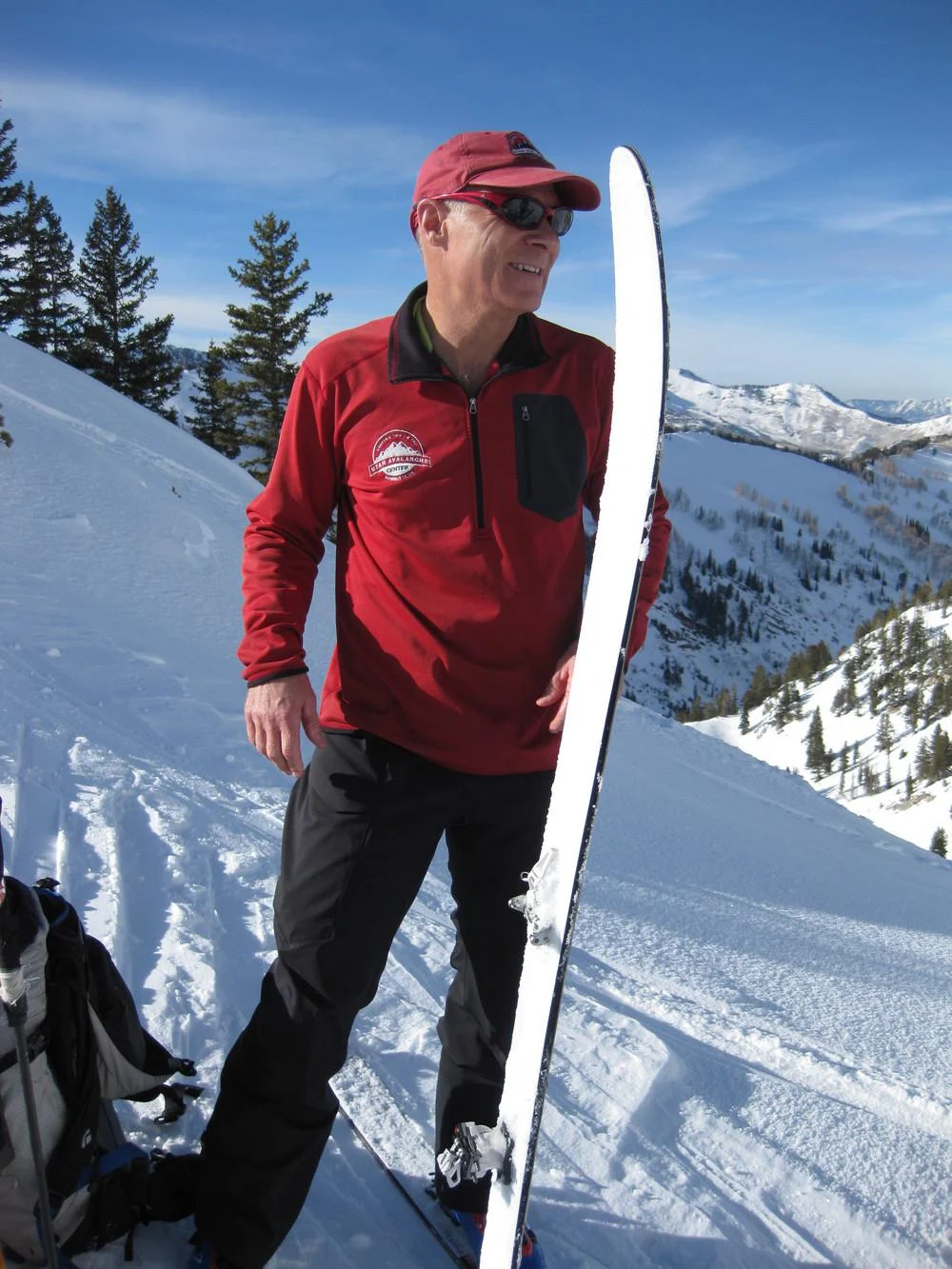
The Utah Avalanche Center (UAC) is marking a significant transition as its long-serving Director, Bruce Tremper, retires from the Forest Service at the end of August. Tremper, a towering figure in avalanche science and public safety for nearly three decades, has been instrumental in shaping avalanche forecasting and education across the United States and internationally. His departure signals a new era for the UAC, with Mark Staples stepping into the Director role, bringing his own extensive experience in avalanche research and forecasting.
A Legacy Forged in Snow and Science
Bruce Tremper’s tenure as Director of the Utah Avalanche Center, beginning in 1986, has been characterized by a relentless pursuit of improving avalanche safety and public awareness. Under his leadership, the UAC evolved from a service primarily offering phone-recorded advisories to a sophisticated operation providing a comprehensive suite of internet-based products. This evolution was not merely technological; Tremper and his team were pioneers in developing innovative communication methods, including the introduction of clear icons and standardized "avalanche problems" to advisories, making complex avalanche information more accessible and understandable to the public.
Tremper’s journey into the world of avalanches began in Montana. He earned his Master of Science degree at Montana State University, where he conducted research under the guidance of Dr. John Montagne. This academic foundation was quickly complemented by practical, hands-on experience. He engaged in avalanche control work at prominent ski areas, including Bridger Bowl and Big Sky. His early career also saw him contributing as an avalanche forecaster at the Alaska Avalanche Center, working alongside esteemed figures in the field such as Doug Fesler, Jill Fredston, and Jim Woodmency. These formative years provided Tremper with a deep understanding of snowpack dynamics and the practical challenges of avalanche mitigation.
Broader Contributions to Avalanche Safety
Tremper’s influence extended far beyond the operational confines of the Utah Avalanche Center. He served as the editor for The Avalanche Review for six years, a critical publication for the avalanche community, where he facilitated the dissemination of research, case studies, and best practices. His prolific writing includes numerous peer-reviewed papers, several influential avalanche safety videos, and two seminal books on avalanches that have become essential references for professionals and enthusiasts alike.
His expertise was recognized on a national and international stage. Tremper played a pivotal role in managing backcountry avalanche safety during the Salt Lake City 2002 Olympic Winter Games, a testament to his organizational and technical capabilities under high-stakes conditions. He has consistently served as a positive and knowledgeable representative of his agency, engaging in hundreds of media interviews to educate the public about avalanche risks and safety. For decades, he has been a dedicated instructor at the National Avalanche School, shaping the next generation of avalanche professionals. Furthermore, he was a key member of the working group that developed the conceptual model of avalanche danger and the associated avalanche danger scale, a foundational framework adopted in 2010 that has standardized how avalanche hazard is understood and communicated globally.
A Look Back: Key Milestones and Innovations
The period from Tremper’s arrival in 1986 to his retirement in 2015 marks a significant era of advancement in avalanche forecasting and public safety.

- Late 1980s – Early 1990s: Tremper assumes directorship of the UAC. Focus on establishing consistent forecasting methods and expanding outreach beyond basic phone advisories. Early adoption of emerging communication technologies.
- Mid-1990s: Development and introduction of iconic visual cues and standardized "avalanche problems" into advisories, enhancing clarity and public comprehension. Increased emphasis on educational materials and public presentations.
- 2002: Tremper oversees backcountry avalanche safety for the Salt Lake City Winter Olympics, a high-profile demonstration of the UAC’s capabilities and Tremper’s leadership.
- 2010: Tremper’s involvement in the conceptual model of avalanche danger and the associated danger scale, a landmark achievement in standardizing avalanche hazard communication.
- 2015: Bruce Tremper announces his retirement from the Forest Service, marking the end of an impactful 29-year directorship.
Data-Driven Impact and Public Safety
The impact of Tremper’s leadership can be indirectly measured by the sustained efforts to reduce avalanche fatalities and injuries in Utah. While precise causality is difficult to quantify, the evolution of forecasting products and educational outreach under his direction has coincided with increased public awareness and a more informed backcountry user community. The UAC, under Tremper, consistently provided detailed daily forecasts, including snowpack observations, weather trends, and specific avalanche problems. For instance, a typical winter forecast might detail the depth of the snowpack, the number of weak layers identified, the temperature gradients within the snowpack, and the resulting likelihood of triggering avalanches on specific aspects and elevations. This level of detail, made accessible through user-friendly formats, empowers individuals to make informed decisions in the backcountry.
The conceptual model of avalanche danger, in which Tremper played a significant role, provided a standardized framework for understanding and communicating avalanche risk. This model typically includes elements like:
- Likelihood of Avalanches: The probability of avalanches occurring.
- Size of Avalanches: The potential magnitude of an avalanche.
- Consequences: The potential for injury or fatality.
This systematic approach allows forecasters to articulate risk more precisely and enables the public to better interpret the associated danger scales, which often range from "Low" to "Extreme." The UAC’s consistent adherence to these principles, championed by Tremper, has undoubtedly contributed to a more safety-conscious backcountry culture in Utah.
A New Chapter: Mark Staples Takes the Helm
With Bruce Tremper’s retirement, the Utah Avalanche Center has appointed Mark Staples as its new Director. Staples brings a wealth of experience and a deep understanding of avalanche science. His background includes extensive work in ski patrol and snow safety at Big Sky Ski Area, providing him with crucial operational experience. He holds a Master of Science degree in Engineering from Montana State University, where he focused on snow avalanche research, further solidifying his scientific credentials.
Staples has also contributed to national avalanche efforts through special projects for the National Avalanche Center and has spent eight seasons as a backcountry avalanche forecaster at the Gallatin National Forest Avalanche Center. This diverse experience positions him to effectively lead the UAC into its next phase of development. He has expressed his enthusiasm for joining the UAC team, acknowledging its reputation as a top-tier organization.
Looking Ahead: Continued Engagement and Future Outlook
While Tremper is retiring from his official Forest Service duties, his commitment to avalanche safety remains strong. He plans to continue teaching, writing, and contributing to avalanche safety projects. This suggests that his expertise and passion will continue to benefit the field, albeit in different capacities. It is also anticipated that Tremper, along with his wife Susi, will continue to be active participants in backcountry skiing, a pursuit he has clearly enjoyed throughout his career. Their continued presence in the backcountry serves as a reminder of the enduring connection between avalanche professionals and the environments they study.
The transition at the UAC is not merely a change in leadership; it represents the continuation of a vital mission. The Utah Avalanche Center plays a critical role in public safety, particularly in a state renowned for its backcountry recreation opportunities. The continued dedication of individuals like Bruce Tremper and the incoming leadership of Mark Staples ensures that the UAC will remain at the forefront of avalanche science, education, and forecasting, striving to make the Wasatch Mountains and other backcountry areas safer for all who venture into them. The legacy of Bruce Tremper is one of dedication, innovation, and an unwavering commitment to saving lives through knowledge and foresight.
