

Today, that ancient rhythm has been replaced by a volatile structural condition. The combination of rising global temperatures, prolonged drought cycles, and the proliferation of invasive annual grasses has transformed the Southern California landscape into a high-risk environment. According to data from the National Oceanic and Atmospheric Administration (NOAA), climate change has become a primary driver in the increasing severity of wildfires across the Western United States. The consequences are no longer merely ecological; they are social and economic, manifesting as smoke-filled summers, mandatory evacuations, insurance instability, and the long-term closure of public recreation lands. In response to this escalating crisis, a traditional yet innovative strategy has reemerged: targeted prescribed grazing.
The Evolution of Fire Risk in the Mediterranean Climate
Southern California operates within a "brittle" Mediterranean climate, characterized by short, intense rainy seasons followed by long periods of aridity. In this environment, vegetation grows rapidly during the wet months and becomes highly flammable tinder by mid-summer. Historically, this system was kept in check by natural grazing and indigenous land management. However, a century of fire suppression policy—the "Smokey Bear" era—allowed vegetation to accumulate uninterrupted. When combined with the introduction of invasive species like mustard and cheatgrass, which burn hotter and faster than native perennials, the landscape became a tinderbox.
The modern wildfire era is defined by a dangerous feedback loop. Hotter, drier conditions lead to more frequent fires; these fires release massive amounts of sequestered carbon into the atmosphere, further accelerating climate change. Furthermore, repeated burning often prevents native ecosystems from recovering, allowing invasive, fire-prone grasses to take over, which in turn increases the likelihood of the next fire. This cycle has forced state and local agencies to move beyond traditional suppression toward proactive "fuel management."
Targeted Grazing: A Strategic Ecological Intervention
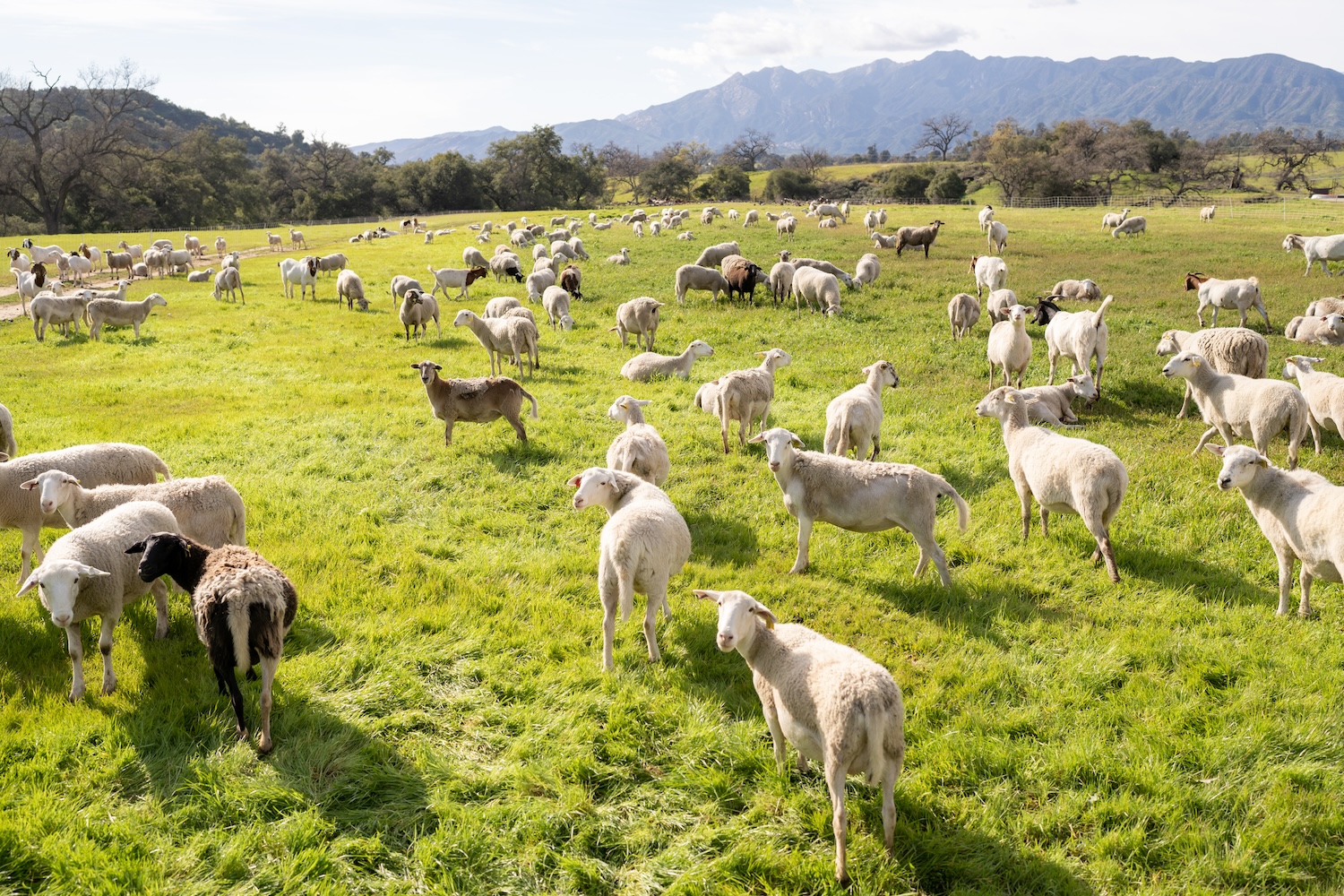
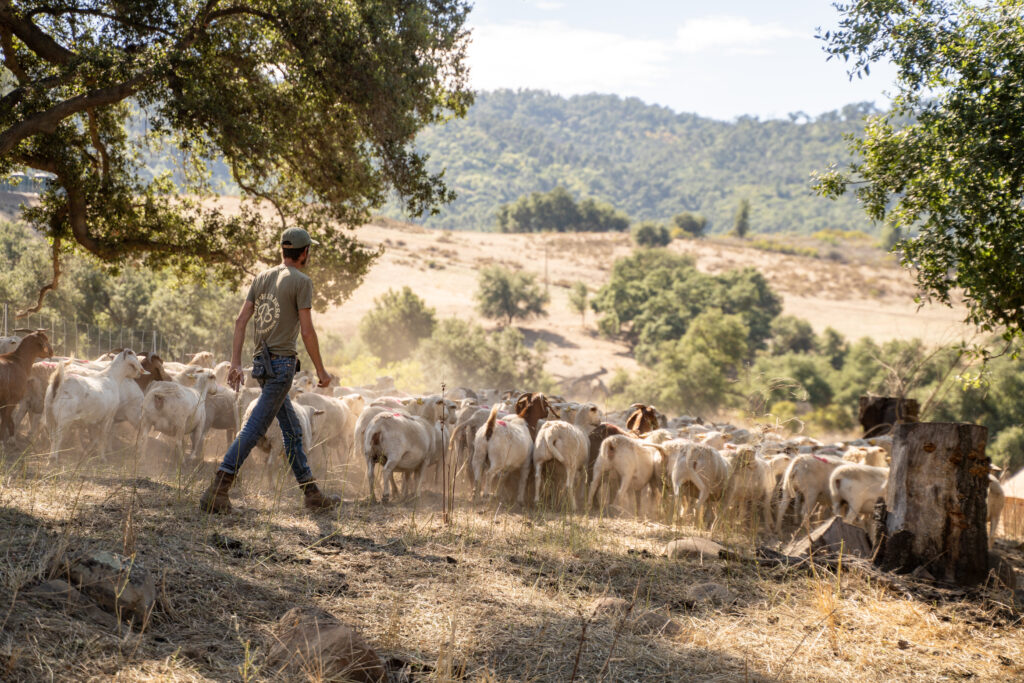
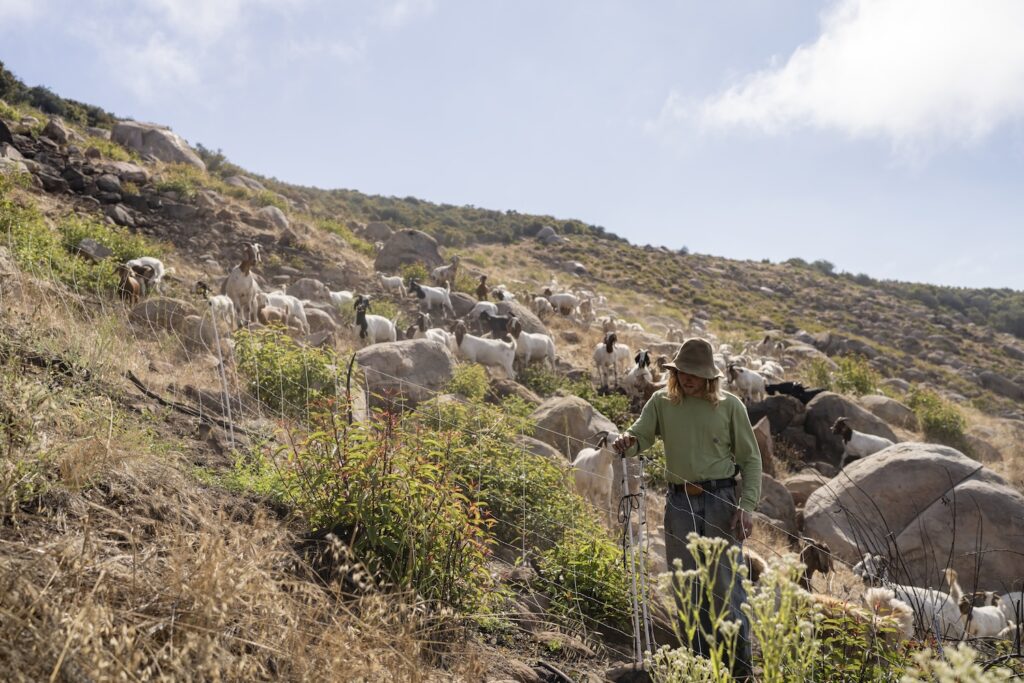
In the hills surrounding Ojai and Ventura County, the Shepherdess Land and Livestock Co. has become a central figure in this shift toward proactive stewardship. Led by shepherd Cole Bush, the organization utilizes bands of sheep and goats to perform "prescribed grazing." This is not traditional ranching but a highly specialized form of land management designed to reduce wildfire risk while promoting biodiversity.
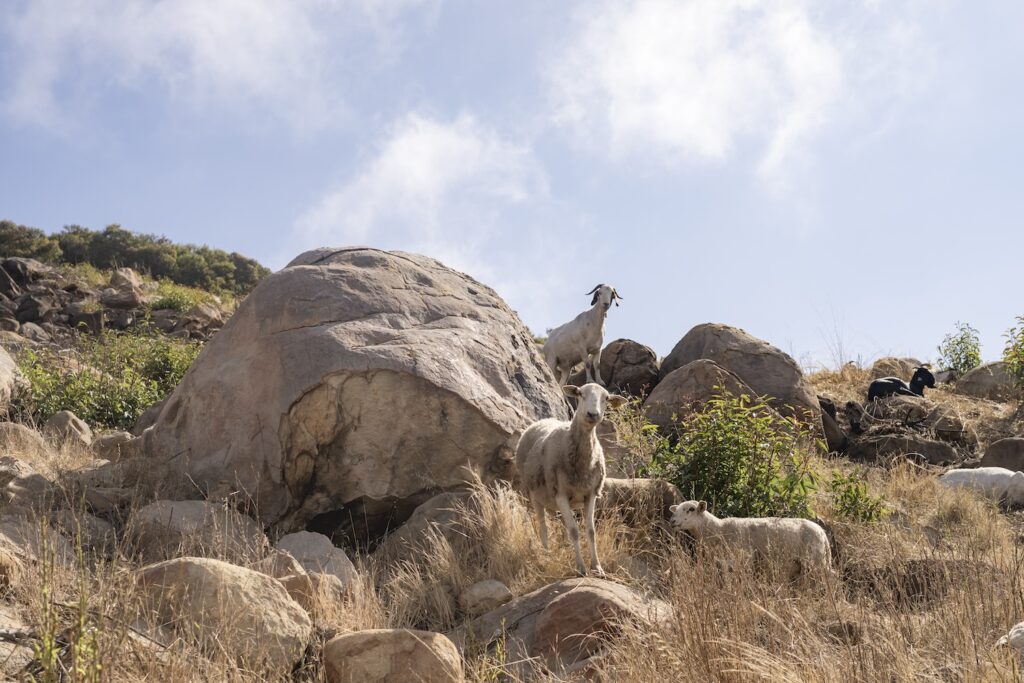
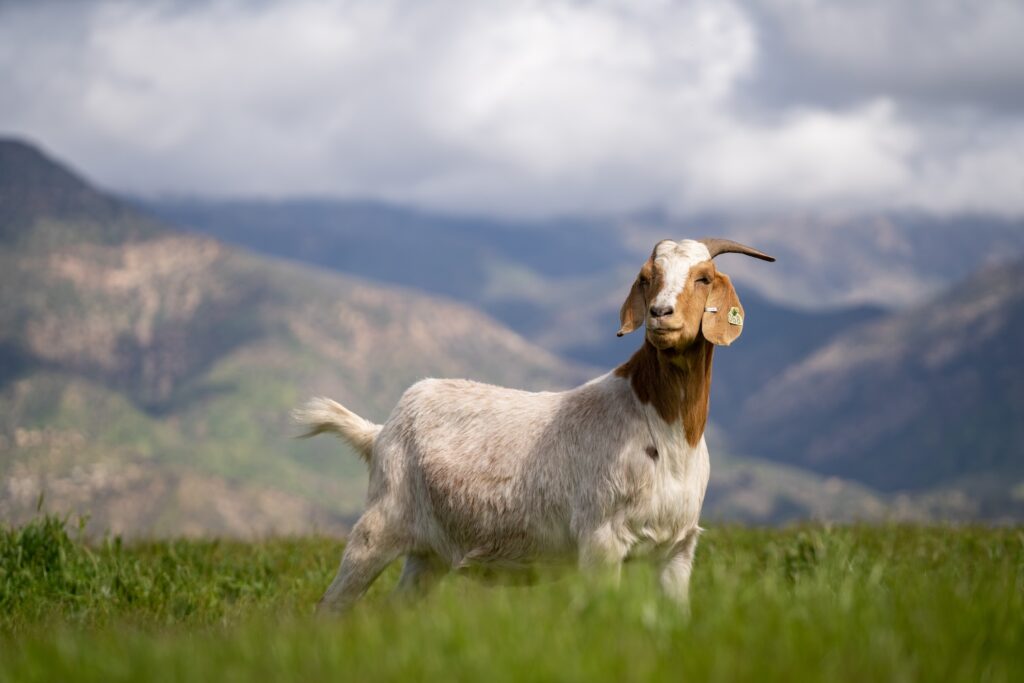
The methodology relies on the distinct biological roles of different livestock. Goats are "browsers," preferring the woody vegetation, shrubs, and low-hanging tree branches that often serve as "ladder fuels," allowing ground fires to climb into the forest canopy. Sheep, conversely, are "grazers" that focus on the lower grasses. By deploying these animals in a "combo punch," shepherds can tailor their impact to the specific needs of a landscape.
Before animals are introduced to a site, a comprehensive ecological assessment is conducted. This includes evaluating soil compaction, the presence of invasive species, and the proximity of wildlife corridors. The goal is systemic health rather than just the removal of grass. This approach is particularly effective in the Wildland-Urban Interface (WUI)—the high-risk zone where suburban developments meet wild spaces. Unlike heavy machinery or chemical herbicides, sheep and goats can navigate steep, technical terrain and utility corridors with minimal ecological disruption.
Chronology of Recent Crisis and Response
The urgency of this work is underscored by a timeline of increasingly destructive events in the region. The 2017 Thomas Fire, which burned over 280,000 acres in Ventura and Santa Barbara counties, served as a catalyst for new community-led resilience efforts. It demonstrated that traditional firebreaks were often insufficient against wind-driven embers.
In early 2025, the Madre Fire—the largest in the state that year—further tested the region’s infrastructure. It was during this period that the Ojai Herd and Horse Network was formed. When the Kenneth Fire erupted near Agoura later that year, the network proved vital. As emergency services focused on human life and property, experienced shepherds like Cole Bush were called upon to evacuate livestock from steep, smoke-filled canyons. These evacuations required a deep understanding of animal psychology; loud, panicked movements could cause a flock to scatter, leading to certain death. By applying the same principles of calm, rhythmic movement used in prescribed grazing, these teams were able to lead animals to safety under extreme pressure.
By 2026, the Sandy Fire in Ventura County further emphasized the need for active management. Areas that had undergone targeted grazing in previous seasons showed a marked difference in fire behavior, often allowing firefighters a "defensible space" to halt the flame front before it reached residential structures.
The Intersection of Recreation and Stewardship
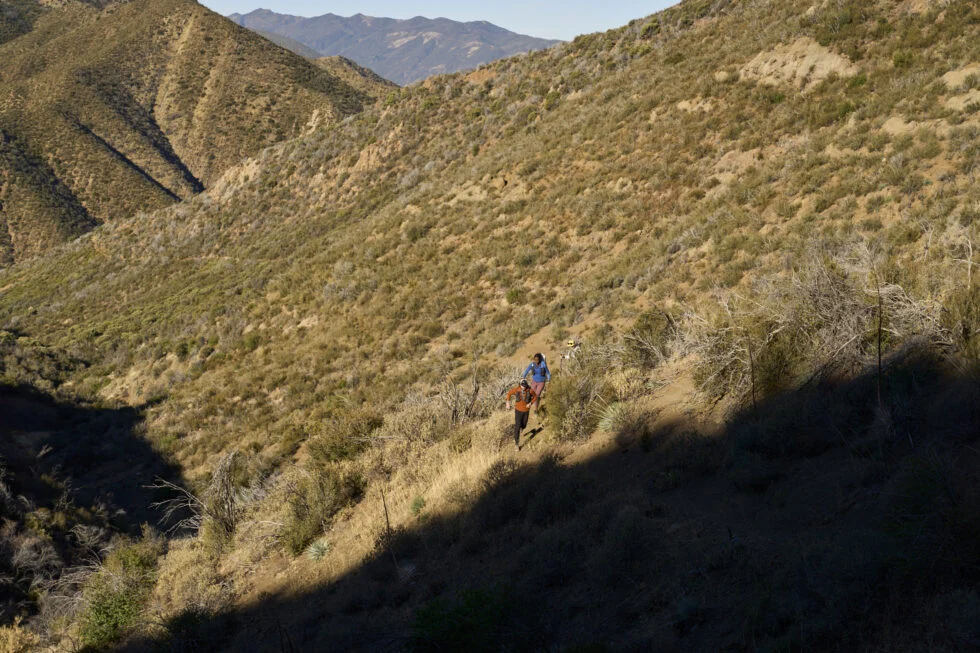
Southern California’s landscapes are not just fuel loads; they are some of the most heavily used recreation areas in the country. Millions of hikers, trail runners, and mountain bikers utilize the Santa Monica Mountains and the Los Padres National Forest annually. For these users, the changing ecology of the region has shifted the nature of outdoor culture.
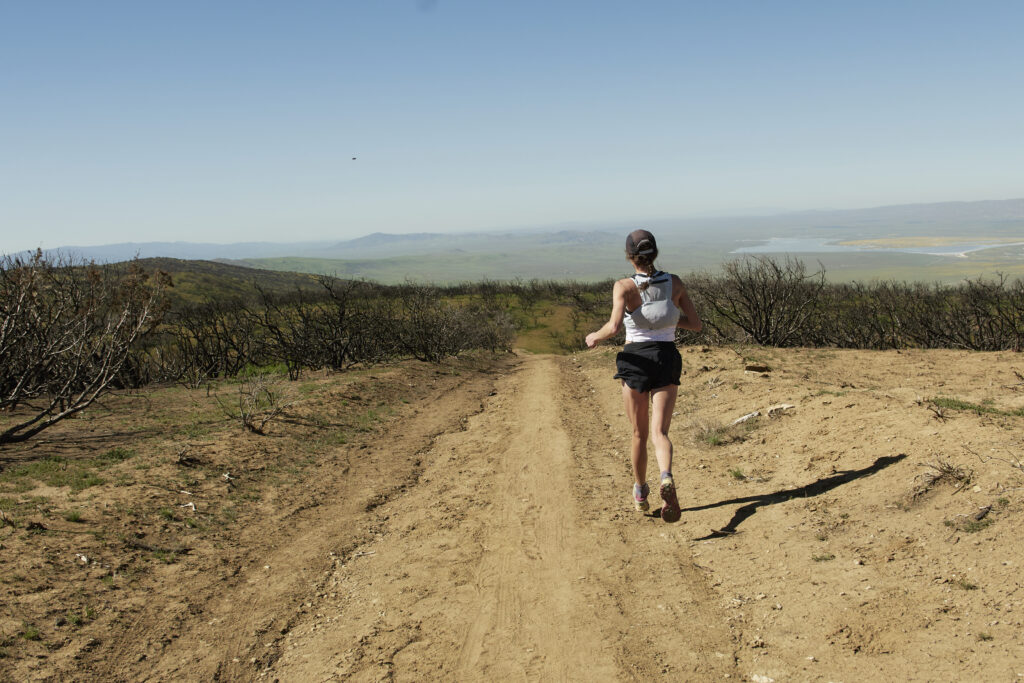
Trail runners, in particular, have become unexpected observers of ecological change. Moving through the landscape on foot at high frequencies, they often notice subtle shifts in vegetation and soil health that casual observers miss. Liam Pickhardt, a photographer and trail runner, notes that the "intimacy" of trail running creates a symbiotic reliance on the land. However, this relationship is increasingly interrupted by trail closures that can last years following a major burn.
There is a growing realization within the outdoor community that recreation cannot be separated from stewardship. Organizations like the Ojai Valley Fire Safe Council are working to bridge this gap. Kalli O’Connor, the council’s Assistant Director, emphasizes that wildfire resilience is a long-term cultural adaptation. It involves educating the public on why a hillside might be covered in sheep for a month, or why certain trails must be closed for prescribed burns. The "escape" that nature provides now requires active human intervention to remain viable.
Economic and Political Implications
The shift toward prescribed grazing and proactive fuel management is also driven by economic necessity. The insurance crisis in California has seen major providers withdraw from fire-prone regions, leaving many homeowners with few options. State-level policy is beginning to reflect this reality. Updated fire hazard maps and new "defensible space" regulations are forcing local governments to invest in land management strategies that go beyond the fire truck.
Prescribed grazing offers a cost-effective alternative to mechanical clearing, which can cost thousands of dollars per acre and often leads to soil erosion. Furthermore, grazing helps sequester carbon by promoting the growth of deep-rooted native perennials, which are more resilient to both fire and drought. This aligns with California’s broader climate goals, turning fire-prone hillsides back into functional carbon sinks.
Analysis of the Path Forward
The future of Southern California’s ecology is one of managed volatility. The era of "leaving it to nature" has passed, as the "nature" of the region has been fundamentally altered by global climate shifts and invasive biology. The reintroduction of grazing animals represents a return to a more resilient ecological model, but it requires a new generation of skilled practitioners.
Cole Bush and the Grazing School of the West are working to address this by training new shepherds in the "prescriptive approach." This involves more than just animal husbandry; it requires a working knowledge of botany, fire science, and community relations. As Bush notes, the "modern shepherd" is a form of activism—a way of quietly leading a movement toward land health from the back of the flock.
The success of these programs depends on continued collaboration between private landowners, public agencies, and local communities. Wildfire is no longer an occasional disaster to be survived; it is a permanent feature of the landscape that must be lived with. By restoring movement to the hillsides through targeted grazing, Southern California is attempting to reclaim a balance that was lost a century ago. The sheep and goats moving through the dry grass today are not just animals; they are the architects of a more resilient future, helping to ensure that the landscapes that define the region remain both beautiful and inhabitable for generations to come.
