

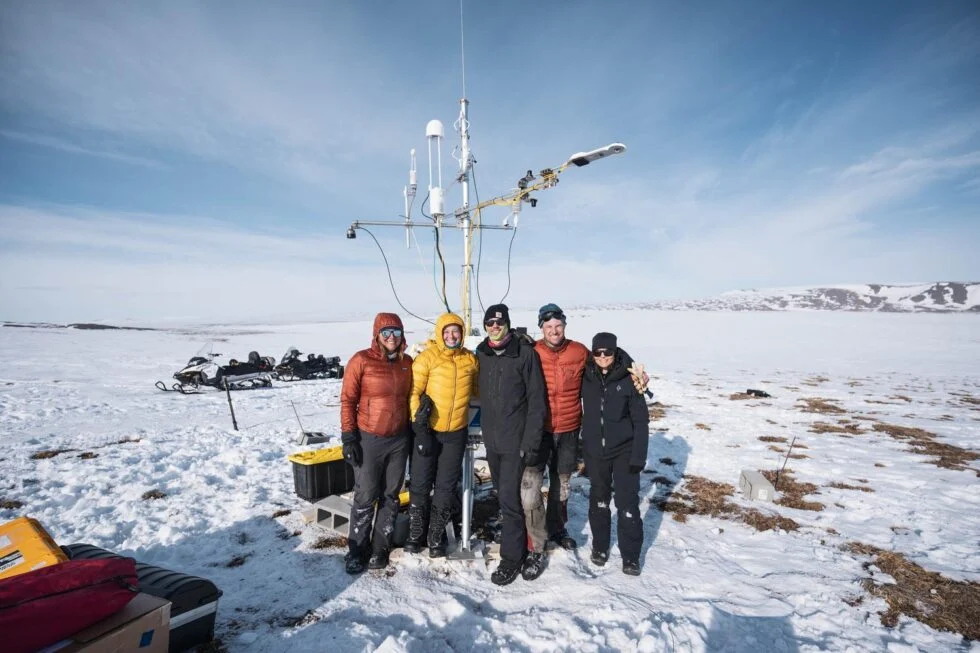
A collaborative scientific team representing the Protect Our Winters (POW) Science Alliance and the Woodwell Climate Research Center recently completed a high-stakes mission to the Toolik Field Station on Alaska’s North Slope to address a critical gap in global climate modeling. Led by Dr. Kelly Gleason, an assistant professor of eco-hydro-climatology at Portland State University, and Dr. Jenny Watts, an ecologist specializing in carbon flux, the expedition focused on the installation of the Arctic’s first specialized flux tower designed to monitor methane and carbon dioxide emissions specifically from permafrost thaw slumps. These geological features, characterized by the rapid collapse and erosion of frozen ground, represent a significant but often overlooked source of greenhouse gas emissions that could fundamentally alter the timeline of global warming.
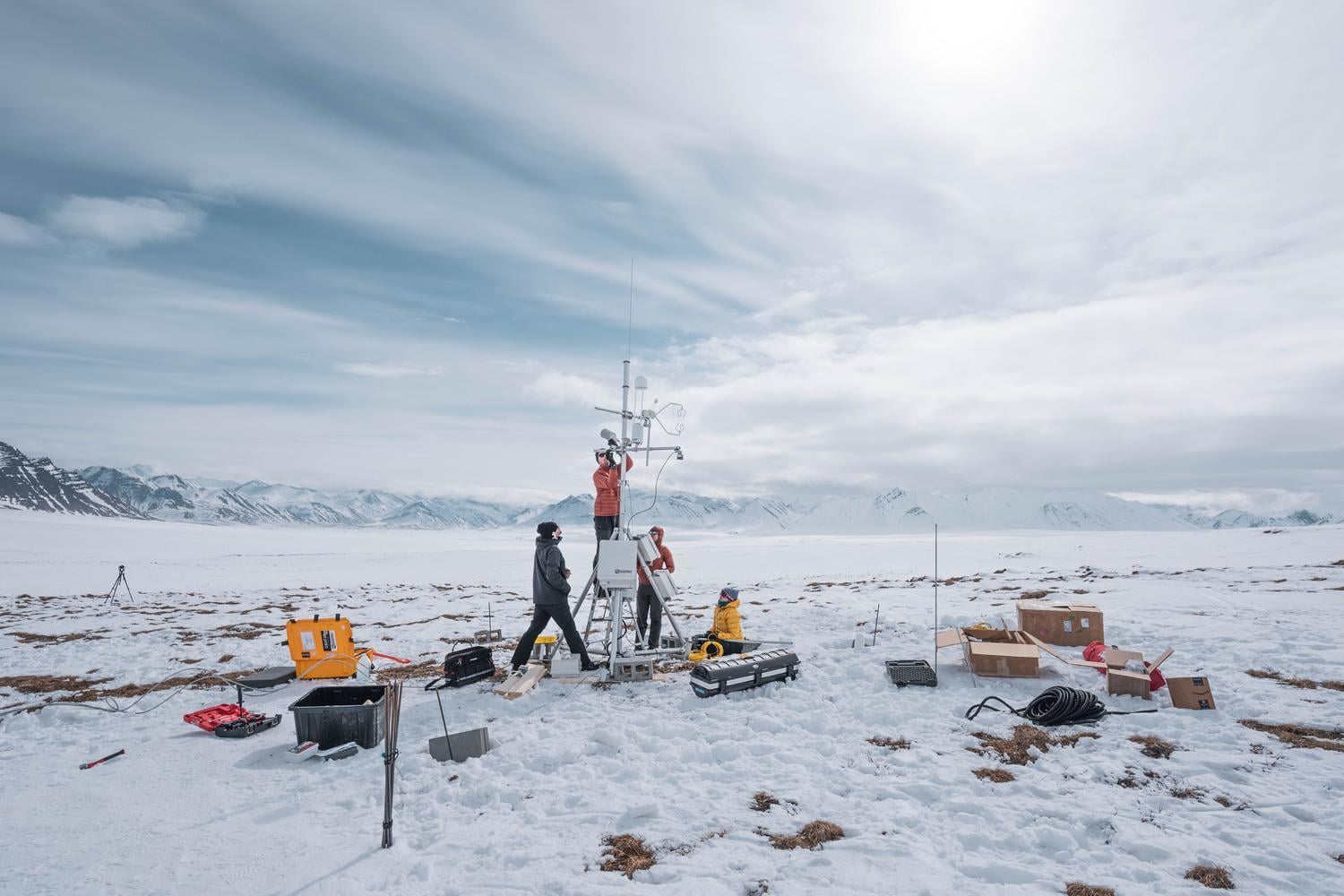
The mission took place against the backdrop of an Arctic region warming at nearly four times the global average rate. While traditional climate models account for gradual, surface-level permafrost thawing, they frequently omit the "abrupt thaw" events represented by thaw slumps. These slumps expose ancient organic material, frozen for millennia, to modern microbial decomposition, leading to a surge in atmospheric carbon release. The data collected by this new installation aims to quantify these emissions, providing a more accurate picture of the Arctic’s transition from a carbon sink to a carbon source.
The Logistics of Arctic Research: Deploying the Toolik Flux Tower
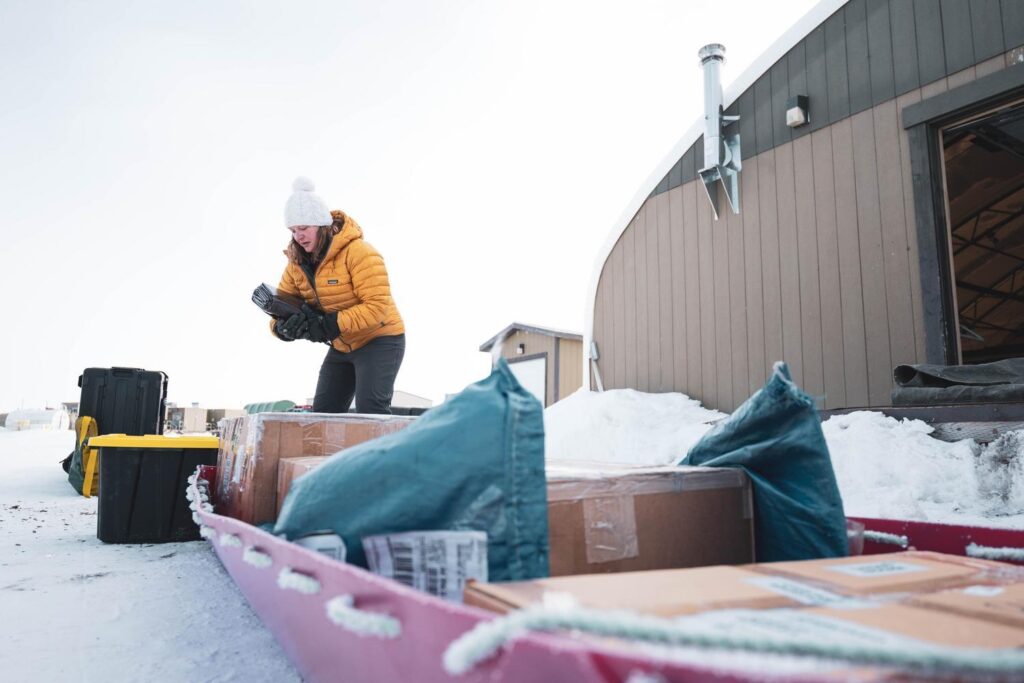
The deployment of scientific equipment in the Arctic involves immense logistical challenges, requiring researchers to operate in sub-freezing temperatures and navigate unstable terrain. The expedition team, which included scientists Kyle, Christina, and Kai alongside Gleason and Watts, utilized snowmachines and heavy-duty sleds to transport several tons of equipment across the tundra.
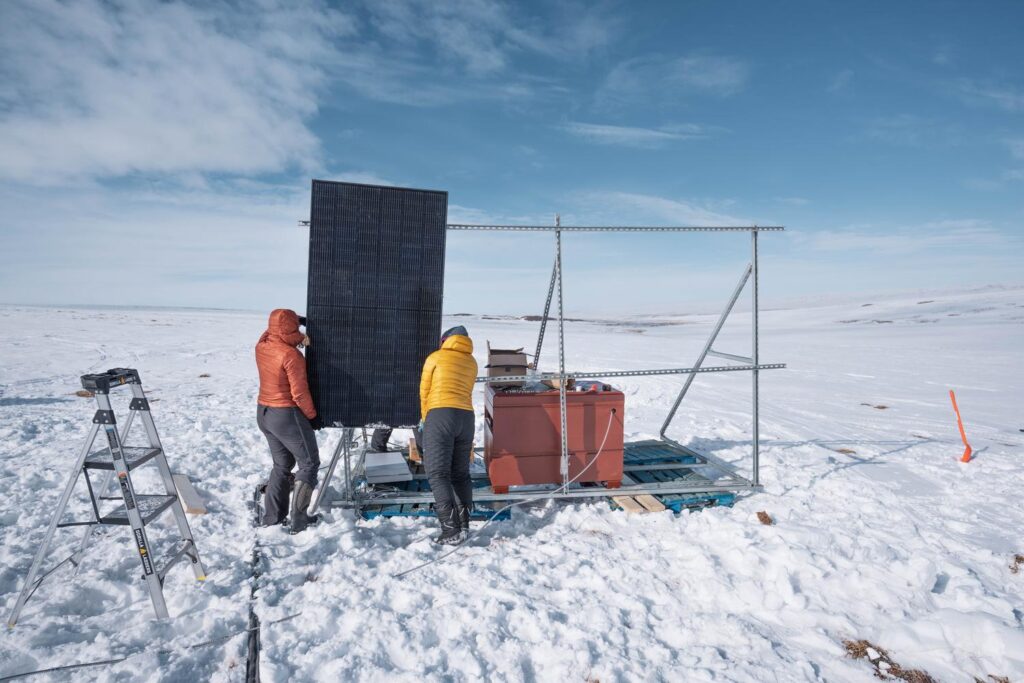
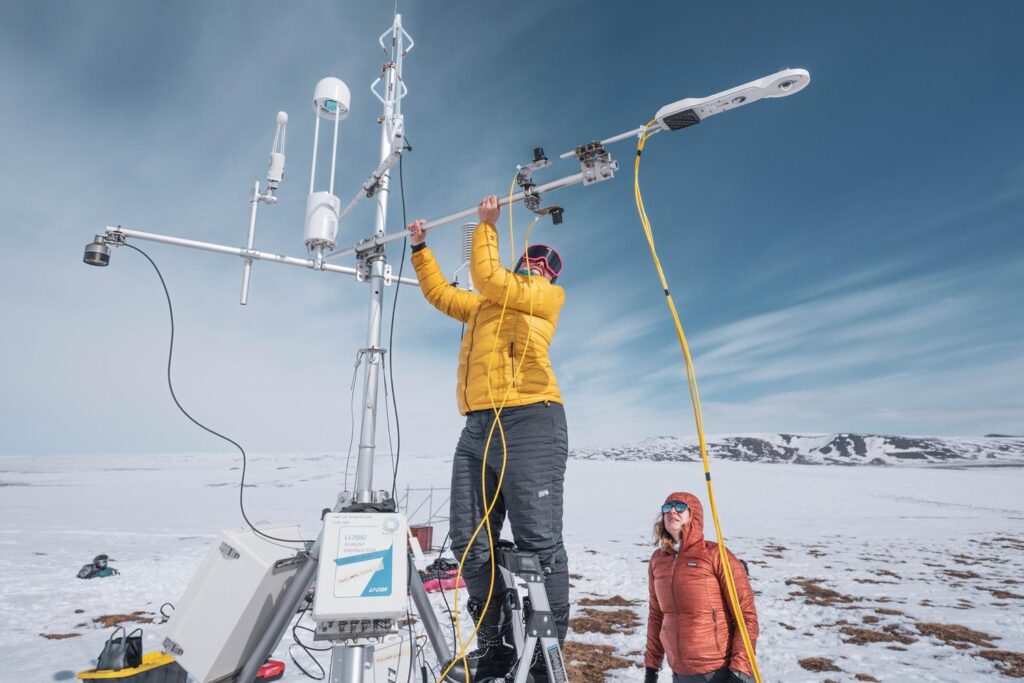
The centerpiece of the mission was a 15-foot-tall aluminum flux tower. To ensure the tower’s stability on the shifting, thawing ground of a permafrost slump, the team utilized a complex anchoring system involving guy-lines, cement anchors, and steel spikes. Powering the sensitive electronic instruments in a remote environment necessitated the transport of eight deep-cell batteries, each weighing over 100 pounds, supported by four large solar panels.
This electrical enclosure serves as the "brain" of the tower, housing sensors that detect the invisible movement of carbon dioxide (CO2) and methane (CH4) as they escape from the soil into the atmosphere. Methane is of particular concern to the researchers; while it persists in the atmosphere for a shorter duration than CO2, it is approximately 80 times more potent at trapping heat over a 20-year period.
Understanding the Mechanics of Permafrost Thaw Slumps
Permafrost is defined as ground that remains frozen for at least two consecutive years. In the North Slope of Alaska, this frozen layer can extend hundreds of meters deep, acting as a massive reservoir for organic carbon. Estimates suggest that Arctic permafrost stores nearly 1,500 billion tons of carbon—roughly double the amount currently present in the Earth’s atmosphere.
As temperatures rise, the ice wedges within the permafrost melt, leading to a loss of structural integrity. This results in "thaw slumps," which are steep, eroding cliffs that migrate backward as the ground collapses. Unlike the slow, uniform warming of the tundra, these slumps act as "hotspots" for greenhouse gas emissions. The exposure of deep, carbon-rich soil to oxygen and moisture accelerates the microbial breakdown of organic matter.
The Toolik Field Station tower is the first of its kind because it focuses specifically on the edge of these slumps. By measuring the "flux"—the rate of exchange—of gases between the earth and the sky at these specific points, the team hopes to provide the empirical data necessary to integrate abrupt thaw events into the next generation of Earth System Models (ESMs).
The Snow Paradox: Insulation vs. Albedo
A significant portion of Dr. Gleason’s research during the expedition focused on the complex role of snow in the Arctic energy balance. Traditionally, snow is viewed as a cooling agent due to its high albedo, or reflectivity. By bouncing solar radiation back into space, snow helps maintain the frigid temperatures of the polar regions. However, the expedition’s findings highlight a more troubling secondary effect: insulation.
As climate change alters atmospheric circulation, the Arctic is becoming "wetter." Shrinking sea ice leaves more open ocean water exposed, which evaporates and falls as increased inland snowfall. While a deeper snowpack might seem beneficial for reflectivity, it also acts as a powerful thermal blanket for the ground.
During the mission, Dr. Gleason conducted comparative analyses of snow pits to measure temperature profiles at varying depths. The data revealed a stark contrast:
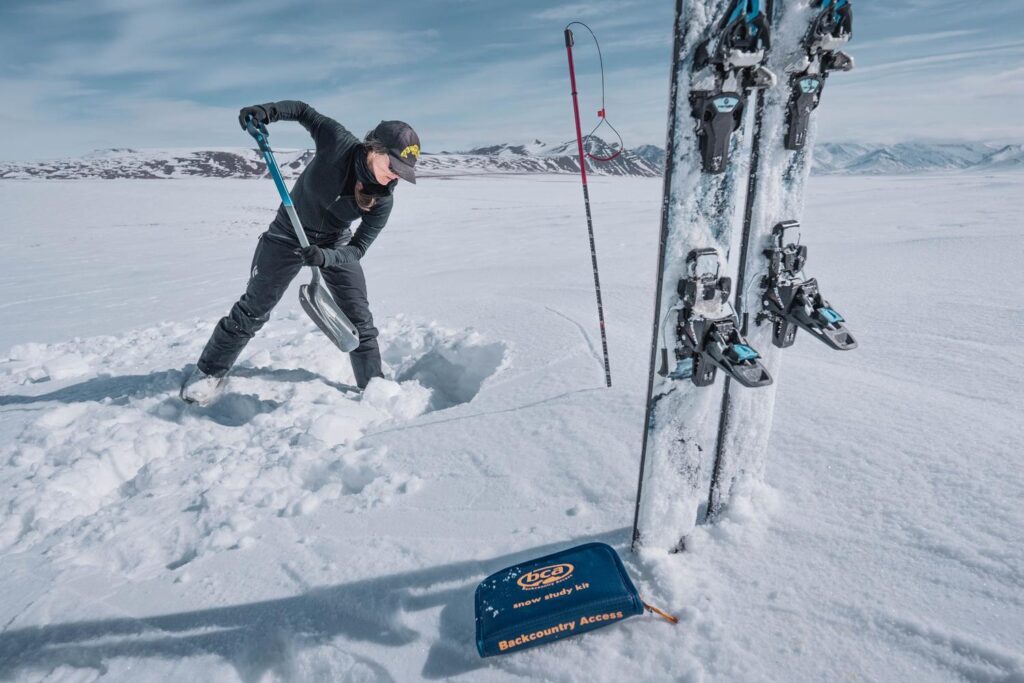
- Shallow Snowpack (57 cm): In areas with thinner snow, the ground remained significantly colder, with temperatures dropping to -10°C at the soil interface. This deep cold helps preserve the permafrost through the winter.
- Deep Snowpack (Approx. 2 meters): Beneath deeper drifts, the insulating effect was pronounced. Despite surface temperatures of -3°C, the temperature at the soil interface was significantly warmer, reaching nearly -3°C.
At -3°C, the soil is warm enough for certain microbial life to remain active, even in the heart of winter. This "overwintering" of microbial activity means that greenhouse gases can be produced and released year-round, hidden beneath the snow. This creates a positive feedback loop: more snow leads to warmer soil, which leads to more permafrost thaw, which releases more carbon, further warming the atmosphere and contributing to more snowfall.
The Role of the POW Science Alliance in Climate Advocacy
The expedition also serves as a high-profile example of the work conducted by the Protect Our Winters (POW) Science Alliance. This organization seeks to bridge the gap between complex academic research and public policy advocacy. By involving scientists like Dr. Gleason and Dr. Watts—who are both active researchers and outdoor enthusiasts—POW aims to humanize climate data and mobilize the outdoor community toward climate action.
"Science shows us what’s happening, but advocacy gives us a path forward," the researchers noted during the mission. The partnership with Woodwell Climate Research Center underscores a growing trend in the scientific community: the move toward "actionable science." The data from the Toolik tower will not only be published in peer-reviewed journals but will also be used to inform policy briefs aimed at reducing global carbon emissions.
Broader Implications for Global Climate Stability
The findings from the North Slope have implications that extend far beyond the borders of Alaska. The "Arctic Amplification" effect means that changes in the north drive weather patterns across the Northern Hemisphere. The thawing of permafrost is considered one of the most dangerous "tipping points" in the climate system. If permafrost emissions reach a certain threshold, they could trigger a self-sustaining cycle of warming that humans would be unable to stop, regardless of how much we reduce our own industrial emissions.
Current international climate agreements, such as the Paris Accord, rely on carbon budgets that may be overly optimistic if they do not account for the methane "burps" coming from thaw slumps. The work at Toolik Field Station is essential for refining these budgets. If the Arctic is contributing more carbon than previously thought, the window for global action to stay below the 1.5°C warming threshold may be narrower than currently estimated.
Chronology of the Expedition and Future Monitoring
The expedition began in early May, a period when the North Slope experiences 24-hour daylight but remains gripped by winter temperatures. The first week was dedicated to logistical staging at Toolik Field Station, a long-term research site managed by the University of Alaska Fairbanks.
Following the staging phase, the team spent several days in the field, utilizing the stable snowpack to transport the heavy flux tower components. The installation was completed in mid-May, with the sensors successfully coming online to transmit data via satellite.
The flux tower is designed to operate autonomously through the Arctic summer and into the following winter. Dr. Watts and the Woodwell team will monitor the data remotely, looking for spikes in methane release during the "active layer" thaw in July and August. Dr. Gleason will continue to analyze the relationship between snow depth and soil temperature, using remote sensing data to map snow-insulation risks across the wider North Slope.
Conclusion: The Urgent Need for Integrated Research
The mission to Toolik Field Station represents a vital step in the evolution of Arctic science. By moving beyond general observations and focusing on the specific mechanics of permafrost collapse, researchers are uncovering the hidden drivers of the climate crisis. The discovery that deep snow may be accelerating thaw rather than preventing it serves as a reminder of the non-linear and often counterintuitive nature of environmental change.
As the data from the new flux tower begins to flow, it will provide a clearer, albeit more sobering, picture of the Arctic in flux. The collaboration between the POW Science Alliance and academic institutions highlights the necessity of a multi-pronged approach to the climate crisis: rigorous data collection, clear communication of findings, and a relentless push for systemic policy changes to protect the world’s most vulnerable and vital ecosystems.
