

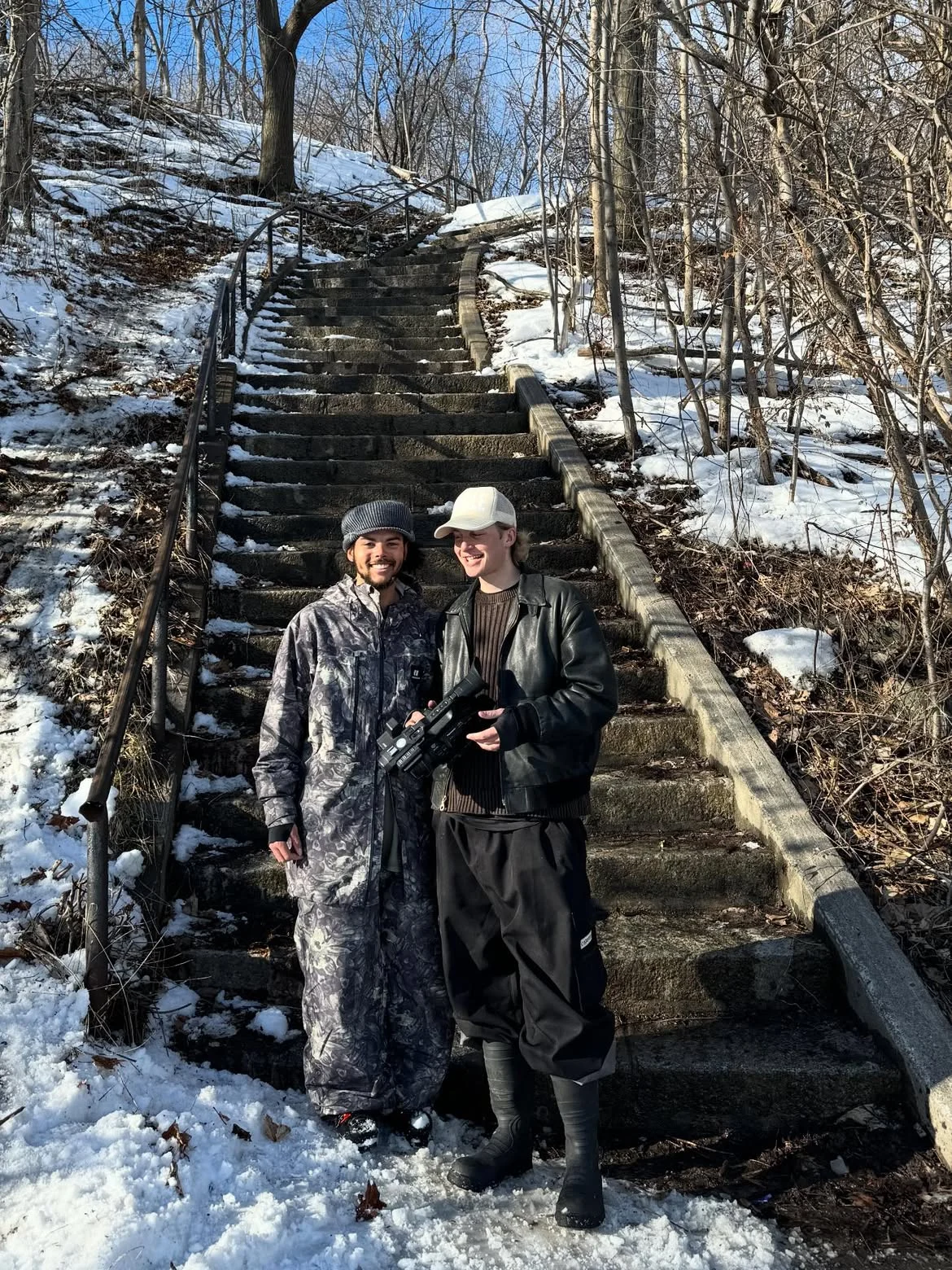
Ethan Cook, widely known as Ecook, has emerged as a singular and profoundly influential voice in contemporary ski filmmaking, fundamentally altering the aesthetic and narrative approach to documenting the sport. At just 22 years old, Cook has already left an indelible mark on some of the most critically acclaimed ski films of recent years, including Capeesh’s CATPISS and Armada’s Ornada. His work transcends mere documentation of athletic prowess, instead crafting immersive cinematic experiences that capture the raw, chaotic, and deeply authentic essence of the ski lifestyle. His recent relocation from the ski mecca of Salt Lake City to the vibrant cultural hub of New York City signals a new chapter for the young auteur, hinting at broader artistic ambitions while reinforcing his commitment to his unique vision within action sports.
A Distinctive Vision: Beyond the Tricks
What sets Cook’s films apart is not solely the breathtaking skiing, but the meticulous attention to the interstitial moments that define a ski season. His productions are characterized by fast cuts, gritty textures, and a narrative tapestry woven from elements often relegated to the cutting room floor in traditional ski films. Viewers are invited into the full spectrum of the experience: the mundane yet meaningful moments like parking lot hangouts, shared cigarette breaks, arduous road trips, inside jokes, and the quiet camaraderie that binds the community. This unfiltered approach imbues his films with a palpable sense of being "lived-in," a stark contrast to the often hyper-polished, trick-focused edits prevalent in the genre. It’s a style that feels as much a product of skateboarding’s raw, street-level aesthetic as it is of skiing, yet it has become unmistakably his own signature.

This distinctive visual language has resonated deeply within the action sports community, garnering widespread recognition and inspiring a new generation of filmmakers. Cook’s work effectively argues that the journey, the struggle, and the unscripted human interactions are as compelling, if not more so, than the gravity-defying feats themselves. His films offer a visceral, almost documentary-style immersion into the culture, making them accessible and engaging even to audiences outside the core ski demographic.
Formative Years: The Unexpected Path from Central Pennsylvania
Cook’s journey into the upper echelons of ski filmmaking began not in a traditional mountain town, but in the unassuming landscape of central Pennsylvania. This origin story diverges sharply from the typical trajectory of many ski filmmakers, most of whom grow up immersed in major ski regions. However, this seemingly unconventional environment provided him with a unique perspective and a foundational understanding of community within niche sports. He describes the local scene as small but tight-knit, fostering a sense of collective identity and mutual support among its participants.
Crucially, his proximity to Woodward Pennsylvania, a renowned action sports camp, proved to be a pivotal influence. At a young age, Cook secured an invitation to Woodward’s digital media program after winning a GoPro Instagram contest. It was there, around the age of 14 or 15, that he encountered Ty Evans, a legendary skateboard filmmaker known for iconic works like Fully Flared. Evans, whose films are celebrated for their innovative cinematography and narrative depth, recognized Cook’s nascent talent and invited him to Los Angeles for a week-long shooting experience. This mentorship, a rare opportunity for a budding filmmaker, provided invaluable exposure to professional production techniques and the artistic philosophy of a master storyteller. Cook continued to return to Woodward for internships each summer, steadily building his skills and network, demonstrating how early access to mentorship and dedicated facilities can accelerate career development in specialized fields.

The Leap to Salt Lake City and the Pursuit of the Unknown
The next significant turning point in Cook’s career arrived with the onset of the COVID-19 pandemic. While many faced uncertainty, Cook saw an opportunity. Deciding to complete his senior year of high school online, he took a bold leap, moving to Salt Lake City, Utah, at the age of 17. This decision, driven by a "fear of the unknown," allowed him to immerse himself fully in the ski scene without the constraints of traditional schooling. Salt Lake City, with its unparalleled access to diverse terrain and a thriving community of professional skiers, offered an ideal proving ground.
This period of couch-surfing and relentless networking became a crucible for his burgeoning career. Without established connections or a formal educational pathway, Cook’s ability to "just figure it out" became a defining characteristic. This self-reliance and willingness to embrace challenges, he notes, continue to fuel his artistic and personal growth. The move underscored the entrepreneurial spirit often required in independent action sports filmmaking, where initiative and adaptability are paramount to success. It provided him with an early advantage, allowing him to accumulate experience, forge relationships, and develop his signature style years ahead of peers who might have followed more conventional academic or industry routes.
The Filmmaking Philosophy: Authenticity Over Artifice

Cook’s filmmaking philosophy is deeply rooted in authenticity. He approaches each project with a blend of premeditated ideas and a keen eye for serendipitous moments. Rather than adhering to rigid shot lists, he allows narratives to unfold organically, trusting the chemistry between himself and the athletes he collaborates with. "I don’t really work off a shot list," he explains, highlighting a fluid, responsive approach to capturing content. This improvisational style, coupled with a shared aesthetic sensibility among his collaborators, ensures that the spontaneous, unscripted moments that truly define a ski season are never missed.
His work deliberately blurs the lines between documenting sport and creating standalone cinematic art. While proper documentation of the skiing is essential for technical credibility, Cook emphasizes the equal importance of crafting a film that feels distinct and engaging beyond its athletic content. His ultimate ambition is to produce ski films that captivate even those without a direct interest in skiing, a testament to his belief in the universal appeal of compelling storytelling. This dual objective of technical precision and artistic expression positions his work at the forefront of innovative action sports media.
The Indispensable Role of Music
For Cook, music is not merely a backdrop but the beating heart of a ski film. He posits that music is "probably the most important part," arguing that a strong soundtrack can elevate even technically weaker visuals or skiing, while a poor one can sink an otherwise brilliant performance. This conviction, again, draws heavily from his skateboarding influences, where classic skate videos are often remembered as much for their iconic musical scores as for their groundbreaking tricks.

The power of music, in Cook’s view, lies in its ability to evoke emotion, set tone, and create lasting memories. A carefully curated soundtrack can imbue raw footage with narrative depth and an emotional resonance that transcends the visual. This understanding aligns with broader cinematic principles where sound and music are integral to the overall viewer experience, often operating on a subconscious level to shape perception and recall. His commitment to this aspect of filmmaking highlights a comprehensive artistic vision that considers every element of the final product.
Navigating Industry Trends: Challenges and Optimism
Cook holds a nuanced, albeit somewhat critical, view on the current direction of ski filmmaking. He openly admits to concerns that the industry is "headed in the wrong direction," primarily due to the pervasive influence of short-form content platforms. The rise of TikTok, Instagram Reels, and similar formats has shifted focus towards bite-sized, instantly gratifying clips, often at the expense of longer, more narrative-driven projects. This trend, he notes, has led to fewer filmmakers committing to the significant time and resource investment required for full-length films.
His deeper concern, however, revolves around the potential marginalization of filmmaking itself. While he loves skiing, Cook confesses a profounder passion for "the filmmaking process, the editing, and creating something special with my friends." He fears that the emphasis on quick virality might devalue the craft and artistic integrity of long-form storytelling. This sentiment echoes a wider debate within creative industries about balancing commercial demands for rapid content production with the artistic desire for depth and longevity.

Despite these reservations, Cook remains cautiously optimistic. He points to brands like Capeesh and 686 that continue to invest substantial resources in full-length films, recognizing their intrinsic value to ski culture beyond immediate marketing returns. Their commitment suggests a counter-current within the industry that values artistic integrity and cultural contribution. "I think it’ll come back around," he states, expressing hope that the pendulum will eventually swing back towards an appreciation for more substantial cinematic works. This perspective offers a critical analysis of market forces versus artistic sustainability within niche sports media.
Inspiring the Next Generation and the Pursuit of Originality
Cook’s unique style has inevitably inspired a wave of younger filmmakers, a phenomenon he views with mixed emotions. He finds it "really cool" to see nascent talents approaching him, expressing enthusiasm for his work, and recognizing in them his own youthful ambition. He sees this as one of the most meaningful aspects of his career: inspiring others to create. The youth, he believes, are the future of the sport, and their creative output, even if derivative, is a positive force.
However, he also acknowledges the challenge of maintaining originality in an era where ideas can be easily replicated. While inspiration is welcome, the line between homage and imitation can sometimes blur, leading to a feeling that his unique contributions are being "devalued." This internal conflict – between the joy of inspiring and the desire for distinctiveness – is a common experience for influential artists. His resolution is simple: "the only answer is to keep creating," continually pushing boundaries and evolving his craft to stay ahead. This commitment to innovation is crucial for any artist seeking to maintain relevance and impact in a rapidly changing media landscape.

Challenges of a Niche Career and Future Aspirations
Building a career in a specialized field like ski filmmaking presents its own set of unique challenges. Cook highlights the lack of established mentorship pathways, noting that many who achieve significant success in ski filmmaking often transition to larger, more mainstream industries. This scarcity of experienced guides within the ski world makes it difficult for aspiring filmmakers to find direct advice tailored to their specific ambitions, forcing them, much like Cook himself, to forge their own paths. This structural challenge underscores the independent and often self-taught nature of many careers in action sports media.
Despite these hurdles, Cook’s ambition extends beyond the slopes. While committed to "stay in skiing; or at least action sports," his move to New York signals a desire for broader creative exploration. He aims to diversify his portfolio, venturing into related fields such as fashion, music, and art. This expansion reflects a natural evolution for a visual storyteller whose aesthetic transcends the confines of a single sport. New York City, a global epicenter for these industries, offers unparalleled opportunities for collaboration and creative growth, providing a fertile ground for his evolving artistic vision.
In essence, Ethan Cook embodies the spirit of an independent artist consistently chasing the unknown. His career trajectory, from the hills of Pennsylvania to the peaks of Salt Lake City, and now to the urban canyons of New York, is a testament to his unwavering dedication to crafting authentic narratives. By prioritizing the human element, embracing the unpolished reality of the ski experience, and continually innovating his visual and auditory storytelling, Ecook is not just documenting skiing; he is actively shaping its cinematic future, proving that true artistry lies in the courage to redefine conventions and pursue inspiration wherever it leads.
