

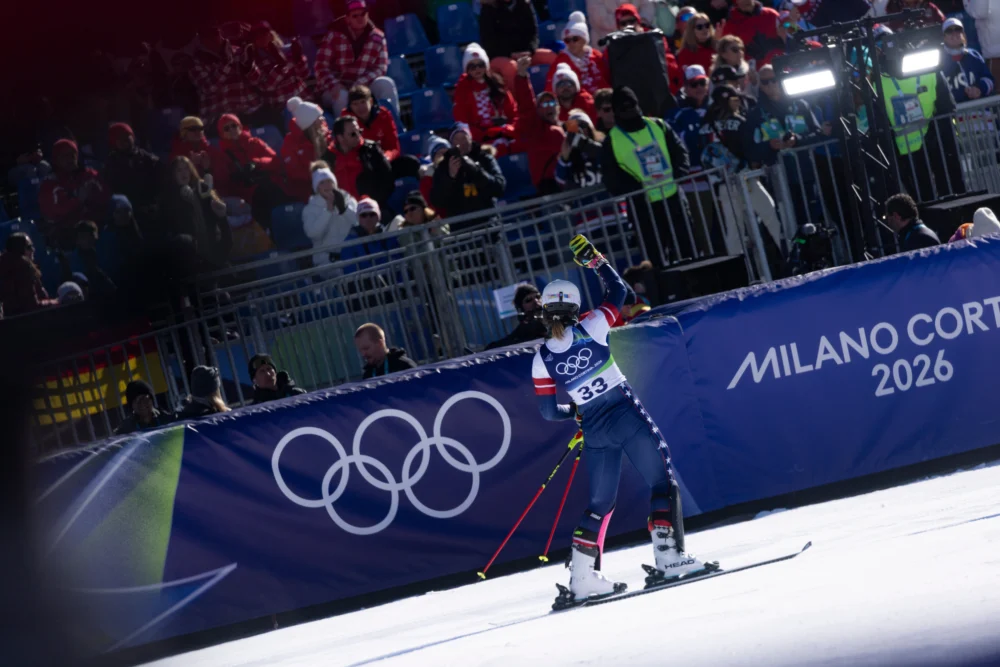
Olympic alpine skiing icon Lindsey Vonn recently disclosed the harrowing details surrounding a severe leg injury sustained during the Women’s Downhill event in Milan-Cortina, revealing that she narrowly avoided amputation due to a rare and life-threatening condition known as compartment syndrome. The incident, which occurred on the demanding World Cup circuit, transcended the typical challenges of elite ski racing, plunging Vonn into a medical emergency that required immediate and intricate surgical intervention to preserve her left leg.
The Catastrophic Fall and Immediate Aftermath
The high-stakes Women’s Downhill race in Milan-Cortina, a notoriously fast and challenging course, was the scene of Vonn’s devastating crash. While specific details of the fall itself remain under wraps, the immediate aftermath was clear: Vonn suffered a severe trauma to her left leg. As is standard protocol for high-speed skiing accidents, Vonn was swiftly airlifted from the racecourse. Initial assessments confirmed what she instinctively knew: her leg was profoundly damaged. "Everything was in pieces," Vonn recounted, a stark descriptor of the bone fragmentation and structural compromise her limb had endured. This initial diagnosis, however, only scratched the surface of the perilous situation developing within her leg.
Alpine ski racing, particularly the downhill discipline, is inherently fraught with risk. Athletes regularly reach speeds exceeding 120 kilometers per hour, navigating icy, uneven terrain with only fractions of a second to react. Injuries are common, ranging from sprains and fractures to more severe ligamentous tears, particularly to the knees. Vonn herself is no stranger to the medical tent, having battled numerous injuries throughout her illustrious career, including multiple anterior cruciate ligament (ACL) tears, tibial plateau fractures, and concussions. Her resilience in returning from these setbacks had become a hallmark of her legendary status, yet the trauma sustained in Milan-Cortina presented an entirely new and far more critical challenge.
The Emergence of Compartment Syndrome: A Race Against Time
The true gravity of Vonn’s injury became apparent as medical professionals evaluated her condition post-crash. She was diagnosed with compartment syndrome, a critical medical condition that, if left untreated, can lead to permanent nerve damage, muscle death, and in severe cases, the necessity of amputation. Vonn described the experience as "by far the most extreme and painful and challenging injury I’ve ever faced in my lifetime x100," emphasizing the unprecedented level of agony and concern she endured.
Compartment syndrome arises when excessive swelling or bleeding occurs within an enclosed muscle compartment, typically in the limbs. The fascia, a tough, inelastic membrane surrounding muscle groups, prevents expansion. As blood rushes to an injured area – in Vonn’s case, a severely fractured and traumatized leg – the internal pressure rapidly escalates. This increased pressure then compresses blood vessels, nerves, and muscles within the compartment, restricting vital blood flow. Without adequate blood supply, tissues begin to suffocate, leading to irreparable damage. Vonn succinctly explained the physiological process: "There’s too much blood and it gets stuck… it basically crushes everything." This "everything" encompasses critical nerves, tendons, and muscle tissues essential for the leg’s function and viability. Medical experts concur that Vonn’s case was exceptionally severe, with the internal pressure reaching levels that posed an immediate threat of limb loss had intervention been delayed. The window for effective treatment in compartment syndrome is typically very narrow, often just a few hours, highlighting the urgent nature of her medical emergency.
A Fortuitous Presence: Dr. Tom Hackett’s Critical Intervention
In a remarkable stroke of fortune, the immediate medical response was facilitated by the fortuitous presence and rapid action of Dr. Tom Hackett, Vonn’s long-standing orthopedic surgeon. The original article notes that Dr. Hackett was already "around and ready to jump in" because the Milan-Cortina event occurred only a week or two after a prior World Cup competition where Vonn had reportedly "destroyed her ACL." This crucial detail underscores the complex tapestry of Vonn’s injury history leading up to this point; her medical team was already on high alert due to a separate, recent knee trauma, inadvertently creating a critical window of immediate surgical readiness.
Dr. Hackett’s prompt arrival and decisive action were instrumental in saving Vonn’s leg. "Dr. Tom Hackett saved my leg," Vonn emotionally shared in an Instagram update, acknowledging the life-altering impact of his expertise. To alleviate the dangerous pressure caused by compartment syndrome, Dr. Hackett performed a fasciotomy, a procedure Vonn vividly described as "filleting" her leg. This involves making incisions through the fascia to release the pressure within the muscle compartments, thereby restoring blood flow and preventing further tissue damage. Following this critical, immediate intervention, Dr. Hackett then embarked on a delicate and extensive six-hour surgery to reconstruct the shattered bones of Vonn’s leg. This complex reconstructive surgery, combined with the urgent fasciotomy, ultimately prevented the necessity of amputation, securing the long-term viability and function of her limb. The precise timing and skill of Dr. Hackett and his team were paramount, turning a potentially career-ending and life-altering injury into a challenging but navigable path to recovery.
Lindsey Vonn’s Enduring Legacy and History of Resilience

Lindsey Vonn’s career is not merely defined by her record-breaking 82 World Cup victories, four overall World Cup titles, three Olympic medals (including a gold in downhill at the 2010 Vancouver Games), and eight World Championship medals. It is equally characterized by her unparalleled resilience in overcoming a litany of severe injuries. Throughout her two-decade career, Vonn has repeatedly demonstrated an extraordinary capacity to return from debilitating physical setbacks.
Her injury list is extensive, including:
- 2006: A serious crash at Lake Louise, Canada, resulted in a torn ACL in her right knee, forcing her out of the remainder of the season.
- 2007: Another crash in training led to a hyperextended knee and a bone bruise.
- 2013: A catastrophic crash at the World Championships in Schladming, Austria, resulted in a torn ACL and MCL in her right knee, along with a tibial plateau fracture. She underwent reconstructive surgery.
- 2013-2014: Complications from the 2013 injury, including re-tears of her ACL and further knee damage, forced her to miss the 2014 Sochi Olympics. She endured multiple surgeries.
- 2016: Sustained a hairline fracture in her left knee and later broke her arm in a training crash, requiring surgery.
- 2018: Suffered a hyperextended knee and bone bruise in her left knee.
- Prior to Milan-Cortina: The reported "destroyed ACL" in a preceding World Cup event.
Each of these setbacks tested Vonn’s physical and mental fortitude, often leading to questions about her ability to return to the elite level. Yet, time and again, she defied expectations, returning stronger and more determined. This established history of confronting and conquering severe physical trauma provides critical context for understanding the gravity of her Milan-Cortina injury; for Vonn to describe it as "x100" worse than anything she had faced underscores its unprecedented nature and the profound relief associated with saving her leg. Her career itself stands as a testament to the advancements in sports medicine and rehabilitation, as well as the sheer willpower of an athlete committed to pushing the boundaries of human performance.
A Long Road to Recovery and Global Outpouring of Support
Following the critical surgeries, Lindsey Vonn has been discharged from the hospital and has returned home to the United States to commence what will undoubtedly be a protracted and arduous rehabilitation process. Recovery from both severe bone fragmentation and compartment syndrome is complex, requiring extensive physical therapy to regain strength, mobility, and nerve function. The journey will test her renowned patience and determination, but she embarks on it with an overwhelming wave of global support.
The news of Vonn’s near-amputation and her subsequent escape from such a dire fate elicited a significant outpouring of encouragement from the international sporting community. Fellow athletes, coaches, and fans from various disciplines rallied around the skiing legend, offering messages of solidarity and inspiration. Among the most prominent figures to weigh in were football superstars Cristiano Ronaldo and Zlatan Ibrahimović, who understand the unique pressures and physical demands of elite sports.
Cristiano Ronaldo, renowned for his own rigorous training and recovery regimens, posted a heartfelt message: "Champions are defined by the moments they win, and the moments they refuse to give up. @lindseyvonn the mountains you conquered were never bigger than the strength you carry. Keep fighting. Legends always rise." Ibrahimović, known for his indomitable spirit, also offered his support, echoing the sentiment of resilience that defines Vonn’s career. These messages from sporting titans underscore the respect and admiration Vonn commands across the athletic world, recognizing her as an embodiment of perseverance. The collective voice of support provides a powerful emotional boost for Vonn as she navigates the demanding path ahead, reminding her that her fight is watched and championed by many.
Broader Implications for Athlete Safety and Medical Preparedness
Lindsey Vonn’s harrowing experience serves as a stark reminder of the inherent dangers in high-speed sports and the critical importance of immediate, expert medical intervention. While advancements in protective gear and course design have reduced certain risks in alpine skiing, the forces involved in a high-speed crash remain immense, capable of inflicting catastrophic injuries. This incident highlights the need for continued research into injury prevention, particularly in identifying and mitigating conditions like compartment syndrome that can arise from seemingly standard trauma.
Furthermore, the case underscores the paramount importance of robust medical teams and protocols at elite sporting events. The fortunate timing of Dr. Hackett’s availability, directly linked to Vonn’s prior injury, proved to be a critical factor in preserving her leg. This situation emphasizes the value of dedicated medical professionals who are not only highly skilled but also deeply familiar with an athlete’s specific medical history and physiological responses. The rapid diagnosis and execution of a life-saving fasciotomy, followed by complex reconstructive surgery, demonstrate the pinnacle of sports medicine and trauma care. As sports continue to push the boundaries of human performance, ensuring that medical preparedness matches the evolving risks remains a crucial imperative for athlete safety and well-being.
Lindsey Vonn’s latest ordeal is more than just another chapter in her storied history of overcoming adversity; it is a profound testament to her unwavering spirit and a chilling illustration of the fine line between triumph and tragedy at the highest echelons of professional sport. As she embarks on her recovery, the world watches, confident that if anyone can navigate this challenging terrain, it is a legend like Lindsey Vonn.
