

Professional snowsports instruction, a cornerstone of safety and progression on the slopes, is continually evolving to meet the diverse needs of learners. At the heart of this evolution lies the persistent challenge faced by instructors: how to effectively diagnose movement patterns, select appropriate teaching tools from a vast repertoire, and ensure student progress aligns with their personal goals. This critical pedagogical dilemma is addressed in a significant contribution from J. Scott McGee and Jacob Crawford, featured in the Fall 2025 issue of 32 Degrees, the official publication of the Professional Ski Instructors of America and American Association of Snowboard Instructors (PSIA-AASI). Their work proposes a dynamic reinterpretation of the foundational Static, Simple, Complex, Applied (SSCA) framework, offering instructors a more nuanced and powerful methodology for movement analysis and the introduction of new skills.
The Foundational SSCA Framework: A Pillar of Snowsports Pedagogy
The SSCA framework, detailed within the authoritative Teaching Snowsports Manual (a key resource for PSIA-AASI certified instructors), serves as a structured, four-phase process for introducing new movement patterns to students. This progressive model is designed to systematically break down complex skills, making them more accessible and manageable for learners. Each phase builds upon the last, carefully managing cognitive load and fostering a sense of accomplishment.
The Static phase is the initial step, where a new movement is introduced without the added challenge of sliding on snow. This allows students to focus intently on the physical sensations and mechanics of the movement in a stable environment. By eliminating the distractions of balance, speed, and gravitational forces, learners can develop a foundational understanding and proprioceptive awareness of the desired action. Examples might include practicing ankle flexion and extension while standing still, or simulating hip angulation in a stationary position. The objective here is pure motor learning, detached from performance anxiety.
Following the static introduction, the Simple phase integrates the newly learned movement into a controlled, low-complexity sliding environment. This typically involves a traverse, a straight run, or a single turn. The purpose is to bridge the gap between static understanding and dynamic application, allowing students to experience the movement while interacting with the snow surface. This phase is crucial for building comfort and confidence with the new movement in a real-world, albeit simplified, context, before introducing the complexities of linking turns. It provides immediate feedback on how the movement translates to ski performance without overwhelming the learner.
The Complex phase marks the transition to incorporating the new movement into linked turns. This is where students begin to practice and gain ownership of the skill within the rhythm and flow of continuous skiing. Drills and activities in this phase are designed to reinforce the movement pattern in a more challenging, yet still structured, environment. The goal is to solidify the skill, making it repeatable and adaptable across various turn shapes and speeds. This phase often involves specific drills that isolate and exaggerate the desired movement within a turning context, allowing for deliberate practice.
Finally, the Applied phase brings the learning experience full circle, integrating the acquired skill into the student’s "normal" skiing. This phase focuses on guiding practice in terrain that naturally reinforces the learned movements, allowing students to use the new skill intuitively and effortlessly. The objective is to ensure that the skill becomes an ingrained part of their repertoire, enhancing their overall performance and enjoyment without conscious effort. It’s about transferring the learned skill from a deliberate, drilled context to spontaneous, fluid skiing.
A Dynamic Reinterpretation: McGee and Crawford’s Innovation
While the linear progression of SSCA is an undeniably powerful teaching tool, McGee and Crawford propose a more dynamic application, viewing the four phases not merely as a fixed sequence, but as flexible lenses through which to structure both movement analysis (MA) and instructional design. This innovative perspective empowers instructors to tailor their approach more precisely to individual student needs, moving beyond a one-size-fits-all methodology.
Applied Phase as the Initial Diagnostic Lens:
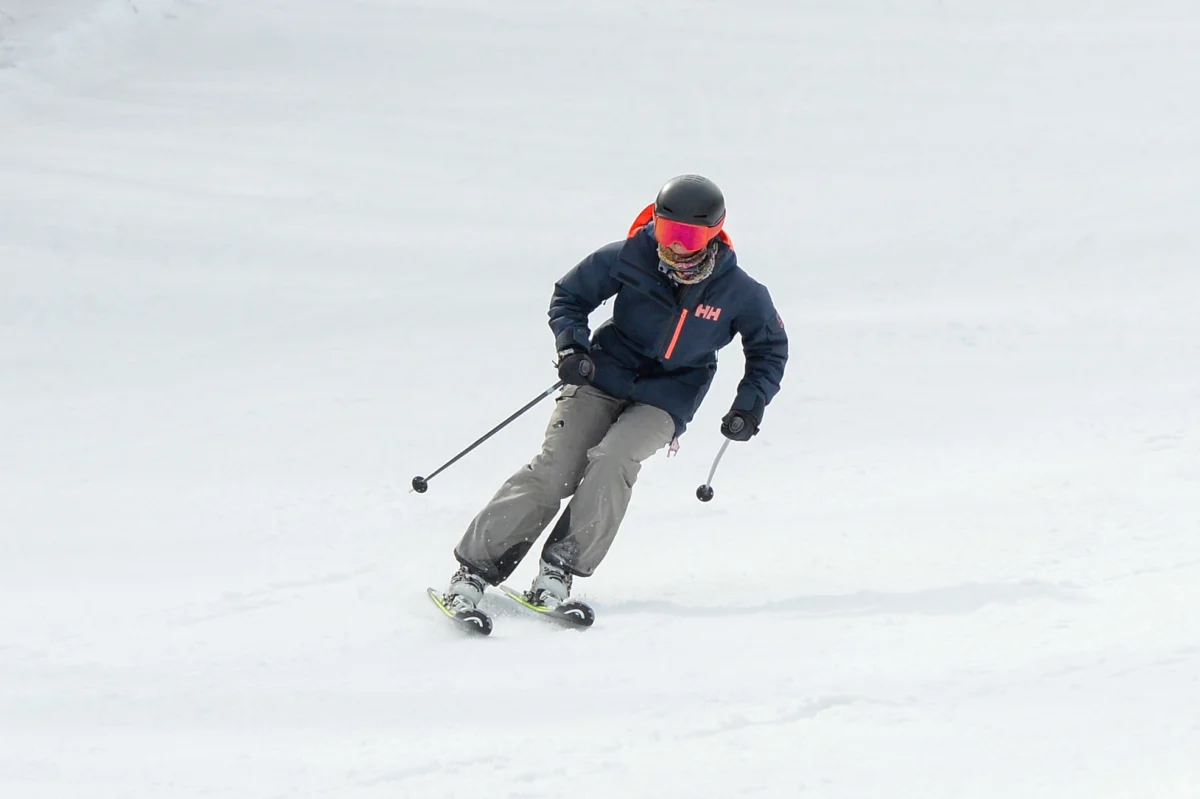
The dynamic view begins by recommending that movement analysis be conducted through the lens of the applied phase. Instructors observe students performing the turns they wish to improve, in the terrain they aim to ski better—be it basic parallel turns, carving, or bump skiing. This initial observation in an "applied" setting is critical because it directly aligns the instructor’s assessment with the student’s stated goals. By observing natural skiing, instructors can identify overarching patterns and performance gaps that are most relevant to the student’s desired outcomes. This approach ensures that the subsequent instructional focus is highly relevant and motivating for the student, as they immediately see how the analysis connects to their personal aspirations. Furthermore, using this initial applied activity as a benchmark allows instructors to easily highlight progress at the end of a lesson, demonstrating tangible improvement by repeating the same turns. This feedback mechanism is a powerful motivator for learners.
Static Phase for High-Resolution Diagnosis:
Once initial observations are made through the applied lens, revealing broader areas for improvement, McGee and Crawford advocate for employing the static phase as a "higher resolution" lens for precise diagnosis. The challenge after an applied observation is that even a short list of identified issues can contain too many movements to address effectively in a single lesson. The static phase, therefore, becomes instrumental in isolating specific cause-and-effect relationships between individual body movements and their impact on ski performance.
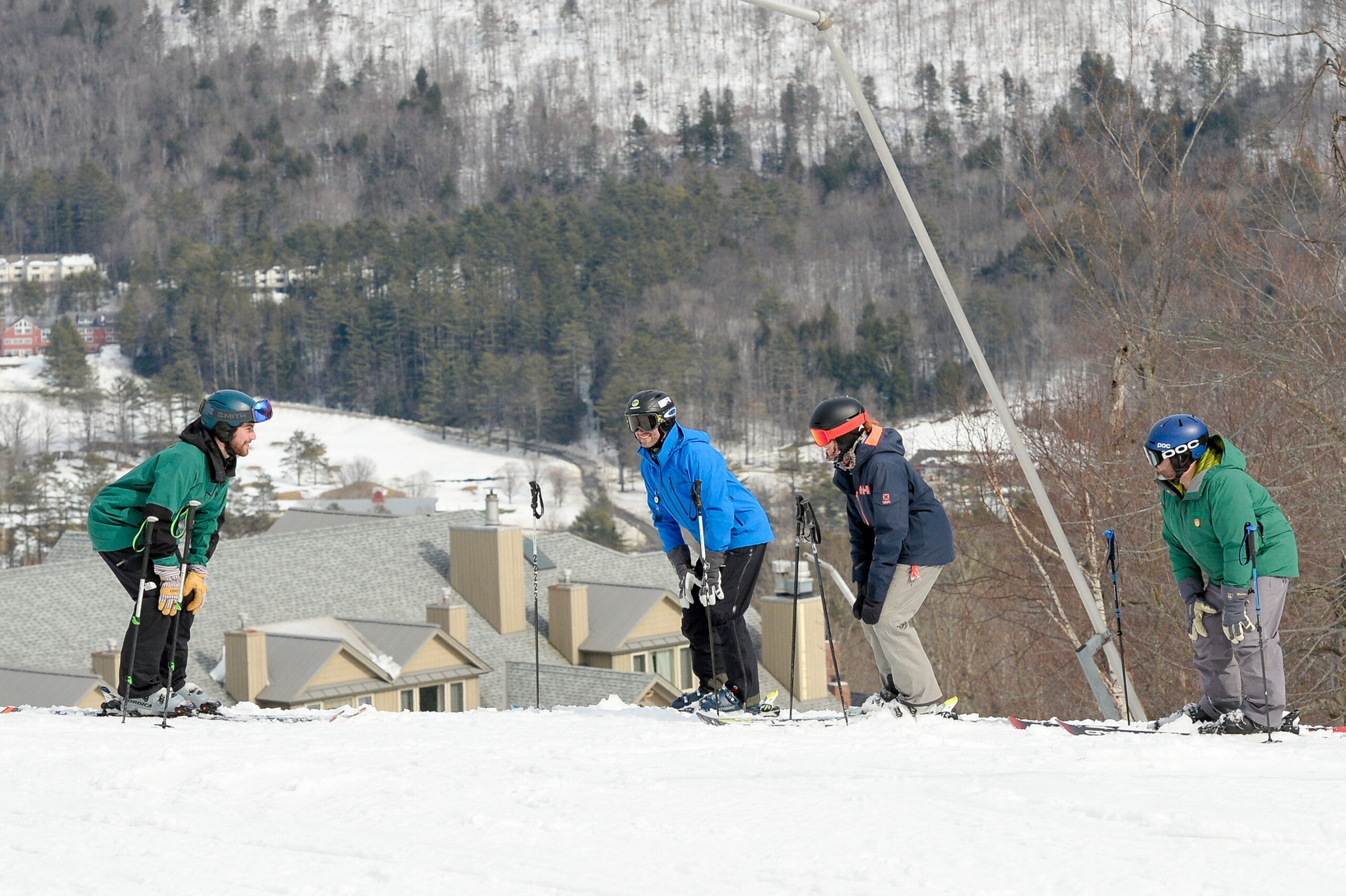
The core question an instructor asks here is: "Can I replicate this movement while standing still?" If a complex issue cannot be reduced to a single, isolatable movement in a static context, it likely means the underlying cause-and-effect relationship has not yet been sufficiently pinpointed. For instance, if an instructor observes a student achieving different edge angles on their inside and outside skis, with legs not tipped symmetrically—a common issue in carving—the static phase allows for the isolation of the leg-tipping movement. By having the student stand still and practice tipping their knees using their hands, the direct relationship between leg articulation and ski edge angle becomes clear and palpable. While some dynamic positions might be untenable statically, the principle remains: the observed movement should be reducible to a fundamental action that can be practiced and understood without motion. This isolation helps both instructor and student focus on the precise kinetic chain involved, significantly enhancing comprehension and retention. This granular analysis is crucial for developing targeted interventions.
Bridging the Gap: Simple and Complex for Skill Acquisition:
With the specific movement to be changed now precisely identified through the applied and static lenses, the instructor turns to the complex and simple phases for skill acquisition. The Complex phase is where the instructor draws upon their "bag of tricks"—a repertoire of drills and activities designed to emphasize the fundamental movement pattern in a turning context. An example might be "railroad track arcs," a drill that exaggerates the desired leg tipping and angulation, encouraging consistent edge angles in linked turns. This phase focuses on practicing the new movement within a dynamic, yet still controlled, turning environment, fostering ownership and fluency.
The Simple phase then acts as a critical bridge, reducing the chosen complex activity to its most basic elements—a single turn, a traverse, or a straight run. This step is vital for clearly connecting the complex drill back to the new movement identified in the static phase. If the student struggles with the complex drill, reverting to the simple phase allows for re-focusing on the core movement without the added demands of linking turns. This iterative process ensures that the student can isolate and refine the movement, building confidence before re-integrating it into more complex scenarios. It’s a feedback loop that allows for immediate adjustment and reinforcement, preventing frustration and promoting efficient learning.
Chronology and Context within Snowsports Instruction
The SSCA framework itself has been a cornerstone of PSIA-AASI instructional methodology for many years, evolving through successive editions of the Teaching Snowsports Manual. This manual is regularly updated to reflect advancements in pedagogical theory, sports science, and practical on-snow experience. The Teaching Snowsports Manual, often updated every few years, ensures that instructors have access to the most current and effective teaching practices. The Fall 2025 publication of McGee and Crawford’s article in 32 Degrees, alongside a dedicated episode of the "First Chair Podcast" titled "Build Better Lessons: A Smarter Way to Create Progressions," marks a significant moment in the continued refinement and promotion of these teaching principles. It highlights PSIA-AASI’s ongoing commitment to empowering its members with adaptable and sophisticated instructional tools. This timing suggests a deliberate effort to disseminate advanced applications of established methodologies to a broad audience of certified instructors, preparing them for the evolving demands of snowsports education.
Inferred Statements and Broader Implications
While direct quotes from specific officials are not provided in the original excerpt, the nature of the publication and the content itself allows for logical inference regarding its reception and implications within the snowsports instruction community.
From PSIA-AASI Leadership/Educators: "This dynamic interpretation of the SSCA framework by J. Scott McGee and Jacob Crawford exemplifies our association’s commitment to advancing snowsports education," a hypothetical statement from a PSIA-AASI education director might read. "It empowers our instructors to move beyond rigid teaching scripts, fostering a more intuitive and student-centric approach to movement analysis and skill development. This refinement ensures that our certified professionals can deliver even more personalized and effective lessons, ultimately enhancing the student experience and accelerating their learning curve."
From Experienced Instructors: Seasoned instructors, who often juggle a ‘veritable cornucopia of drills,’ would likely welcome this structured yet flexible approach. An instructor might reflect, "I’ve definitely felt that moment of knowing what I want a student to change but struggling with how to make it happen efficiently. Using the Applied and Static phases as diagnostic lenses first, before diving into drills, fundamentally changes how I plan and execute lessons. It’s a game-changer for precision and student buy-in."
Analysis of Implications:
The implications of McGee and Crawford’s dynamic SSCA model are far-reaching.
- Enhanced Instructor Effectiveness: By providing a structured yet flexible framework, instructors can more quickly and accurately diagnose student issues, leading to more targeted and effective interventions. This reduces trial-and-error teaching and increases instructional efficiency.
- Improved Student Learning Experience: Students benefit from a clearer, more personalized learning path. The ability to isolate movements statically helps them understand the "why" behind changes, while starting with their goals in the applied phase keeps them engaged and motivated. This leads to faster progress and a more rewarding experience on the snow.
- Professional Development and Standardization: This refined approach contributes to the ongoing professionalization of snowsports instruction. It provides a common language and methodology for instructors across the globe, facilitating knowledge sharing and elevating teaching standards within PSIA-AASI and potentially other international instruction bodies.
- Transferability of Principles: The underlying pedagogical principles of breaking down complex skills, isolating movements for focused practice, and gradually integrating them into performance are not unique to snowsports. This dynamic SSCA model offers a template that could be adapted and applied to skill acquisition in a wide array of other sports, arts, and technical disciplines, highlighting its universal educational value.
- Data-Driven Instruction (Future Potential): While not explicitly data-driven in the article, the emphasis on precise diagnosis and clear cause-and-effect relationships lays a foundation for future integration with biomechanical analysis tools and performance data, further refining the instructional process.
In conclusion, the dynamic application of the Static, Simple, Complex, Applied (SSCA) framework, as articulated by J. Scott McGee and Jacob Crawford, represents a significant evolution in snowsports instruction. By offering instructors a powerful and flexible methodology for movement analysis and skill acquisition, it promises to enhance teaching effectiveness, optimize the student learning experience, and further solidify the pedagogical standards of professional snowsports education. This approach moves beyond mere drill selection, empowering instructors to become more adept diagnosticians and facilitators of profound and lasting skill development on the slopes.
