

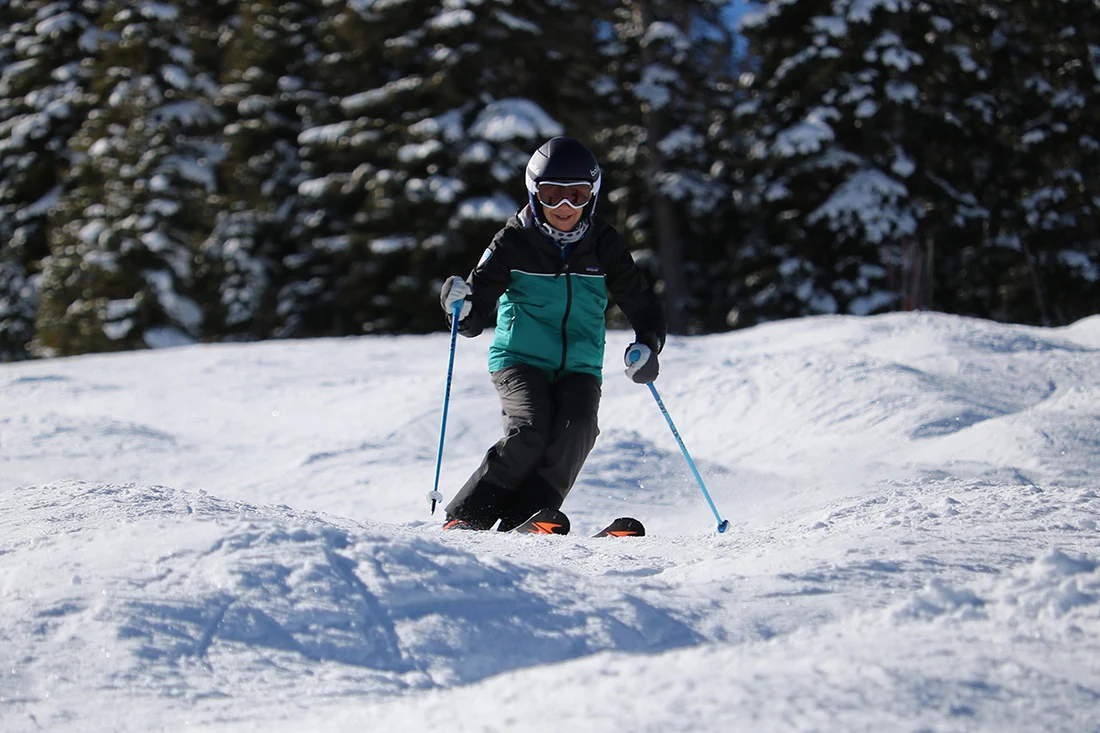
The instructional strategy known as mirroring, defined as copying another individual with the deliberate intent of understanding their actions and perspectives, is emerging as a cornerstone of best practices in teaching and learning across diverse fields, particularly within the dynamic realm of snowsports education. This technique, highlighted by a comment from a PSIA-AASI social media post stating, "I like to follow [my students] and copy their movements to understand what they are doing," encapsulates a profound pedagogical approach with deep evolutionary roots and significant contemporary implications for instructor effectiveness and student progression.
The Deep Evolutionary Roots of Observational Learning
The human capacity for learning through observation and imitation is not merely a modern pedagogical tool but a fundamental survival strategy honed over millions of years of evolution. This foundational capability begins with motor resonance, the innate ability to neurologically match observed actions. Scientists trace the origins of this capacity back over 100 million years, noting its presence in a wide array of vertebrates. For instance, wolf packs exhibit synchronized movements, adjusting speed, turning, and stopping in unison, while young songbirds meticulously learn complex vocalizations by imitating their parents. These examples underscore the pervasive nature of observational learning across species, indicating its critical role in social cohesion and skill acquisition.
Among primates, observational learning underwent significant sophistication tens of millions of years ago, allowing for the transmission of complex behaviors that enhance survival and social interaction. Chimpanzees, for example, demonstrate intricate techniques for "termite fishing," a skill typically acquired by observing elder members of their group. Bonobos engage in elaborate chasing games and social greetings, behaviors learned and reinforced through imitation within their communities.
The advent of intentional teaching, a more deliberate and structured form of knowledge transfer, is believed to have evolved within our own genus, Homo. The production of stone tools, particularly those requiring intricate multi-step processes, suggests that simple observation alone was insufficient for their replication. It is widely hypothesized that purposeful demonstration, guided practice, and direct instruction were indispensable for transmitting these complex technological skills across generations. This evolutionary trajectory suggests that modern learning theories, such as Albert Bandura’s Social Learning Theory, which emphasizes learning through observation, imitation, and modeling, are not novel constructs but rather contemporary psychological frameworks grounded in ancient, hardwired evolutionary mechanisms. The concept of "mirror neurons," discovered in the 1990s, provides a neurological basis for this phenomenon, showing how specific brain cells fire both when an individual performs an action and when they observe another performing the same action, facilitating empathy, understanding, and imitation.
Interski 2023: A Global Nexus for Snowsports Innovation
Interski, the quadrennial international congress for snowsports instruction, stands as a premier global platform for the exchange of pedagogical advancements and technical innovations. The 2023 event, hosted in Levi, Finland, brought together national demonstration teams and leading educators from around the world to share insights, refine techniques, and explore the future of snowsports instruction. It was against this backdrop of international collaboration and cutting-edge research that attendees, including Angelo Ross from the Eastern Alpine and Children’s Examiner, experienced a powerful demonstration of brain-based learning principles presented by the Czech Republic National Team.
Brain-based learning is an educational paradigm that meticulously aligns instructional methodologies with contemporary neuroscience, focusing on how the brain naturally acquires, processes, and retains information. The Czech team, renowned for its scientific approach to instruction, showcased a particularly impactful application of mirroring designed to enhance trust, empathy, and technical understanding among instructors.
The practical session commenced with approximately 40 participants forming a large circle on the snow. The initial instruction was deceptively simple yet profoundly challenging: select a partner solely through eye contact, without any verbal communication. The ensuing minute was characterized by an "awkward silence with uncomfortable, darting eyes," a testament to the human reliance on verbal cues. Yet, within this brief period, connections were forged through subtle non-verbal signals, leading to the formation of partnerships. This non-verbal icebreaker, while initially disarming, proved highly effective in establishing immediate, non-linguistic rapport, a critical first step in fostering a receptive learning environment.
Angelo Ross’s partner for this exercise was Angela Cesnik from the Australian National Team (APSI), an association recognized globally for its high standards in snowsports education. Following a brief introduction, the pair, whose names coincidentally shared a striking similarity, were again instructed to stand face-to-face, about two feet apart, and non-verbally decide who would lead an undisclosed activity. Without a single spoken word, Angela Cesnik intuitively assumed the role of leader.
The Mirroring Exercise: From Bathroom Routines to Tandem Skiing
The first mirroring task was designed to be both humorous and insightful: leaders were to mime their morning bathroom routine for 60 seconds, while followers were tasked with reproducing these movements exactly, as if they were reflections in a mirror. This "reflective mirroring" demanded precise coordination, requiring followers to reverse limbs and directions – if the leader brushed their teeth with their right hand, the follower used their left; if the leader turned left, the follower turned right. The scene of 40 international snowsports professionals miming personal hygiene rituals, from "eliminating morning breath" to "applying deodorant," was undeniably comical. Yet, beneath the laughter, a profound connection began to form. Participants reported a rapid breakdown of social barriers, a sense of shared vulnerability, and an unexpected depth of understanding. The exercise, which could easily have been perceived as a trivial icebreaker, instead facilitated immediate trust and rapport, demonstrating the power of shared experience and non-verbal communication. After one round, roles were switched, allowing both partners to experience leading and following.
The exercise then transitioned to the snow, introducing "tandem mirroring." In this phase, the original leader made predictable medium-radius turns, with the follower positioned directly behind, striving to replicate every aspect of the leader’s movement – limb positions, pole plants, helmet orientation, and ski movements. At a predetermined stopping point, the follower articulated how the act of mirroring had influenced their own technical performance. The roles then reversed for the remainder of the run.
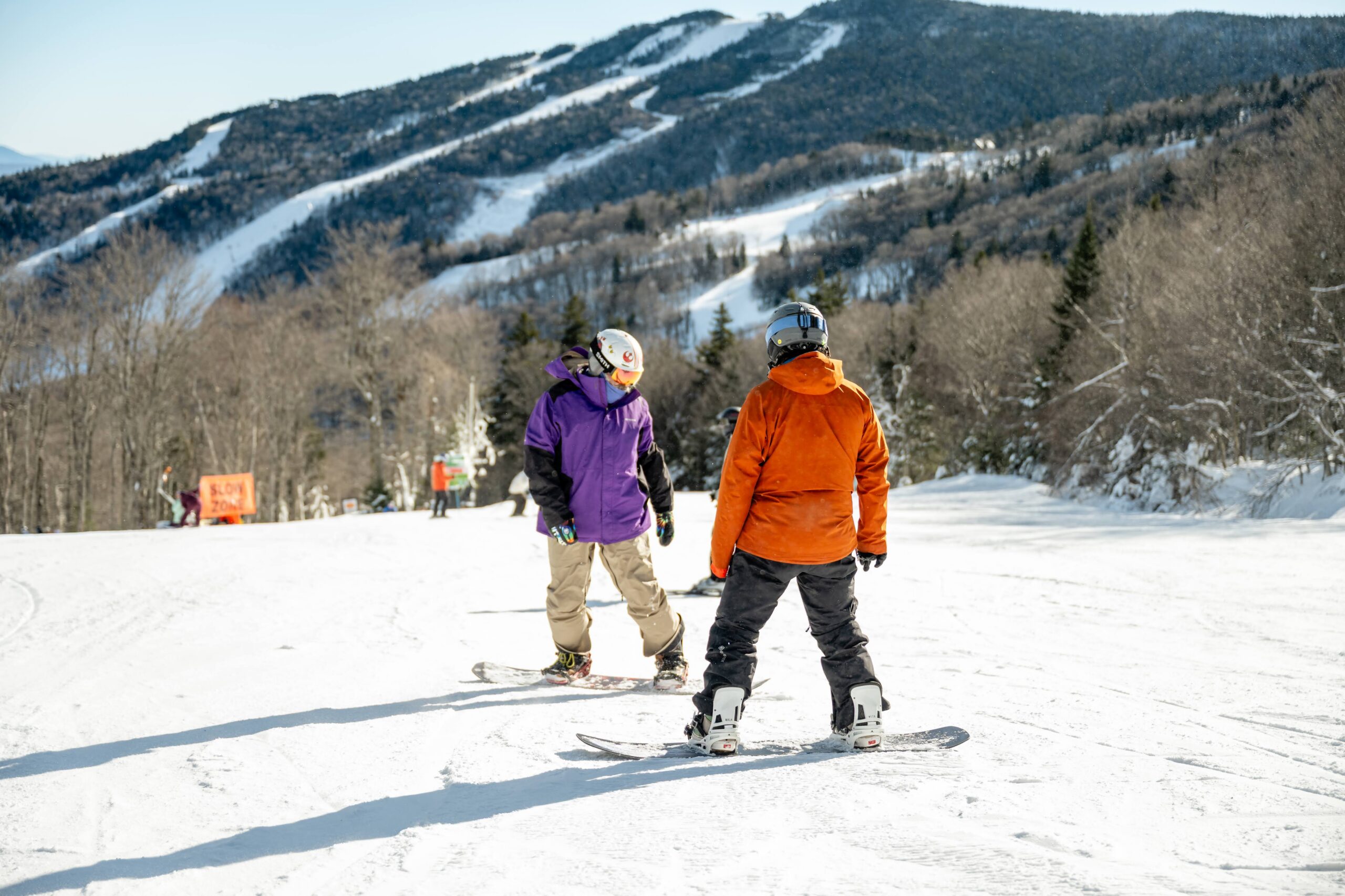
The subsequent lift ride offered a crucial opportunity for debriefing and deeper discussion. Ross and Cesnik, despite never having met and hailing from geographically opposite ends of the globe, engaged in a rich dialogue covering similarities and differences in their skiing techniques, the impact of the mirroring exercise on their performance, the distinct values of APSI and PSIA-AASI, and even broader global political perspectives. This "high-impact experience in a short amount of time" underscored the exercise’s ability to accelerate communication, foster mutual understanding, and facilitate deep learning. The corresponding indoor session, led by Czech researchers, provided the scientific rationale, explaining the neurological underpinnings of why mirroring so effectively facilitates trust, empathy, and understanding – largely through the activation of mirror neurons and the cultivation of shared embodied experience.
Expert Endorsement: Ellen Post Foster and the PSIA-AASI Manual
The efficacy of mirroring is not merely confined to cutting-edge research at international symposia; it is a time-tested strategy championed by luminaries in the snowsports world. U.S. Ski & Snowboard Hall of Famer Ellen Post Foster stands as a testament to the profound value of this instructional approach. Her illustrious career spans multiple disciplines and decades: 1973 Junior National Champion of Exhibition Skiing, aerials, ballet, moguls, and combined champion in international freestyle competition in 1975, alumna of the 1980 and 1984 PSIA National Demonstration Teams, Class of 2016 U.S. Ski & Snowboard Hall of Famer, and 2021 Colorado Snowsports Museum Hall of Famer. She is also a prolific snowsports author, having significantly shaped instructional literature.
Ross recounts an insightful experience skiing with Foster, known for her "exceedingly nimble touch" and ability to move almost imperceptibly. During one session, Foster seemingly vanished, only to reappear at the lift, revealing she had been following Ross "so she could understand [his] skiing." This anecdote powerfully illustrates the instructor’s mindset: mirroring is not about critique, but about empathy and understanding. Foster then sought permission to offer feedback, demonstrating respect for the student’s autonomy while providing valuable insights. As a co-author of the current Teaching Snowsports Manual, Foster has ensured that "following students" is explicitly recognized as a critical teaching skill, embedding the principle of mirroring within the official PSIA-AASI instructional guidelines. This reinforces the idea that true understanding of a student’s movements and challenges often comes from experiencing those movements firsthand, even if vicariously.
Broadening the Impact: Mirroring in Practice
Inspired by the transformative experience at Interski Levi, Angelo Ross has actively integrated mirroring into his own instructional strategies, yielding consistently positive results across various training environments. In November, at the Rocky Mountain Telemark Education Staff Training, he implemented a format similar to the Czech team’s, beginning with an indoor session designed to build rapid rapport between paired partners, which then transitioned to an outdoor session requiring meticulous observation and honest, constructive feedback.
A modified on-snow version was also successfully deployed in December with a group of National Ski Patrol leaders at the Outdoor Emergency Transportation Conference in Killington, Vermont. This application focused on facilitating partner observation and subsequent discussions regarding the applicability of diverse movement patterns in varying circumstances, such as navigating challenging terrain or responding to emergencies.
Feedback from both sessions was overwhelmingly positive, consistently highlighting several key benefits: participants reported "connecting quickly," "developing trust" with their partners, and experiencing "deep learning" that transcended superficial technical adjustments. This corroborates the research-backed assertion that mirroring fosters a conducive learning environment characterized by mutual respect and accelerated skill acquisition. The adaptability of mirroring makes it suitable for diverse groups, from beginner ski students to seasoned instructors and emergency responders, underscoring its versatility as a pedagogical tool.
The Future of Snowsports Instruction: Embracing Mirroring
The integration of mirroring as a core teaching and learning strategy holds significant promise for the future of snowsports instruction. By actively mirroring students, instructors gain invaluable "insights into their understanding and performance of the sport," moving beyond mere observation to an embodied comprehension of their student’s experience. Conversely, encouraging students to mirror their instructors or peers fosters communication, builds trust, and demonstrably enhances skill development and understanding.
Moreover, engaging peers in synchronized skiing and riding activities through mirroring offers unique benefits. It is not only an enjoyable activity but also provides critical insights into the value of varied movement patterns, thereby challenging the "one-right-way mentality" that, despite progressive efforts, can still sometimes permeate instructional circles. By observing and imitating different styles, instructors and students alike sharpen their observational skills, broaden their technical understanding, and cultivate adaptability.
Incorporating this nuanced approach into common "Follow Me" activities can significantly boost student interest and engagement. By empowering students to take turns leading and mirroring, instructors can transform routine drills into dynamic games, movement explorations, and practical experiments. These approaches align perfectly with established best practices in teaching and learning, as well as with the PSIA-AASI fundamentals, which emphasize student-centered learning and adaptable instruction.
In essence, mirroring is more than just a technique; it is a foundational human capacity, time-tested and research-backed, that forms an intrinsic part of our species’ fabric. By consciously applying this evolutionary mechanism in snowsports education, instructors can significantly evolve their understanding, performance, and teaching methodologies, fostering a more empathetic, effective, and engaging learning environment for all. As the snowsports world continues to advance, the ancient art of mirroring offers a powerful, yet elegant, pathway to accelerated learning and deeper connection on the slopes.
