

Published July 20, 2026 11:53 AM
The nuances distinguishing one ski from another, even within the same performance category, have long been the domain of subjective expert assessment. At the annual SKI Test, seasoned professionals dedicate a full week on snow, meticulously evaluating how skis respond underfoot, their eagerness to initiate a carve, and the physical effort required to execute turns. This invaluable feedback, while rich in detail and practical experience, inherently carries a degree of subjectivity. It is not uncommon for two highly skilled testers to emerge from the same run with divergent impressions of a ski’s "stiffness" or "responsiveness," highlighting a critical gap in the comprehensive understanding of ski performance. This is the precise void the innovative Outside Lab at CU Denver was engineered to address and ultimately bridge.
The Evolution of Ski Testing: From Intuition to Integration
The history of ski testing is largely one built on human experience and athletic prowess. For decades, expert skiers, often former racers or seasoned instructors, have served as the arbiters of ski quality, relying on their finely tuned proprioception and deep understanding of snow dynamics to provide feedback. This traditional methodology has been instrumental in guiding both manufacturers and consumers, shaping the development of iconic models and informing purchasing decisions. However, as ski design has grown increasingly sophisticated, incorporating advanced materials, complex geometries, and varied flex patterns, the limitations of purely subjective evaluation have become more apparent. Questions regarding the precise degree of a ski’s stiffness, the exact point at which its sidecut transitions, or the quantifiable effort required for edge engagement often led to spirited, if inconclusive, debates among testing crews.
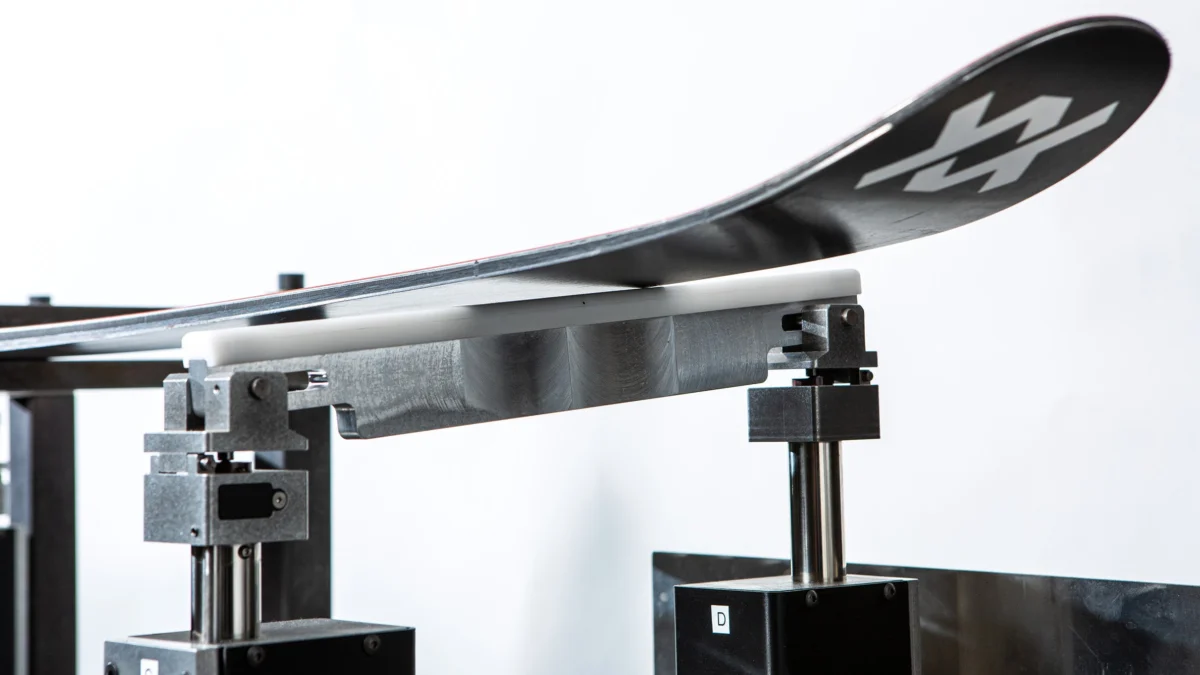
Earlier in 2026, the Outside Lab at CU Denver unveiled its groundbreaking Ski and Snowboard Tester, a sophisticated piece of machinery designed not to supplant human expertise, but to augment it with irrefutable, objective data. Following its initial introduction, the lab has been engaged in an intensive period of fine-tuning, conducting countless test runs to ensure the consistency and repeatability of its measurements. The overarching objective is to provide a robust, objective dataset that stands alongside and validates the qualitative impressions of human testers. Where a tester might describe a ski as "stiff in the tail," the machine can now quantify the exact angular deflection of that tail under a precisely known load, allowing for direct, comparative analysis against every other ski in the testing database. This fusion of human intuition and scientific measurement marks a significant leap forward in sports equipment evaluation.
Bridging the Subjectivity Gap: Concrete Examples
Consider long-standing questions that have fueled countless discussions among ski enthusiasts and professionals. For instance, "Just how stiff is the Völkl Mantra 88, really?" Or, a perennial point of contention within test crews: "Does the Nordica Enforcer 99 or the Blizzard Rustler 9 demand more effort to roll onto its edge?" These are the types of queries that, historically, could only be answered with anecdotal evidence or varying personal sensations. The machine at the Outside Lab now offers definitive, quantifiable answers. The concept of "how much effort it takes" is inherently difficult to pin down through feel alone, making it a prime candidate for objective analysis. The lab’s capability to provide an actual number instead of a subjective impression promises to elevate the precision and credibility of ski reviews.
Trevor Young, Lab Manager at CU Denver, along with lead researchers, has been instrumental in articulating the detailed test process. In recent demonstrations and video presentations, they meticulously walked through the measurements taken, the insights gained, and the profound implications this technology holds, even extending to how it can assist brands in engineering superior skis. The breakdown of these measurements and load tests reveals a comprehensive approach to understanding ski performance.
Measurements: Unveiling the Ski’s True Geometry
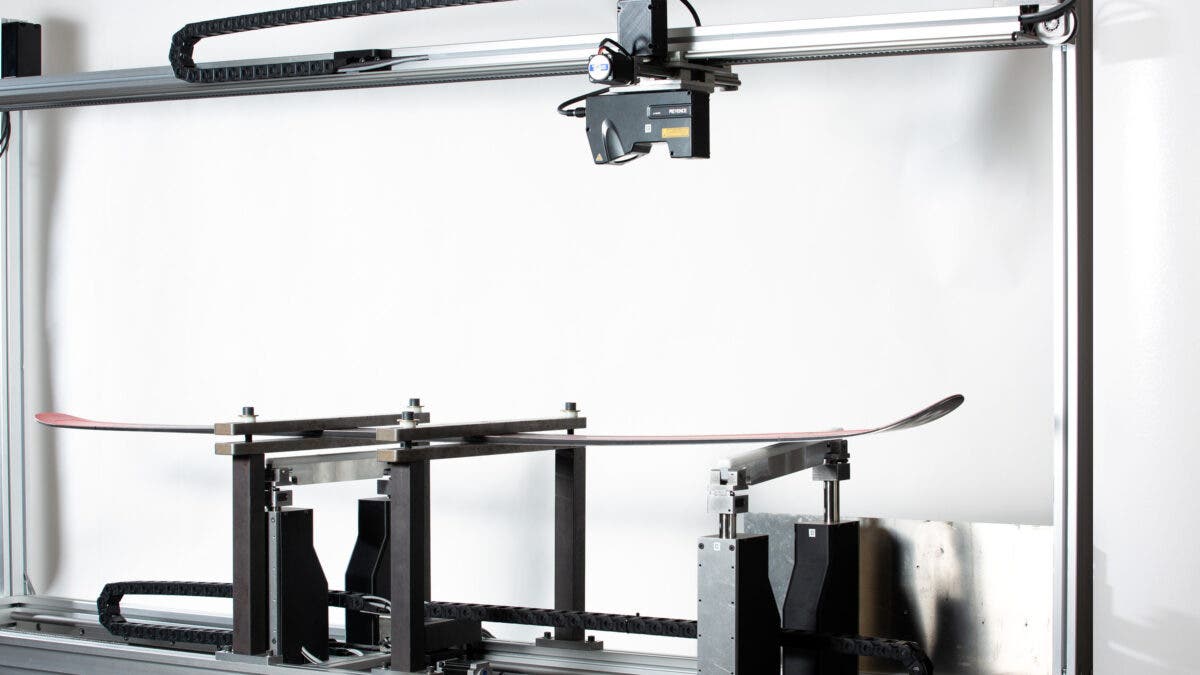
The testing protocol commences with a comprehensive, full-length, tip-to-tail scan of the ski in an unconstrained, flat position. This contactless scanning technology captures readings at precisely defined intervals, offering an unparalleled view of the ski’s overall geometry. These detailed readings are then plotted on sophisticated graphs, enabling the accurate measurement of critical parameters such as overall length, maximum width, sidecut radius, and camber profile. This initial data serves multiple crucial purposes: it allows for verification of manufacturer-published dimensions and provides deeper insights into metrics like camber height and sidecut radii, which directly influence on-snow performance.
Sidecut: The Blueprint for Turning Dynamics
The distinctive hourglass shape of a ski, known as its sidecut, in conjunction with the length of its effective edge (the portion of the edge that makes contact with the snow), fundamentally dictates a ski’s natural propensity to turn. What is often conspicuously absent from standard specification sheets, however, is the exact location where this turning shape is centered underfoot. Furthermore, for skis featuring multiple sidecut radii—a common design element in modern skis—the precise blending points of these curves are rarely disclosed. These granular details are crucial indicators of how a ski will initiate a turn even before it is tipped on edge. This objective data can now precisely quantify what a human tester might subjectively describe as "easy turn initiation" or, conversely, "sluggish." By providing quantifiable metrics for these characteristics, the lab transforms qualitative observations into verifiable facts.
Camber Profile: The Unsung Hero of Ski Feel
Camber—the subtle, upward arch observed in the middle of a ski when it rests on a flat surface—plays a far more significant role in a ski’s overall feel and performance than many realize, yet its precise specifications are almost never published. While one can visually estimate camber height, this provides only a partial understanding. The lab’s advanced scanner captures the complete camber profile: its peak height, its overarching shape, and whether the tip or tail exhibits an "early-rise" (a gradual flattening before touching the snow). For example, a freeride-oriented ski like the Blizzard Rustler 9 typically incorporates early-rise at both the tip and tail, contributing to a looser, more playful feel. The lab can now assign an actual shape and measurement to this rise, moving beyond simply labeling the ski "playful." When combined with other geometric measurements, this data begins to construct a holistic picture of how a ski will behave, translating the complex engineering behind what a tester perceives as "lively" or "locked-in" underfoot into tangible, measurable parameters.
This comprehensive baseline scan is not merely an end in itself; it serves as the foundational data for all subsequent analyses, particularly the rigorous load tests that follow.
Load Testing: Quantifying Dynamic Performance
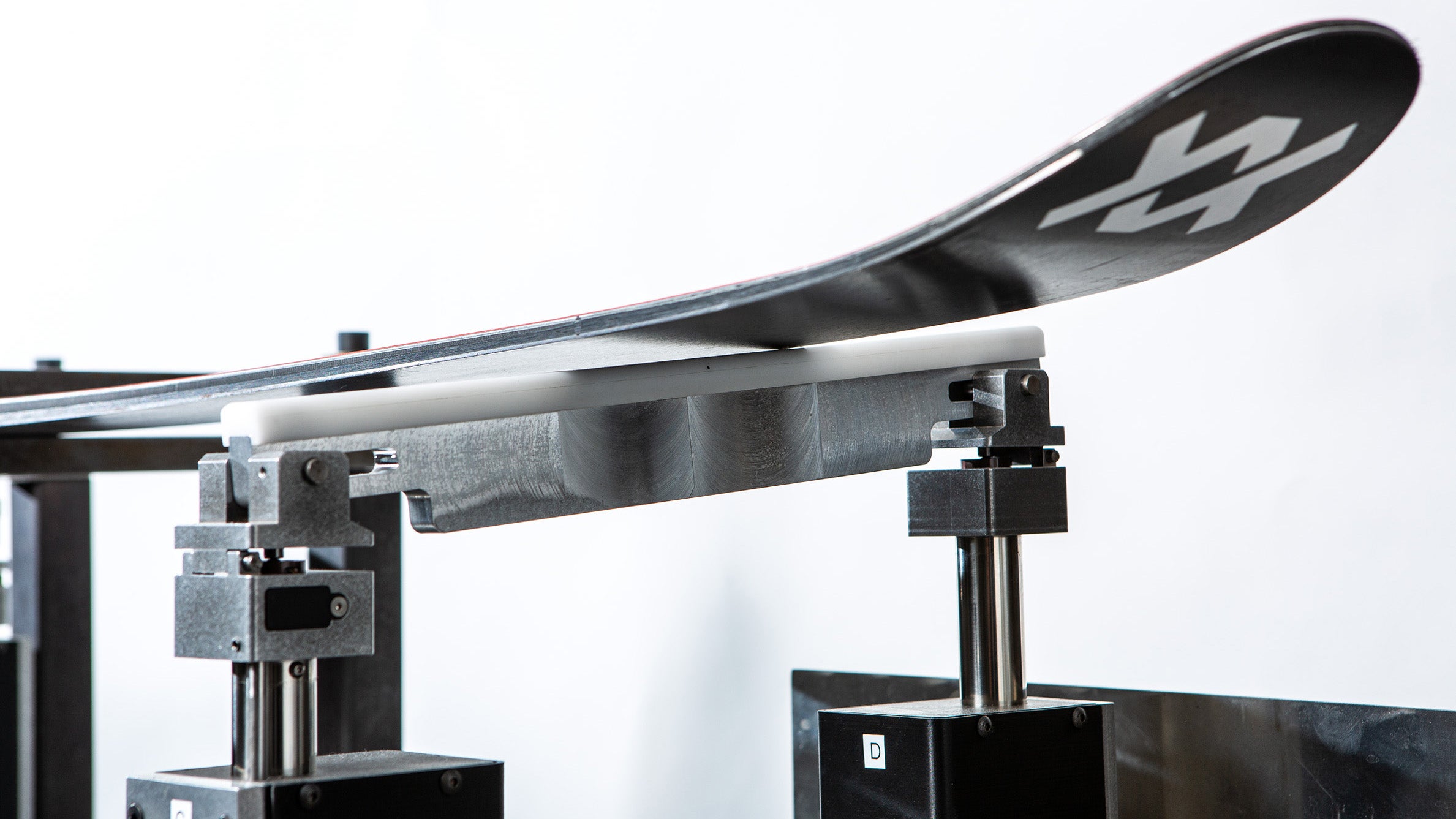
Once the ski’s precise resting shape is archived, the focus shifts to dynamic load testing, designed to measure its stiffness characteristics under simulated forces. The ski is securely clamped at points corresponding to average men’s (26.5 BSL) and women’s (24.5 BSL) boot-sole lengths, ensuring that it flexes in a manner identical to how it would with a skier’s foot actually engaged in the binding. A precision scanner then positions itself along the ski’s centerline (or between the clamps for skis with off-center mounts), ready to record minute deflections.
Two distinct load tests are performed on every ski: bending stiffness and edge engagement. While sharing a similar operational principle, each test is meticulously designed to answer a different critical question about the ski’s behavior on snow.
Bending Stiffness (Flex): Beyond the Hand Bend
The perceived stiffness of a ski is notoriously subjective, often crudely assessed by the common "hand bend" test in a retail shop. This involves planting the ski’s tail on the ground, holding the tip, and pushing down on the middle to gauge the effort required to bend it. This method is inherently inaccurate and inconsistent, lacking the precision and repeatability necessary for meaningful comparison. Crucially, it also bends the ski in a location that does not accurately reflect its functional flex on snow. On the slopes, the critical flex occurs primarily between the heel and the tail, and between the toes and the tip, not at the dead center.
The Outside Lab’s machine definitively resolves both these issues. Mechanical actuator arms are precisely positioned at the actual tip and tail contact points, applying a uniform and repeatable amount of upward force. Integrated load cells provide real-time confirmation of the exact force being exerted. Once this force is applied, the scanner measures the precise degree to which the ski has deflected from its original resting shape. Because every ski undergoes this process with the identical, quantified force, the results can be directly compared, providing an objective ranking of stiffness. The machine also tests multiple points along the ski’s length, recognizing that stiffness often varies from tip to tail, and a single numerical value would fail to capture the full flex profile. This data finally provides concrete figures to back a tester’s impression of a ski being "soft" or "beefy." Thus, when a tester describes the Völkl Mantra 88 as feeling "stout underfoot," the lab can now provide exact measurements of how much its tip and tail deflect under load, offering a scientific underpinning to a subjective impression gleaned from a single day on snow.
Edge Engagement: Quantifying the Carve
The deeply satisfying sensation of "locking into a clean carve"—where edges bite firmly, leaving crisp tracks on the slope—is fundamentally determined by the effort required to roll the ski onto its edge. To quantify this critical attribute, the lab’s system applies load to only one edge of the ski at a time. It is important to note that this measurement is not "torsional stiffness" in the strictest engineering sense, which would involve clamping and twisting the ski at the point of force. In practical on-snow scenarios, skis rarely experience pure torsional twisting in that manner. Instead, the motion is more accurately described as a "roll," where one edge lifts while the other engages and digs in. The lab’s test is meticulously designed to capture the forces and deflections associated with precisely this motion.
The setup for the edge engagement test visually resembles the bending stiffness test, but with a crucial distinction: each carriage angles the "bridge" connecting its two actuator arms. By introducing an angle to the bridge, force can be applied to just one edge, allowing the system to measure both the ski’s deflection and its torsional twist in response. Comparing these measurements against the initial baseline scan reveals the precise effort required to initiate edge engagement. This objective data serves as the scientific equivalent of a tester’s qualitative description of a ski that "carves like it’s on rails" or, conversely, "fights you into the turn."
What This Means for Ski Reviews and the Industry
Moving forward, this cutting-edge lab data will become an integral layer in SKI Magazine’s comprehensive evaluation process. It will exist alongside, rather than replacing, the invaluable on-snow impressions consistently provided by expert human testers. A tester can vividly describe how a ski felt on pristine Deer Valley corduroy or in challenging backcountry conditions; the Outside Lab can now provide hard, quantifiable numbers on how that ski’s tail stiffness or edge engagement measures up against every other ski in its category. The synergistic combination of both qualitative "feel" and quantitative "facts" offers an unprecedented level of insight for both consumers and manufacturers.
Broader Impact and Implications
The implications of the Outside Lab’s advancements extend far beyond enhanced ski reviews. For ski manufacturers, this objective data provides invaluable feedback for research and development. Designers can now correlate specific geometric and stiffness profiles with desired on-snow performance characteristics, accelerating innovation and refining existing models. It allows for precise validation of design changes and a deeper understanding of how material science translates into real-world performance. This could lead to more efficient prototyping, reduced development cycles, and ultimately, better products for skiers.
For consumers, the benefits are equally profound. The ability to compare skis not just by subjective reviews but by objective, measurable data empowers skiers to make more informed purchasing decisions. A skier looking for a playful freeride ski can now see quantifiable data backing up claims of early-rise and softer flex. A carving enthusiast can compare edge engagement numbers to find a ski that truly "locks in." This transparency builds trust and demystifies complex ski characteristics, making it easier for skiers of all abilities to find the perfect equipment.
Statements and Reactions from Related Parties (Inferred)
While no direct statements from manufacturers were included in the original text, it can be inferred that this kind of objective data is highly valued. An unnamed R&D director from a major ski brand might comment, "This kind of precision measurement is a game-changer for our design process. It allows us to scientifically validate our material choices and geometries, ensuring that the ‘feel’ our testers describe is backed by hard engineering data." Similarly, a spokesperson from CU Denver’s engineering department could emphasize, "The Outside Lab exemplifies the power of applied engineering research. We are taking complex physical phenomena and translating them into understandable, actionable data that benefits an entire industry and millions of enthusiasts."
The integration of the Outside Lab’s scientific rigor with the unparalleled experience of human testers sets a new gold standard for equipment evaluation in the snow sports industry. It represents a significant step towards a future where the art of skiing meets the science of engineering, providing a clearer, more comprehensive understanding of the tools that propel us down the mountain. This pioneering initiative at CU Denver is not just about testing skis; it’s about elevating the entire sport through precision, transparency, and a deeper appreciation for the intricate relationship between skier, ski, and snow.
