

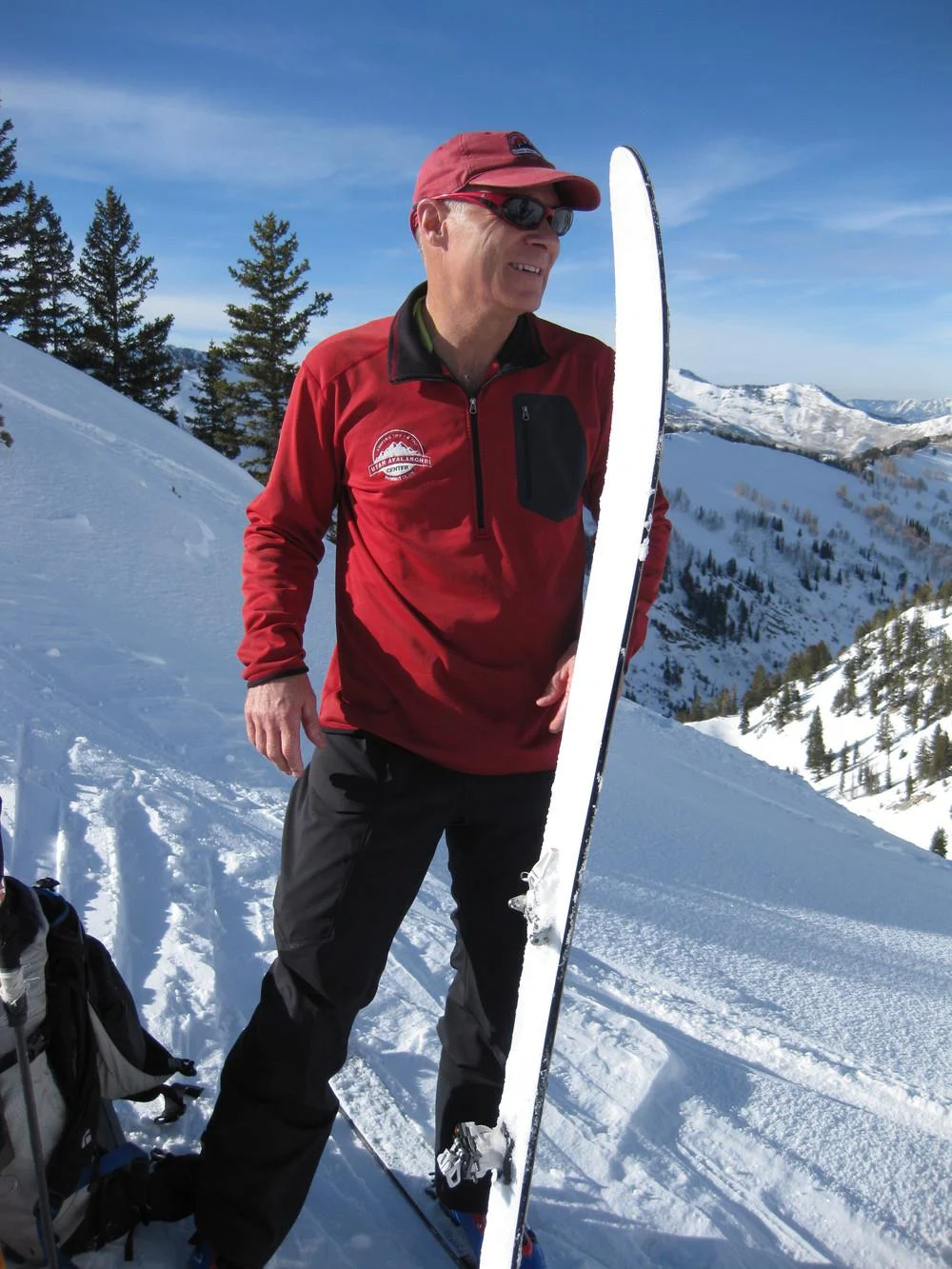
The Utah Avalanche Center (UAC), a cornerstone of avalanche safety and forecasting in the Intermountain West, announced the retirement of its long-serving Director, Bruce Tremper, effective at the end of August. Tremper, a towering figure in the avalanche industry for nearly 30 years, leaves behind a legacy of innovation, public service, and a profound impact on avalanche education and forecasting both domestically and internationally. Concurrently, the UAC revealed that Mark Staples has been appointed as the new Director, poised to lead the organization into its next chapter.
A Career Forged in Snow and Expertise
Bruce Tremper’s dedication to understanding and mitigating avalanche hazards spans decades and continents. His journey into the field began in Montana, where he pursued a Master of Science degree at Montana State University under the tutelage of Dr. John Montagne. This academic foundation was quickly complemented by practical experience. Tremper engaged in crucial avalanche control work at prominent ski resorts, including Bridger Bowl and Big Sky, gaining firsthand knowledge of avalanche dynamics in real-world operational settings.
His expertise further deepened during his tenure as an avalanche forecaster at the Alaska Avalanche Center. There, he collaborated with esteemed professionals such as Doug Fesler, Jill Fredston, and Jim Woodmency. This period in Alaska, renowned for its challenging avalanche terrain and extreme weather conditions, undoubtedly honed his observational skills and forecasting acumen.
In 1986, Tremper assumed the directorship of the Utah Avalanche Center, a role he would hold for an impressive 29 years. Under his leadership, the UAC underwent a significant transformation, evolving from a primarily phone-based advisory system to a sophisticated, multi-platform information provider. This evolution mirrored the advancements in communication technology and the growing public demand for accessible, timely avalanche information. Tremper and his team were at the forefront of this change, pioneering the integration of visual aids like icons and distinct avalanche problem descriptions into their advisories. This innovative approach significantly enhanced the clarity and usability of the forecasts, making them more actionable for backcountry enthusiasts.
A Multifaceted Contributor to Avalanche Safety
Tremper’s influence extended far beyond the directorship of the UAC. He actively contributed to the broader avalanche community through various significant roles and initiatives. For six years, he served as the editor of The Avalanche Review, a key publication that disseminated vital research, operational insights, and safety information to professionals worldwide. His prolific writing career includes numerous published papers on avalanche science and safety, as well as the production of several influential avalanche safety videos. He is also the author of two highly regarded books on avalanches, which have become essential resources for both professionals and recreational users.
A testament to his leadership and the critical importance of his work, Tremper was entrusted with managing backcountry avalanche safety during the 2002 Salt Lake City Winter Olympics. This high-profile assignment underscored the UAC’s and Tremper’s capabilities in managing complex avalanche risks in a major public event setting. Furthermore, he has consistently served as a valuable spokesperson for the agency, engaging in hundreds of media interviews to educate the public and raise awareness about avalanche hazards. His commitment to education is also evident in his decades-long role as an instructor at the National Avalanche School, where he has mentored generations of avalanche professionals.
Tremper also played a pivotal role in shaping the conceptual framework of avalanche danger assessment. He was a member of the working group responsible for developing the conceptual model of avalanche danger and the associated avalanche danger scale in 2010, a significant contribution that standardized how avalanche danger is understood and communicated globally.
Transition and Continuity: Welcoming Mark Staples
With Bruce Tremper’s retirement, the Utah Avalanche Center has appointed Mark Staples as its new Director. Staples brings a wealth of experience and a strong academic background to the role. His professional journey includes valuable experience in ski patrol and snow safety at Big Sky Ski Area, providing him with essential operational knowledge of avalanche management in a resort environment.

Academically, Staples holds a Master of Science degree in Engineering from Montana State University, where his research focused on snow avalanches. This scientific grounding is complemented by his work on several special projects for the National Avalanche Center, further demonstrating his commitment to advancing avalanche science and safety. Prior to his appointment as UAC Director, Staples spent eight seasons as a backcountry avalanche forecaster at the Gallatin National Forest Avalanche Center, gaining extensive experience in forecasting for diverse and challenging terrain. Staples expressed his enthusiasm for joining the "top-notch UAC team" and continuing the organization’s mission.
A Look Back: The Evolution of Avalanche Forecasting
The career of Bruce Tremper largely mirrors the evolution of avalanche forecasting and public outreach over the past three decades. Prior to the widespread adoption of the internet, avalanche advisories were primarily disseminated via telephone hotlines. This system, while functional, had limitations in reach and the ability to convey detailed information.
The advent of the internet and digital communication technologies revolutionized avalanche forecasting. Tremper and the UAC were early adopters and innovators in this digital transformation. The introduction of graphical representations, such as icons depicting different avalanche problems (e.g., wind slab, persistent slab, wet slab), alongside clear textual descriptions, marked a significant leap forward. This visual language allowed backcountry users to quickly grasp the prevailing avalanche conditions and the specific types of avalanches they were most likely to encounter.
The UAC’s online presence evolved to include detailed discussions of snowpack stability, weather patterns, and specific avalanche observations. This data-rich environment empowered backcountry skiers, snowboarders, snowmobilers, and other users to make more informed decisions, thereby enhancing their safety in the mountains. The UAC’s website became a critical resource, providing not only daily forecasts but also a wealth of educational materials, snowpack observations from the public, and archival data.
Supporting Data and Broader Context
The Wasatch Mountains, a prominent range in Utah, are a popular destination for backcountry recreation. However, their steep and complex terrain, coupled with variable winter weather patterns, makes them a region with a significant avalanche hazard. Between 1995 and 2023, Utah has averaged approximately 8.5 avalanche fatalities per year, a statistic that highlights the ongoing need for robust forecasting and public education efforts. The UAC plays a vital role in reducing this number by providing timely and accurate information to the public.
The work of avalanche centers like the UAC is supported by a network of snow observers, weather stations, and field technicians who gather crucial data throughout the winter season. This data, meticulously collected and analyzed, forms the basis of the avalanche forecasts. Tremper’s tenure saw the UAC enhance its data collection methods and foster a strong relationship with the backcountry community, encouraging user-generated observations that contribute to a more comprehensive understanding of snowpack conditions.
Future Outlook and Legacy
While Bruce Tremper is retiring from his official duties with the Forest Service, his engagement with avalanche safety is far from over. He has expressed his intention to continue teaching, writing, and contributing to avalanche safety projects. This ongoing involvement ensures that his extensive knowledge and experience will continue to benefit the avalanche community. It is also anticipated that Tremper, along with his wife Susi, will be spending even more time enjoying the backcountry skiing that has been a passion throughout his career, a testament to his enduring love for the mountains and the sport.
The transition to Mark Staples as Director signals a new era for the UAC. With his strong technical background and practical experience, Staples is well-positioned to build upon the foundation laid by Tremper. The continued success of the UAC will be critical in ensuring that backcountry users in Utah and beyond have access to the vital information they need to navigate the inherent risks of the mountain environment. The legacy of Bruce Tremper is one of dedication, innovation, and a profound commitment to saving lives through education and informed forecasting, a legacy that Mark Staples and the UAC team are poised to carry forward.
