

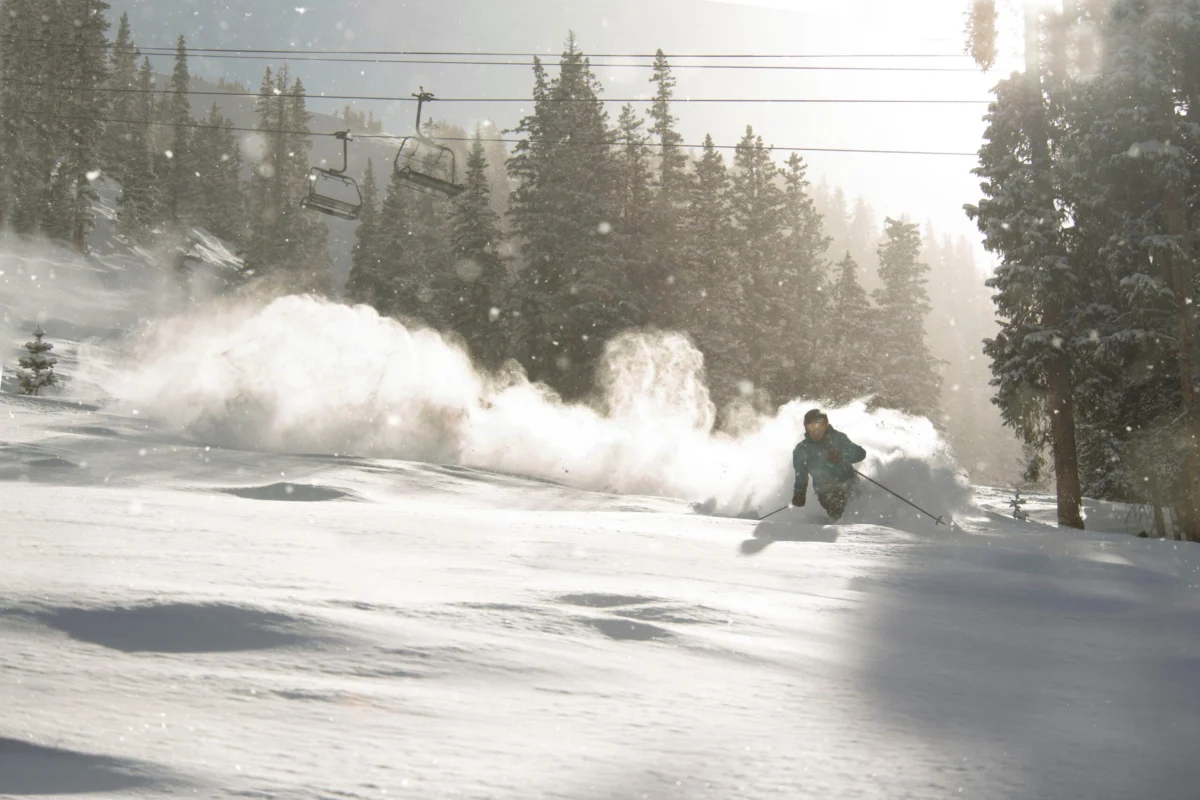
As of late July 2026, the global meteorological community is closely monitoring the rapid intensification of an El Niño event in the equatorial Pacific, with growing consensus among leading climate agencies that it is on track to become one of the strongest, potentially a "Super El Niño," on record. This unfolding climate phenomenon carries profound implications, not only for the highly anticipated ski season across North America but also for broader environmental and socioeconomic sectors, from agriculture and water resource management to global weather patterns. Following a notably brief and parched winter for numerous resorts in the Western and Southwestern United States, the prospect of an exceptionally snowy season is a source of considerable optimism for skiers and the winter tourism industry. However, the sheer scale of the developing El Niño also heralds the potential for widespread and unpredictable impacts that extend far beyond the boundaries of recreational ski areas.
Understanding the El Niño Phenomenon
At its core, El Niño is the warm phase of the El Niño-Southern Oscillation (ENSO), a recurring climate pattern involving changes in the temperature of surface waters in the central and eastern tropical Pacific Ocean. This oceanic warming is coupled with atmospheric pressure changes (the Southern Oscillation), influencing global weather patterns. Typically, an El Niño event is declared when sea surface temperatures (SSTs) in the Niño 3.4 region (a specific area in the equatorial Pacific) are at least 0.5 degrees Celsius above average for an extended period, usually five consecutive overlapping three-month periods. The term "Super El Niño," while not an official scientific classification, is commonly used by meteorologists and media to describe exceptionally strong El Niño events where SST anomalies in the Niño 3.4 region exceed 2.0 degrees Celsius above average.
During an El Niño, the typical Walker Circulation, which involves strong trade winds blowing west across the Pacific, weakens or even reverses. This allows warm surface waters, usually confined to the western Pacific, to spread eastward towards the Americas. This shift in ocean temperature redistributes atmospheric heat and moisture, altering the global atmospheric circulation patterns, most notably the position and strength of the jet streams. For North America, a strong El Niño typically leads to an active subtropical jet stream, drawing more storms across the southern tier of the United States, while the northern parts may experience warmer and drier conditions.
The Current Trajectory: A Potential Record-Setter
Meteorologists at institutions like OpenSnow and national weather agencies have been tracking the current El Niño’s development with growing concern and anticipation. Alan Smith, a prominent meteorologist at OpenSnow, explains that the current trajectory suggests "this winter has the potential to be the strongest El Niño on record." Observations in the Niño 3.4 region already indicate significant warming, with some models projecting anomalies to surpass the 2.0°C threshold, solidifying its "Super El Niño" status. This rapid intensification, observed throughout the spring and early summer of 2026, suggests a robust event is forming earlier than some historical counterparts.
The World Meteorological Organization (WMO) and the U.S. National Oceanic and Atmospheric Administration (NOAA) have echoed these sentiments, with recent advisories highlighting the high probability of a strong event persisting through the Northern Hemisphere winter. The rapid warming observed in the Pacific, coupled with specific atmospheric indicators, provides a strong basis for these projections. The sheer magnitude of the observed ocean temperature anomalies is the primary driver behind the predictions of potentially unprecedented weather patterns.
Historical Precedents: Lessons from Past Super El Niños
Examining previous "Super El Niño" events provides critical context for understanding the potential impacts of the current situation. Three strong El Niños stand out in recent history: 1982-83, 1997-98, and 2015-16. Each brought distinct, yet often correlated, weather patterns to North America and globally.
- 1982-83 El Niño: This event was largely unanticipated and had devastating global impacts, including widespread flooding in the American West, severe droughts in Australia and Indonesia, and significant disruptions to marine ecosystems. For the U.S. ski industry, California and the Southwest experienced exceptional snowfall, with some resorts reporting record-breaking accumulations.
- 1997-98 El Niño: This event was one of the most powerful on record, with SST anomalies exceeding 2.5°C. It led to extensive flooding in California, heavy snowfall in the southern Rockies, and a relatively mild and dry winter for the Pacific Northwest. Globally, it caused widespread agricultural damage and extreme weather.
- 2015-16 El Niño: While strong, this event did not deliver the "miracle drought-buster" for California that some had hoped for, though it did bring above-average precipitation to parts of the state and the Southern U.S. Its impacts were more varied, partly due to the influence of other climate factors.
These historical events demonstrate that while strong El Niños tend to favor increased precipitation in the southern U.S., the exact distribution and form (rain vs. snow) can vary, and other regional climate drivers can modulate the outcome. However, the general trend of an active subtropical jet stream impacting the Southern U.S. remains a consistent feature.
Implications for the 2026-2027 Ski Season
For the North American ski industry, the "Super El Niño" brings a mix of hope and strategic considerations. After a previous winter characterized by a thin snowpack and early closures in many Western resorts, the potential for a rebound is eagerly awaited.
Alan Smith’s analysis indicates that a strong El Niño "tend[s] to favor an active subtropical jet stream, which means that you tend to get a strong and frequent storm track across the southern tier of the U.S." This atmospheric pattern, when combined with sufficiently cold temperatures, translates directly to increased snowfall.
- Southwest and California: These regions are generally considered the strongest beneficiaries of a robust El Niño. Southern California’s Sierra Nevada range, New Mexico, and Arizona could see significantly above-average snowfall. Resorts like Mammoth Mountain in California and Taos Ski Valley in New Mexico are positioned to capitalize on these conditions.
- Southern and Central Rockies: Southern Colorado, in particular, shows a high correlation with increased snowfall during El Niño years. The strength of this projected event also tips the scales in favor of other parts of Colorado, as well as Utah and Idaho. Resorts such as Telluride, Aspen Snowmass, and Sun Valley could experience banner years.
- Pacific Northwest and Canada: Conversely, the Pacific Northwest and much of Western Canada often experience warmer and drier-than-average conditions during El Niño winters, which could pose challenges for resorts in these regions.
- Northeast U.S.: The forecast for the Northeast is typically more ambiguous. While an active storm track could bring increased precipitation, warmer temperatures associated with El Niño could mean a higher likelihood of rain rather than snow, especially at lower elevations or during mid-season thaws.
Darin Smith (no relation to Alan Smith), a seasoned ski-travel expert for Ski.com, advises clients to consider these trends when planning their winter getaways. His primary recommendation for this season is diversification. "Create an environment for your family where if the skiing isn’t 100 percent, there will be alternatives," he suggests. This might involve choosing destinations that offer a robust range of non-skiing activities or those at higher altitudes known for colder temperatures and more reliable snowmaking capabilities.
Colorado, with its combination of high elevation, inherently colder temperatures, and strong likelihood of El Niño precipitation, is highlighted by Darin Smith as a particularly "safest bet" for the upcoming season. He also emphasizes the importance of timing. While early and late season periods can be notoriously risky due to variable snow bases, strong El Niños can sometimes deliver powerful storms during these very windows, offering opportunities for intrepid skiers. However, early season still carries the inherent risk of resorts not having fully built out their base or opened all terrain.
Broader Environmental and Socioeconomic Impacts
The influence of a "Super El Niño" extends far beyond the ski slopes, posing significant challenges and opportunities across various sectors.
- Water Resources: For drought-prone regions, particularly in the American West, a heavy snowpack could provide a much-needed boost to water reserves for the following spring and summer. However, rapid snowmelt or heavy rainfall on existing snow can also lead to flood risks.
- Agriculture: Shifts in precipitation patterns, including increased rainfall or prolonged dry spells, can severely impact agricultural yields. Regions dependent on specific weather patterns for crop growth could face significant losses or unexpected bounties.
- Global Temperatures: Strong El Niño events typically contribute to a temporary spike in global average temperatures. Coupled with long-term climate change, this could lead to new global temperature records, exacerbating heatwaves and other extreme weather events worldwide.
- Marine Ecosystems: The warming of Pacific waters can disrupt marine life, affecting fisheries and causing coral bleaching events.
- Wildfires: While some areas may receive abundant moisture, other regions (e.g., the Pacific Northwest) might experience drier conditions, potentially increasing the risk of wildfires in those specific areas. Conversely, heavy precipitation in the Southwest could lead to increased vegetation growth, potentially fueling future fire seasons if followed by dry periods.
- Infrastructure: Increased precipitation can lead to mudslides, landslides, and infrastructure damage, particularly in mountainous regions or areas with recent wildfire scars.
Alan Smith cautions against complacency, noting the inherent unpredictability of such a powerful climatic force. "There could be some surprises this winter, for better or worse," he states. "I think this could really throw the atmosphere into some potentially chaotic patterns that we might not be able to foresee." This sentiment underscores the need for robust monitoring and adaptive strategies across all affected sectors.
Regional Ski Outlook: Expert Recommendations
Based on current projections and historical correlations, several ski areas emerge as prime candidates for an exceptional winter. Experts from OpenSnow, Ski.com, and Scout Ski offer their top recommendations:
- Telluride, Colorado: Nestled in the San Juan Mountains of Southwestern Colorado, Telluride consistently demonstrates a strong correlation with abundant snowfall during El Niño winters. Claire Hopper, a snow travel manager for Scout Ski, hails it as a "bucket list worthy" destination, praising its diverse terrain, breathtaking scenery, and charming walkable downtown. Beyond its high-end amenities, Telluride offers a full spectrum of terrain from meticulously groomed runs to challenging advanced and extreme trails. For budget-conscious regional travelers, nearby Wolf Creek and Purgatory ski areas in Southern Colorado offer compelling alternatives with wallet-friendlier lift tickets and lodging.
- Mammoth Mountain, California: California’s winters are among the most directly influenced by El Niño, and the Sierra Nevada range is often a major beneficiary. Mammoth Mountain frequently boasts one of North America’s longest ski seasons, making it an ideal choice "for those who chase an endless winter," according to Hopper. She describes its ethos as "big mountain skiing but with a laid-back local vibe," offering vast terrain, high elevation, and reliable snowfall during favorable patterns.
- Sun Valley, Idaho: With a strong El Niño on the horizon, Alan Smith suggests that storm tracks from California could extend northward, blessing Idaho’s iconic Sun Valley. Darin Smith underscores Sun Valley’s appeal, noting its rich history as America’s first true ski destination, its distinctive old-school ski-town ambiance, and its varied terrain. He also commends the meticulous care taken by the mountain operations team. Recent investments, including new lifts and hundreds of acres of newly opened terrain over the past decade, mean returning visitors may discover even more to explore.
- Aspen Snowmass, Colorado: As one of Colorado’s most glamorous destinations, Aspen Snowmass offers four distinct resorts, catering to all skill levels. Darin Smith identifies it as "perfect for families—or people who are chasing powder." Beyond its world-class skiing, Aspen is renowned for its vibrant après-ski scene, epitomized by the famous Cloud Nine Alpine Bistro, and a plethora of high-end shopping and dining options. For Epic Pass holders, Colorado’s Beaver Creek and Breckenridge also present family-friendly ski vacation options that can be tailored to various luxury preferences.
- Taos Ski Valley, New Mexico: Alan Smith believes this could be the year for Taos, particularly for advanced skiers seeking technical terrain within a historic and culturally rich Southwestern setting. Hopper characterizes New Mexico’s largest ski area as a hidden gem in the Southern Rockies, offering dramatic scenery and unique terrain, all "oozing with culture that’s unlike any other in North America." Its steep chutes and challenging bowls, combined with a distinct adobe aesthetic, offer a truly memorable experience.
Preparing for the Season Ahead
As the "Super El Niño" continues to develop, stakeholders across the ski industry and broader communities are urged to remain vigilant. For prospective skiers, monitoring detailed, localized forecasts from reputable sources like OpenSnow will be crucial as the season approaches. Flexibility in travel plans, consideration of diversified resort options, and understanding the regional nuances of El Niño’s impact will be key to maximizing the winter experience. While the promise of abundant powder looms large for certain regions, the overarching message from meteorologists and travel experts alike is one of informed anticipation and preparedness for a winter that could truly be "like no other," with both exhilarating opportunities and unforeseen challenges.
