

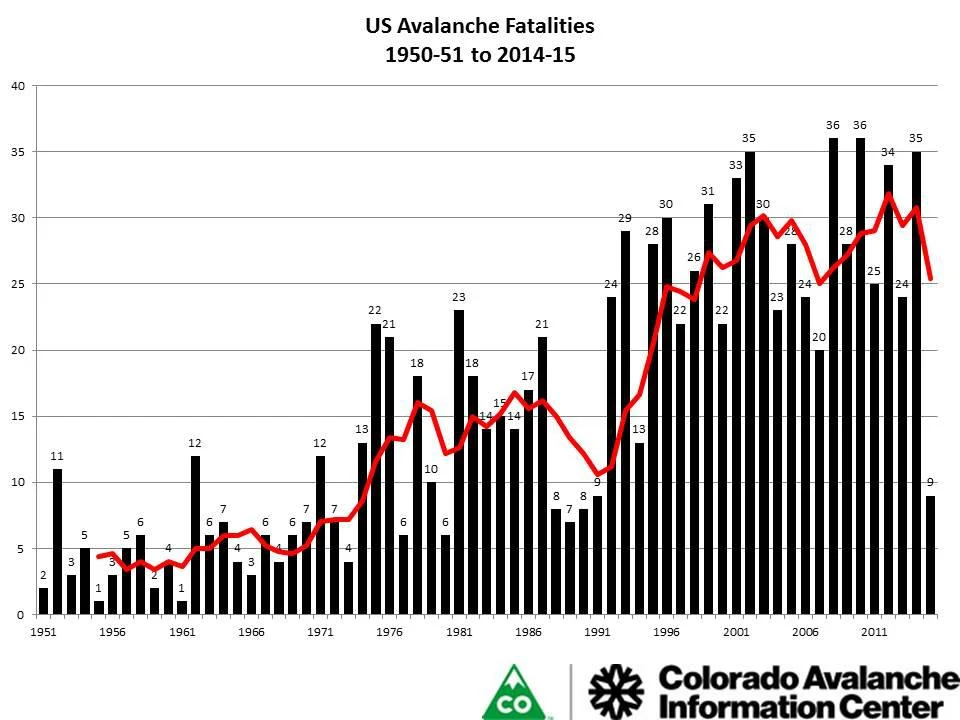
As the 2014-2015 winter season draws to a close on April 30, data compiled by national safety organizations indicates a historic shift in backcountry safety outcomes. For the first time since the early 1990s, the United States has seen a dramatic decrease in avalanche-related deaths, recording only nine fatalities over the course of the winter. This figure represents the lowest annual death toll since 1991, a statistic that stands in stark contrast to the increasing popularity of winter backcountry sports. While safety officials emphasize that any loss of life is a tragedy, the single-digit fatality rate marks a significant milestone in the ongoing effort to manage the inherent risks of mountainous terrain.
The decline in fatalities is attributed to a complex interplay of meteorological conditions and the intensified efforts of safety organizations. Experts from the Colorado Avalanche Information Center (CAIC) and the United States Forest Service (USFS) suggest that while the weather played a foundational role in reducing risk, the growing sophistication of avalanche forecasting and public education cannot be overlooked. As more enthusiasts venture into the wilderness, the stabilization of fatality rates suggests that safety messaging may finally be keeping pace with the rapid expansion of the winter recreation industry.
Meteorological Factors and Snowpack Stability
The primary driver behind the 2014-2015 season’s low fatality count was an anomalous weather pattern that dominated much of the Western United States. A "poor snow year" across the West Coast, particularly in the Sierra Nevada and the Cascades, resulted in a significantly thinner snowpack than average. In many regions, the lack of heavy precipitation meant that the mechanical loads required to trigger large, destructive avalanches were rarely present.
Furthermore, unseasonably warm temperatures extended further inland into the Rocky Mountains and the Intermountain West. In a typical winter, cold temperatures can preserve "persistent weak layers" within the snowpack—buried layers of faceted, sugar-like crystals that remain unstable for months. However, the 2014-2015 season saw frequent warming cycles. These temperatures encouraged "settling" and "bonding" within the snowpack, a process known as metamorphic strengthening. By rounding the edges of snow crystals and creating melt-freeze crusts, the warmth effectively "healed" the snowpack in many areas, keeping the overall avalanche danger rating at "Low" or "Moderate" for extended periods.
In California and Oregon, the drought conditions were so severe that many popular backcountry slopes remained bare or below the threshold for slide activity. While this was a disappointment for skiers and snowboarders, it inadvertently created a safer environment by physically limiting the opportunities for accidents. In contrast, years with heavy, erratic snowfall often create complex "slab" conditions that are much harder for recreationists to navigate safely.
A Chronology of the 2014-2015 Season
The 2014-2015 season began with early-season snowfall in the high peaks of Colorado and Wyoming, leading to some initial concerns about deep persistent slabs. However, as the calendar turned to 2015, the anticipated "big winter" failed to materialize for the Pacific states.
By mid-January, a period traditionally associated with high avalanche activity, forecasters noted an unusual trend: the number of reported "close calls" was high, but the number of burials and fatalities remained exceptionally low. In February, which often sees the highest frequency of accidents, the warming trend across the West began to take hold. While this led to some "wet slide" activity—avalanches caused by melting snow—these are generally easier for backcountry travelers to predict and avoid than the "dry slab" avalanches triggered by cold-weather storms.
As the season progressed into March and April, the "spring transition" occurred earlier than usual. The CAIC and other regional centers issued frequent bulletins regarding daytime heating, but the overall lack of a deep, unstable base meant that the catastrophic "deep slab" cycles seen in previous years (such as the 2013-2014 season) were largely absent. By the time the official reporting period neared its end on April 30, the national tally remained at nine, a figure that took many industry veterans by surprise.
The Role of Institutional Education and Information
While weather was a significant factor, the professional community emphasizes the role of the Forest Service avalanche centers and the Colorado Avalanche Information Center in preventing tragedies. Over the last decade, these organizations have revolutionized how they communicate risk to the public.
Spencer Logan and the team at the CAIC have been instrumental in maintaining the U.S. avalanche accident database, which provides the raw data necessary for researchers to understand where and why accidents happen. The graphic data provided by CAIC for the 2014-2015 season highlights a crucial trend: the five-year moving average for fatalities has remained stable, hovering between 25 and 30 deaths per year.
This stability is significant because it occurs against a backdrop of "skyrocketing" backcountry use. Industry sales data for alpine touring (AT) gear, splitboards, and climbing skins have shown double-digit growth nearly every year for the past decade. If safety measures were stagnant, one would expect the fatality rate to rise in proportion to the number of people in the mountains. The fact that the average has stayed flat—and dropped so significantly this year—points to the efficacy of modern avalanche education.
The Forest Service avalanche centers have expanded their reach through social media, mobile apps, and "Know Before You Go" awareness programs. These initiatives target the "recreational" user who may not have formal mountain training but seeks the thrill of untracked powder. By providing daily, localized forecasts and clear danger ratings (ranging from Low to Extreme), these centers have empowered users to make informed decisions about where and when to travel.
Statistical Comparison: 1991 vs. 2015
To understand the magnitude of this year’s low fatality count, it is necessary to look back to 1991. In the early 90s, the backcountry community was a fraction of its current size. High-tech safety gear, such as digital multi-antenna beacons, avalanche airbags, and AvaLungs, was either non-existent or in its infancy.
In 1991, nine fatalities represented a standard year for the level of participation at the time. In 2015, nine fatalities in a community of millions of backcountry users suggest a much higher "per capita" safety rate. This shift indicates a cultural change within the community, where carrying a beacon, probe, and shovel is now considered the bare minimum, and taking a Level 1 avalanche course is becoming a standard rite of passage for new enthusiasts.
The "Human Factor" and Future Implications
Despite the encouraging numbers, safety experts warn against complacency. The 2014-2015 season may be an outlier caused by a specific set of weather conditions. Analysis of avalanche accidents often points to the "human factor"—heuristics or mental shortcuts that lead people to ignore physical warning signs. In a year with low snow, these human errors are less likely to result in a fatal burial simply because there is less snow to slide.
However, the implications of this season extend into the broader discussion of climate change and its impact on mountain safety. Warmer winters may lead to more "predictable" snowpacks in some regions, but they also increase the risk of unpredictable "wet" avalanches and rain-on-snow events, which can be just as deadly.
Furthermore, the stability of the five-year average (25-30 deaths) suggests that there is a "baseline" risk that education and technology have yet to fully eliminate. As the 2015-2016 season approaches, the challenge for organizations like the CAIC will be to maintain this momentum. The goal is to ensure that the low numbers of 2014-2015 become the new norm rather than a statistical anomaly.
Conclusion and Official Outlook
The 2014-2015 avalanche season will be remembered by the winter sports community for two things: a disappointing snow year for many and a historic win for mountain safety. The nine fatalities recorded are a somber reminder of the power of nature, but the broader data provides a glimmer of hope for the future of backcountry recreation.
The continued efforts of Spencer Logan, the CAIC, and the U.S. Forest Service remain vital. Their work in maintaining the U.S. avalanche accident database allows for a transparent look at the risks involved in winter sports and provides the foundation for life-saving education. As the industry moves forward, the focus will remain on bridging the gap between high-tech forecasting and the individual decision-making of the person on the slope. For now, the 2014-2015 season stands as a testament to the fact that with the right combination of weather and wisdom, the dangers of the mountains can be managed.
